
OFF
Microsoft Outlook Skills and Training
- Lifetime Access
- All Levels
- PDF Certificate
Learn With Confidence









Overview
Microsoft Outlook Skills and Training
In today’s fast-paced workplace, effective communication, organisation, and time management are essential for professional success. Microsoft Outlook is more than an email application—it is a powerful productivity platform that can help you manage messages, organise your schedule, track tasks, maintain contacts, and keep important information accessible in one place. The Microsoft Outlook Skills and Training course is designed to help learners build practical Outlook skills and use the platform more confidently and efficiently.
Whether you are new to Microsoft Outlook, looking to improve your existing knowledge, or want to become more organised at work, this course provides a structured introduction to the key features you need for everyday productivity. By developing practical Outlook skills, you can reduce time spent searching for information, manage communications more effectively, and create a more organised approach to your working day.
Why Learn Microsoft Outlook Skills and Training?
Email, appointments, meetings, contacts, tasks, and notes can quickly become difficult to manage when they are not organised effectively. Microsoft Outlook provides tools designed to bring these activities together, but knowing how to use those tools efficiently can make a significant difference to your productivity.
The Microsoft Outlook Skills and Training course focuses on practical outcomes rather than simply introducing individual features. You will learn how to navigate Outlook, manage your emails, schedule activities, organise contacts, and use tasks and notes to keep track of responsibilities.
By the end of the course, you can have a stronger understanding of how Outlook supports everyday workplace organisation and how its features can be incorporated into your personal workflow.
What Will You Learn?
This course covers eight focused modules, taking you from the fundamentals of Microsoft Outlook through to effective contact organisation.
Module 1: Introduction to Microsoft Outlook
The course begins with an introduction to Microsoft Outlook and its role as a productivity and communication tool. You will develop an understanding of the main functions available within Outlook and how different features can work together.
This foundation can help beginners feel more comfortable with the platform while giving existing users an opportunity to strengthen their understanding of Outlook’s core capabilities.
You will learn about:
-
The purpose and main uses of Microsoft Outlook
-
Core Outlook features
-
How Outlook can support workplace communication
-
The relationship between email, calendars, tasks, notes, and contacts
-
Ways Outlook can contribute to better organisation
By establishing a solid foundation, you can approach the rest of the course with a clearer understanding of how Outlook can support your daily activities.
Module 2: User Interface
Knowing where to find Outlook’s features is an important part of using the application efficiently. This module focuses on the Outlook user interface and helps you become familiar with its layout and navigation.
You will explore the main areas of Outlook and learn how to access the tools you need. Developing familiarity with the interface can reduce the time spent looking for functions and make everyday Outlook activities more straightforward.
The module helps you build confidence in navigating Outlook so that you can move between different features and manage your information more efficiently.
Module 3: Email Management Part 1
Email is one of the most frequently used functions of Microsoft Outlook, making effective email management an essential workplace skill. This module introduces important techniques for managing your messages and keeping your inbox under control.
You will learn how to work with emails more effectively and develop a structured approach to handling everyday communication. Rather than allowing messages to accumulate and become difficult to manage, you can use Outlook’s available features to create a more organised email workflow.
Effective email management can help you:
-
Keep track of important messages
-
Find information more easily
-
Handle workplace correspondence efficiently
-
Maintain a more organised inbox
-
Reduce unnecessary time spent managing email
These skills can be valuable for professionals who regularly communicate with colleagues, customers, clients, suppliers, or other stakeholders.
Module 4: Email Management Part 2
Building on the previous module, Email Management Part 2 takes your understanding further and explores additional ways to organise and manage Outlook communications.
A well-managed inbox can make it easier to identify priorities, locate information, and stay on top of correspondence. This module helps you develop practical habits for maintaining control over your email environment.
The skills covered can support a more consistent approach to handling messages, particularly when managing a busy workload with frequent incoming and outgoing communications.
Together, the two email management modules provide a practical foundation for becoming more confident and organised when using Outlook for professional communication.
Module 5: Efficient Scheduling
Managing your time effectively is an important part of workplace productivity. Microsoft Outlook includes scheduling tools that can help you organise appointments, meetings, and other activities.
This module introduces efficient scheduling and shows how Outlook can support better organisation of your working calendar.
You will develop an understanding of how to use Outlook to manage your schedule and keep track of important commitments. Better scheduling can help you maintain awareness of upcoming activities and create a clearer view of how your time is being allocated.
By developing efficient scheduling habits, you can work towards:
-
Keeping appointments organised
-
Managing your calendar more effectively
-
Staying aware of upcoming commitments
-
Planning activities in a structured way
-
Improving day-to-day time management
These capabilities are useful for employees, administrators, managers, business professionals, and anyone who needs to coordinate multiple activities.
Module 6: Manage Tasks and Notes
Remembering every responsibility, idea, reminder, and piece of information can be challenging during a busy working day. Outlook’s tasks and notes features provide useful ways to keep track of important information.
In this module, you will learn how to manage tasks and notes within Outlook. These features can help you create a more structured approach to personal organisation and make it easier to keep track of things that require attention.
Using task and note management effectively can help you move beyond simply managing your inbox. Instead, Outlook can become a central productivity tool that supports both communication and personal organisation.
You can use these skills to help manage responsibilities, record useful information, and maintain greater visibility over the work you need to complete.
Module 7: Contacts
Professional communication often involves maintaining information about colleagues, customers, clients, suppliers, and other contacts. Outlook provides contact management functionality that can help keep this information organised.
This module introduces Outlook contacts and explains how they can support your communication and organisation.
Developing effective contact management skills can make it easier to maintain useful contact information and access it when required. Instead of relying on scattered notes or separate sources of information, you can use Outlook as part of a more structured approach.
This can be particularly useful for professionals whose roles involve regular communication with multiple people or organisations.
Module 8: Organising Contacts
The final module focuses on organising contacts effectively. As your contact list grows, simply storing information is not always enough. Good organisation can help you find and manage contacts more efficiently.
You will explore ways of organising your Outlook contacts so that information remains easier to manage and access.
This module brings together the course’s broader focus on organisation and productivity. Just as effective email management can help keep your inbox under control, organised contacts can help you maintain a more efficient communication system.
Practical Outcomes of the Course
The Microsoft Outlook Skills and Training course is designed around skills that can be applied to everyday work and personal productivity. After completing the course, you can be better prepared to use Outlook for a range of common activities.
You can develop the ability to:
-
Navigate the Microsoft Outlook interface with greater confidence
-
Manage emails in a more structured way
-
Organise your inbox and communications
-
Schedule appointments and activities
-
Manage tasks and notes
-
Maintain contact information
-
Organise contacts more effectively
-
Use Outlook as a broader productivity tool
-
Create more organised working habits
-
Improve your confidence when using Outlook
These outcomes can contribute to a more efficient approach to managing digital communication and daily responsibilities.
Who Can Benefit from Microsoft Outlook Skills and Training?
This course can be useful for a wide range of learners. It is particularly suitable for anyone who wants to improve their ability to use Microsoft Outlook for communication, organisation, and productivity.
It may benefit:
-
Beginners who are learning Microsoft Outlook
-
Office and administrative professionals
-
Business professionals
-
Managers and team leaders
-
Employees who regularly manage email
-
Professionals who coordinate appointments and meetings
-
Individuals looking to improve workplace productivity
-
Learners developing their digital workplace skills
-
Anyone who wants to become more confident using Outlook
You do not need to be an advanced Outlook user to benefit from the course. The structured modules provide a practical learning journey that starts with the fundamentals and progresses towards more organised use of Outlook’s key functions.
Improve Your Workplace Productivity
Strong digital skills can make a meaningful difference to how efficiently you approach everyday responsibilities. When emails, schedules, tasks, notes, and contacts are managed separately or inconsistently, it can become harder to maintain an organised workflow.
Learning how to use Microsoft Outlook effectively can help bring many of these activities together. Instead of treating Outlook as simply an email application, you can use its different functions to support communication, scheduling, task management, and organisation.
The Microsoft Outlook Skills and Training course can therefore be a valuable step towards improving your overall digital workplace skills. The knowledge you gain can be applied to everyday situations, helping you approach common Outlook tasks with greater confidence.
Build Confidence with Microsoft Outlook
Technology skills are increasingly important across modern workplaces, and being comfortable with commonly used productivity software can support professional development. Microsoft Outlook remains an important tool for communication and organisation in many professional environments.
Developing your Outlook skills can help you work more systematically, stay organised, and make better use of the features available to you. Whether your goal is to improve your current workplace performance, strengthen your digital skills, or prepare for new professional responsibilities, learning Outlook can provide a practical addition to your skill set.
Rather than focusing only on individual features, this course encourages you to understand how Outlook can support your overall workflow. From managing your first email through to organising contacts and scheduling activities, each module contributes to a broader understanding of workplace productivity.
Start Developing Your Outlook Skills Today
The Microsoft Outlook Skills and Training course provides a practical learning experience covering the essential areas of Outlook, including the user interface, email management, scheduling, tasks, notes, contacts, and contact organisation.
By completing the eight modules, you can develop practical knowledge that supports better communication and organisation. You can become more confident navigating Outlook, manage your email more effectively, organise your schedule, keep track of tasks, and maintain useful contact information.
If you want to strengthen your digital workplace skills and make Microsoft Outlook a more effective part of your daily workflow, this course offers a focused way to build the knowledge and confidence you need.
Enrol in Microsoft Outlook Skills and Training today and start developing practical Outlook skills that can help you communicate, organise, schedule, and manage your daily responsibilities more effectively.
Course Modules
Course Content
Module 1 Introduction to Microsoft Outlook
-
Lesson 1 Introduction to Microsoft Outlook
Module 2 User Interface
Module 3 Email Management Part 1
Module 4 Email Management Part 2
Module 5 Efficient Scheduling
Module 6 Manage Tasks and Notes
Module 7 Contacts
Module 8 Organising Contacts
What our students say

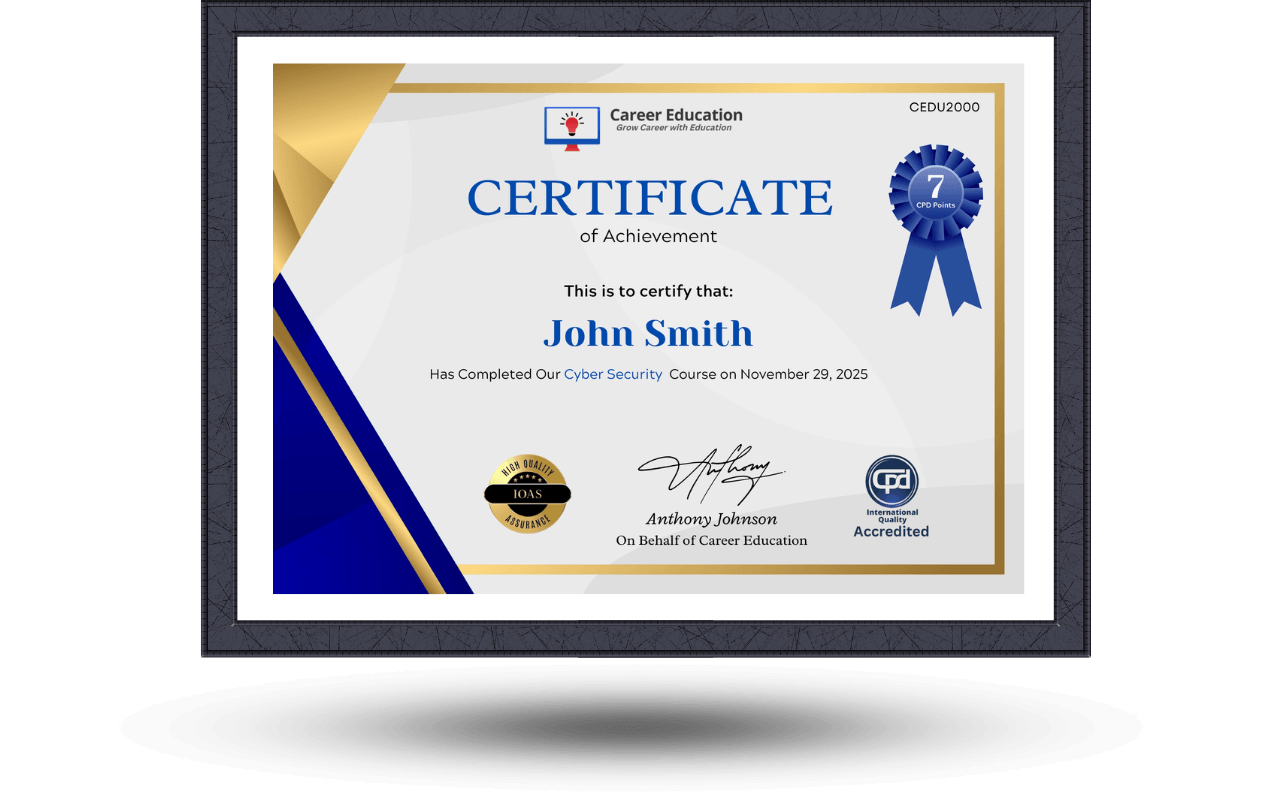
Earn an Accredited Certificate
Upon completion of the course, an e-certificate will be downloadable from Khan Education signifying the completion of your course. But, the course is CPD Accredited and after you complete the assignment, you will be eligible to order a certificate accredited by CPD International Quality for £5.99 only. If you want a hardcopy certificate accredited by CPD IQ, you can get it for only £15.99.
Get your CertificateSimilar Courses