
94%
OFF
OFF
Mental Health Care: MCA, DoLS, LPS and Mental Health Law
- Lifetime Access
- All Levels
- PDF Certificate
£296
£19
14-Day Money-Back Guarantee
Learn With Confidence









Mental Health Care: MCA, DoLS, LPS and Mental Health Law
Overview
Mental health care is about far more than providing treatment. It involves protecting the rights, dignity, wellbeing, and independence of individuals while ensuring that care is delivered safely, ethically, and within the law. Professionals working across health and social care settings regularly encounter situations where they must make decisions about a person’s mental capacity, liberty, consent, and legal rights. Understanding the legal frameworks that govern these decisions is essential for delivering high-quality, person-centred care.
The Mental Health Care: MCA, DoLS, LPS and Mental Health Law course provides a comprehensive introduction to the legislation and principles that shape mental health practice. It explores the Mental Capacity Act (MCA), Deprivation of Liberty Safeguards (DoLS), Liberty Protection Safeguards (LPS), and Mental Health Law, helping learners understand how these frameworks support both individuals receiving care and the professionals responsible for safeguarding them.
As mental health awareness continues to grow across healthcare, social care, education, community services, and residential settings, employers increasingly value professionals who understand legal responsibilities alongside compassionate care. Whether supporting older adults, individuals with learning disabilities, people living with dementia, or those experiencing mental illness, a sound understanding of these legal principles helps professionals make informed, ethical, and lawful decisions.
Many practitioners find legislation surrounding mental capacity and mental health challenging because it combines legal requirements with complex ethical considerations. Knowing when a person can make their own decisions, when decisions must be made in their best interests, and how deprivation of liberty should be authorised requires confidence and practical knowledge.
Throughout this course, learners will develop a clear understanding of the legal responsibilities surrounding mental health care while exploring real-world scenarios that demonstrate how legislation is applied in everyday practice. By the end of the programme, learners will be better equipped to protect vulnerable individuals, uphold their rights, and contribute confidently to safe, lawful, and compassionate care.
Course Description
The Mental Health Care: MCA, DoLS, LPS and Mental Health Law course has been designed for anyone seeking a practical understanding of the legal frameworks that underpin modern mental health and social care practice. Combining legislation with real-life applications, the course helps learners build confidence in applying legal principles while maintaining person-centred care.
Mental health legislation affects professionals working across hospitals, care homes, supported living services, domiciliary care, community healthcare, social services, local authorities, education, and voluntary organisations. Understanding these legal duties enables professionals to protect vulnerable individuals while balancing autonomy, safety, and professional accountability.
The course begins by introducing the foundations of mental health and care, establishing an understanding of mental wellbeing, mental illness, recovery, and person-centred approaches. Learners then progress through the Mental Capacity Act, exploring the principles of capacity assessment, informed consent, best-interest decision-making, and the rights of individuals who may lack capacity.
A significant focus is placed on Deprivation of Liberty Safeguards (DoLS) and the transition towards Liberty Protection Safeguards (LPS). Learners gain insight into why these legal safeguards exist, how authorisations are granted, and how professionals protect individuals from unlawful restrictions while ensuring appropriate care.
The programme also examines the Mental Health Act, providing learners with an understanding of compulsory assessment, treatment, detention procedures, professional responsibilities, and the legal protections available to patients receiving mental health services.
Alongside legal knowledge, the course explores the ethical dilemmas that frequently arise in practice. Topics such as confidentiality, safeguarding, human rights, informed consent, professional judgement, balancing risk, and multidisciplinary working are discussed within a practical context.
Case studies throughout the course encourage learners to apply legislation to realistic scenarios. Rather than simply learning legal definitions, participants develop practical decision-making skills that can be transferred directly into professional practice.
By completing this course, learners will strengthen their understanding of:
-
Mental health legislation
-
Mental capacity assessments
-
Best-interest decision-making
-
Deprivation of liberty procedures
-
Liberty Protection Safeguards (LPS)
-
Mental Health Act principles
-
Human rights considerations
-
Ethical decision-making
-
Safeguarding responsibilities
-
Professional accountability
-
Risk assessment
-
Multi-agency collaboration
-
Person-centred care planning
Whether you are beginning your career in health and social care or looking to refresh your legal knowledge, this course provides practical guidance that supports confident, lawful, and compassionate practice across a wide range of professional environments.
What You Will Learn in Mental Health Care: MCA, DoLS, LPS and Mental Health Law
Module 1: Introduction to Mental Health and Care
The opening module establishes the essential foundations of mental health care by introducing key concepts, terminology, and principles that influence professional practice. Learners explore different mental health conditions, factors affecting wellbeing, recovery-focused care, and the importance of treating every individual with dignity and respect.
This module explains how physical health, emotional wellbeing, social circumstances, and environmental factors influence mental health. Learners also gain an appreciation of the roles and responsibilities of professionals involved in supporting individuals experiencing mental health challenges.
Best practice approaches to communication, empathy, safeguarding, and person-centred care are introduced to provide a strong framework for later legal learning.
After completing this module you will be able to:
-
Understand the principles of mental health care.
-
Explain common mental health conditions.
-
Recognise factors affecting mental wellbeing.
-
Apply person-centred approaches to care.
-
Identify the roles of mental health professionals.
-
Promote dignity, respect, and inclusion.
-
Support individuals with compassion and professionalism.
-
Build a strong foundation for later legal learning.
Module 2: Mental Capacity Act
This module provides an in-depth understanding of the Mental Capacity Act (MCA) and its importance within health and social care. Learners examine the five statutory principles, capacity assessments, informed consent, and best-interest decision-making.
The module demonstrates how professionals determine whether someone has the capacity to make specific decisions while ensuring individuals retain as much independence as possible. Practical examples illustrate how the Act supports both vulnerable individuals and care professionals.
Learners also explore documentation, decision recording, and the legal responsibilities associated with applying the Act appropriately.
After completing this module you will be able to:
-
Explain the principles of the Mental Capacity Act.
-
Understand how capacity is assessed.
-
Apply best-interest decision-making.
-
Support informed consent processes.
-
Promote individual autonomy.
-
Recognise legal responsibilities under the MCA.
-
Record decisions appropriately.
-
Apply the Act confidently in practice.
Module 3: Deprivation of Liberty Safeguards
This module explores the legal protections designed to safeguard individuals who may be deprived of their liberty for their own safety or care needs. Learners examine the purpose of Deprivation of Liberty Safeguards (DoLS), when authorisation is required, and how professionals identify potential restrictions.
The module also introduces Liberty Protection Safeguards (LPS), explaining how future legal developments seek to strengthen protections while simplifying authorisation processes.
Practical examples help learners understand how legal safeguards protect individual rights without compromising necessary care.
After completing this module you will be able to:
-
Understand the purpose of DoLS.
-
Explain when deprivation of liberty applies.
-
Recognise indicators requiring authorisation.
-
Describe the transition towards LPS.
-
Protect individuals’ legal rights.
-
Balance safety with personal freedom.
-
Follow best practice procedures.
-
Apply safeguarding principles effectively.
Module 4: Mental Health Act
The Mental Health Act provides the legal framework for compulsory assessment, treatment, and detention in specific circumstances. This module explains the purpose of the legislation, the criteria for detention, patient rights, and professional responsibilities.
Learners explore the roles of Approved Mental Health Professionals, healthcare teams, and legal safeguards that protect patients receiving compulsory treatment.
Realistic case examples demonstrate how the Act operates within hospitals and community settings while highlighting the importance of ethical, proportionate decision-making.
After completing this module you will be able to:
-
Explain the purpose of the Mental Health Act.
-
Understand detention procedures.
-
Recognise patient rights and protections.
-
Identify professional responsibilities.
-
Support lawful clinical practice.
-
Apply legal principles appropriately.
-
Work within multidisciplinary teams.
-
Promote safe and ethical care.
Module 5: Legal and Ethical Issues in Mental Health Care
Legal compliance alone is not enough to deliver excellent care. This module examines the ethical principles that guide professional judgement, including confidentiality, consent, safeguarding, equality, human rights, and balancing individual autonomy with duty of care.
Learners explore common ethical dilemmas faced by professionals and consider practical strategies for making fair, lawful, and compassionate decisions.
The module also reinforces accountability, professional standards, and reflective practice.
After completing this module you will be able to:
-
Understand ethical principles in mental health care.
-
Apply confidentiality appropriately.
-
Balance autonomy and safeguarding.
-
Promote equality and human rights.
-
Recognise professional accountability.
-
Respond to ethical dilemmas.
-
Support lawful decision-making.
-
Improve professional judgement.
Module 6: Practical Applications and Case Studies
The final module brings together everything learned throughout the course by applying legislation to realistic workplace situations. Through practical case studies, learners examine complex scenarios involving mental capacity, deprivation of liberty, safeguarding, consent, and mental health law.
This practical approach strengthens confidence in applying legal knowledge while improving decision-making, communication, documentation, and multidisciplinary collaboration.
Learners leave the course with a stronger understanding of how legal frameworks influence everyday professional practice.
After completing this module you will be able to:
-
Apply legislation to real-life scenarios.
-
Make informed professional decisions.
-
Analyse complex case studies.
-
Improve safeguarding practice.
-
Strengthen documentation skills.
-
Communicate effectively with colleagues.
-
Integrate legal knowledge into daily practice.
-
Deliver confident, person-centred care.
Who Is This Course For?
The Mental Health Care: MCA, DoLS, LPS and Mental Health Law course is suitable for a wide range of learners, including:
-
Beginners interested in mental health and social care.
-
Health and social care professionals.
-
Care assistants and support workers.
-
Nurses and nursing associates.
-
Social workers.
-
Residential and domiciliary care staff.
-
Mental health practitioners.
-
Healthcare assistants.
-
Managers and supervisors responsible for care delivery.
-
Students studying health, nursing, psychology, or social care.
-
Safeguarding professionals.
-
Community support workers.
-
Charity and voluntary sector staff.
-
Career changers entering health or social care.
-
Lifelong learners wishing to understand mental health legislation.
Requirements
To complete this course, learners simply need:
-
An interest in mental health and legal frameworks.
-
A computer, tablet, or smartphone.
-
A reliable internet connection.
-
Basic digital skills.
-
A willingness to learn.
No previous experience is required, making the course suitable for beginners as well as experienced professionals seeking to refresh or expand their knowledge.
Career Path
Completing this course supports professional development across numerous health and social care roles, including:
Mental Health Support Worker
Develop a stronger understanding of legal responsibilities while providing safe, person-centred support to individuals experiencing mental health challenges.
Care Worker
Apply the Mental Capacity Act and safeguarding principles confidently when supporting adults in residential, community, or home care settings.
Social Care Practitioner
Improve decision-making surrounding capacity, consent, safeguarding, and best-interest planning while working collaboratively with multidisciplinary teams.
Healthcare Assistant
Strengthen legal awareness when supporting patients in hospitals, community healthcare services, and mental health settings.
Mental Health Practitioner
Enhance professional knowledge of mental health legislation, patient rights, ethical practice, and lawful care planning.
Care Manager or Supervisor
Improve governance, compliance, staff supervision, and organisational understanding of legal responsibilities relating to mental health care.
The knowledge gained can also support progression into safeguarding roles, leadership positions, continuing professional development, consultancy, training, and wider responsibilities across health and social care services.
Frequently Asked Questions
1. What is Mental Health Care: MCA, DoLS, LPS and Mental Health Law?
This course provides an introduction to the legal and ethical frameworks that govern mental health and social care practice, including the Mental Capacity Act, Deprivation of Liberty Safeguards, Liberty Protection Safeguards, and Mental Health Law.
2. Who should take this course?
The course is suitable for healthcare professionals, care workers, social care staff, students, managers, support workers, safeguarding practitioners, and anyone wishing to improve their understanding of mental health legislation.
3. Is previous experience required?
No. The course is designed for beginners while also offering valuable knowledge for experienced professionals seeking to refresh or update their understanding.
4. What will I learn?
You will learn about mental health care principles, mental capacity assessments, DoLS, LPS, the Mental Health Act, ethical practice, safeguarding, legal responsibilities, and practical case applications.
5. How long does the course take?
Study time varies depending on your learning pace. Because the course is delivered online, you can progress through the modules at a schedule that suits your personal and professional commitments.
6. Can beginners complete this course?
Yes. The content begins with fundamental concepts before progressing to more detailed legal and practical applications, making it suitable for learners with no previous experience.
7. How does this course help my career?
Understanding mental health legislation is highly valuable across healthcare and social care settings. The knowledge gained can improve professional confidence, support compliance, and strengthen decision-making in day-to-day practice.
8. Will I receive a certificate?
Certificate availability depends on the training provider’s assessment and certification arrangements. Please refer to your course provider for specific details.
9. Can I study at my own pace?
Yes. Online learning allows you to complete the modules whenever it is convenient, making it easier to balance study with work and personal commitments.
10. Why should I choose this course?
This course combines legal knowledge with practical application, helping learners understand not only what the legislation says but also how it is applied in real mental health and social care settings. It provides valuable knowledge that supports ethical, lawful, and person-centred practice.
Enrol Today
Mental health legislation plays a vital role in protecting individuals, supporting professional practice, and ensuring ethical, person-centred care. By completing the Mental Health Care: MCA, DoLS, LPS and Mental Health Law course, you will gain the knowledge and confidence to understand key legal frameworks, make informed decisions, and contribute to safe and compassionate care across a variety of health and social care settings.
Whether you are starting your career, developing your professional expertise, or refreshing your legal knowledge, now is an excellent time to invest in skills that remain valuable throughout your career. Enrol today and take the next step towards becoming a more knowledgeable, confident, and effective mental health and care professional.
Course Modules
Course Content
Module 1 Introduction to Mental Health and Care
-
Lesson 1 Introduction to Mental Health and Care
Module 2 Mental Capacity Act
Module 3 Deprivation of Liberty Safeguards
Module 4 Mental Health Act
Module 5 Legal and Ethical Issues in Mental Health Care
Module 6 Practical Applications and Case Studies
What our students say
Excellent
4.9 average
158 Reviews

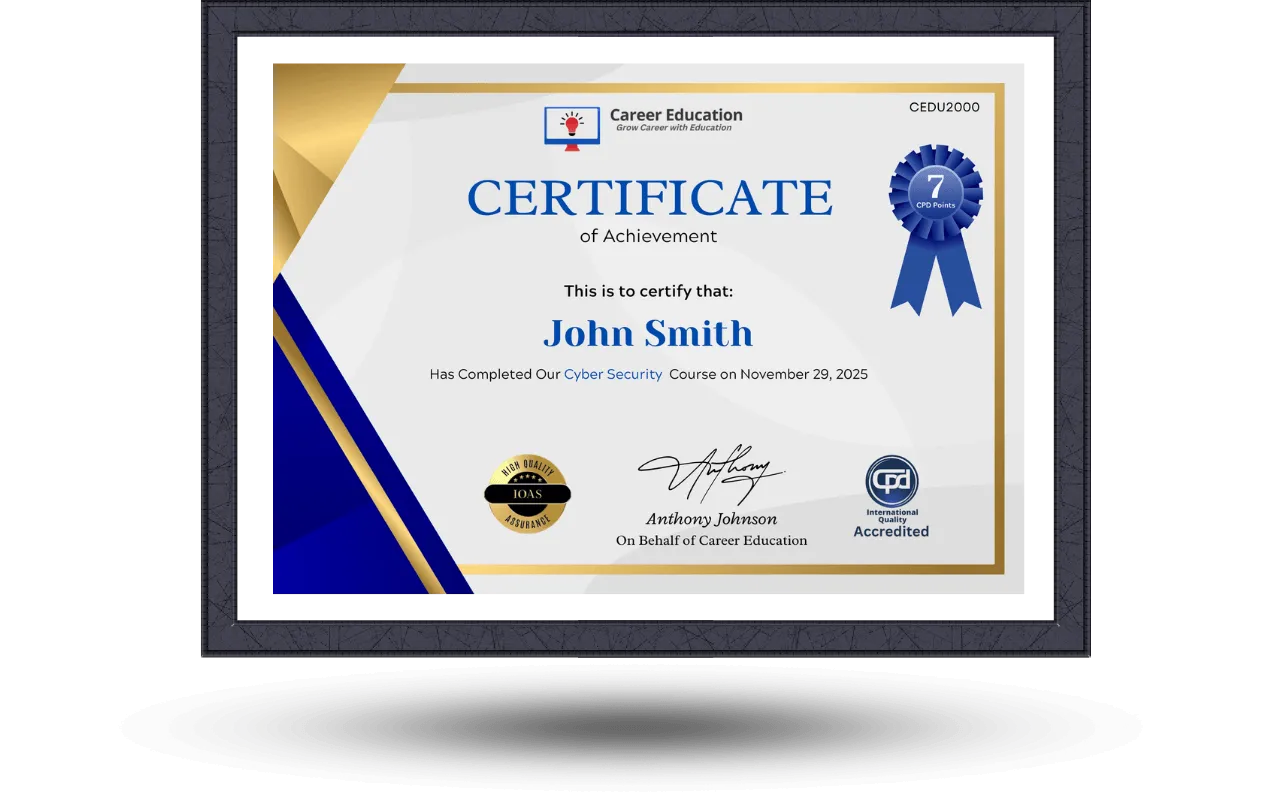
Earn an Accredited Certificate
Upon completion of any course, all students are entitled to a CPD IQ Accredited e-certificate that will be issued by Career Education signifying the completion of your course.
After you complete the course and assignment, you will be eligible to order a free certificate accredited by CPD International Quality by completing the form below.
Hardcopy certificates and transcripts are also available for a small additional fee. More information is disclosed upon course completion.
Frequently Asked Questions
The lifetime membership includes unlimited access to all courses, resources, and updates for a one-time fee.
You can purchase the membership directly from our website using a secure checkout process.
Yes, selected courses can be downloaded for offline access through our mobile app.
Yes, all future updates and new courses are included at no extra cost.
Yes, we offer a 30-day money-back guarantee if you are not satisfied with the membership.