
OFF
Medical Transcription Course
- Lifetime Access
- All Levels
- PDF Certificate
Learn With Confidence





Overview
# Medical Transcription Course
Develop the knowledge, accuracy and organisational skills needed to work with healthcare-related transcription tasks with the **Medical Transcription Course**.
Medical transcription is an important part of healthcare administration and documentation. Healthcare professionals generate a significant amount of information through consultations, examinations, procedures, referrals and other clinical activities. Accurate documentation helps ensure that information can be recorded, reviewed, communicated and stored appropriately.
For individuals interested in healthcare administration, medical office support, transcription or remote working opportunities, developing medical transcription skills can provide a valuable foundation.
However, medical transcription requires more than simply typing what you hear.
A transcriptionist needs to listen carefully, understand terminology and context, identify unclear information, maintain accuracy, manage time effectively and review completed documents carefully. Communication skills, problem-solving abilities and attention to detail are also important.
Our **Medical Transcription Course** provides a structured introduction to these essential areas.
Across eight modules, you will explore the fundamentals of medical transcription, transcription techniques, troubleshooting and problem-solving, time and task management, review and editing, communication, audio and video transcription, and transcription for specialist medical fields.
The course is designed to help learners build a broad understanding of medical transcription and develop practical habits that can support accurate and professional transcription work.
## Why Study a Medical Transcription Course?
Healthcare documentation needs to be clear, consistent and accurate.
Even small transcription errors can potentially change the meaning of information, particularly when medical terminology, medication names, measurements or clinical instructions are involved.
For this reason, transcription requires concentration and a systematic approach.
A professional medical transcriptionist needs to be able to:
* Listen carefully to recorded information.
* Understand medical terminology and context.
* Type accurately and efficiently.
* Identify unclear or incomplete audio.
* Apply appropriate transcription methods.
* Review documents carefully.
* Manage competing tasks.
* Meet deadlines.
* Communicate effectively.
* Maintain professionalism and confidentiality.
* Adapt to different medical specialisms.
The **Medical Transcription Course** introduces these skills through a structured curriculum.
Rather than focusing only on typing, the course considers the wider knowledge and working practices required to approach transcription tasks effectively.
## Course Learning Outcomes
By completing the **Medical Transcription Course**, you will develop the knowledge to:
* Understand the role and purpose of medical transcription.
* Explore the medical transcription workflow.
* Understand fundamental transcription techniques and methods.
* Approach transcription tasks with greater accuracy and consistency.
* Identify common transcription difficulties.
* Apply problem-solving approaches to challenging audio.
* Manage transcription time and tasks more effectively.
* Develop organised working practices.
* Review and edit completed transcripts.
* Identify potential errors before documents are finalised.
* Communicate professionally with colleagues and clients.
* Understand the importance of interpersonal skills in transcription work.
* Work with audio and video transcription assignments.
* Adapt transcription approaches to different types of recordings.
* Develop awareness of transcription requirements across medical specialisms.
* Build a foundation for further training and professional development.
# Module 1: Introduction to Medical Transcription
The first module introduces the world of medical transcription.
You will explore what medical transcription involves and why accurate documentation is important within healthcare environments.
Medical transcription involves converting spoken or recorded healthcare information into written documentation.
This can include dictated notes, consultation records, medical reports and other forms of healthcare-related documentation.
You will explore the role of the medical transcriptionist and the skills required to perform transcription tasks effectively.
Accuracy is a central consideration.
A transcriptionist needs to capture information carefully while understanding that healthcare terminology may be unfamiliar or complex.
The module introduces the importance of listening skills, concentration, typing accuracy and attention to detail.
You will also develop awareness of the professional nature of medical transcription.
Healthcare information can be sensitive, so professionalism, confidentiality and appropriate handling of information are important considerations.
By completing this module, you will have a clearer understanding of medical transcription and the responsibilities associated with transcription work.
# Module 2: Medical Transcription Techniques and Methods
Module 2 explores the techniques and methods used when completing medical transcription tasks.
Successful transcription requires an organised process.
You need to listen to the recording, interpret the information appropriately, type the content accurately and review the final document.
You will explore approaches that can help improve transcription efficiency and accuracy.
This includes developing effective listening habits and learning how to manage recordings that contain unfamiliar terms, varying speech patterns or complex information.
The module also encourages you to develop consistency.
A systematic approach can reduce avoidable errors and make it easier to identify sections that require additional attention.
You will explore how context can help when interpreting spoken information.
Understanding the subject matter can make it easier to recognise terminology and identify whether a transcription makes sense.
The objective is not to guess when information is unclear, but to develop appropriate methods for dealing with uncertainty.
By completing this module, you will have a stronger understanding of the techniques and methods that can support professional transcription work.
# Module 3: Medical Transcription Troubleshooting and Problem-Solving
Not every recording will be straightforward.
Module 3 focuses on troubleshooting and problem-solving.
You may encounter unclear audio, background noise, unfamiliar terminology, poor pronunciation, incomplete phrases or sections that are difficult to understand.
Effective transcription requires a calm and systematic response to these challenges.
You will explore ways to identify transcription problems and consider appropriate approaches for resolving them.
Problem-solving is particularly important because guessing can introduce inaccuracies into healthcare documentation.
You will develop awareness of when information requires further review and how to approach difficult sections methodically.
The module also reinforces the importance of checking context.
A transcriptionist should consider the surrounding information when trying to understand unclear content while avoiding unsupported assumptions.
You will also explore how developing experience and familiarity with terminology can make challenging assignments easier to manage.
By completing this module, you will be better prepared to approach common transcription difficulties and solve problems without compromising accuracy.
# Module 4: Medical Transcription Time and Task Management
Medical transcription can involve multiple assignments, deadlines and priorities.
Module 4 focuses on time and task management.
Working efficiently does not simply mean typing faster.
Effective time management involves planning your workload, prioritising tasks and allocating sufficient time for transcription, review and correction.
You will explore ways to organise your work and maintain productivity.
This can be particularly important when handling several recordings or documents at once.
Poor organisation can lead to missed deadlines, rushed work and avoidable errors.
A structured approach can help you maintain consistency even when workload increases.
You will also consider the importance of balancing speed with accuracy.
Completing a transcript quickly has limited value if it contains significant errors.
The aim is to develop efficient working habits while maintaining appropriate attention to detail.
By completing this module, you will have greater awareness of how effective time and task management can support reliable transcription work.
# Module 5: Medical Transcription Review and Editing
Transcription does not end when the recording has been typed.
Module 5 focuses on reviewing and editing completed transcripts.
Reviewing is essential because errors can occur even when you are concentrating carefully.
You may overlook spelling mistakes, missing words, punctuation issues or incorrectly interpreted terminology during the initial transcription.
A separate review process gives you an opportunity to identify and correct these issues.
You will explore the importance of proofreading and editing your work systematically.
This can include checking for consistency, accuracy and clarity.
You will also develop awareness of why medical transcription requires particular attention to terminology.
A small spelling difference can potentially result in a completely different word.
The review stage therefore provides an important quality-control opportunity.
You will explore how careful editing can improve the overall professionalism of completed documentation.
By completing this module, you will develop stronger awareness of quality checking and the role of review in producing accurate transcripts.
# Module 6: Medical Transcription Communication and Interpersonal Skills
Medical transcription may involve more communication than people initially expect.
Module 6 focuses on communication and interpersonal skills.
Transcriptionists may work with healthcare professionals, administrative staff, clients, managers or other members of a wider team.
Professional communication can help ensure that questions, clarifications and workflow issues are handled appropriately.
You will explore the importance of listening, professional language and clear communication.
You will also consider how interpersonal skills can contribute to effective working relationships.
When an issue arises with an assignment, communicating the problem clearly can be more effective than making assumptions.
The module also reinforces professionalism.
A medical transcriptionist may encounter sensitive information during their work, making discretion and appropriate professional conduct particularly important.
By completing this module, you will have greater awareness of how communication skills complement technical transcription abilities.
# Module 7: Medical Transcription Audio and Video Transcription
Modern transcription work can involve a variety of media formats.
Module 7 explores audio and video transcription.
Different recordings can present different challenges.
Audio quality, speaker clarity, background noise, multiple speakers and recording formats can all affect the transcription process.
Video recordings may also provide visual context that can contribute to understanding the content.
You will explore how to approach audio and video transcription tasks systematically.
The module reinforces the importance of active listening and careful review.
You will also consider how transcription requirements may vary depending on the recording and intended document.
Developing flexibility can help you adapt to different types of assignments.
By completing this module, you will have greater awareness of the skills involved in working with both audio and video transcription.
# Module 8: Medical Transcription for Specialisations and Niches
Healthcare includes numerous medical specialisms, each with its own terminology, procedures and documentation requirements.
Module 8 explores medical transcription for specialisations and niches.
A transcriptionist may eventually encounter material from different areas of healthcare.
These can involve specialised vocabulary and subject matter.
Developing awareness of this variation can help you approach unfamiliar assignments with greater confidence.
The module encourages you to recognise the importance of context and continued learning.
You do not need to know every medical term before beginning your development as a transcriptionist.
However, you should develop reliable research, learning and verification habits.
Specialisation can also become an area for future professional development.
As your knowledge increases, you may choose to focus on particular areas of medical transcription.
By completing this module, you will understand why medical specialisms can influence transcription work and why continued learning is important.
# Develop Essential Medical Transcription Skills
The **Medical Transcription Course** is designed to develop a broad range of knowledge and practical working skills.
## Improve Accuracy
You will learn why careful listening, transcription and review are essential to producing reliable documentation.
## Strengthen Attention to Detail
Medical transcription requires concentration and careful checking. The course highlights the importance of identifying errors before finalising work.
## Develop Problem-Solving Skills
You will explore approaches for dealing with unclear audio, unfamiliar terminology and other transcription challenges.
## Manage Your Workload
Time and task management skills can help you organise assignments and maintain productivity without sacrificing accuracy.
## Improve Review and Editing
You will understand why proofreading and quality checking are essential parts of the transcription process.
## Develop Professional Communication
You will explore the interpersonal skills required when working with clients, healthcare professionals and colleagues.
## Work With Different Media
The course introduces audio and video transcription, helping you understand how different recording formats can affect your approach.
## Explore Medical Specialisations
You will develop awareness of the terminology and subject-matter variation that can occur across different healthcare niches.
# Who Is the Medical Transcription Course For?
The **Medical Transcription Course** can be suitable for:
* Aspiring medical transcriptionists.
* Healthcare administration professionals.
* Medical administrative assistants.
* Healthcare support staff.
* Administrative professionals.
* Transcriptionists seeking specialist knowledge.
* Freelancers interested in medical transcription.
* Remote workers developing transcription skills.
* Individuals considering healthcare-related administrative careers.
* Students interested in medical documentation.
* Professionals seeking to broaden their administrative skill set.
The course can also be useful for beginners who want to understand the fundamentals before pursuing more specialised education or practical experience.
# Build a Foundation for Medical Transcription Work
Medical transcription combines language, listening, technology, organisation and healthcare knowledge.
It requires someone who can concentrate carefully while working through detailed information.
The **Medical Transcription Course** provides an introduction to these different areas so that learners can develop a more complete understanding of the profession.
Rather than treating transcription as simple typing, the course highlights the importance of accuracy, problem-solving, review, communication and professional working practices.
# Develop Accuracy Without Sacrificing Efficiency
Speed can be valuable in transcription, but accuracy remains essential.
Working too quickly can increase the likelihood of mistakes.
On the other hand, spending excessive time on every task can make it difficult to meet deadlines.
The course therefore introduces the importance of balancing productivity with careful quality control.
Developing efficient working habits can help you become more confident when handling transcription assignments.
# Improve Your Approach to Difficult Recordings
Some recordings are easy to understand.
Others are not.
Background noise, accents, technical terminology, multiple speakers and poor recording quality can make transcription more challenging.
The course helps you develop awareness of the problem-solving mindset required to deal with these situations.
You will learn why systematic checking is preferable to simply guessing at unclear information.
# Understand the Importance of Confidentiality and Professionalism
Healthcare documentation can involve highly sensitive information.
Anyone working with such material needs to understand the importance of professional conduct and appropriate information handling.
The course introduces medical transcription from a professional perspective, helping learners recognise the importance of discretion, accuracy and responsible working practices.
# Prepare for Continued Learning
Medical terminology and healthcare documentation are broad fields.
No introductory course can replace ongoing learning and practical experience.
The **Medical Transcription Course** provides a foundation from which learners can continue developing their skills through additional education, terminology study, practical transcription exercises and professional experience.
For those interested in specialising, the final module provides an introduction to the diversity of medical transcription niches.
# Why Choose Medical Transcription Course?
The **Medical Transcription Course** provides a structured eight-module learning journey covering:
1. Introduction to Medical Transcription.
2. Medical Transcription Techniques and Methods.
3. Medical Transcription Troubleshooting and Problem-Solving.
4. Medical Transcription Time and Task Management.
5. Medical Transcription Review and Editing.
6. Medical Transcription Communication and Interpersonal Skills.
7. Medical Transcription Audio and Video Transcription.
8. Medical Transcription for Specialisations and Niches.
The curriculum progresses from foundational knowledge to practical working skills and specialist awareness.
You will explore not only how transcription works but also how to approach assignments accurately, efficiently and professionally.
# Take the Next Step Towards Your Transcription Goals
If you are interested in developing a skill that combines healthcare knowledge, language, listening and administrative organisation, medical transcription can be an interesting area to explore.
The **Medical Transcription Course** gives you a structured introduction to the key concepts and working practices involved.
You will learn about transcription techniques, troubleshooting, workload management, editing, communication, audio and video transcription and specialist medical fields.
Whether your goal is to explore a new career direction, strengthen your healthcare administration knowledge or develop transcription skills for future opportunities, this course can provide a valuable foundation.
**Enrol in the Medical Transcription Course today and develop the knowledge, accuracy, organisation and professional skills needed to approach medical transcription tasks with greater confidence.**
Course Modules
Course Content
Module 1_ Introduction to Medical Transcription
-
Lesson 1_ Introduction to Medical Transcription
Module 2_ Medical Transcription Techniques and Methods
Module 3_ Medical Transcription Troubleshooting and Problem-Solving
Module 4_ Medical Transcription Time and Task Management
Module 5_ Medical Transcription Review and Editing
Module 6_ Medical Transcription Communication and Interpersonal Skills
Module 7_ Medical Transcription Audio and Video Transcription
Module 8_ Medical Transcription for Specializations and Niches
What our students say

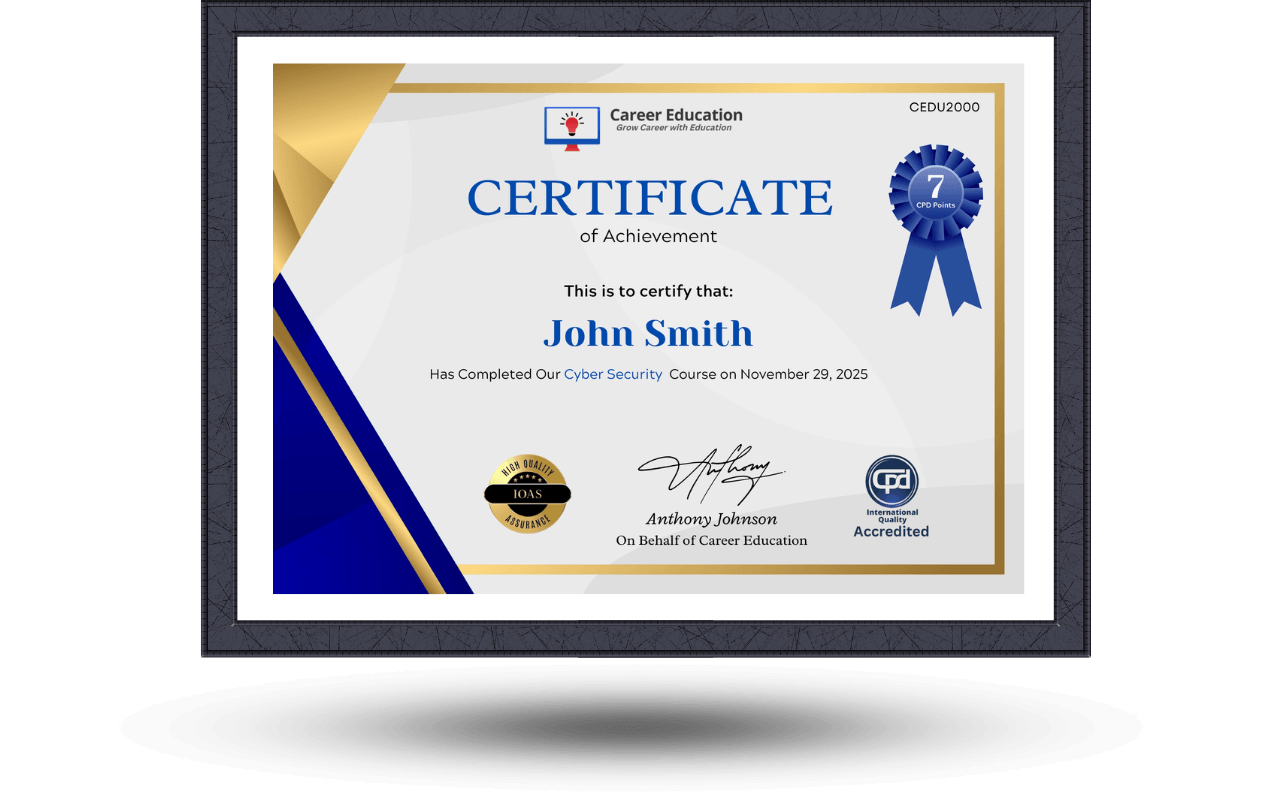
Earn an Accredited Certificate
Upon completion of the course, an e-certificate will be downloadable from Khan Education signifying the completion of your course. But, the course is CPD Accredited and after you complete the assignment, you will be eligible to order a certificate accredited by CPD International Quality for £5.99 only. If you want a hardcopy certificate accredited by CPD IQ, you can get it for only £15.99.
Get your CertificateSimilar Courses