
94%
OFF
OFF
Medical Law Training
- Lifetime Access
- All Levels
- PDF Certificate
£296
£19
14-Day Money-Back Guarantee
Learn With Confidence






Medical Law Training
Develop a stronger understanding of the legal and ethical principles that influence healthcare practice with Medical Law Training.
Healthcare professionals work in an environment where decisions can have significant consequences for patients, families, organisations and practitioners. Understanding the legal framework surrounding healthcare is therefore an important part of professional practice.
From informed consent and patient rights to medical negligence, end-of-life decisions and professional ethics, healthcare workers may encounter complex situations where legal and ethical considerations overlap.
Our Medical Law Training course provides a structured introduction to key areas of medical law and healthcare ethics. Across five focused modules, you will explore informed consent, ethical and legal considerations in end-of-life care, patient rights and responsibilities, medical malpractice and liability, and medical ethics and professionalism.
The course is designed to help learners develop awareness of important legal concepts and understand how they can influence healthcare decisions and professional responsibilities.
Whether you work in healthcare, administration, social care, support services or another healthcare-related environment, this course can provide valuable foundational knowledge.
Why Study Medical Law Training?
Healthcare is not simply about providing treatment.
It also involves respecting patient autonomy, protecting rights, maintaining professional standards and making decisions within appropriate legal and ethical boundaries.
A healthcare professional may need to consider questions such as:
-
Does the patient understand the proposed treatment?
-
Has valid consent been obtained?
-
What rights does the patient have?
-
What responsibilities do healthcare professionals have?
-
What happens when a patient lacks decision-making capacity?
-
How should end-of-life decisions be approached?
-
What constitutes negligence or malpractice?
-
How can professional standards help protect patients and practitioners?
Understanding these issues can help healthcare professionals approach challenging situations more thoughtfully.
The Medical Law Training course introduces these areas in a structured and accessible format, helping learners build awareness of the relationship between law, ethics and healthcare practice.
Course Learning Outcomes
By completing Medical Law Training, you will develop the knowledge to:
-
Understand fundamental concepts relating to medical law.
-
Explain the importance of informed consent.
-
Recognise key considerations involved in obtaining valid consent.
-
Understand the relationship between patient autonomy and healthcare decisions.
-
Explore ethical and legal considerations surrounding end-of-life care.
-
Develop awareness of patient rights and responsibilities.
-
Understand the general principles of medical malpractice and liability.
-
Recognise why professional standards and accountability matter.
-
Explore the relationship between medical ethics and professionalism.
-
Identify situations where legal and ethical considerations may overlap.
-
Approach healthcare-related legal issues with greater awareness.
-
Recognise the importance of appropriate professional conduct.
-
Develop a foundation for further study in healthcare law and ethics.
-
Support more informed decision-making within appropriate professional boundaries.
Module 1: Informed Consent
Informed consent is one of the fundamental principles of patient-centred healthcare.
Module 1 introduces informed consent and explores why it is important in healthcare practice.
Consent involves more than simply asking a patient whether they agree to a procedure.
For consent to be meaningful, the patient generally needs appropriate information about what is being proposed, along with an opportunity to make a voluntary decision.
You will explore the importance of patient autonomy and the individual’s right to participate in decisions about their healthcare.
The module considers why communication is such an important part of the consent process.
Patients need information that they can understand, and healthcare professionals need to ensure that important decisions are approached appropriately.
You will also develop awareness of circumstances that can make consent more complex.
These may include situations involving capacity, emergencies or patients who may have difficulty understanding information.
The legal requirements surrounding consent can vary by jurisdiction and clinical context, so the course focuses on foundational principles rather than providing jurisdiction-specific legal advice.
By completing this module, you will have a stronger understanding of the importance of informed consent and its role in respectful healthcare practice.
Module 2: Ethical and Legal Considerations in End-of-Life Care
End-of-life care can involve some of the most sensitive and complex decisions within healthcare.
Module 2 explores ethical and legal considerations that may arise when caring for individuals approaching the end of life.
Healthcare professionals may need to consider patient wishes, dignity, autonomy, family involvement, treatment decisions and professional responsibilities.
These situations can involve competing perspectives and deeply personal circumstances.
You will explore why ethical decision-making is important and how legal requirements can influence the way healthcare decisions are approached.
The module also encourages awareness of the importance of communication.
Patients and families may need clear and sensitive information when discussing serious illness, treatment options and care preferences.
You will develop an understanding of why end-of-life decisions should be approached carefully and within relevant professional and legal frameworks.
The course does not attempt to replace specialist legal, clinical or palliative-care training.
Instead, it provides foundational awareness that can help learners understand the types of issues involved.
By completing this module, you will have greater awareness of the legal and ethical considerations associated with end-of-life care.
Module 3: Patient Rights and Responsibilities
Patients are central to healthcare, and understanding their rights is an important aspect of professional practice.
Module 3 explores patient rights and responsibilities.
Healthcare environments should respect patients as individuals and recognise their right to participate appropriately in decisions about their care.
You will explore concepts such as dignity, privacy, autonomy, communication and access to appropriate healthcare information.
Understanding patient rights can help healthcare professionals recognise the importance of respectful and person-centred care.
The module also considers patient responsibilities.
While healthcare providers have significant professional obligations, patients may also have responsibilities within the healthcare relationship.
Understanding these expectations can support clearer communication and more constructive interactions.
You will explore why respecting rights and responsibilities can contribute to trust between patients and healthcare professionals.
The module also encourages awareness of the importance of treating patients fairly and without inappropriate discrimination.
By completing this module, you will develop a stronger understanding of the principles surrounding patient rights and responsibilities.
Module 4: Medical Malpractice and Liability
Medical malpractice and professional liability are important areas of healthcare law.
Module 4 introduces the concepts and explores why professional standards, competence and accountability matter.
Healthcare professionals have responsibilities towards the people they care for.
When those responsibilities are not met and harm occurs, legal questions may arise.
You will explore the general concept of medical malpractice and the importance of professional duty.
The module also helps learners understand why liability can be a complex issue.
Not every undesirable outcome automatically constitutes malpractice.
Healthcare involves uncertainty, risk and complex clinical decisions.
Legal liability depends on the circumstances and applicable law.
The course therefore focuses on developing general awareness rather than presenting specific legal conclusions about individual cases.
You will also explore why documentation, communication, professional standards and appropriate procedures can be important within healthcare practice.
By completing this module, you will have greater awareness of medical malpractice and liability and why professional accountability matters.
Module 5: Medical Ethics and Professionalism
The final module explores medical ethics and professionalism.
Law establishes important requirements, but ethical healthcare practice involves broader considerations about professional behaviour, patient welfare and responsible decision-making.
You will explore why healthcare professionals need to maintain appropriate standards of conduct.
Professionalism can influence patient trust, communication, confidentiality and the quality of healthcare relationships.
The module also considers how ethical principles can help professionals approach difficult situations.
Healthcare decisions may not always have straightforward answers.
Professionals may need to balance competing considerations while remaining within legal and professional boundaries.
You will explore the importance of integrity, respect, accountability and appropriate professional behaviour.
The module reinforces the connection between ethical practice and patient-centred care.
By completing this module, you will have a stronger understanding of how medical ethics and professionalism contribute to responsible healthcare practice.
Develop Greater Legal and Ethical Awareness
The Medical Law Training course is designed to help learners understand key legal and ethical issues that can arise in healthcare.
Understand Informed Consent
Explore why patients should be appropriately informed and involved in decisions about their care.
Recognise Patient Rights
Develop awareness of principles surrounding autonomy, dignity, privacy and respectful healthcare.
Explore End-of-Life Issues
Understand why end-of-life care can involve complex legal and ethical considerations.
Understand Liability
Develop foundational knowledge of medical malpractice and professional liability.
Strengthen Professional Awareness
Explore how ethics, accountability and professional conduct influence healthcare practice.
Who Is Medical Law Training For?
Medical Law Training can be suitable for:
-
Healthcare professionals.
-
Healthcare assistants.
-
Nurses and nursing support staff.
-
Medical administrative professionals.
-
Healthcare managers.
-
Social care professionals.
-
Support workers.
-
Healthcare students.
-
Care workers.
-
Practice administrators.
-
Allied health professionals.
-
Healthcare volunteers.
-
Professionals interested in healthcare ethics and law.
The course can also be useful for individuals considering a career in healthcare who want to develop a basic understanding of the legal and ethical environment in which healthcare operates.
Support Better Understanding of Patient Autonomy
Patient autonomy is an important concept in modern healthcare.
Individuals should generally have an appropriate role in decisions concerning their own care.
Understanding informed consent can help professionals recognise why communication, information and voluntary decision-making are so important.
The Medical Law Training course introduces these principles and explains their relevance to healthcare practice.
Develop Awareness of Ethical Decision-Making
Healthcare professionals may encounter situations where there is no simple answer.
An ethical approach requires consideration of the patient, professional responsibilities, applicable law and relevant ethical principles.
The course helps learners understand why these considerations need to be approached systematically and professionally.
Understand the Importance of Professional Accountability
Professional accountability is essential for maintaining trust in healthcare.
Patients need confidence that professionals will act responsibly and within appropriate standards.
Understanding medical malpractice, liability and professional ethics can help learners appreciate the importance of competence, communication and responsible conduct.
Promote Patient-Centred Practice
Legal and ethical awareness can support a more patient-centred approach.
Respecting individual rights, communicating clearly and recognising patient preferences can contribute to better healthcare relationships.
The course provides foundational knowledge that can complement practical healthcare experience.
Prepare for Further Learning
Medical law is a broad and evolving field.
Laws, regulations and professional requirements can differ between countries and may change over time.
This course therefore provides general educational knowledge rather than jurisdiction-specific legal advice.
Learners who require detailed legal guidance or specialist professional advice should consult appropriately qualified professionals and current legislation applicable to their circumstances.
The course can nevertheless provide a useful starting point for further study in healthcare law, ethics, compliance and professional practice.
Why Choose Medical Law Training?
The Medical Law Training course provides a structured five-module learning journey covering:
-
Informed Consent.
-
Ethical and Legal Considerations in End-of-Life Care.
-
Patient Rights and Responsibilities.
-
Medical Malpractice and Liability.
-
Medical Ethics and Professionalism.
The curriculum progresses through some of the most important foundational areas of healthcare law and ethics.
Rather than focusing on complex legal terminology alone, the course encourages learners to understand how legal and ethical principles relate to real healthcare situations.
Build Confidence in Healthcare Legal Concepts
Legal terminology can initially seem intimidating.
The course provides a structured way to explore important concepts and understand their relevance to healthcare.
Developing this knowledge can help you recognise situations where legal or ethical considerations may require additional attention.
Improve Professional Awareness
Healthcare professionals operate within a framework of laws, regulations, professional standards and ethical expectations.
Understanding this environment can contribute to more responsible professional practice.
The course helps learners appreciate why these frameworks exist and how they can protect patients and professionals.
Support Respectful Patient Relationships
Patients are more than clinical cases.
They are individuals with preferences, rights, concerns and personal circumstances.
Understanding informed consent, patient rights and ethical practice can help professionals approach patient interactions with greater awareness and respect.
A Valuable Foundation for Healthcare Professionals
Whether you are already working in healthcare or preparing for a healthcare-related career, Medical Law Training can provide valuable foundational knowledge.
It can complement existing professional education and help you explore the legal and ethical dimensions of healthcare practice.
Start Your Medical Law Learning Journey Today
Healthcare professionals make decisions that can affect people’s wellbeing, dignity and quality of life.
Understanding the legal and ethical principles behind those decisions is therefore an important part of professional awareness.
The Medical Law Training course provides a structured introduction to informed consent, end-of-life care, patient rights, medical malpractice, liability, medical ethics and professionalism.
You will develop greater awareness of the responsibilities involved in healthcare and the importance of respecting patient autonomy, maintaining professional standards and approaching complex situations appropriately.
Whether you are a healthcare professional, administrator, support worker, student or someone interested in healthcare law, this course can help you build a stronger foundation in medical legal and ethical concepts.
Enrol in Medical Law Training today and develop the knowledge to better understand informed consent, patient rights, professional liability, end-of-life considerations and the ethical responsibilities that shape modern healthcare practice.
Course Modules
Course Content
Module 1_ Informed Consent
-
Lesson 1_ Informed Consent
Module 2_ Ethical and Legal Considerations in End-of-Life Care
Module 3_ Patient Rights and Responsibilities
Module 4_ Medical Malpractice and Liability
Module 5_ Medical Ethics and Professionalism
What our students say
Excellent
4.9 average
158 Reviews

Earn an Accredited Certificate
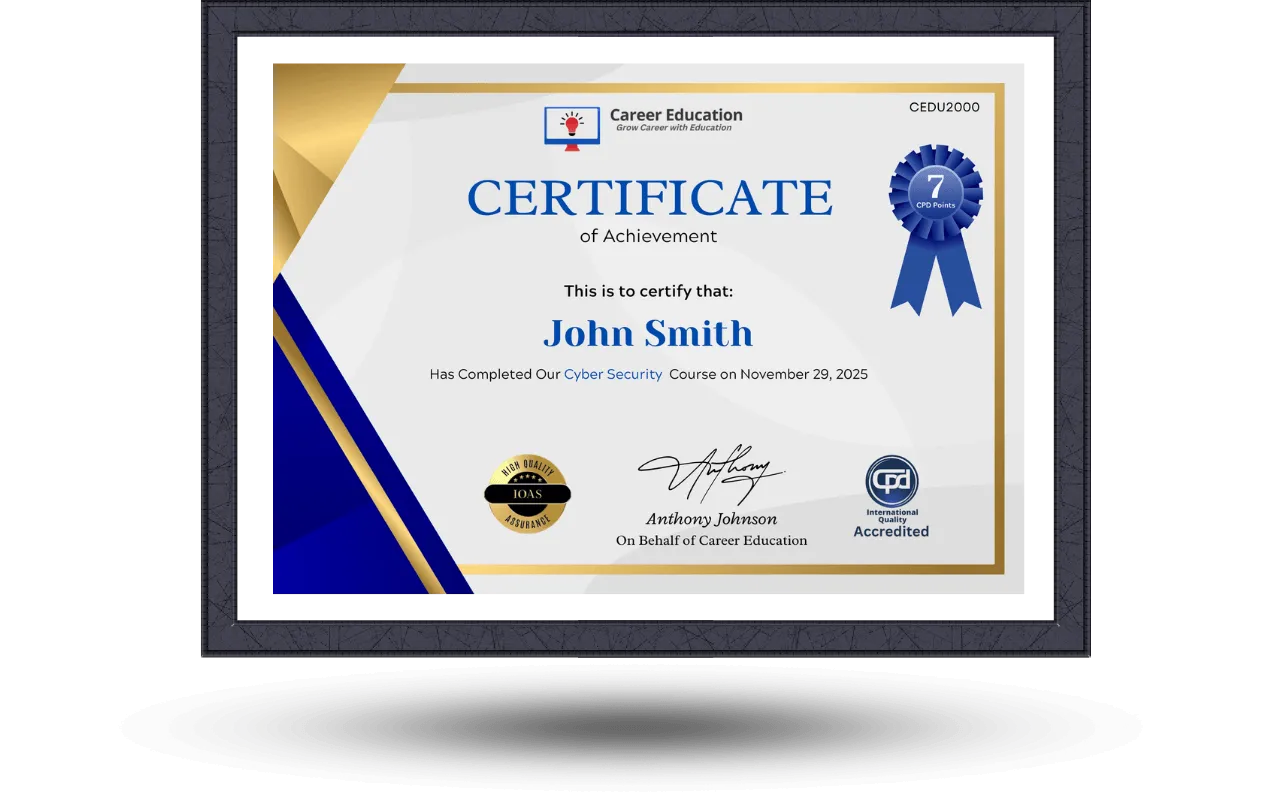
Upon completion of any course, all students are entitled to a CPD IQ Accredited e-certificate that will be issued by Career Education signifying the completion of your course.
After you complete the course and assignment, you will be eligible to order a free certificate accredited by CPD International Quality by completing the form below.
Hardcopy certificates and transcripts are also available for a small additional fee. More information is disclosed upon course completion.
Similar Courses



Frequently Asked Questions
The lifetime membership includes unlimited access to all courses, resources, and updates for a one-time fee.
You can purchase the membership directly from our website using a secure checkout process.
Yes, selected courses can be downloaded for offline access through our mobile app.
Yes, all future updates and new courses are included at no extra cost.
Yes, we offer a 30-day money-back guarantee if you are not satisfied with the membership.