
94%
OFF
OFF
Mastering Advanced Problem-Solving Techniques
- Lifetime Access
- All Levels
- PDF Certificate
£296
£19
14-Day Money-Back Guarantee
Learn With Confidence









# Mastering Advanced Problem-Solving Techniques
Problems are an unavoidable part of professional and personal life. The difference between simply reacting to problems and resolving them effectively often comes down to having a structured approach, strong analytical skills, creative thinking and the ability to make informed decisions.
**Mastering Advanced Problem-Solving Techniques** is designed to help learners develop a more effective and systematic approach to identifying, analysing and resolving complex problems. Rather than relying on guesswork, assumptions or temporary fixes, this course explores practical techniques that can help you understand the real causes of problems, evaluate possible solutions and make decisions with greater confidence.
From analytical and creative thinking to systems thinking, collaboration, data-driven decision-making and innovation, the course provides a broad range of approaches that can be applied across different workplace environments and everyday situations.
Whether you are a manager, team leader, business professional, entrepreneur, employee or aspiring professional, developing advanced problem-solving capabilities can help you respond more effectively to challenges, improve processes and contribute greater value to your organisation.
## Why Learn Mastering Advanced Problem-Solving Techniques?
Modern workplaces are constantly changing. Organisations face operational challenges, customer demands, resource limitations, technology changes, competitive pressures and unexpected disruptions. Many of these challenges cannot be solved effectively with a quick answer or a standard procedure.
Strong problem-solving requires the ability to step back, understand the situation, challenge assumptions and consider multiple possibilities before taking action.
**Mastering Advanced Problem-Solving Techniques** helps you build this mindset. You will explore different ways of approaching problems and learn how to select an appropriate strategy depending on the situation.
By completing this course, you can develop the ability to:
* Understand the foundations of effective problem solving.
* Define problems more clearly before attempting to solve them.
* Strengthen analytical and critical thinking skills.
* Generate creative solutions to challenging situations.
* Understand relationships between different parts of a system.
* Work collaboratively to solve complex problems.
* Use data to support more informed decisions.
* Identify opportunities for innovation through problem solving.
* Evaluate potential solutions more systematically.
* Approach workplace challenges with greater confidence and structure.
## What You Will Learn
### Module 1 – Foundations of Problem Solving
Effective problem solving starts with understanding what a problem actually is. A visible issue may only be a symptom of a much deeper cause, so solving the surface-level issue may provide only temporary relief.
This module introduces the foundations of effective problem solving and establishes a structured approach to dealing with challenges.
You will explore how to identify problems, clarify their scope and distinguish between symptoms and underlying causes. Learners will develop greater awareness of why defining a problem correctly is an essential first step before generating solutions.
The module also encourages a disciplined approach to decision-making. Instead of immediately choosing the first solution that appears, you will learn the importance of gathering relevant information, considering alternatives and evaluating potential consequences.
By building a strong foundation, you can approach future challenges more systematically and avoid common mistakes such as making assumptions, jumping to conclusions or treating symptoms rather than causes.
### Module 2 – Analytical Thinking
Complex problems often contain multiple factors, relationships and possible causes. Analytical thinking helps you break complicated situations into manageable components and examine them logically.
This module focuses on strengthening your analytical approach to problem solving. You will explore how to examine information, identify patterns, compare alternatives and evaluate possible causes.
Learners will develop a more structured way of thinking about problems rather than relying entirely on instinct or personal opinion. You will learn why asking the right questions can be just as important as finding the right answers.
Analytical thinking can help you determine what information is relevant, identify gaps in your understanding and assess the likely impact of different choices.
The outcome is a more logical and evidence-conscious approach to solving problems, helping you make decisions that are based on careful evaluation rather than assumptions.
### Module 3 – Creative Problem Solving
Not every problem can be solved using conventional approaches. Sometimes the most effective solution requires a new perspective, an alternative method or an idea that has not previously been considered.
This module introduces creative problem-solving approaches and explores how learners can develop greater flexibility in their thinking.
You will examine ways to generate multiple ideas, challenge established assumptions and look at problems from different perspectives. The module encourages learners to move beyond the first obvious solution and consider alternative possibilities.
Creative problem solving does not mean choosing unusual ideas simply because they are different. It involves generating possibilities and then evaluating them to determine which options are realistic, useful and appropriate.
By developing creative thinking skills, you can become better equipped to deal with unfamiliar challenges, identify new opportunities and develop solutions when conventional approaches are not enough.
### Module 4 – Systems Thinking
Many workplace problems are not isolated events. They are connected to processes, people, technology, resources, policies and other factors within a wider system.
This module explores systems thinking and helps learners understand how different parts of a system can influence one another.
You will develop an understanding of why solving one problem can sometimes create another problem elsewhere. For example, changing one process may affect employees, customers, costs, quality or productivity.
Systems thinking encourages you to look beyond individual events and consider relationships, dependencies and wider consequences. This broader perspective can help you identify root causes and avoid solutions that only address a small part of a larger issue.
By applying systems thinking, you can develop a more holistic approach to problem solving and make decisions with greater awareness of their potential long-term effects.
### Module 5 – Collaborative Problem Solving
Many of the most important problems in an organisation cannot be solved effectively by one person alone. Different team members may have different experiences, knowledge and perspectives that can contribute to a stronger solution.
This module focuses on collaborative problem solving and explores how individuals can work together to understand challenges and develop effective solutions.
You will learn about the importance of communication, active participation, constructive discussion and shared decision-making. The module also highlights the value of bringing different perspectives into the problem-solving process.
Effective collaboration requires more than simply putting people in the same meeting. Team members need to be able to communicate ideas, challenge assumptions respectfully, consider alternative viewpoints and work towards a shared objective.
Developing collaborative problem-solving skills can help teams make better use of collective knowledge and create stronger solutions to complex workplace challenges.
### Module 6 – Data-Driven Problem Solving
Data can provide valuable evidence for understanding problems, identifying patterns and evaluating potential solutions. However, effective data-driven problem solving requires more than simply collecting large amounts of information.
This module explores how data can support structured problem solving and informed decision-making.
You will learn why relevant and reliable information matters when investigating a problem. The module encourages learners to use evidence to test assumptions, identify trends and evaluate possible solutions.
You will also develop greater awareness of the importance of interpreting information carefully. Data can be misunderstood or used incorrectly if its context, limitations or quality are not considered.
By developing data-driven problem-solving skills, you can make decisions with stronger evidence and reduce reliance on unsupported assumptions.
This approach can be valuable across many professional environments, from analysing customer issues and operational performance to identifying inefficiencies and evaluating business improvements.
### Module 7 – Innovation and Problem Solving
Innovation often begins with recognising that an existing process, product, service or approach could be improved. Effective problem solving can therefore become a powerful driver of innovation.
This final module explores the connection between innovation and problem solving. You will consider how identifying unmet needs, inefficiencies and recurring challenges can create opportunities for improvement.
Learners will explore ways to approach problems with an improvement-focused mindset and consider how new ideas can be developed and evaluated.
Innovation does not always require a revolutionary invention. Sometimes meaningful innovation comes from improving an existing process, simplifying a complicated task, reducing waste or finding a better way to meet customer needs.
By connecting problem solving with innovation, you can develop a mindset that looks beyond fixing problems and considers how challenges can become opportunities for positive change.
## Practical Outcomes You Can Apply
**Mastering Advanced Problem-Solving Techniques** is focused on practical outcomes that can be applied across a wide range of professional situations.
After completing the course, you should be better prepared to:
### Define Problems Clearly
Instead of immediately reacting to an issue, you can learn to clarify what is actually happening, identify the scope of the problem and determine what needs to be addressed.
### Analyse Complex Situations
You can develop stronger analytical thinking skills to break problems into smaller components, evaluate information and identify relationships between different factors.
### Generate Better Solutions
Creative problem-solving approaches can help you move beyond obvious answers and generate a wider range of potential solutions.
### Understand Wider Impacts
Systems thinking can help you recognise how individual problems are connected to broader processes, teams and organisational environments.
### Solve Problems Collaboratively
You can develop a stronger understanding of how to involve others, use diverse perspectives and work towards shared solutions.
### Make Evidence-Based Decisions
Data-driven approaches can help you use relevant information to test assumptions, identify trends and make more informed choices.
### Turn Challenges into Opportunities
By connecting problem solving with innovation, you can learn to identify opportunities for improvement rather than viewing every problem simply as an obstacle.
## Who Is This Course For?
**Mastering Advanced Problem-Solving Techniques** is suitable for anyone who wants to strengthen their ability to think critically, analyse challenges and develop effective solutions.
It can benefit:
* Managers and team leaders.
* Business professionals.
* Project managers.
* Supervisors and coordinators.
* Entrepreneurs and business owners.
* Operations and process improvement professionals.
* Customer service professionals.
* Administrative and office professionals.
* Professionals working in changing or complex environments.
* Individuals seeking to improve their decision-making skills.
The course can also be valuable for professionals preparing to take on greater responsibility, where the ability to analyse situations and solve problems independently becomes increasingly important.
## Develop a Stronger Problem-Solving Mindset
Effective problem solving is not simply about finding an answer. It is about understanding the problem, evaluating the situation, considering alternatives and selecting an appropriate course of action.
**Mastering Advanced Problem-Solving Techniques** gives you a structured framework for developing these capabilities. The course brings together analytical thinking, creative problem solving, systems thinking, collaboration, data-driven decision-making and innovation to provide a comprehensive learning experience.
You will learn how different problem-solving approaches can complement one another. A complex workplace issue may require analytical thinking to understand the facts, creative thinking to generate options, systems thinking to identify wider consequences, collaboration to involve the right people and data to evaluate results.
This combination can help you become more adaptable when facing different types of challenges.
## Improve Your Decision-Making and Workplace Performance
Strong problem-solving skills can have a direct impact on professional performance. When problems are identified and addressed effectively, organisations can improve processes, reduce inefficiencies, strengthen customer experiences and make better use of resources.
For individuals, stronger problem-solving capabilities can increase confidence when dealing with difficult situations. Instead of feeling overwhelmed by complexity, you can develop a structured approach for breaking challenges down and determining what needs to happen next.
The skills explored in this course are transferable across industries. Whether you are dealing with a project delay, customer complaint, operational inefficiency, team challenge, resource constraint or opportunity for improvement, the ability to approach the situation logically and creatively can make a meaningful difference.
## Take Your Problem-Solving Skills to the Next Level
In a rapidly changing professional environment, the ability to solve problems effectively is a valuable and transferable skill. Organisations need people who can identify challenges, evaluate information, work with others and develop practical solutions.
**Mastering Advanced Problem-Solving Techniques** provides the knowledge and frameworks needed to approach problems with greater structure, creativity and confidence.
From the foundations of problem solving through analytical and creative thinking to systems-based approaches, collaboration, data and innovation, each module builds an important part of a complete problem-solving toolkit.
By completing the course, you can strengthen your ability to understand complex situations, challenge assumptions, evaluate alternatives and contribute to meaningful improvements.
Start **Mastering Advanced Problem-Solving Techniques** today and develop a smarter, more adaptable approach to solving challenges, making decisions and creating opportunities for improvement.
Course Modules
Course Content
Module 1_ Foundations of Problem Solving
-
Lesson 1_ Foundations of Problem Solving
Module 2_ Analytical Thinking
Module 3_ Creative Problem Solving
Module 4_ Systems Thinking
Module 5_ Collaborative Problem Solving
Module 6_ Data-Driven Problem Solving
Module 7_ Innovation and Problem Solving
What our students say
Excellent
4.9 average
158 Reviews

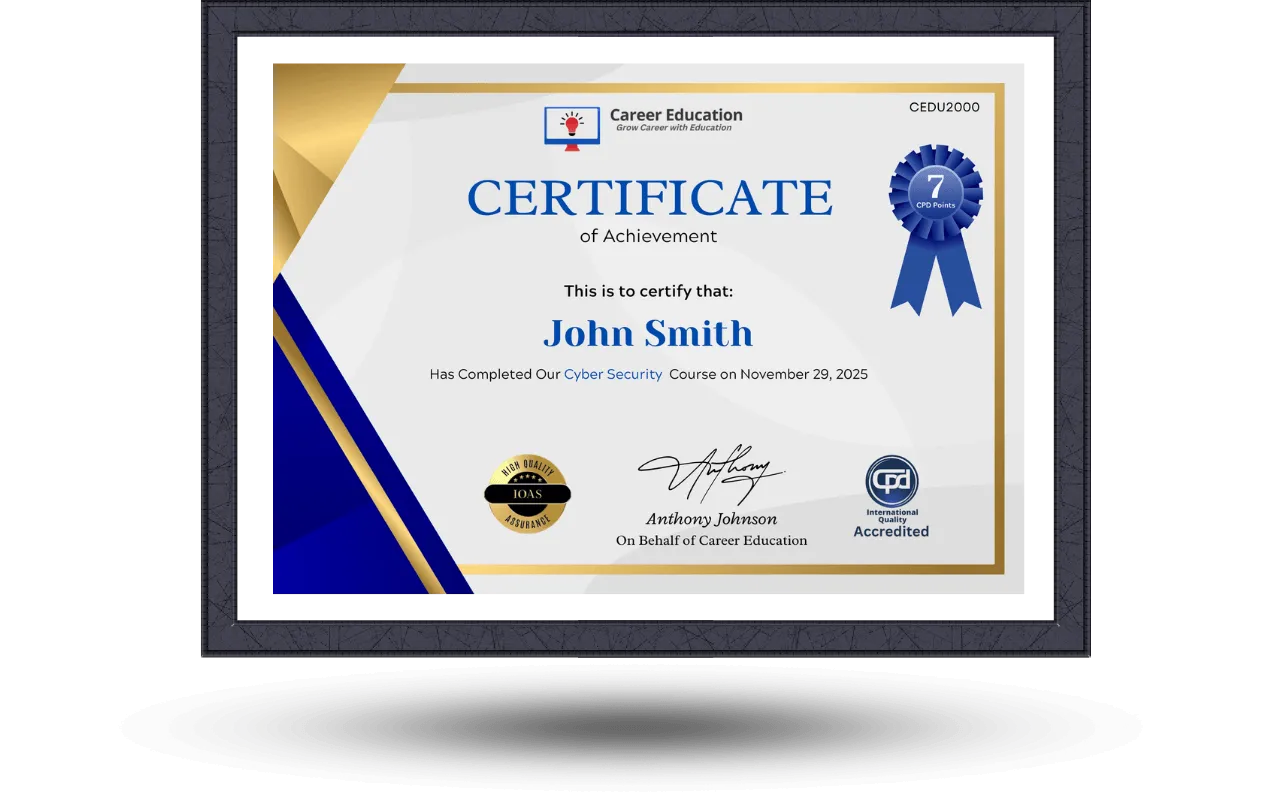
Earn an Accredited Certificate
Upon completion of any course, all students are entitled to a CPD IQ Accredited e-certificate that will be issued by Career Education signifying the completion of your course.
After you complete the course and assignment, you will be eligible to order a free certificate accredited by CPD International Quality by completing the form below.
Hardcopy certificates and transcripts are also available for a small additional fee. More information is disclosed upon course completion.
Similar Courses



Frequently Asked Questions
The lifetime membership includes unlimited access to all courses, resources, and updates for a one-time fee.
You can purchase the membership directly from our website using a secure checkout process.
Yes, selected courses can be downloaded for offline access through our mobile app.
Yes, all future updates and new courses are included at no extra cost.
Yes, we offer a 30-day money-back guarantee if you are not satisfied with the membership.