
94%
OFF
OFF
Manufacturing Training
- Lifetime Access
- All Levels
- PDF Certificate
£296
£19
14-Day Money-Back Guarantee
Learn With Confidence








Manufacturing Training
Build Practical Knowledge of Modern Manufacturing, Production, Automation, Maintenance, Safety and Product Development
Manufacturing is at the heart of countless industries. From automotive and aerospace to electronics, engineering, consumer goods, construction materials and industrial products, manufacturing transforms raw materials and components into products that people and businesses depend on every day.
Behind every successful manufacturing operation are carefully designed processes, appropriate materials, reliable equipment, skilled people, effective production planning and strong attention to health, safety and environmental responsibilities.
Manufacturing Training is designed to provide learners with a broad foundation in the principles, processes and technologies used in modern manufacturing environments. The course covers manufacturing techniques, materials science, production planning and control, automation and robotics, manufacturing equipment and maintenance, environmental and health and safety considerations, and product design and development.
Whether you are considering a career in manufacturing, working in a production or engineering environment, involved in operations or simply interested in understanding how products are designed and produced, this course provides a structured introduction to the subject.
The curriculum combines fundamental manufacturing knowledge with modern technologies and practical considerations, helping you develop a broader understanding of how manufacturing operations work.
Why Learn About Manufacturing?
Manufacturing is much more than operating machinery or assembling products.
Modern manufacturing involves planning, design, material selection, production processes, automation, quality, maintenance, safety, environmental responsibility and continuous improvement.
A successful manufacturing operation needs to answer important questions:
-
Which materials should be used?
-
Which manufacturing technique is most appropriate?
-
How should production be planned?
-
How can equipment remain reliable?
-
Where can automation improve efficiency?
-
How can workers remain safe?
-
How can environmental impacts be reduced?
-
How should a product be designed for efficient production?
Understanding these areas can help you see the complete manufacturing process rather than focusing on individual tasks.
Manufacturing Training introduces these essential concepts and helps learners build knowledge that can support further education, professional development and career exploration.
What You Will Learn
The course consists of eight comprehensive modules:
-
Introduction to Manufacturing
-
Manufacturing Techniques
-
Materials Science
-
Production Planning and Control
-
Automation and Robotics
-
Manufacturing Equipment and Maintenance
-
Environmental and Health & Safety Considerations
-
Product Design and Development
Together, these modules provide a broad overview of manufacturing, from basic principles and production techniques through to automation, maintenance, safety and product development.
Module 1 – Introduction to Manufacturing
The first module provides an Introduction to Manufacturing, establishing the foundation for the rest of the course.
The introductory lesson introduces the concept of manufacturing and explores its importance across modern industries.
You will develop an understanding of how manufacturing transforms materials and components into finished products and why manufacturing operations require effective coordination of people, equipment, materials and processes.
You will also gain an appreciation of the different stages that can contribute to manufacturing, from product design and material selection through to production, inspection, maintenance and distribution.
This foundation will help you understand the topics covered throughout the remainder of the course.
By completing this module, you should have a clearer picture of what manufacturing involves and how different manufacturing functions work together.
Module 2 – Manufacturing Techniques
Different products require different manufacturing processes.
Module 2 explores Manufacturing Techniques, introducing learners to the range of methods that can be used to transform materials into finished components and products.
You will develop awareness of why manufacturing techniques are selected according to factors such as material properties, product design, required characteristics, production volumes and operational requirements.
Understanding manufacturing techniques can help you appreciate why there is no single production method suitable for every product.
The choice of process can influence product quality, production efficiency, costs, material usage and the characteristics of the finished item.
This module provides an important foundation for understanding how manufacturers select and manage production processes.
Module 3 – Materials Science
Materials are fundamental to manufacturing.
Module 3 focuses on Materials Science, helping learners understand the importance of material properties in manufacturing and product development.
Different materials respond differently to forces, temperatures, environmental conditions and manufacturing processes.
Understanding these characteristics can help engineers and manufacturing professionals make more informed decisions about material selection and processing.
You will develop awareness of why materials science is closely connected to product performance and manufacturing processes.
Material selection can affect durability, weight, strength, cost, manufacturability and environmental considerations.
This module therefore helps you understand the connection between what a product is made from and how it can be manufactured.
Module 4 – Production Planning and Control
Efficient manufacturing requires careful planning.
Module 4 explores Production Planning and Control, introducing learners to the processes involved in organising and coordinating production activities.
Manufacturers need to consider resources, production requirements, schedules, materials, equipment and demand.
Effective planning can help organisations coordinate these elements and support consistent production.
Production control is also important because manufacturing activities need to be monitored and adjusted when circumstances change.
This module helps you understand the importance of planning and control in manufacturing operations.
You will develop awareness of how production activities can be organised to support efficiency, resource utilisation and reliable output.
Module 5 – Automation and Robotics
Technology has transformed modern manufacturing.
Module 5 explores Automation and Robotics, introducing learners to the growing role of automated systems in production environments.
Automation can be used to perform repetitive, precise or highly controlled tasks.
Robotics can support manufacturing activities by providing programmable systems capable of performing a range of operations.
You will develop an understanding of how automation and robotics connect with manufacturing processes.
The module also provides context for understanding how technology can influence productivity, consistency and production capabilities.
Modern manufacturing increasingly combines human expertise with automated technologies, making awareness of robotics and automation valuable for anyone interested in the future of production.
Module 6 – Manufacturing Equipment and Maintenance
Reliable equipment is essential to successful manufacturing.
Module 6 focuses on Manufacturing Equipment and Maintenance, helping learners understand why equipment reliability is an important part of production management.
Manufacturing operations may depend on machinery, tools, automated systems and other equipment.
When equipment fails unexpectedly, production can be disrupted, potentially resulting in delays, additional costs and reduced productivity.
Maintenance helps organisations keep equipment operating effectively and identify potential issues before they become major problems.
This module introduces the importance of manufacturing equipment and maintenance and helps learners appreciate the relationship between equipment reliability and production performance.
You will develop a stronger understanding of why maintenance should be viewed as an important component of manufacturing operations rather than simply a response to equipment failure.
Module 7 – Environmental and Health & Safety Considerations
Manufacturing organisations have responsibilities that extend beyond productivity.
Module 7 explores Environmental and Health & Safety Considerations, introducing learners to important considerations associated with safe and responsible manufacturing.
Manufacturing activities can involve machinery, chemicals, energy use, waste, emissions, noise and other workplace or environmental considerations.
Effective health and safety practices help organisations identify and manage workplace hazards.
Environmental management can help organisations consider how manufacturing activities affect natural resources and the surrounding environment.
This module encourages learners to recognise that successful manufacturing needs to balance productivity with responsible operational practices.
You will develop awareness of why health, safety and environmental considerations should be integrated into manufacturing processes.
Module 8 – Product Design and Development
The final module focuses on Product Design and Development, connecting manufacturing with the earlier stages of creating a product.
Manufacturing begins long before a product reaches the production line.
Product design decisions can influence materials, manufacturing techniques, production costs, equipment requirements and the overall feasibility of production.
This module introduces learners to the relationship between product development and manufacturing.
You will develop awareness of why products should be considered not only from the perspective of customer requirements but also from the perspective of how they will be produced.
Understanding this connection can help you appreciate the importance of designing products that are practical, manufacturable and suitable for their intended purpose.
Practical Learning Outcomes
By completing Manufacturing Training, you can develop a broad foundation in modern manufacturing principles and practices.
You will be able to:
-
Explain the fundamental principles of manufacturing.
-
Understand the role of manufacturing across different industries.
-
Recognise key considerations involved in manufacturing processes.
-
Develop awareness of different manufacturing techniques.
-
Understand why material properties influence manufacturing decisions.
-
Recognise the role of materials science in product development.
-
Understand the importance of production planning.
-
Develop awareness of production control principles.
-
Explain the growing role of automation in manufacturing.
-
Recognise the applications of robotics in production environments.
-
Understand the importance of manufacturing equipment reliability.
-
Recognise the role of maintenance in supporting production.
-
Understand key environmental considerations in manufacturing.
-
Develop awareness of workplace health and safety considerations.
-
Understand the relationship between product design and manufacturing.
-
Recognise how design decisions can influence production.
-
Build a foundation for further study and professional development in manufacturing.
Understand the Complete Manufacturing Process
One of the key benefits of Manufacturing Training is that it helps you look at manufacturing as an interconnected system.
A finished product is the result of multiple decisions and activities.
Materials need to be selected. Products need to be designed. Manufacturing techniques need to be chosen. Production needs to be planned. Equipment needs to be maintained. Employees need to work safely. Environmental considerations need to be managed.
Automation and robotics may also be integrated into production processes.
Understanding these connections can help you develop a more complete view of manufacturing operations.
Develop Manufacturing Process Awareness
Manufacturing techniques can have a significant impact on the final product.
The appropriate technique depends on the material, design, required characteristics, production volume and other factors.
By studying manufacturing techniques, you can develop greater awareness of why manufacturers choose different production methods.
This knowledge can support your understanding of manufacturing environments and help you communicate more effectively about production processes.
Understand the Importance of Materials
The right material can make a major difference to product performance.
Materials need to be selected according to the intended application and the requirements of the finished product.
The Materials Science module helps you understand this relationship.
You will develop awareness of how material properties influence manufacturing and product development.
This can be particularly useful for learners interested in engineering, product design, manufacturing or industrial production.
Understand Production Planning
Manufacturing operations require coordination.
Raw materials need to be available when required. Equipment needs to be ready. Employees and resources need to be organised. Production schedules need to reflect operational requirements.
Production planning and control provide the framework for coordinating these activities.
Through the course, you will develop a foundation for understanding how manufacturers organise production and respond to changing operational conditions.
Explore Automation and Robotics
Automation is becoming increasingly important across modern manufacturing.
Automated technologies can support repetitive tasks, improve consistency and enable sophisticated production systems.
Robotics can also contribute to manufacturing processes across industries.
The Automation and Robotics module helps you develop awareness of these technologies and their relationship with modern manufacturing.
This can be particularly valuable if you are interested in industrial technology, engineering, automation or the future of manufacturing.
Understand Equipment and Maintenance
A manufacturing process is only as reliable as the equipment supporting it.
Equipment failures can interrupt production and affect delivery schedules.
Maintenance therefore plays an important role in supporting manufacturing continuity.
The course introduces the principles behind manufacturing equipment and maintenance, helping learners understand why reliable machinery is an important operational priority.
Promote Safer and More Responsible Manufacturing
Modern manufacturing needs to consider people and the environment as well as production targets.
Workplace hazards need to be identified and managed appropriately.
Environmental impacts also need to be considered as organisations seek to use resources responsibly and manage waste and emissions.
The Environmental and Health & Safety Considerations module helps you develop awareness of these responsibilities.
The course provides educational knowledge and should not be considered a substitute for site-specific health and safety training, legally required qualifications or professional competency assessments.
Connect Product Design with Manufacturing
A product may look excellent on paper but still be difficult or expensive to manufacture.
This is why product design and manufacturing need to be considered together.
The final module helps you understand how design decisions can influence production.
You will develop awareness of the importance of considering materials, processes, equipment and manufacturing requirements during product development.
This broader perspective can be valuable for anyone interested in product development, engineering or manufacturing management.
Who Is This Course For?
Manufacturing Training is suitable for a wide range of learners.
Aspiring Manufacturing Professionals
If you are considering a career in manufacturing, this course can help you develop foundational knowledge of production environments and manufacturing processes.
Production Professionals
Those already working in production can use the course to broaden their understanding of the wider manufacturing system.
Engineering Professionals
Engineers can benefit from exploring the relationships between materials, manufacturing, equipment, automation and product development.
Operations Professionals
Operations professionals can develop greater awareness of production planning, equipment reliability and manufacturing processes.
Product Development Professionals
Those involved in designing products can benefit from understanding how design decisions affect manufacturability.
Maintenance Professionals
Individuals working around industrial equipment can benefit from understanding the wider role of maintenance within manufacturing operations.
Career Changers
If you are considering moving into manufacturing, engineering or production, the course provides an accessible introduction to the field.
Students and Lifelong Learners
The course can also support learners who want to explore manufacturing as an academic or professional subject.
Support Your Career Development
Manufacturing knowledge can be relevant to careers across automotive, aerospace, electronics, engineering, consumer goods, industrial production and many other sectors.
Understanding manufacturing processes can complement skills in engineering, operations, logistics, maintenance, product development and management.
Manufacturing Training provides a broad foundation that can support further education and professional development.
The course is educational and foundational in nature and should not be treated as a replacement for accredited engineering qualifications, specialist machinery training or legally required workplace certifications.
Learn at Your Own Pace
Online learning gives you the flexibility to build knowledge around your existing commitments.
Whether you are working, studying or exploring a new career direction, Manufacturing Training provides a structured way to develop your understanding of modern manufacturing.
You can work through the curriculum progressively and use the knowledge as a foundation for further study or professional development.
Build Your Manufacturing Knowledge
Manufacturing brings together people, materials, machines, processes and technology.
Understanding how these elements work together can help you appreciate what is required to create products efficiently, reliably and responsibly.
Manufacturing Training provides a broad introduction to these essential areas.
From manufacturing techniques and materials science to production planning, automation, maintenance, safety and product development, the course gives you an opportunity to explore the complete manufacturing environment.
Take the Next Step Towards Your Manufacturing Goals
The manufacturing sector continues to evolve as organisations adopt new technologies, improve production processes and respond to changing customer and environmental expectations.
Building a strong foundation can help you understand these developments and identify areas for further learning.
Manufacturing Training gives you the opportunity to explore the principles behind modern production while developing knowledge relevant to manufacturing, engineering, operations, maintenance and product development.
Whether your goal is career exploration, professional development, further study or simply gaining a better understanding of how products are made, this course can help you move forward with greater knowledge and confidence.
Enrol in Manufacturing Training today and start building the knowledge you need to understand modern manufacturing processes, production planning, automation, equipment, safety and product development.
Course Modules
Course Content
Module 1_ Introduction to Manufacturing
-
Lesson 1_ Introduction to Manufacturing
Module 2_ Manufacturing Techniques
Module 3_ Materials Science
Module 4_ Production Planning and Control
Module 5_ Automation and Robotics
Module 6_ Manufacturing Equipment and Maintenance
Module 7_ Environmental and Health & Safety Considerations
Module 8_ Product Design and Development
What our students say
Excellent
4.9 average
158 Reviews

Earn an Accredited Certificate
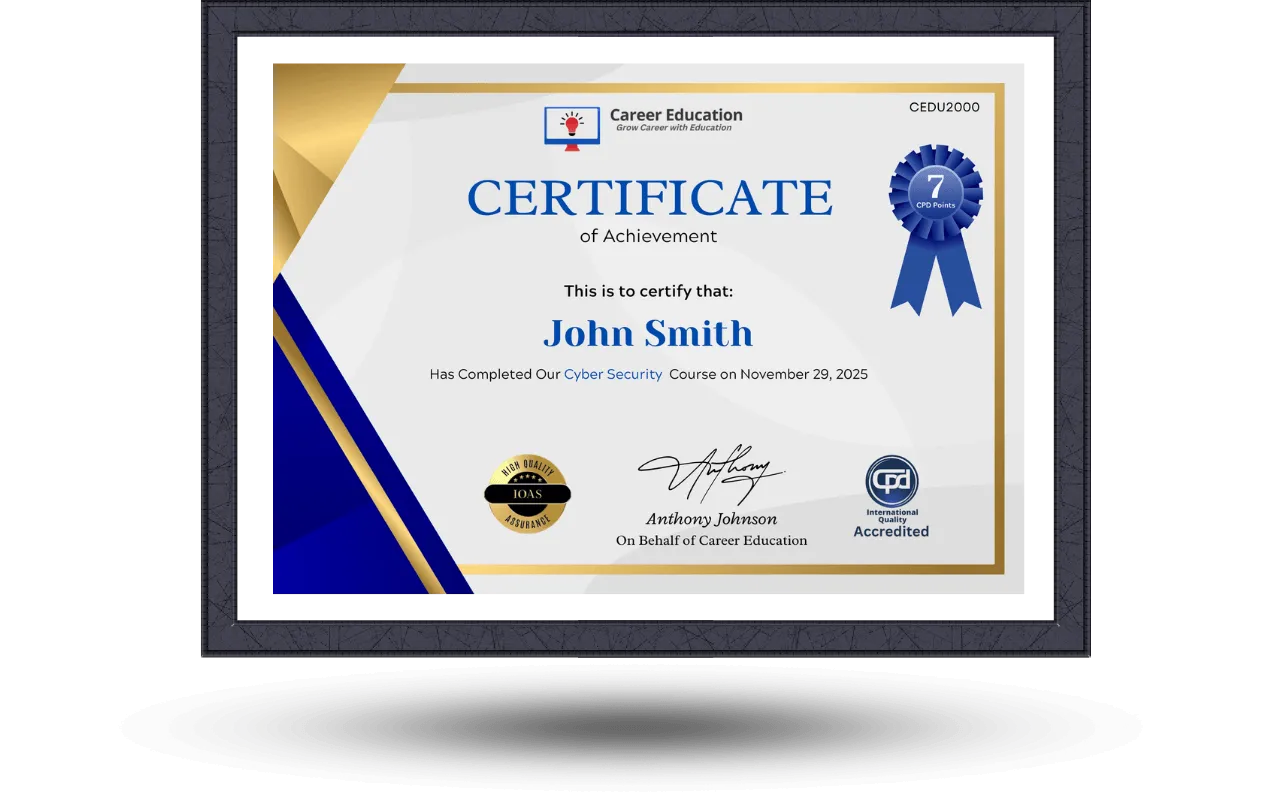
Upon completion of any course, all students are entitled to a CPD IQ Accredited e-certificate that will be issued by Career Education signifying the completion of your course.
After you complete the course and assignment, you will be eligible to order a free certificate accredited by CPD International Quality by completing the form below.
Hardcopy certificates and transcripts are also available for a small additional fee. More information is disclosed upon course completion.
Similar Courses




Frequently Asked Questions
The lifetime membership includes unlimited access to all courses, resources, and updates for a one-time fee.
You can purchase the membership directly from our website using a secure checkout process.
Yes, selected courses can be downloaded for offline access through our mobile app.
Yes, all future updates and new courses are included at no extra cost.
Yes, we offer a 30-day money-back guarantee if you are not satisfied with the membership.