
94%
OFF
OFF
Managing Difficult Conversations Effectively
- Lifetime Access
- All Levels
- PDF Certificate
£296
£19
14-Day Money-Back Guarantee
Learn With Confidence









# Managing Difficult Conversations Effectively
Difficult conversations are an unavoidable part of professional and personal life. Whether you need to address poor performance, resolve a disagreement, provide constructive feedback, discuss sensitive issues, manage resistance, or respond to challenging behaviour, the way you approach the conversation can significantly influence its outcome.
Avoiding difficult conversations may provide temporary comfort, but unresolved issues can become more complicated over time. Misunderstandings can grow, relationships can deteriorate, workplace morale can suffer, and small problems can develop into significant conflicts.
**Managing Difficult Conversations Effectively** is a practical, outcome-focused course designed to help learners approach challenging discussions with greater confidence, preparation, emotional awareness, and professionalism. The course explores how to understand difficult conversations, prepare effectively, create an appropriate environment, communicate clearly, manage emotions, encourage constructive dialogue, and respond to resistance or difficult behaviours.
Rather than encouraging confrontation, the course focuses on creating productive conversations where concerns can be addressed respectfully and solutions can be explored.
Whether you are a manager, team leader, employee, coach, consultant, educator, customer-service professional, or anyone who regularly communicates with others, **Managing Difficult Conversations Effectively** can help you develop practical skills for handling challenging discussions more constructively.
—
## Why Managing Difficult Conversations Effectively Matters
A difficult conversation does not necessarily mean an argument.
It may simply involve discussing something uncomfortable, sensitive, or emotionally charged.
Examples include:
* Addressing repeated mistakes
* Giving constructive feedback
* Discussing missed deadlines
* Handling disagreements
* Addressing inappropriate workplace behaviour
* Managing customer complaints
* Discussing changes within a team
* Setting boundaries
* Resolving misunderstandings
* Discussing performance concerns
* Addressing resistance to change
These situations can become more difficult when people feel criticised, ignored, misunderstood, threatened, or emotionally overwhelmed.
Learning how to manage such conversations can help individuals communicate concerns without unnecessarily escalating tension.
The **Managing Difficult Conversations Effectively** course focuses on practical communication strategies that can be adapted to different situations and professional environments.
—
# What You Will Learn
By completing the **Managing Difficult Conversations Effectively** course, learners will be able to:
* Understand why difficult conversations occur.
* Recognise common causes of communication breakdown.
* Prepare effectively before starting a challenging discussion.
* Establish an appropriate environment for sensitive conversations.
* Communicate concerns clearly and respectfully.
* Use active listening techniques.
* Ask constructive questions.
* Manage emotional reactions more effectively.
* Prevent conversations from unnecessarily escalating.
* Encourage constructive dialogue.
* Respond appropriately to resistance.
* Handle challenging behaviours professionally.
* Focus discussions on solutions and future improvements.
* Build greater confidence when addressing sensitive issues.
—
# Course Curriculum
## Module 1: Understanding Difficult Conversations
### Lesson 1: Understanding Difficult Conversations
The course begins by exploring what makes a conversation difficult.
Learners will discover that challenging discussions can arise from differences in:
* Opinions
* Expectations
* Goals
* Values
* Communication styles
* Personal experiences
* Priorities
* Responsibilities
A conversation may also become difficult when there is a perceived imbalance of power or when one person believes they are being judged or blamed.
This module explores common reactions to difficult conversations, including:
* Avoidance
* Defensiveness
* Anger
* Withdrawal
* Blaming
* Denial
* Emotional escalation
Learners will consider why avoiding a challenging conversation may not always solve the underlying problem.
The course introduces the difference between approaching a conversation with the goal of “winning” and approaching it with the goal of understanding, resolving, and improving.
Participants will explore the importance of separating the person from the problem.
For example, addressing a specific behaviour is often more productive than making broad statements about someone’s character.
By completing this module, learners will develop a clearer understanding of difficult conversations and the factors that can influence their outcomes.
—
# Module 2: Preparation for Difficult Conversations
Good preparation can make a significant difference when approaching a sensitive discussion.
This module focuses on what should happen before the conversation begins.
Learners will explore how to clarify:
* The purpose of the conversation
* The specific issue
* Relevant facts
* Desired outcomes
* Potential concerns
* Possible responses
* Appropriate boundaries
Preparation can help prevent a conversation from becoming vague or unnecessarily emotional.
Learners will consider the difference between facts, assumptions, interpretations, and opinions.
For example, saying “The report was submitted three days after the agreed deadline” is different from saying “You don’t care about deadlines.”
The first statement focuses on an observable issue, while the second makes a judgement about the individual.
Participants will also explore how to anticipate possible reactions without making assumptions about how another person will respond.
The module encourages learners to consider what they need to communicate and what they need to understand from the other person.
By completing this module, participants will be better prepared to enter difficult conversations with a clear purpose and a constructive mindset.
—
# Module 3: Establishing the Right Environment
The environment in which a difficult conversation takes place can influence how people respond.
This module explores how to create conditions that support respectful and productive communication.
Learners will consider factors such as:
* Privacy
* Timing
* Location
* Distractions
* Available time
* Emotional readiness
* Confidentiality
* Personal safety
A sensitive conversation may be inappropriate in front of colleagues or during a period of intense pressure.
Similarly, beginning a serious discussion when one or both people are extremely emotional may make productive communication more difficult.
Learners will explore how to establish a respectful tone from the beginning.
This may involve:
* Explaining the purpose of the conversation
* Using neutral language
* Avoiding unnecessary blame
* Allowing the other person to respond
* Demonstrating respect
* Establishing clear expectations for the discussion
The module also considers the importance of creating an environment where people can express concerns without being unnecessarily interrupted or dismissed.
By completing this module, learners will understand how timing, setting, and tone can contribute to a more constructive conversation.
—
# Module 4: Effective Communication Strategies
Communication is at the heart of every difficult conversation.
This module introduces practical strategies for communicating clearly while maintaining respect.
Learners will explore techniques such as:
* Active listening
* Open-ended questions
* Clarification
* Reflective listening
* Neutral language
* Appropriate tone
* Concise explanations
* Constructive feedback
Active listening involves more than simply hearing what someone says. It includes paying attention, avoiding unnecessary interruptions, checking understanding, and responding appropriately.
Learners will also explore the importance of asking questions that encourage dialogue.
Instead of immediately assuming why someone behaved in a certain way, a person can ask:
**”Can you help me understand what happened?”**
This approach can create an opportunity for the other person to explain their perspective.
The course also examines language that can unintentionally increase defensiveness.
Statements that begin with accusations, sweeping generalisations, or personal criticism can make constructive dialogue more difficult.
Participants will learn to focus on specific behaviours, situations, impacts, and expectations.
By completing this module, learners will have a practical set of communication techniques for navigating challenging discussions.
—
# Module 5: Managing Emotions During Conversations
Emotions can strongly influence difficult conversations.
People may experience frustration, disappointment, anxiety, embarrassment, anger, or defensiveness.
This module focuses on managing emotional responses constructively.
Learners will explore the importance of recognising their own emotional reactions before responding.
They will consider strategies such as:
* Pausing before responding
* Maintaining an appropriate tone
* Taking a breath
* Listening before reacting
* Avoiding impulsive statements
* Acknowledging emotions
* Returning attention to the issue
The course also explores how to respond when another person becomes emotional.
Rather than immediately dismissing or challenging the person’s feelings, learners will explore ways to acknowledge the situation while keeping the conversation constructive.
For example, recognising that someone is frustrated does not necessarily mean agreeing with everything they say.
It can simply communicate that their emotional response has been noticed.
The module also examines when a conversation may need to pause or be rescheduled.
A productive conversation should not become an uncontrolled confrontation.
By completing this module, learners will develop greater awareness of emotional dynamics and practical strategies for maintaining professionalism under pressure.
—
# Module 6: Strategies for Constructive Dialogue
A difficult conversation should ideally lead somewhere.
This module focuses on turning challenging discussions into constructive dialogue.
Learners will explore ways to:
* Identify common ground
* Clarify expectations
* Explore different perspectives
* Generate solutions
* Agree on practical actions
* Establish responsibilities
* Set follow-up arrangements
Constructive dialogue does not require both people to agree on everything.
Instead, the goal may be to develop sufficient understanding to move forward.
Learners will examine the importance of distinguishing between positions and underlying interests.
For example, two people may disagree about how a task should be completed while sharing the same objective of delivering high-quality work.
Identifying shared objectives can help move a conversation away from confrontation and towards problem-solving.
Participants will also explore the value of summarising agreements at the end of a conversation.
This can help ensure that both people understand:
* What was discussed
* What was agreed
* What actions are required
* Who is responsible
* What happens next
By completing this module, learners will be better prepared to transform difficult discussions into opportunities for improvement and collaboration.
—
# Module 7: Handling Resistance and Difficult Behaviours
Not every difficult conversation will go smoothly.
Some individuals may respond with resistance, denial, anger, avoidance, defensiveness, or other challenging behaviours.
This module focuses on responding professionally when conversations become more difficult.
Learners will explore how to respond to behaviours such as:
* Interrupting
* Blaming
* Denial
* Aggression
* Withdrawal
* Repeated objections
* Refusal to engage
* Emotional outbursts
* Deflection
The course encourages learners to avoid responding to difficult behaviour with equally difficult behaviour.
Instead, participants will explore techniques such as:
* Remaining calm
* Setting respectful boundaries
* Repeating key points
* Asking clarifying questions
* Acknowledging legitimate concerns
* Redirecting the discussion
* Focusing on facts
* Identifying shared objectives
* Pausing when necessary
Learners will also consider situations where a conversation should not continue without additional support.
In workplace environments, serious issues may require escalation through appropriate organisational processes.
The goal is not to “win” against a difficult person. It is to manage the situation professionally while protecting relationships, standards, safety, and appropriate boundaries.
By completing this module, learners will have practical strategies for managing resistance and challenging behaviour more effectively.
—
# Who Is This Course For?
The **Managing Difficult Conversations Effectively** course can benefit anyone who needs to communicate about sensitive or challenging issues.
It may be particularly useful for:
* Managers
* Team leaders
* Supervisors
* Business owners
* HR professionals
* Customer-service professionals
* Coaches
* Consultants
* Educators
* Healthcare professionals
* Project managers
* Employees
* Team members
* Sales professionals
* Community and voluntary-sector workers
The skills covered can be applied across many professional and interpersonal situations.
—
# Practical Learning Outcomes
The course is designed to help learners move beyond simply understanding communication theory.
Participants will develop practical skills they can apply before, during, and after a difficult conversation.
They will learn to approach challenging discussions by asking:
**What is the real issue?**
**What outcome am I trying to achieve?**
**What facts do I know?**
**What assumptions might I be making?**
**How might the other person see the situation?**
**How can I communicate my concern respectfully?**
**What can we agree to do next?**
This structured approach can help conversations remain focused and purposeful.
—
# Build Confidence in Difficult Conversations
Avoiding challenging discussions can allow problems to continue.
Developing practical communication skills can make it easier to address concerns earlier, before they become more difficult to resolve.
The **Managing Difficult Conversations Effectively** course helps learners develop confidence by providing structured approaches for preparation, communication, emotional management, dialogue, and resistance.
—
# Improve Workplace Communication
Difficult conversations are particularly important in professional environments.
Managers and employees may need to discuss:
* Performance
* Deadlines
* Behaviour
* Team conflict
* Customer complaints
* Workload
* Expectations
* Changes
* Mistakes
Handling these conversations professionally can contribute to stronger working relationships and more effective teams.
—
# Encourage Constructive Problem-Solving
The purpose of a difficult conversation should not simply be to identify what went wrong.
Where appropriate, the conversation can also explore:
* What happened?
* Why did it happen?
* What can be learned?
* What needs to change?
* What support is required?
* What happens next?
This future-focused approach can turn difficult discussions into opportunities for improvement.
—
# Strengthen Emotional Awareness
Recognising emotional triggers can help individuals respond rather than react.
The course provides strategies for remaining composed, listening effectively, acknowledging emotions, and maintaining appropriate boundaries during challenging interactions.
—
# Improve Conflict Management
Many workplace conflicts become worse when communication breaks down.
By using active listening, neutral language, clarification, and constructive problem-solving, learners can contribute to more productive discussions.
—
# Build Better Professional Relationships
Effective communication does not mean avoiding disagreement.
Healthy professional relationships can include differences of opinion, provided those differences are addressed respectfully.
Learning how to manage difficult conversations can help create greater clarity, accountability, trust, and mutual understanding.
—
# Enrol in Managing Difficult Conversations Effectively Today
Difficult conversations are a normal part of working with people. The difference lies in how those conversations are approached.
**Managing Difficult Conversations Effectively** provides learners with practical strategies for understanding challenging discussions, preparing appropriately, creating a suitable environment, communicating clearly, managing emotions, encouraging constructive dialogue, and handling resistance.
By completing the course, participants can develop greater confidence in addressing sensitive issues without unnecessarily escalating conflict. They can learn to focus on facts, listen to different perspectives, communicate expectations clearly, and work towards practical solutions.
Whether you are responsible for managing employees, working within a team, supporting customers, leading projects, coaching others, or simply want to improve your communication skills, this course provides valuable tools for navigating challenging discussions.
The course provides general educational information and should be adapted to the specific policies, procedures, professional standards, and legal requirements applicable to your organisation and situation.
**Enrol in the Managing Difficult Conversations Effectively course today and develop the communication skills needed to approach challenging discussions with greater confidence, emotional awareness, professionalism, and a solution-focused mindset.**
Course Modules
Course Content
Module 1_ Understanding Difficult Conversations
-
Lesson 1_ Understanding Difficult Conversations
Module 2_ Preparation for Difficult Conversations
Module 3_ Establishing the Right Environment
Module 4_ Effective Communication Strategies
Module 5_ Managing Emotions During Conversations
Module 6_ Strategies for Constructive Dialogue
Module 7_ Handling Resistance and Difficult Behaviors
What our students say
Excellent
4.9 average
158 Reviews

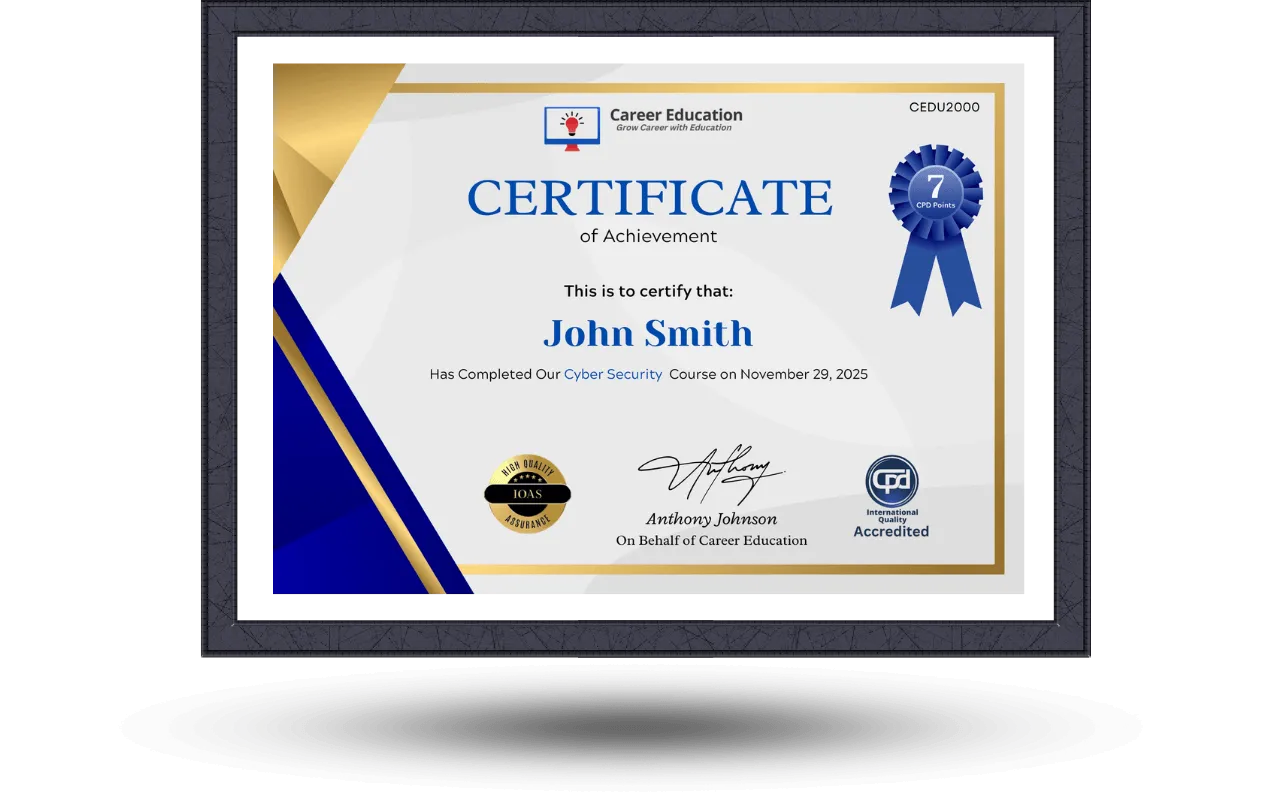
Earn an Accredited Certificate
Upon completion of any course, all students are entitled to a CPD IQ Accredited e-certificate that will be issued by Career Education signifying the completion of your course.
After you complete the course and assignment, you will be eligible to order a free certificate accredited by CPD International Quality by completing the form below.
Hardcopy certificates and transcripts are also available for a small additional fee. More information is disclosed upon course completion.
Similar Courses




Frequently Asked Questions
The lifetime membership includes unlimited access to all courses, resources, and updates for a one-time fee.
You can purchase the membership directly from our website using a secure checkout process.
Yes, selected courses can be downloaded for offline access through our mobile app.
Yes, all future updates and new courses are included at no extra cost.
Yes, we offer a 30-day money-back guarantee if you are not satisfied with the membership.