
94%
OFF
OFF
Logistics & Transport Training
- Lifetime Access
- All Levels
- PDF Certificate
£296
£19
14-Day Money-Back Guarantee
Learn With Confidence





Logistics & Transport Training
Build the Knowledge to Understand Logistics, Transport and Modern Supply Chain Operations
Behind almost every product, service and business transaction is a logistics process. Products need to be sourced, stored, transported and delivered to the right place at the right time. Businesses need to coordinate suppliers, transport providers, warehouses, customers and international markets while controlling costs and maintaining reliable service.
Effective logistics and transport management can therefore have a direct impact on operational efficiency, customer satisfaction and business performance.
Logistics & Transport Training is designed to provide learners with a broad foundation in logistics, transport management and supply chain operations. The course explores the principles of logistics strategy, strategy design and implementation, transport modes, supply chains and global logistics.
Whether you are considering a career in logistics, transport or supply chain management, working in a related business environment or simply looking to strengthen your understanding of how goods and resources move through modern supply chains, this course provides a structured introduction to the subject.
Across eight modules, you will progress from the fundamentals of logistics through to strategic planning, implementation, transport modes, supply chain relationships and global logistics.
Why Logistics and Transport Matter
Modern businesses depend on the movement of goods, materials and information.
Manufacturers need raw materials delivered to production facilities. Retailers need stock moved into warehouses and stores. E-commerce businesses need orders processed and delivered to customers. International companies need to coordinate transportation across borders and manage complex global supply networks.
When logistics processes work effectively, organisations can improve efficiency, reduce unnecessary costs and deliver better customer experiences.
When logistics processes are poorly managed, businesses can face delays, excess inventory, transport inefficiencies, increased costs and dissatisfied customers.
This makes logistics knowledge valuable across many industries.
The Logistics & Transport Training course helps learners understand the fundamental principles behind these processes and introduces the strategic thinking required to manage logistics effectively.
You will explore:
-
The fundamentals of logistics
-
Logistics strategy
-
Designing logistics strategies
-
Implementing logistics strategies
-
Transport principles
-
Different modes of transport
-
Logistics and supply chains
-
Global logistics
By studying these areas together, you can develop a more complete understanding of how logistics and transport contribute to business operations.
What You Will Learn
The course consists of eight structured modules:
-
Introduction to Logistics
-
Logistics Strategy
-
Designing and Implementing Logistics Strategy
-
Implementing the Strategy
-
Introduction to Transport
-
Mode of Transport
-
Logistics and the Supply Chain
-
Global Logistics
Each module builds on the previous topics and helps you develop progressively broader knowledge of logistics and transport.
Module 01 – Introduction to Logistics
The first module provides an Introduction to Logistics, establishing the foundation for the course.
You will explore what logistics means and why it is important to modern organisations.
The introductory lesson introduces the core concepts associated with logistics and helps you understand the activities involved in moving and managing goods and resources.
Logistics involves much more than transportation. It can involve coordinating the movement of materials, managing inventory, supporting production, handling orders and ensuring that products reach customers effectively.
By studying the fundamentals, you will develop a clearer understanding of how logistics supports wider business operations.
This module gives you the terminology and foundational knowledge needed to understand the strategic and operational subjects covered later in the course.
Module 02 – Logistics Strategy
Logistics decisions can have long-term implications for an organisation.
Module 2 focuses on Logistics Strategy, introducing the importance of taking a strategic approach to logistics management.
A logistics strategy can help organisations align their logistics activities with wider business objectives.
You will explore the role of strategic thinking in logistics and consider how organisations can make decisions about logistics operations based on factors such as customer requirements, efficiency, cost and service.
This module helps you move beyond viewing logistics as simply a series of transportation activities.
Instead, you will begin to understand logistics as a strategic business function that can influence competitiveness and operational performance.
Module 03 – Designing and Implementing Logistics Strategy
Developing a strategy is only the beginning. Organisations also need to translate strategic objectives into practical action.
Module 3 focuses on Designing and Implementing Logistics Strategy.
You will explore the considerations involved in developing a logistics strategy and understand the importance of implementation.
A well-designed logistics strategy needs to reflect organisational goals and operational realities.
This can involve considering how logistics resources are used, how processes are organised and how different activities work together.
The module helps you understand the relationship between strategic planning and practical implementation.
By completing this section, you should have a stronger appreciation of how logistics strategies can be developed with clear objectives and translated into operational activities.
Module 04 – Implementing the Strategy
Module 4 continues the strategic theme by focusing specifically on Implementing the Strategy.
A strategy has limited value if it cannot be implemented effectively.
This module explores the importance of putting logistics strategies into practice and helps learners understand why implementation needs to be managed carefully.
You will develop awareness of the practical considerations involved in translating plans into action.
This can include coordinating people, processes and resources while ensuring that activities remain aligned with strategic objectives.
The module reinforces the importance of execution within logistics management and helps you understand that successful logistics performance depends on both good planning and effective implementation.
Module 05 – Introduction to Transport
Transport is one of the most visible elements of logistics.
Module 5 provides an Introduction to Transport, helping learners understand the role transportation plays in moving goods and resources.
Transport connects suppliers, manufacturers, warehouses, retailers and customers.
Choosing and managing transportation effectively can influence delivery times, costs, reliability and customer satisfaction.
This module introduces the principles of transport and helps you understand how transportation fits within wider logistics operations.
You will gain a stronger appreciation of why transport decisions need to be considered in the context of overall logistics strategy rather than as isolated operational choices.
Module 06 – Mode of Transport
Different situations require different transportation solutions.
Module 6 examines Modes of Transport, helping learners develop awareness of the different ways goods can be moved.
Different transport modes have different characteristics, advantages, limitations, costs and suitability for particular journeys.
Understanding these differences is important for logistics planning.
The module encourages you to consider transport from a decision-making perspective and recognise that selecting an appropriate mode can influence the overall performance of a logistics operation.
This knowledge is particularly useful for learners interested in transport management, supply chains, distribution and international logistics.
Module 07 – Logistics and the Supply Chain
Logistics is closely connected to supply chain management.
Module 7 explores Logistics and the Supply Chain, helping learners understand how logistics activities fit within the broader supply chain.
A supply chain can involve numerous interconnected organisations and processes, from sourcing raw materials through production and distribution to final customers.
Logistics helps facilitate the movement and coordination of goods throughout this network.
This module helps you understand why logistics should not be considered separately from suppliers, manufacturers, distributors, retailers and customers.
You will develop a broader perspective on how logistics contributes to supply chain performance and business operations.
Module 08 – Global Logistics
The final module focuses on Global Logistics, introducing the complexities associated with logistics across international markets.
Global supply chains can involve multiple countries, transportation modes, suppliers, customers and regulatory environments.
International logistics therefore requires organisations to consider a wider range of factors than domestic logistics.
This module helps learners understand the broader context of global logistics and the challenges associated with coordinating international movement of goods.
By completing this module, you will have developed a more comprehensive understanding of logistics—from basic principles to strategic planning, transportation, supply chains and global operations.
Practical Learning Outcomes
By completing Logistics & Transport Training, you can develop a broad foundation in logistics and transport management.
You will be able to:
-
Explain the fundamental principles of logistics.
-
Understand the role of logistics within business operations.
-
Recognise the importance of logistics strategy.
-
Understand the principles involved in designing a logistics strategy.
-
Develop awareness of logistics strategy implementation.
-
Explain why effective implementation is essential to strategic success.
-
Understand the role of transport within logistics.
-
Recognise the characteristics of different transport modes.
-
Understand how logistics contributes to supply chain performance.
-
Develop awareness of global logistics.
-
Recognise the challenges associated with international logistics.
-
Understand the relationship between logistics, transport and supply chains.
-
Develop relevant terminology for further logistics study.
-
Apply foundational concepts to professional and academic learning.
-
Build a foundation for further development in logistics and supply chain management.
Develop a Strategic Approach to Logistics
Effective logistics requires more than moving goods from one location to another.
Organisations need to consider how logistics supports their wider objectives.
The strategic modules within Logistics & Transport Training help you understand this relationship.
You will explore logistics strategy and learn why organisations need to consider logistics decisions in the context of business performance.
A strategic approach can help organisations think about their logistics activities more systematically.
It can also help decision-makers consider how logistics resources are used, how processes are organised and how service requirements can be balanced with operational priorities.
This strategic perspective can be valuable for anyone interested in management, supply chain operations or business development.
Understand the Importance of Implementation
Good planning does not automatically result in good performance.
A logistics strategy needs to be implemented effectively if it is going to produce meaningful results.
The course therefore includes dedicated content on designing, implementing and executing logistics strategies.
This helps learners understand the importance of turning strategic objectives into practical processes.
You will gain greater awareness of why implementation requires coordination and why logistics performance depends on the effective interaction of people, processes and resources.
Understand Transport Decision-Making
Transport can represent a significant part of logistics operations.
Choosing the right transport solution can influence cost, speed, reliability and customer service.
Through the transport modules, you will develop a foundation for understanding why different modes of transport may be appropriate in different circumstances.
This knowledge can help you think more critically about transportation decisions and understand how transport contributes to wider logistics performance.
See Logistics as Part of the Supply Chain
A common mistake is to view logistics as a standalone function.
In reality, logistics is closely connected to the wider supply chain.
Suppliers, manufacturers, warehouses, distributors, retailers and customers can all be connected through logistics activities.
The Logistics and the Supply Chain module helps you develop this broader perspective.
Understanding these relationships can help you appreciate why coordination and information flow are important to effective supply chain management.
Develop Global Logistics Awareness
Globalisation has created supply chains that can span multiple countries and continents.
Businesses may source materials from one country, manufacture products in another and sell them to customers around the world.
This creates additional complexity.
Global logistics requires consideration of transportation, international operations, coordination and other factors that can influence the movement of goods across borders.
The global logistics module provides an introduction to this wider environment and helps learners understand why international supply chains require careful planning and management.
Who Is This Course For?
Logistics & Transport Training is suitable for a wide range of learners.
Aspiring Logistics Professionals
If you are considering a career in logistics, this course can provide a foundation in the principles and terminology used within the industry.
Supply Chain Professionals
Those working in supply chain environments can use the course to strengthen their understanding of the relationship between logistics and wider supply chain operations.
Transport Professionals
Individuals interested in transportation management can benefit from learning how transport fits within overall logistics strategy.
Warehouse and Distribution Professionals
People working in warehousing, distribution or fulfilment can develop a broader understanding of the logistics processes surrounding their roles.
Business Professionals
Managers and business owners can benefit from understanding how logistics decisions can influence efficiency, customer service and organisational performance.
Career Changers
If you are exploring a new career in logistics, transport or supply chain management, the course provides an accessible introduction to the field.
Students and Lifelong Learners
Students studying business, operations, logistics, transport or supply chain subjects can use the course to broaden their knowledge.
Support Your Professional Development
Logistics is relevant to almost every industry that moves products, materials or resources.
Retail, manufacturing, e-commerce, construction, food distribution, pharmaceuticals, automotive, technology and many other sectors depend on effective logistics.
Developing logistics knowledge can therefore complement a wide range of professional skills.
The Logistics & Transport Training course can provide a useful foundation for further study and career development.
It is educational and foundational in nature and should not be regarded as a substitute for specialist qualifications, regulated training or practical workplace experience where these are required.
Learn at Your Own Pace
Online learning provides flexibility for professionals, students and career changers.
You can work through the Logistics & Transport Training curriculum around your existing commitments and develop your knowledge progressively.
Whether you are starting from scratch or looking to broaden your existing understanding, the course provides a structured way to explore logistics and transport.
Build Your Logistics and Transport Knowledge
Logistics is the connection between products, resources, businesses and customers.
Understanding how that connection works can help you appreciate the operational and strategic decisions that keep modern supply chains moving.
Logistics & Transport Training provides a broad introduction to these essential concepts.
You will explore logistics fundamentals, strategy, strategy design and implementation, transport, transport modes, supply chains and global logistics.
By the end of the course, you will have developed a stronger foundation for understanding how goods move through supply networks and how logistics contributes to organisational performance.
Take the Next Step Towards Your Logistics Career
The logistics and transport sector offers opportunities across operations, warehousing, distribution, procurement, transportation, supply chain management and international business.
Building your knowledge is an important first step towards understanding the industry and identifying areas you may wish to explore further.
Logistics & Transport Training gives you the opportunity to develop foundational knowledge across the complete logistics journey—from introductory principles and strategy through to transport, supply chains and global logistics.
Whether your goal is professional development, career exploration, academic learning or simply a better understanding of modern supply chains, this course can help you move forward with greater knowledge and confidence.
Enrol in Logistics & Transport Training today and build the foundation you need to understand logistics strategy, transport operations, supply chains and the global movement of goods.
Course Modules
Course Content
Module 01- Introduction to Logistics
-
Lesson 01- Introduction to Logistics
Module 02- Logistics Strategy
Module 03- Designing and Implementing Logistics Strategy
Module 04 – Implementing the Strategy
Module 05 -Introduction to Transport
Module 06- Mode of Transport
Module 07- Logistics and the Supply Chain
Module 08- Global Logistics
What our students say
Excellent
4.9 average
158 Reviews

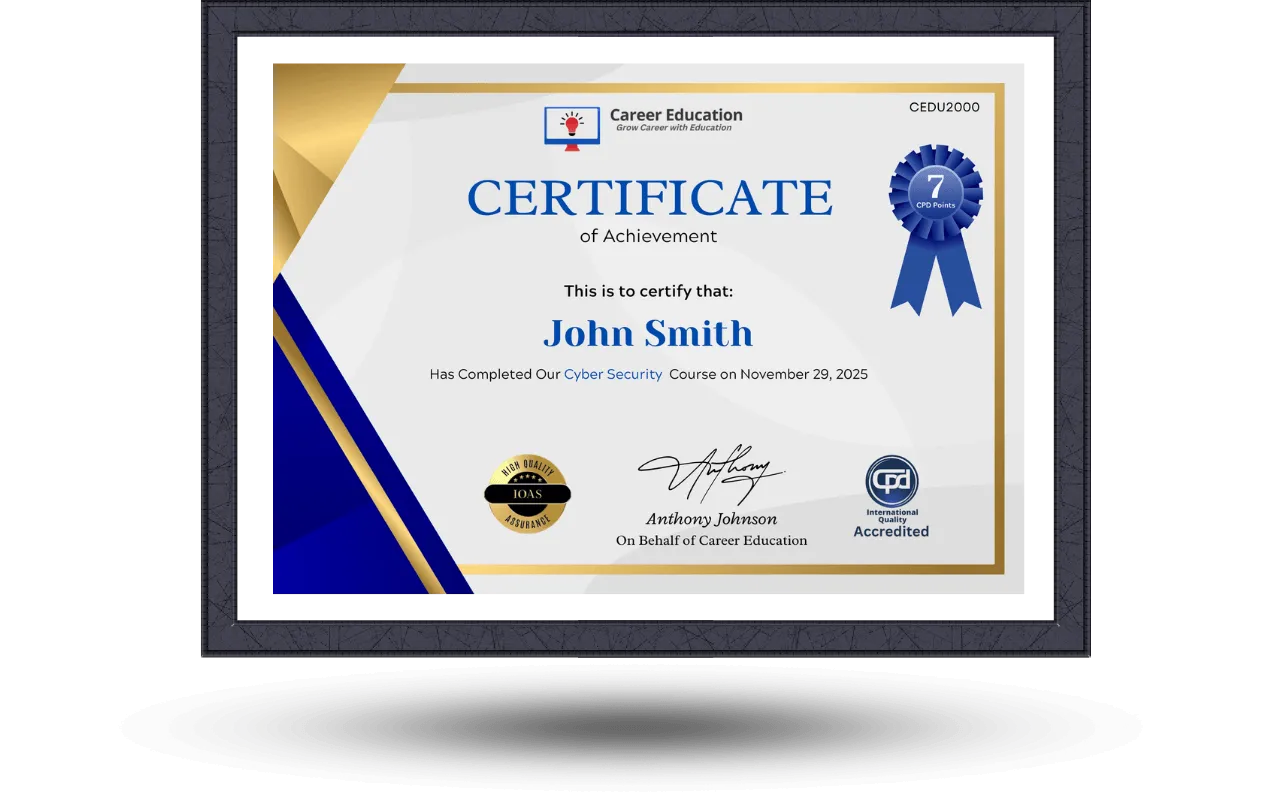
Earn an Accredited Certificate
Upon completion of any course, all students are entitled to a CPD IQ Accredited e-certificate that will be issued by Career Education signifying the completion of your course.
After you complete the course and assignment, you will be eligible to order a free certificate accredited by CPD International Quality by completing the form below.
Hardcopy certificates and transcripts are also available for a small additional fee. More information is disclosed upon course completion.
Similar Courses




Frequently Asked Questions
The lifetime membership includes unlimited access to all courses, resources, and updates for a one-time fee.
You can purchase the membership directly from our website using a secure checkout process.
Yes, selected courses can be downloaded for offline access through our mobile app.
Yes, all future updates and new courses are included at no extra cost.
Yes, we offer a 30-day money-back guarantee if you are not satisfied with the membership.