OFF
Lean Six Sigma Principles and Methodologies
- Lifetime Access
- All Levels
- PDF Certificate
Learn With Confidence







Overview
Lean Six Sigma Principles and Methodologies
Transform Processes, Reduce Waste and Drive Measurable Business Improvement
In today’s competitive workplace, organisations are constantly looking for ways to improve efficiency, reduce unnecessary costs, maintain consistent quality and deliver greater value to customers. Lean Six Sigma Principles and Methodologies provides a structured approach to achieving these goals by combining Lean thinking with Six Sigma techniques.
This course is designed to help learners understand how organisations can identify inefficiencies, measure performance, analyse root causes, implement practical improvements and maintain better processes over time. Rather than focusing only on theory, the course develops knowledge that can be applied to real workplace situations, projects and continuous improvement initiatives.
Whether you are developing your professional skills, preparing for greater responsibilities or looking to understand process improvement more effectively, this course can help you build a practical foundation in Lean Six Sigma concepts and methodologies.
What Are Lean Six Sigma Principles and Methodologies?
Lean Six Sigma brings together two complementary approaches to process improvement. Lean focuses on improving efficiency by identifying and reducing activities that do not add value, while Six Sigma focuses on reducing variation, identifying causes of problems and improving process quality through structured analysis.
Together, these approaches provide a systematic way to improve how work is performed.
By studying Lean Six Sigma Principles and Methodologies, you can develop an understanding of how improvement projects are structured and how data can support better decision-making. You will explore the DMAIC framework—Define, Measure, Analyse, Improve and Control—and learn how each phase contributes to successful process improvement.
The course also introduces beginner statistics and project management concepts, helping you understand how improvement initiatives can be approached in a logical and organised way.
What Will You Learn?
The course curriculum covers the key stages and supporting concepts needed to understand Lean Six Sigma and its professional applications.
Module 1 – Introduction to Six Sigma
Begin by exploring the foundations of Six Sigma and why organisations use structured improvement methodologies. This module provides an introduction to the principles behind process quality, variation reduction and continuous improvement.
You will develop a clearer understanding of what Six Sigma means, how it supports organisational performance and why a systematic approach can be valuable when addressing operational challenges.
Module 2 – Basic Six Sigma Concepts
Build your knowledge of essential Six Sigma terminology, principles and concepts. This module helps establish the foundation needed to understand the later stages of the course.
You will become familiar with the ideas behind process improvement and develop a stronger understanding of how Six Sigma approaches problems in a structured, evidence-based manner.
Module 3 – The Define Phase
Learn about the first stage of the DMAIC methodology: Define.
Successful improvement projects begin by clearly identifying the problem, understanding the desired outcome and establishing the scope of the project. This module introduces the importance of defining improvement objectives before moving into measurement and analysis.
By completing this stage, you can better understand how a clearly defined problem can provide direction for an improvement project.
Module 4 – The Measure Phase
Once a problem has been defined, reliable information is needed to understand the current state of a process. The Measure phase focuses on collecting and understanding relevant process data.
You will explore the role of measurement in Six Sigma and learn why accurate information is important when assessing process performance. This can help you approach workplace problems using evidence rather than assumptions.
Module 5 – Analyse Phase
The Analyse phase focuses on understanding why a problem is occurring.
You will explore methods for examining process information and identifying potential root causes. Rather than simply addressing visible symptoms, Six Sigma encourages practitioners to investigate the underlying reasons behind process problems.
This knowledge can help you approach workplace challenges more logically and identify opportunities for meaningful improvement.
Module 6 – Improve Phase
After identifying potential causes, the next step is to develop and implement improvements.
The Improve phase introduces the principles involved in finding practical solutions to process problems. You will explore how improvement ideas can be considered, developed and applied to achieve better performance.
This can help you understand how organisations move from analysis to action and turn identified opportunities into practical process improvements.
Module 7 – Control Phase
Improvements need to be maintained if they are going to deliver long-term value. The Control phase focuses on sustaining improvements and monitoring process performance.
You will learn why ongoing control is important and how organisations can reduce the risk of processes returning to previous performance levels.
Understanding this stage can help you appreciate that process improvement is not simply about making a change—it is also about maintaining the gains achieved.
Module 8 – Beginner Statistics
Data plays an important role in Six Sigma. This module introduces beginner-level statistical concepts to help you understand how numerical information can support process analysis and decision-making.
You will gain foundational statistical knowledge relevant to Six Sigma applications without requiring advanced mathematical expertise. This can help you become more comfortable working with process data and understanding how measurements contribute to improvement projects.
Module 9 – Six Sigma in Professional Field
Explore how Six Sigma concepts can be applied in professional environments.
This module connects the principles covered throughout the course with workplace applications, helping you understand how structured process improvement can contribute to organisational performance.
You can develop a broader perspective on how Six Sigma can be relevant across different professional settings and operational challenges.
Module 10 – Project Management
Process improvement initiatives require organisation, planning and coordination. The final module introduces project management concepts relevant to Lean Six Sigma activities.
You will develop an understanding of how improvement projects can be managed in a structured manner, helping connect technical improvement methods with practical project execution.
Build Practical Process Improvement Knowledge
One of the key benefits of Lean Six Sigma Principles and Methodologies is its focus on structured problem-solving.
Instead of approaching workplace problems through trial and error, Lean Six Sigma provides a framework for understanding the current situation, investigating causes, developing solutions and monitoring results.
Through the DMAIC approach, you can develop a repeatable way of thinking about process challenges:
Define the problem clearly.
Measure current performance using relevant information.
Analyse data and investigate potential causes.
Improve the process by developing appropriate solutions.
Control the improved process to help sustain results.
This structured approach can be useful when working with quality issues, inefficiencies, inconsistent processes and opportunities for operational improvement.
Develop Skills That Support Better Decision-Making
Modern workplaces increasingly value professionals who can identify problems and contribute to practical solutions. Understanding Lean Six Sigma can help you develop a more analytical approach to workplace challenges.
Instead of asking only, “What went wrong?”, you can learn to consider questions such as:
-
What is the actual problem?
-
How can the current process be measured?
-
What evidence supports the issue?
-
What could be causing the problem?
-
Which improvements could address the underlying causes?
-
How can improvements be monitored over time?
This way of thinking can support more informed decisions and encourage a culture of continuous improvement.
Improve Your Professional Confidence
You do not need to be an advanced statistician or experienced project manager to begin learning Lean Six Sigma. This course starts with fundamental concepts and progressively introduces the key stages of the methodology.
The inclusion of beginner statistics makes the subject more approachable for learners who want to understand the role of data without starting with highly advanced mathematical concepts.
By completing the course, you can gain greater confidence when discussing process improvement, quality management, operational efficiency and structured problem-solving in professional environments.
Who Can Benefit From This Course?
Lean Six Sigma Principles and Methodologies can be valuable for learners and professionals who want to develop their understanding of process improvement.
It may be suitable for:
-
Professionals interested in operational improvement
-
Individuals developing business and management skills
-
Team members involved in quality improvement
-
People interested in project management
-
Learners seeking knowledge of Six Sigma methodologies
-
Professionals who want to strengthen analytical thinking
-
Individuals interested in efficiency and waste reduction
-
Those preparing for roles involving process improvement
-
Entrepreneurs and business owners interested in improving processes
-
Anyone looking to expand their professional development
The course can also provide useful foundational knowledge for people who are new to Lean Six Sigma and want to understand how the methodology works before progressing to more advanced learning.
Apply Lean Six Sigma Thinking to Workplace Challenges
Process improvement is relevant to many types of organisations. Businesses may need to reduce delays, improve consistency, eliminate unnecessary activities, increase customer satisfaction or make better use of available resources.
Lean Six Sigma offers a framework for examining these challenges systematically.
For example, when a process is producing inconsistent results, simply making a quick change may not solve the underlying issue. A structured approach encourages you to define the problem, gather information, investigate potential causes and evaluate improvements.
This can support a more disciplined approach to continuous improvement.
Understand the Relationship Between Quality and Efficiency
Quality and efficiency are closely connected. A process that is fast but produces inconsistent results may create additional work, while a process that delivers high quality but uses unnecessary resources may not be efficient.
Lean Six Sigma helps learners understand how improvement can consider both process efficiency and quality.
By exploring Lean principles alongside Six Sigma concepts, you can develop a broader understanding of how organisations can seek to create value while reducing avoidable waste and variation.
Strengthen Your Career Development
Professional development is an ongoing process. As organisations continue to focus on efficiency, quality and data-informed decision-making, knowledge of structured improvement methodologies can complement a wide range of professional skills.
Studying Lean Six Sigma Principles and Methodologies can help demonstrate your commitment to learning and continuous improvement. The knowledge gained can complement existing experience in areas such as business operations, management, administration, quality, project work and other professional fields.
While completing a course does not guarantee employment or promotion, developing relevant knowledge can help you become better prepared to contribute to workplace improvement initiatives.
Why Choose Lean Six Sigma Principles and Methodologies?
This course brings together essential Lean Six Sigma concepts in a structured learning journey.
You will explore:
-
Six Sigma fundamentals
-
Core Six Sigma concepts
-
The Define phase
-
The Measure phase
-
The Analyse phase
-
The Improve phase
-
The Control phase
-
Beginner statistics
-
Professional applications of Six Sigma
-
Project management principles
This broad curriculum gives you an opportunity to understand both the methodology itself and the practical context in which it can be used.
Achieve a More Structured Approach to Improvement
Effective improvement requires more than identifying that something is wrong. It requires a clear understanding of the problem, appropriate measurements, logical analysis, practical solutions and ongoing monitoring.
Lean Six Sigma Principles and Methodologies introduces you to this complete improvement cycle.
By the end of the course, you can have a stronger foundation for understanding how Lean Six Sigma approaches process challenges and how the DMAIC methodology supports continuous improvement.
Whether your goal is to improve your current professional capabilities, explore process improvement as a career skill or simply gain a better understanding of modern business methodologies, this course provides a practical starting point.
Start Your Lean Six Sigma Learning Journey
Developing process improvement knowledge can help you approach workplace challenges with greater structure, clarity and confidence. Lean Six Sigma Principles and Methodologies gives you the opportunity to explore the core concepts, stages and applications of Six Sigma while developing an understanding of statistics and project management.
From defining a problem to controlling an improved process, you will explore the complete DMAIC journey and discover how data, analysis and structured thinking can support better processes.
Start learning today and build valuable knowledge that can support your ongoing professional development and your ability to contribute to continuous improvement initiatives.
Course Modules
Course Content
Lean Six Sigma_Module 1 – Introduction to Six Sigma
-
Lean Six Sigma_Lesson 1 – Introduction to Six Sigma
Lean Six Sigma_Module 10 – Project Management
Lean Six Sigma_Module 2 – Basic Six Sigma Concepts
Lean Six Sigma_Module 3 – The Define Phase
Lean Six Sigma_Module 4 – The Measure Phase
Lean Six Sigma_Module 5 – Analyse Phase
Lean Six Sigma_Module 6 – Improve Phase
Lean Six Sigma_Module 7 – Control Phase
Lean Six Sigma_Module 8 – Beginner Statistics
Lean Six Sigma_Module 9 – Six Sigma in Professional Field
What our students say

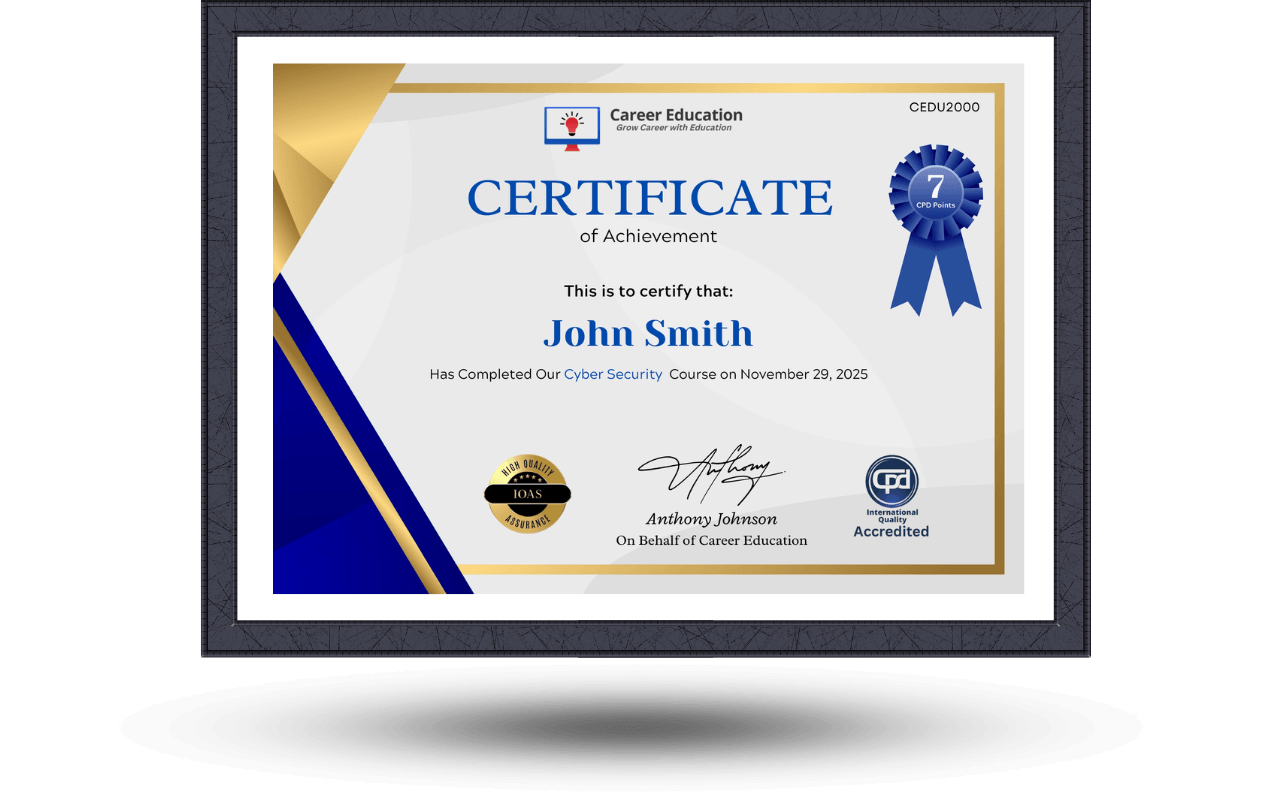
Earn an Accredited Certificate
Upon completion of the course, an e-certificate will be downloadable from Khan Education signifying the completion of your course. But, the course is CPD Accredited and after you complete the assignment, you will be eligible to order a certificate accredited by CPD International Quality for £5.99 only. If you want a hardcopy certificate accredited by CPD IQ, you can get it for only £15.99.
Get your CertificateSimilar Courses