OFF
Lean Management Principles and Practices
- Lifetime Access
- All Levels
- PDF Certificate
Learn With Confidence



Overview
Lean Management Principles and Practices
In today’s competitive business environment, organisations are constantly looking for ways to improve efficiency, reduce unnecessary costs, enhance quality, and deliver greater value to customers. Lean Management Principles and Practices provides a structured approach to achieving these goals by focusing on value, eliminating waste, improving processes, and creating a culture of continuous improvement.
This course is designed to introduce learners to the essential principles, tools, and practices of Lean Management and show how they can be applied across a wide range of business and operational environments. Rather than focusing only on theory, the course emphasises practical outcomes, helping learners understand how Lean approaches can contribute to smoother workflows, better resource utilisation, improved productivity, and more consistent results.
Whether you are involved in operations, manufacturing, logistics, business management, project coordination, quality improvement, or process development, developing an understanding of Lean Management can help you identify opportunities for improvement and contribute more effectively to organisational performance.
What Is Lean Management?
Lean Management is a systematic approach to improving organisational processes by maximising customer value while minimising activities that do not add value. It encourages organisations to examine how work is performed, identify inefficiencies, remove unnecessary steps, and continuously improve processes.
The philosophy of Lean extends beyond simply reducing costs. Effective Lean Management can help organisations improve quality, shorten lead times, reduce waste, increase efficiency, and create more responsive operations.
A successful Lean environment also depends on people. Employees at different levels of an organisation can contribute ideas, identify problems, and participate in improvement activities. This makes Lean not only a collection of tools but also a management philosophy and organisational culture.
By completing this Lean Management Principles and Practices course, learners can develop a stronger understanding of how Lean thinking can be used to create more efficient and value-focused processes.
What Will You Learn?
The course provides a progressive introduction to important Lean concepts, beginning with the foundations and moving into practical tools, continuous improvement, inventory management, and Lean leadership.
Module 1: Introduction to Lean Management
The course begins by establishing a solid foundation in Lean Management. You will explore the core concepts behind Lean thinking and understand why organisations use Lean principles to improve operational performance.
This module introduces the concept of value from the customer’s perspective and explains the importance of identifying activities that contribute to desired outcomes. You will also develop an awareness of different types of waste that can exist within business processes.
By the end of this module, you can expect to have a clearer understanding of:
-
The fundamental principles of Lean Management
-
The importance of customer value
-
How waste affects organisational performance
-
Why process efficiency matters
-
The role of Lean thinking in organisational improvement
This foundation can help you approach later modules with a practical understanding of why Lean techniques are used and what they are designed to achieve.
Module 2: Value Stream Mapping
Understanding how work moves through an organisation is essential for identifying improvement opportunities. Value Stream Mapping (VSM) provides a visual way to examine the flow of materials, information, tasks, and activities within a process.
In this module, you will explore how value stream mapping can be used to analyse existing processes and identify areas of delay, duplication, unnecessary movement, bottlenecks, and other forms of waste.
You will develop an understanding of how mapping a process can make hidden inefficiencies easier to recognise. This can support more informed decision-making when planning improvements.
By studying Value Stream Mapping, you can work towards being able to:
-
Examine processes from beginning to end
-
Identify value-adding and non-value-adding activities
-
Recognise potential bottlenecks and delays
-
Visualise process flows more effectively
-
Identify opportunities for process improvement
The ability to understand and communicate process flows is valuable for professionals involved in operations, quality, logistics, administration, and business improvement.
Module 3: Continuous Improvement (Kaizen)
Lean Management is not based on making a single improvement and stopping. Instead, it encourages organisations to continually look for ways to make processes better. This philosophy is commonly associated with Kaizen, meaning continuous improvement.
This module explores how organisations can create a structured approach to identifying problems, developing improvements, implementing changes, and reviewing results.
You will learn about the importance of involving employees in improvement activities and encouraging a mindset where problems are viewed as opportunities to learn and improve.
The module can help you understand how continuous improvement may contribute to:
-
More efficient processes
-
Better quality and consistency
-
Reduced operational waste
-
Improved employee involvement
-
Ongoing performance development
Rather than waiting for major problems to occur, a continuous improvement mindset encourages organisations to identify smaller opportunities for improvement and address them systematically.
Module 4: Just-in-Time (JIT) and Lean Inventory Management
Inventory can be an important part of business operations, but excessive or poorly managed inventory can create unnecessary costs and operational challenges. Just-in-Time (JIT) is a Lean approach that focuses on having the right resources available when they are needed, while avoiding unnecessary accumulation.
This module introduces the principles behind JIT and Lean inventory management. You will explore how inventory practices can influence efficiency, responsiveness, costs, and workflow.
You will develop an understanding of how organisations can think more strategically about inventory and resource requirements.
After completing this module, you can be better prepared to understand:
-
The basic principles of Just-in-Time management
-
How inventory can contribute to operational waste
-
The relationship between demand and supply
-
The importance of efficient resource flow
-
How Lean inventory practices can support operational performance
These concepts can be particularly useful for learners interested in supply chain management, manufacturing, logistics, procurement, and operations.
Module 5: Lean Tools and Techniques
Lean Management includes a range of practical tools and techniques that can help organisations identify problems, organise processes, improve quality, and reduce waste.
This module introduces key Lean tools and demonstrates how different techniques can support process improvement. You will develop a broader understanding of how Lean tools can be selected and applied according to specific operational needs.
The goal is not simply to memorise tools but to understand their purpose and how they can contribute to better processes.
By studying this module, you can strengthen your ability to:
-
Recognise appropriate Lean improvement techniques
-
Analyse operational problems
-
Support structured problem-solving
-
Improve process organisation
-
Contribute to waste-reduction initiatives
-
Apply Lean thinking to practical workplace situations
Having knowledge of Lean tools can help professionals participate more confidently in improvement projects and communicate effectively with teams involved in operational change.
Module 6: Lean Leadership and Culture
Sustainable Lean improvement requires more than processes and tools. Leadership, communication, employee participation, and organisational culture all play important roles.
The final module explores the human side of Lean Management and examines how leaders can encourage continuous improvement throughout an organisation.
You will explore the importance of creating an environment where employees are encouraged to identify problems, suggest ideas, collaborate with colleagues, and take ownership of improvement activities.
This module can help you understand how effective Lean leadership can support:
-
Employee engagement
-
Continuous improvement
-
Better communication
-
Problem-solving cultures
-
Sustainable process improvements
-
Long-term operational excellence
By understanding the relationship between leadership and Lean culture, you can gain a more complete view of what is required to make Lean practices sustainable rather than treating them as short-term initiatives.
Practical Outcomes of the Course
The Lean Management Principles and Practices course is designed with practical workplace outcomes in mind. By completing the course, learners can develop knowledge that may help them contribute to process improvement and operational efficiency within their organisation.
You can expect to develop the ability to:
-
Explain the fundamental principles of Lean Management
-
Recognise different forms of operational waste
-
Understand how customer value influences process design
-
Use Value Stream Mapping concepts to examine workflows
-
Understand the purpose of Kaizen and continuous improvement
-
Explain the principles of Just-in-Time management
-
Recognise how inventory practices can affect efficiency
-
Understand the purpose of key Lean tools and techniques
-
Appreciate the importance of employee involvement
-
Understand the role of leadership in sustaining Lean practices
-
Contribute more effectively to workplace improvement initiatives
These outcomes can support professionals who want to become more confident when analysing processes, identifying inefficiencies, and participating in improvement discussions.
Who Can Benefit From This Course?
Lean Management Principles and Practices can be valuable for learners who want to develop knowledge of process improvement and operational efficiency.
It may be suitable for:
-
Business owners and entrepreneurs
-
Operations professionals
-
Managers and team leaders
-
Manufacturing professionals
-
Supply chain and logistics staff
-
Quality improvement professionals
-
Project and process managers
-
Procurement and inventory professionals
-
Employees involved in operational improvement
-
Individuals developing their business management knowledge
-
Learners interested in Lean and continuous improvement
You do not need to be an experienced Lean specialist to benefit from the course. The curriculum begins with the fundamentals and gradually introduces practical concepts, making it suitable for learners who want to build their knowledge systematically.
Why Study Lean Management Principles and Practices?
Organisations operate in environments where efficiency, quality, customer satisfaction, and adaptability are increasingly important. Understanding Lean principles can give professionals a useful framework for thinking about how work is performed and where improvements can be made.
One of the key advantages of learning Lean is its broad application. Lean thinking can be relevant to manufacturing environments, offices, logistics operations, service organisations, healthcare settings, technology businesses, and many other workplaces.
The course also provides a balanced perspective by covering both technical and human factors. Learning about Value Stream Mapping, JIT, and Lean tools can help you understand process improvement, while studying Kaizen and Lean leadership highlights the importance of people and culture.
This combination can help you develop a more comprehensive understanding of how sustainable operational improvement is achieved.
Build a Continuous Improvement Mindset
One of the most valuable outcomes of learning Lean Management is developing a mindset focused on improvement. Instead of accepting inefficient processes simply because they have always been done that way, Lean encourages professionals to ask important questions:
Where is value being created? Where is waste occurring? What is causing delays? How can the process be simplified? How can quality be improved? What can the team learn from the current process?
These questions can encourage more structured and proactive approaches to workplace challenges.
The Lean Management Principles and Practices course can help you build the knowledge needed to approach these questions with greater confidence and a clearer understanding of Lean methodology.
Support Better Business Performance
Lean Management is ultimately about creating greater value with fewer unnecessary activities. When applied effectively, Lean principles can support improvements in productivity, quality, workflow, resource utilisation, and customer value.
By learning how Lean principles, continuous improvement, inventory management, process mapping, and leadership work together, you can gain a broader perspective on operational performance.
Whether your goal is to contribute to improvement projects, strengthen your professional knowledge, support business operations, or develop your management capabilities, this course provides a structured introduction to essential Lean concepts.
Start Your Lean Management Learning Journey
The Lean Management Principles and Practices course provides a practical foundation for understanding how organisations can improve processes, reduce waste, increase efficiency, and develop a culture of continuous improvement.
From the fundamentals of Lean Management and Value Stream Mapping to Kaizen, Just-in-Time inventory practices, Lean tools, and leadership, the course covers key areas needed to understand the Lean approach from both operational and organisational perspectives.
If you want to develop practical knowledge of Lean Management and learn how improvement-focused principles can be applied to real workplace challenges, this course can provide a valuable starting point.
Enrol in Lean Management Principles and Practices today and take the next step towards developing your knowledge of efficient processes, continuous improvement, and sustainable operational performance.
Course Modules
Course Content
Module 1_ Introduction to Lean Management
-
Lesson 1_ Introduction to Lean Management
Module 2_ Value Stream Mapping
Module 3_ Continuous Improvement (Kaizen)
Module 4_ Just-in-Time (JIT) and Lean Inventory Management
Module 5_ Lean Tools and Techniques
Module 6_ Lean Leadership and Culture
What our students say

Earn an Accredited Certificate
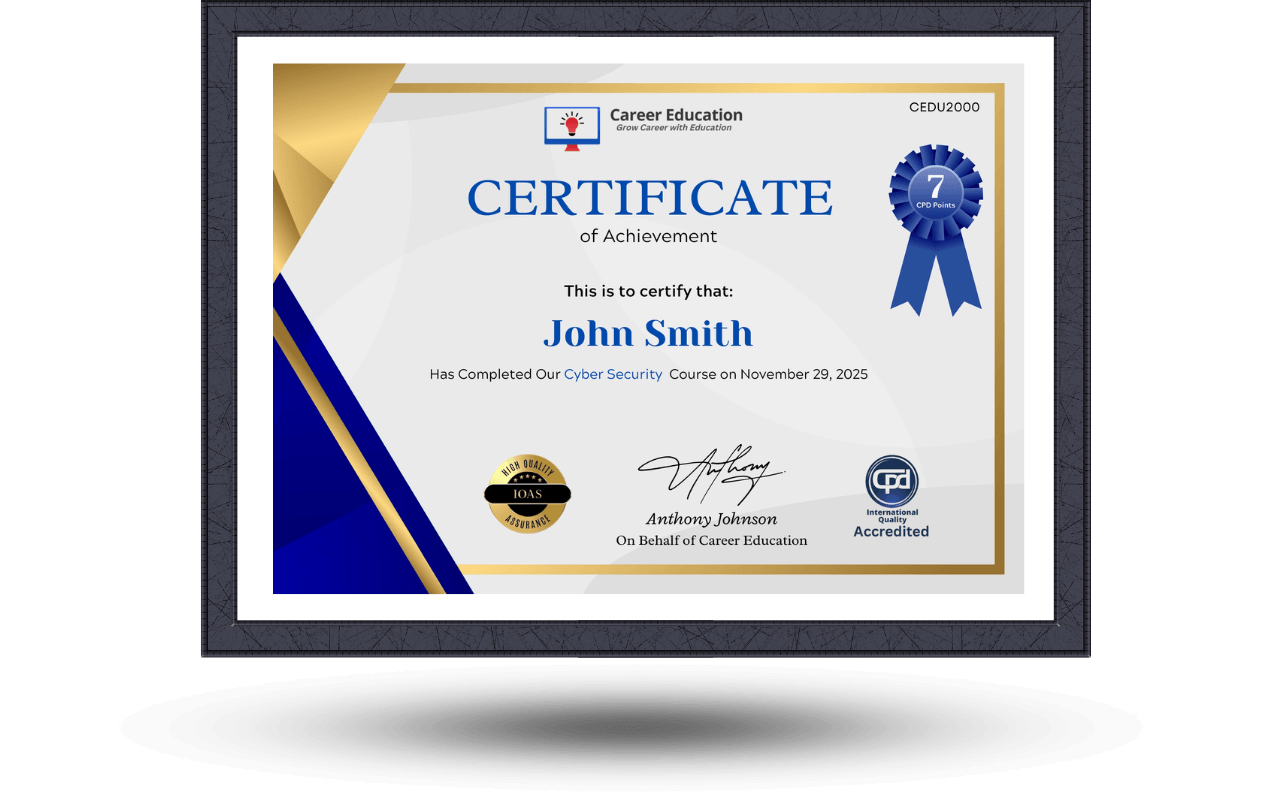
Upon completion of the course, an e-certificate will be downloadable from Khan Education signifying the completion of your course. But, the course is CPD Accredited and after you complete the assignment, you will be eligible to order a certificate accredited by CPD International Quality for £5.99 only. If you want a hardcopy certificate accredited by CPD IQ, you can get it for only £15.99.
Get your CertificateSimilar Courses