
94%
OFF
OFF
Laboratory Flammable and Explosive Materials Safety Essentials
- Lifetime Access
- All Levels
- PDF Certificate
£296
£19
14-Day Money-Back Guarantee
Learn With Confidence









# Laboratory Flammable and Explosive Materials Safety Essentials
Laboratories are environments where precision, innovation, and experimentation come together—but they can also contain materials and processes that present serious fire and explosion hazards. Flammable liquids, gases, vapours, reactive substances, laboratory equipment, ignition sources, and incompatible chemicals can create dangerous conditions when they are not properly identified and controlled.
**Laboratory Flammable and Explosive Materials Safety Essentials** is a practical, outcome-focused course designed to help learners develop a strong foundation in recognising, assessing, preventing, and responding to hazards associated with flammable and potentially explosive materials in laboratory environments.
The course explores the properties of flammable substances, safe handling and storage principles, laboratory equipment and instrumentation, risk assessment, chemical compatibility, and emergency response. Learners will develop an understanding of how unsafe conditions can arise and how appropriate controls can reduce the likelihood and potential consequences of fires, explosions, chemical incidents, and related emergencies.
Whether you work in a research laboratory, educational laboratory, healthcare setting, industrial facility, quality-control environment, or another workplace where flammable materials are present, **Laboratory Flammable and Explosive Materials Safety Essentials** provides valuable knowledge for supporting safer laboratory practices.
—
## Why Laboratory Flammable and Explosive Materials Safety Essentials Matters
Laboratory fire and explosion hazards can develop from a combination of factors rather than from a single material alone.
Potential contributing factors include:
* Flammable liquids and gases
* Vapour accumulation
* Ignition sources
* Static electricity
* Hot surfaces
* Electrical equipment
* Improper chemical storage
* Incompatible substances
* Pressurised systems
* Poor ventilation
* Spills and leaks
* Inadequate emergency planning
Understanding these hazards is an important part of laboratory safety.
A container of flammable material may be safely manageable under appropriate conditions, yet the risk can change significantly when the substance is transferred, heated, mixed, stored incorrectly, or exposed to an ignition source.
**Laboratory Flammable and Explosive Materials Safety Essentials** helps learners understand these relationships and develop a prevention-focused approach to laboratory safety.
—
# What You Will Learn
By completing **Laboratory Flammable and Explosive Materials Safety Essentials**, learners will be able to:
* Explain the basic hazards associated with flammable and explosive materials.
* Recognise important properties of flammable substances.
* Identify common ignition and fire hazards in laboratories.
* Understand safe handling and storage principles.
* Recognise the importance of appropriate laboratory equipment.
* Understand fundamental risk assessment and control concepts.
* Identify chemical compatibility and incompatibility concerns.
* Appreciate the role of ventilation and engineering controls.
* Understand emergency response and contingency planning principles.
* Contribute more effectively to a laboratory safety culture.
* Apply general safety principles to laboratory activities involving flammable materials.
—
# Course Curriculum
## Module 1: Introduction to Flammables & Explosives
### Lesson 1: Introduction to Flammables & Explosives
The course begins by establishing a foundation in flammable and explosive hazards.
Learners will explore what makes a substance flammable and why certain materials or conditions can create fire or explosion risks.
The module introduces concepts such as:
* Flammability
* Combustion
* Ignition sources
* Vapours
* Fire hazards
* Explosion hazards
* Chemical reactions
* Laboratory risk factors
Participants will examine how laboratory activities can introduce or increase fire risks.
For example, transferring liquids, using heating equipment, conducting reactions, storing chemicals, and working with compressed or flammable gases can all require specific safety considerations.
The module also emphasises the importance of understanding the chemical products being used.
Labels, Safety Data Sheets (SDS), laboratory procedures, and workplace-specific safety instructions can provide important information about hazards and precautions.
Learners will understand why identifying hazards before beginning laboratory work is an essential part of prevention.
By completing this module, participants will have a clear foundation for recognising flammable and explosive hazards in laboratory environments.
—
# Module 2: Properties of Flammable Substances
Understanding the properties of flammable materials is essential for assessing how they may behave in a laboratory.
This module examines key characteristics that influence fire and explosion risks.
Learners will explore concepts including:
* Flash point
* Ignition
* Vapour formation
* Vapour concentration
* Flammable ranges
* Volatility
* Combustion
* Heat sources
* Vapour movement
Participants will learn why a flammable liquid’s vapour can sometimes present a greater immediate hazard than the liquid itself.
The module also examines the importance of environmental conditions.
Temperature, ventilation, container conditions, and the presence of ignition sources can influence the potential for a hazardous event.
Learners will explore why seemingly small changes in laboratory conditions can affect risk.
The course encourages participants to consult relevant SDS information and established laboratory procedures when working with specific substances.
Rather than relying on assumptions about chemical behaviour, learners will understand the importance of using reliable safety information.
By completing this module, participants will be better equipped to understand the characteristics that influence flammability and fire risk.
—
# Module 3: Handling and Storage of Flammable Materials
Safe handling and storage are essential components of laboratory fire prevention.
This module focuses on practical principles for reducing risks when working with flammable materials.
Learners will explore areas such as:
* Appropriate containers
* Chemical storage
* Labelling
* Container integrity
* Storage quantities
* Separation of incompatible materials
* Ignition-source control
* Spill prevention
* Safe transfer practices
* Housekeeping
Participants will examine why flammable materials should be stored and handled according to applicable requirements, manufacturer instructions, SDS information, and workplace procedures.
The module also considers the importance of maintaining clear work areas and avoiding unnecessary accumulation of hazardous materials.
Learners will explore how poor housekeeping can increase the likelihood or consequences of a fire.
The course also reinforces the importance of using appropriate storage equipment where required and ensuring that workers understand the specific storage requirements for the substances they handle.
By completing this module, participants will develop stronger awareness of safe handling and storage practices for flammable laboratory materials.
—
# Module 4: Laboratory Equipment and Instrumentation
Laboratory equipment can be an important source of both safety and risk.
This module examines how laboratory equipment and instrumentation can interact with flammable and explosive hazards.
Learners will explore safety considerations associated with equipment such as:
* Heating devices
* Electrical equipment
* Laboratory instruments
* Refrigeration equipment
* Ventilation systems
* Fume hoods
* Gas systems
* Temperature-control equipment
Participants will consider the importance of preventing ignition sources from coming into contact with flammable vapours or materials.
The module also introduces the role of appropriate engineering controls.
Ventilation systems, fume hoods, equipment safeguards, and other engineering measures can help reduce exposure or prevent hazardous concentrations from developing, depending on the specific application.
Learners will also explore the importance of inspecting equipment and reporting defects or unsafe conditions.
Equipment should be used according to manufacturer instructions and workplace procedures.
By completing this module, participants will better understand how laboratory equipment can influence fire and explosion risks and why equipment selection, maintenance, and appropriate use matter.
—
# Module 5: Risk Assessment and Control Measures
Risk assessment is central to effective laboratory safety.
This module introduces a structured approach to identifying hazards, evaluating risks, and selecting appropriate control measures.
Learners will explore concepts such as:
* Hazard identification
* Risk evaluation
* Exposure potential
* Ignition-source assessment
* Chemical quantities
* Work processes
* Engineering controls
* Administrative controls
* Personal protective equipment
Participants will examine the hierarchy of controls and understand why prevention through elimination, substitution, and engineering controls is generally preferred where feasible.
Examples may include reducing quantities, substituting less hazardous materials, improving ventilation, isolating ignition sources, and implementing appropriate procedures.
PPE can provide an important additional layer of protection but should not automatically be considered the primary method of controlling every laboratory hazard.
Learners will also consider how risk assessments should account for the specific task rather than simply the chemical itself.
A procedure involving a small quantity of material may present different risks from one involving larger quantities, heating, pressurisation, or other processes.
By completing this module, participants will have a practical foundation for recognising and evaluating laboratory fire and explosion risks.
—
# Module 6: Chemical Compatibility and Incompatibility
Chemical incompatibility can create serious hazards in laboratories.
This module focuses on understanding why certain substances should not be stored or combined together.
Learners will explore:
* Chemical compatibility
* Incompatible materials
* Reactive substances
* Unintended reactions
* Storage segregation
* Cross-contamination
* Spill considerations
Participants will understand why chemicals should not be grouped together simply because they are all stored in the same laboratory.
Different substances may have very different storage requirements.
Some combinations can generate heat, toxic gases, fire, pressure, or other hazardous reactions.
The module emphasises the importance of consulting SDS information, chemical compatibility guidance, workplace procedures, and qualified safety personnel when determining appropriate storage and handling arrangements.
Learners will also explore how contamination between incompatible materials can occur through containers, equipment, spills, or poor handling practices.
By completing this module, participants will better understand the importance of chemical compatibility and segregation in preventing hazardous reactions.
—
# Module 7: Emergency Response and Contingency Planning
Even with effective prevention, laboratories need appropriate emergency plans.
This module focuses on emergency response and contingency planning for incidents involving flammable and potentially explosive materials.
Learners will explore the importance of:
* Emergency procedures
* Alarm systems
* Evacuation
* Emergency communication
* Spill response
* Fire response
* Incident reporting
* Emergency contacts
* Training and drills
* Contingency planning
Participants will learn why employees need to understand what to do when an emergency occurs.
In many situations, the safest response may involve raising the alarm, evacuating, isolating the area if safe to do so, and contacting trained emergency personnel rather than attempting to control an incident without appropriate training or equipment.
The module also explores the importance of preparedness.
Emergency plans should reflect the actual hazards present in the laboratory and should be communicated to relevant personnel.
Learners will understand why emergency equipment, routes, communication procedures, and responsibilities should be established before an incident occurs.
By completing this module, participants will have a stronger understanding of how emergency planning can support safer and more organised responses to laboratory incidents.
—
# Who Is This Course For?
**Laboratory Flammable and Explosive Materials Safety Essentials** is suitable for anyone who may encounter flammable or potentially explosive materials in laboratory environments.
It can benefit:
* Laboratory technicians
* Laboratory assistants
* Researchers
* Scientists
* Students
* Laboratory supervisors
* Quality-control personnel
* Healthcare laboratory staff
* Industrial laboratory employees
* Research and development teams
* Safety professionals
* Environmental health and safety personnel
* Educational laboratory staff
* Laboratory managers
The course can also be useful for organisations seeking to strengthen general laboratory hazard awareness.
—
# Practical Learning Outcomes
The course is designed to help learners connect safety concepts with workplace situations.
After completing **Laboratory Flammable and Explosive Materials Safety Essentials**, learners will be better prepared to:
### Recognise Fire and Explosion Hazards
Identify common laboratory conditions that may contribute to fires, explosions, or chemical incidents.
### Understand Flammable Material Behaviour
Recognise how properties such as volatility, vapour formation, and ignition characteristics influence risk.
### Improve Handling and Storage Awareness
Understand the importance of appropriate containers, storage arrangements, labelling, segregation, and housekeeping.
### Recognise Equipment-Related Risks
Understand how heating devices, electrical equipment, ventilation systems, and other laboratory equipment can influence fire safety.
### Support Risk Assessment
Use basic risk-assessment principles to identify hazards and consider appropriate control measures.
### Identify Compatibility Concerns
Understand why incompatible chemicals should be properly segregated and why chemical combinations should never be assumed to be safe.
### Prepare for Emergencies
Understand the importance of emergency procedures, evacuation, communication, and contingency planning.
—
# Build a Stronger Laboratory Safety Culture
Laboratory safety is a shared responsibility.
Every employee, researcher, student, supervisor, and manager has a role to play in recognising hazards and following established safety procedures.
**Laboratory Flammable and Explosive Materials Safety Essentials** helps develop this safety mindset by connecting chemical properties with practical prevention strategies.
The course encourages learners to think proactively: identify the hazard, understand the potential consequences, assess the risk, apply appropriate controls, and prepare for emergencies.
—
# Reduce Preventable Laboratory Risks
Many laboratory incidents can be linked to preventable conditions such as improper storage, uncontrolled ignition sources, incompatible chemical combinations, poor housekeeping, inadequate procedures, or insufficient emergency preparedness.
Understanding these risk factors can help learners recognise unsafe conditions before they contribute to an incident.
—
# Strengthen Safe Chemical Handling Practices
Safe chemical handling requires more than knowing the name of a substance.
Workers need to understand the relevant hazards, consult appropriate safety information, follow established procedures, and use suitable controls.
This course provides foundational knowledge that can complement laboratory-specific training and procedures.
—
# Enrol in Laboratory Flammable and Explosive Materials Safety Essentials Today
Working with flammable and potentially explosive materials requires awareness, preparation, and disciplined safety practices.
**Laboratory Flammable and Explosive Materials Safety Essentials** provides a structured introduction to the principles that support safer laboratory environments.
Across seven focused modules, learners explore flammable and explosive hazards, properties of flammable substances, handling and storage, laboratory equipment, risk assessment, chemical compatibility, and emergency response planning.
The course is designed as general educational training and does not replace site-specific risk assessments, laboratory SOPs, Safety Data Sheets, professional safety advice, emergency response training, or applicable legal and regulatory requirements. Specific controls and procedures should always reflect the materials, quantities, equipment, processes, facilities, and requirements applicable to the workplace.
Whether you are a laboratory professional, researcher, student, supervisor, or safety practitioner, this course can help strengthen your foundational understanding of laboratory fire and explosion prevention.
**Enrol in Laboratory Flammable and Explosive Materials Safety Essentials today and build the knowledge to recognise hazards, understand flammable material behaviour, support safer storage and handling, assess risks, identify compatibility concerns, and contribute to a stronger laboratory safety culture.**
Course Modules
Course Content
Module 1_ Introduction to Flammables & Explosives
-
Lesson 1_ Introduction to Flammables & Explosives
Module 2_ Properties of Flammable Substances
Module 3_ Handling and Storage of Flammable Materials
Module 4_ Laboratory Equipment and Instrumentation
Module 5_ Risk Assessment and Control Measures
Module 6_ Chemical Compatibility and Incompatibility
Module 7_ Emergency Response and Contingency Planning
What our students say
Excellent
4.9 average
158 Reviews

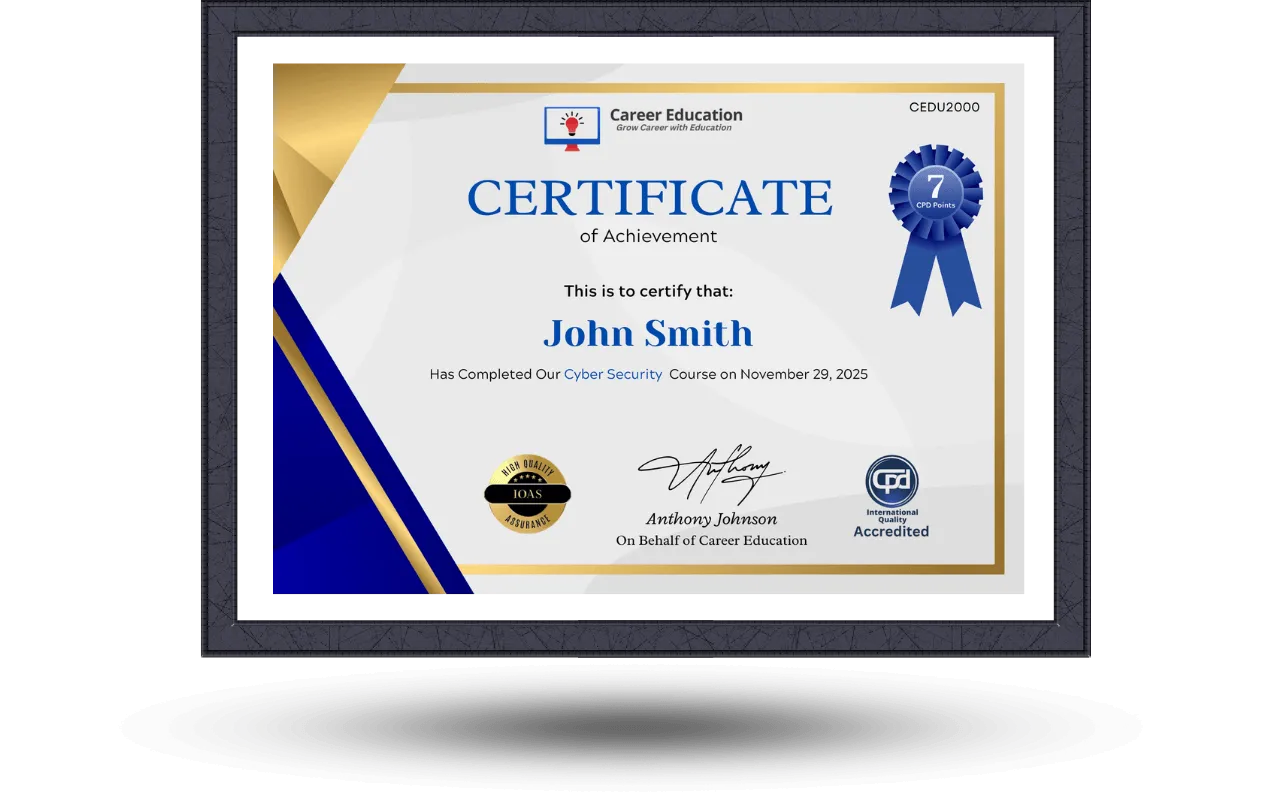
Earn an Accredited Certificate
Upon completion of any course, all students are entitled to a CPD IQ Accredited e-certificate that will be issued by Career Education signifying the completion of your course.
After you complete the course and assignment, you will be eligible to order a free certificate accredited by CPD International Quality by completing the form below.
Hardcopy certificates and transcripts are also available for a small additional fee. More information is disclosed upon course completion.
Similar Courses




Frequently Asked Questions
The lifetime membership includes unlimited access to all courses, resources, and updates for a one-time fee.
You can purchase the membership directly from our website using a secure checkout process.
Yes, selected courses can be downloaded for offline access through our mobile app.
Yes, all future updates and new courses are included at no extra cost.
Yes, we offer a 30-day money-back guarantee if you are not satisfied with the membership.