
94%
OFF
OFF
Information Management and Strategy
- Lifetime Access
- All Levels
- PDF Certificate
£296
£19
14-Day Money-Back Guarantee
Learn With Confidence






Information Management and Strategy
Build the Skills to Organise, Govern, Manage and Use Information Effectively
In a modern organisation, information is one of the most valuable resources available. Businesses generate and rely on enormous volumes of information every day, from customer records and operational documents to financial data, business reports, digital content, internal knowledge and strategic insights. When information is poorly organised, difficult to access, inaccurate or inadequately protected, it can create inefficiencies and increase business risk.
Information Management and Strategy provides a structured introduction to the principles and practices organisations can use to manage information as a valuable business resource. The course explores how information can be organised, governed, structured, managed and transformed into useful knowledge that supports better decision-making and organisational performance.
Rather than treating information management as simply storing files or maintaining databases, this course takes a broader strategic perspective. You will explore how information moves through an organisation, how governance frameworks support responsible information use, how information architecture creates structure, how data management supports quality and accessibility, and how knowledge management helps organisations capture and share valuable expertise.
The course is designed to provide practical, outcome-focused knowledge that can support learners in business, administration, information technology, data-related roles, management and professional development.
Why Information Management Matters
Organisations depend on reliable information to make decisions, serve customers, manage operations and plan for the future. However, information becomes valuable only when it can be located, understood, trusted and used appropriately.
Effective information management can help organisations:
-
Improve access to important information
-
Support more informed decision-making
-
Reduce information duplication and inconsistency
-
Establish clearer information structures
-
Improve data quality and reliability
-
Strengthen information governance practices
-
Support organisational knowledge sharing
-
Improve operational efficiency
-
Protect important information assets
-
Create a stronger foundation for strategic planning
Information Management and Strategy introduces the concepts that help organisations move from simply collecting information to managing it strategically.
Who Is This Course For?
This course is suitable for learners who want to develop their understanding of information management and its role in modern organisations.
It can be particularly useful for:
-
Students studying business, management, IT or information-related subjects
-
Business and administrative professionals
-
Managers and team leaders
-
Data and information professionals
-
IT professionals expanding their business knowledge
-
Knowledge management professionals
-
Project and operations professionals
-
Entrepreneurs and business owners
-
Graduates preparing for information-related careers
-
Professionals seeking to strengthen their digital and organisational skills
The course provides a structured learning journey, making it accessible to learners who are new to the subject while also offering useful concepts for professionals who want to strengthen their existing knowledge.
What You Will Learn
By completing Information Management and Strategy, you will develop a stronger understanding of how organisations can manage information throughout its lifecycle and use it to support business objectives.
You will learn how to:
-
Understand the fundamental principles of information management
-
Recognise the strategic value of organisational information
-
Understand the purpose of information governance
-
Explore approaches to responsible information management
-
Understand the principles of information architecture
-
Examine how information can be structured and organised
-
Understand the fundamentals of data management
-
Recognise the importance of data quality and consistency
-
Explore the relationship between information and organisational knowledge
-
Understand the principles of knowledge management
-
Support more effective information and knowledge sharing
-
Develop a strategic perspective on organisational information resources
Course Curriculum
Module 1 – Introduction to Information Management
The course begins by establishing a strong foundation in information management.
In this module, you will explore what information management means and why it has become an important organisational capability. You will examine the relationship between information, business processes, technology, people and decision-making.
Modern organisations generate information across numerous departments and systems. Without appropriate management practices, important information can become difficult to locate, duplicated across different systems or separated from the context needed to understand it.
This module introduces the fundamental concepts that will support your learning throughout the course. You will consider the different types of information organisations use and explore why information should be treated as a strategic resource rather than simply as a collection of documents or records.
You will also develop an understanding of how effective information management can contribute to organisational efficiency, productivity and decision-making.
Outcome
By completing this module, you will be able to explain the importance of information management and recognise its role in supporting organisational activities and strategic objectives.
Module 2 – Information Governance
Managing information effectively requires clear rules, responsibilities and processes.
This module introduces information governance and explores how organisations can establish frameworks for managing information responsibly.
Information governance provides a structured approach to determining how information should be created, accessed, used, maintained, shared and managed throughout its lifecycle. It can also help organisations establish accountability and improve consistency in information-related activities.
You will explore the importance of governance and consider the roles that policies, procedures, responsibilities and organisational controls can play in supporting effective information management.
The module also highlights why governance should be aligned with organisational objectives. Information management is not simply an IT responsibility. Effective governance can involve business leaders, managers, employees, data professionals and other stakeholders.
You will develop an understanding of how clear governance structures can help organisations improve information quality, accountability and responsible use.
Outcome
By the end of this module, you will understand the purpose of information governance and be able to identify key considerations involved in establishing responsible information management practices.
Module 3 – Information Architecture
Information needs structure if people are going to find and use it effectively.
This module focuses on information architecture, exploring how information can be organised, structured and presented so that users can access what they need.
You will examine the importance of creating logical relationships between information resources. You will also consider how categorisation, organisation, navigation and structure can influence the way people interact with information.
Poorly structured information can result in wasted time, confusion and inefficient workflows. A well-designed information environment, by contrast, can make information easier to locate and understand.
The module introduces key concepts that can help you think systematically about information structures within organisations.
You will explore how information architecture can support consistency and accessibility across digital and organisational environments.
Outcome
By completing this module, you will have a clearer understanding of information architecture and its importance in creating organised, accessible and usable information environments.
Module 4 – Data Management
Data is a fundamental component of modern information systems and business operations.
This module examines data management and its relationship with effective information management.
You will explore how organisations collect, store, organise, maintain and use data. You will also consider why data quality is important and how inaccurate, incomplete, duplicated or inconsistent data can affect business activities.
Effective data management can support reliable reporting, better decision-making, operational efficiency and improved access to useful information.
The module encourages you to think about data throughout its lifecycle rather than viewing data storage as the only consideration. Organisations need appropriate approaches for managing data from creation and collection through to use, maintenance, retention and eventual disposal.
You will also explore the relationship between data and information, developing a stronger understanding of how raw data can contribute to meaningful organisational insight when appropriately managed and interpreted.
Outcome
By the end of this module, you will understand the fundamental principles of data management and recognise how effective data practices can contribute to reliable information and better organisational outcomes.
Module 5 – Knowledge Management
The final module focuses on knowledge management, an important area of organisational performance.
Information and data can provide significant value, but organisations also depend on the knowledge and experience of their people. Employees develop expertise through education, training, professional experience, problem-solving and collaboration. Capturing and sharing this knowledge can help organisations maintain continuity and improve performance.
This module explores the principles of knowledge management and examines how organisations can identify, capture, organise, share and apply valuable knowledge.
You will consider the relationship between information, knowledge and organisational learning. You will also explore why knowledge sharing can be important when organisations want to encourage collaboration and reduce the risk of valuable expertise being lost.
Effective knowledge management can support employees by helping them access relevant information and organisational expertise when they need it.
The module also provides a broader strategic perspective, helping you understand how knowledge can contribute to innovation, continuous improvement and organisational development.
Outcome
By completing this module, you will understand the fundamentals of knowledge management and be able to recognise ways organisations can support knowledge sharing and organisational learning.
Practical Outcomes
The purpose of Information Management and Strategy is to help you develop knowledge that can be connected to real organisational situations.
After completing the course, you should have a clearer understanding of how information moves from creation and collection through organisation, governance, management and use.
You will be able to recognise the importance of treating information as a strategic resource and understand how different information management disciplines work together.
You will also be better prepared to participate in conversations about information governance, information architecture, data management and knowledge management within professional environments.
The knowledge gained from this course can support a wide range of responsibilities, including business administration, data-related activities, digital transformation, operations, project work, information systems and organisational management.
Develop a Strategic Approach to Information
Organisations that manage information effectively can create stronger foundations for decision-making, collaboration and continuous improvement.
However, information management requires more than technology. It involves people, processes, structures, governance and organisational culture. Businesses need to understand what information they hold, why it matters, how it should be organised, who should have access to it and how it can contribute to organisational objectives.
Information Management and Strategy brings these areas together into a structured learning experience.
You will explore the foundations of information management before progressing into governance, architecture, data management and knowledge management. This progression allows you to develop a broader understanding of how different information disciplines contribute to organisational effectiveness.
Why Study Information Management and Strategy?
Information continues to play an increasingly important role in modern workplaces. Organisations need professionals who can understand how information is created, structured, managed and used.
Studying Information Management and Strategy can help you develop a valuable combination of organisational, analytical and strategic knowledge.
The course can help you:
Understand information as an asset: Learn why information can contribute directly to organisational performance and strategic decision-making.
Improve organisational thinking: Develop a structured perspective on how information is created, managed and used across different areas of an organisation.
Recognise governance requirements: Understand the importance of policies, responsibilities and frameworks for responsible information management.
Understand information structures: Explore how information architecture can make information easier to organise and access.
Strengthen data knowledge: Develop a foundation in data management and understand the importance of data quality.
Support knowledge sharing: Understand how organisations can capture and share valuable knowledge and expertise.
Build transferable skills: Apply information management concepts to a variety of business, administrative, digital and professional environments.
Build Your Information Management Knowledge
Effective information management can influence how efficiently an organisation operates, how confidently decisions are made and how effectively employees collaborate.
As businesses continue to rely on digital information, data and organisational knowledge, understanding how these resources should be managed is increasingly valuable.
Information Management and Strategy provides a practical foundation for understanding the interconnected areas of information management, governance, architecture, data and knowledge.
Whether you are a student developing your professional knowledge, a manager looking to understand organisational information more effectively, a business professional strengthening your digital capabilities, or a learner preparing for future opportunities, this course can help you develop a structured understanding of information management.
Build your knowledge, strengthen your strategic perspective and develop a clearer understanding of how organisations can turn information into a valuable resource for better decisions, improved processes and sustainable performance.
Course Modules
Course Content
Module 1_ Introduction to Information Management
-
Lesson 1_ Introduction to Information Management
Module 2_ Information Governance
Module 3_ Information Architecture
Module 4_ Data Management
Module 5_ Knowledge Management
What our students say
Excellent
4.9 average
158 Reviews

Earn an Accredited Certificate
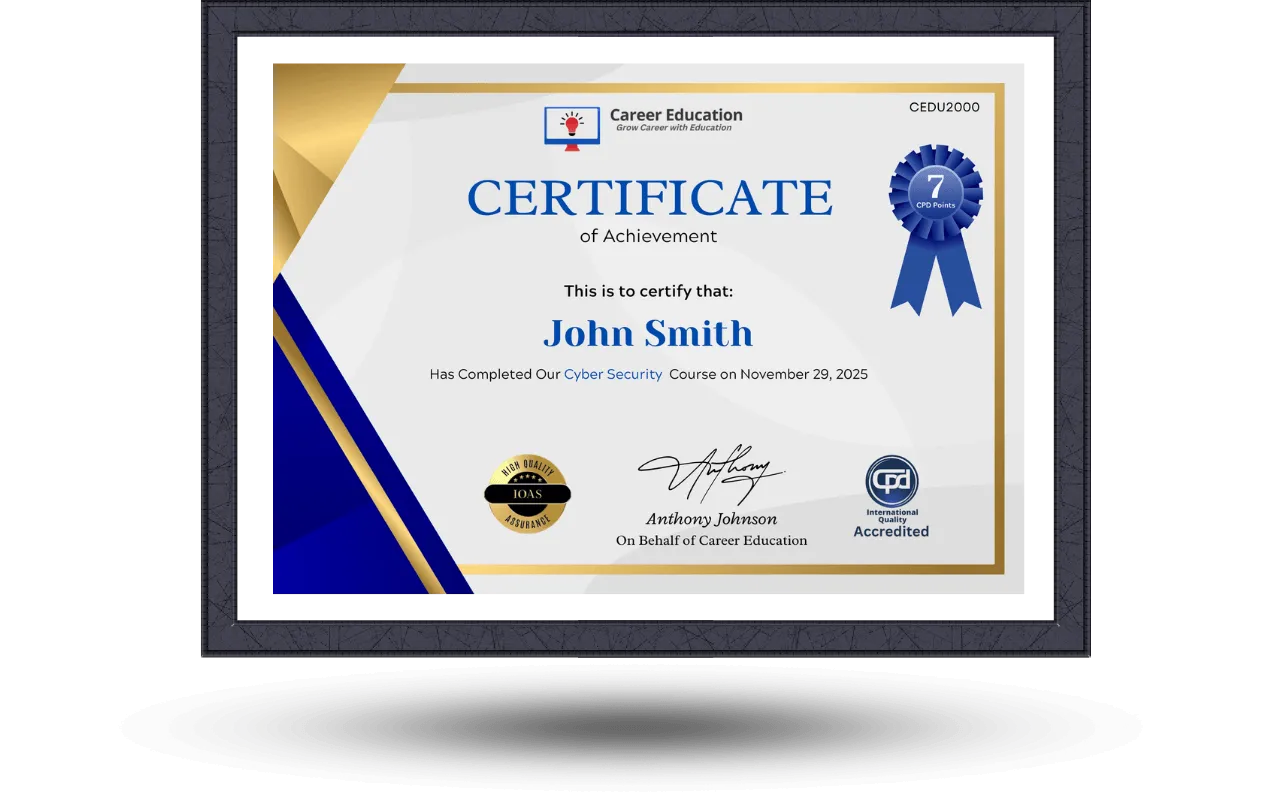
Upon completion of any course, all students are entitled to a CPD IQ Accredited e-certificate that will be issued by Career Education signifying the completion of your course.
After you complete the course and assignment, you will be eligible to order a free certificate accredited by CPD International Quality by completing the form below.
Hardcopy certificates and transcripts are also available for a small additional fee. More information is disclosed upon course completion.
Similar Courses



Frequently Asked Questions
The lifetime membership includes unlimited access to all courses, resources, and updates for a one-time fee.
You can purchase the membership directly from our website using a secure checkout process.
Yes, selected courses can be downloaded for offline access through our mobile app.
Yes, all future updates and new courses are included at no extra cost.
Yes, we offer a 30-day money-back guarantee if you are not satisfied with the membership.