
94%
OFF
OFF
HTML IT Administrator Training
- Lifetime Access
- All Levels
- PDF Certificate
£296
£19
14-Day Money-Back Guarantee
Learn With Confidence






HTML IT Administrator Training
In today’s digital workplace, understanding how websites and web-based systems are structured is a valuable skill for IT professionals, administrators, support staff, and aspiring technology specialists. HTML IT Administrator Training provides a practical introduction to HTML, CSS, responsive design, accessibility, multimedia, forms, and advanced HTML techniques, helping learners develop the skills needed to work confidently with web content and interfaces.
Whether you are starting your IT career, expanding your existing technical knowledge, or looking to understand how web pages are created and maintained, this course offers a structured pathway from fundamental HTML concepts to more advanced techniques. By progressing through each module, you can build a stronger understanding of how web documents are structured, how users navigate websites, and how HTML works alongside CSS to create professional digital experiences.
What Is HTML IT Administrator Training?
HTML IT Administrator Training is designed to introduce learners to the core technologies behind modern web pages. HTML, or HyperText Markup Language, provides the structure and meaning of content displayed in web browsers. Although HTML is only one part of web development, understanding it can be highly useful for anyone working with websites, online platforms, content systems, or IT environments.
The course begins with HTML fundamentals before progressing into text formatting, links, multimedia, tables, forms, semantics, accessibility, HTML5 features, CSS styling, responsive design, and advanced techniques.
Rather than focusing solely on theoretical concepts, the curriculum is structured to help you develop practical knowledge that can be applied to real-world digital and IT tasks.
Why Study HTML IT Administrator Training?
Web technologies are part of almost every modern organisation. Businesses rely on websites, intranets, online forms, customer portals, internal systems, learning platforms, and digital content. IT professionals who understand the fundamentals of web technologies can communicate more effectively with developers and work more confidently with web-based systems.
Completing HTML IT Administrator Training can help you:
-
Understand the fundamental structure of HTML documents.
-
Create and organise structured web content.
-
Format text using appropriate HTML elements.
-
Build links and navigation structures.
-
Add images, audio, video, and other multimedia.
-
Understand tables and HTML forms.
-
Apply semantic HTML principles.
-
Recognise the importance of web accessibility.
-
Explore modern HTML5 capabilities.
-
Understand how CSS is used to style HTML.
-
Develop knowledge of responsive web design.
-
Explore more advanced HTML techniques.
-
Strengthen your overall digital and IT knowledge.
-
Communicate more effectively with web development teams.
These skills can be useful when supporting websites, managing digital content, troubleshooting basic web issues, working with content management systems, or progressing towards more specialised web technology roles.
Build a Strong Foundation in HTML
The first stage of HTML IT Administrator Training focuses on helping learners understand what HTML is and how it is used to structure web pages.
Module 1: Introduction to HTML
You will begin by exploring the fundamentals of HTML. This module introduces the basic concepts behind HTML documents and helps you understand how elements and structures are used to organise information for web browsers.
Developing a strong foundation at this stage makes it easier to understand the more advanced topics covered later in the course.
By the end of this module, you can have a clearer understanding of how HTML contributes to the structure of a web page and how individual elements work together.
Improve Web Content with Text Formatting
Well-structured text is essential for creating readable and accessible web content. HTML provides a range of elements that allow content to be organised and presented logically.
Module 2: Text Formatting
This module explores text formatting in HTML. You will learn how HTML can be used to structure headings, paragraphs, lists, and other forms of written content.
Understanding text structure can help you create cleaner web documents and make information easier for users and browsers to interpret.
The knowledge gained here can also support tasks involving website content management and basic web page editing.
Create Effective Links and Navigation
Navigation plays a major role in helping users move through websites and digital resources.
Module 3: Links and Navigation
You will explore how links work in HTML and how they can connect different pages, resources, and sections of a website.
This knowledge can help you understand how websites are organised and how navigation systems allow users to move between different areas of digital content.
You will also gain a better understanding of the role hyperlinks play in creating connected and usable web experiences.
Work with Images and Multimedia
Modern websites frequently incorporate visual and multimedia content to communicate information more effectively.
Module 4: Images and Multimedia
This module introduces the use of images and multimedia in HTML. You will explore how different types of media can be incorporated into web pages and how HTML provides the structure required to display them.
Understanding multimedia elements can be particularly useful when working with websites that contain product images, instructional videos, audio resources, graphics, or other digital assets.
You can develop a better understanding of how multimedia contributes to a complete web page while also learning about the importance of organising digital content appropriately.
Understand Tables and Forms
Tables and forms remain useful components of many websites and web-based systems.
Module 5: Tables and Forms
In this module, you will explore how HTML can be used to create structured tables and interactive forms.
Tables can help organise information into rows and columns, while forms allow users to submit information through websites and online applications.
Understanding these features can be valuable for IT professionals who work with websites, online services, customer-facing platforms, or internal digital systems.
You can develop knowledge that helps you recognise how information is displayed and collected through web interfaces.
Create More Meaningful and Accessible Web Pages
Modern web development is not only about making pages look good. Websites should also be structured meaningfully and designed so that as many users as possible can interact with them.
Module 6: HTML Semantics and Accessibility
This module introduces semantic HTML and accessibility principles. You will explore why choosing meaningful HTML elements matters and how appropriate structure can improve the way content is understood.
Accessibility is an increasingly important consideration across digital services. Understanding basic accessibility principles can help you appreciate how websites can be made more usable for people with different needs and assistive technologies.
The knowledge from this module can support more responsible and user-focused approaches to working with web content.
Explore Modern HTML5 Features
HTML has developed significantly over time, with HTML5 introducing capabilities that support modern web experiences.
Module 7: HTML5 Features
You will explore key HTML5 features and gain a better understanding of how modern HTML supports contemporary websites and web applications.
This module helps you move beyond basic HTML concepts and understand how newer features can contribute to more capable and structured web pages.
Learning modern HTML concepts can also make it easier to communicate about current web technologies and recognise the capabilities available within modern browsers.
Learn How HTML and CSS Work Together
HTML provides structure, while CSS is commonly used to control presentation and visual appearance.
Module 8: Styling with CSS
This module introduces CSS and explains how it can be used alongside HTML to style web pages.
You will explore how styling can influence the presentation of text, layouts, spacing, and other visual aspects of a web page.
Understanding the relationship between HTML and CSS is particularly useful because modern websites generally rely on both technologies to create structured and visually organised interfaces.
By developing foundational CSS knowledge, you can better understand how web pages are constructed and how changes to styling can affect the user experience.
Understand Responsive Design
People access websites through a wide range of devices, including desktop computers, laptops, tablets, and smartphones. As a result, web pages need to work effectively across different screen sizes.
Module 9: Responsive Design
This module introduces responsive design concepts and helps you understand how web content can adapt to different devices and screen dimensions.
You will explore the principles behind creating web experiences that remain usable across different viewing environments.
This knowledge can be particularly useful for IT administrators and digital professionals who need to understand how websites behave across devices or support users experiencing display and layout issues.
Develop More Advanced HTML Knowledge
After establishing your foundation, the final module takes your understanding further.
Module 10: Advanced HTML Techniques
You will explore more advanced HTML techniques and build upon the concepts introduced throughout the earlier modules.
This final stage gives you an opportunity to bring together your knowledge of HTML structure, multimedia, forms, semantics, HTML5, CSS, and responsive design.
By reaching this stage, you can develop a broader understanding of how different web technologies work together and gain greater confidence when dealing with HTML-based digital environments.
Practical Outcomes of HTML IT Administrator Training
The main goal of HTML IT Administrator Training is to help learners develop knowledge that can be applied beyond the classroom.
After completing the course, you should have a stronger understanding of how web pages are structured and how different technologies contribute to their functionality and presentation.
You can use your knowledge to support activities such as:
-
Reviewing basic HTML structures.
-
Understanding website content and page layouts.
-
Working with links and navigation.
-
Managing or editing web content.
-
Understanding multimedia elements.
-
Working with basic forms and tables.
-
Recognising semantic HTML structures.
-
Supporting accessibility-focused web practices.
-
Understanding modern HTML5 features.
-
Recognising the relationship between HTML and CSS.
-
Understanding responsive website concepts.
-
Communicating more confidently with web professionals.
These outcomes can provide a useful foundation for further study in web development, frontend technologies, website administration, digital content management, or broader IT disciplines.
Who Can Benefit from This Course?
HTML IT Administrator Training can be suitable for a variety of learners who want to improve their understanding of web technologies.
It may be particularly useful for:
-
Aspiring IT administrators.
-
IT support professionals.
-
Website administrators.
-
Digital content professionals.
-
Beginners interested in web technologies.
-
Business professionals who manage website content.
-
Individuals considering a career change into technology.
-
Students developing practical digital skills.
-
Professionals who work with web-based systems.
-
Anyone wanting to strengthen their HTML knowledge.
You do not necessarily need advanced programming experience to begin learning HTML fundamentals. The curriculum progresses through concepts in a structured way, making it suitable for learners who want to develop their knowledge step by step.
Strengthen Your Digital Career Skills
Technology continues to influence how organisations operate, communicate, and deliver services. Having a broader understanding of web technologies can help you become more confident when working with digital platforms.
While HTML knowledge alone does not make someone a full web developer, it provides an important foundation for understanding the technology behind websites. Learners can use this foundation as a stepping stone towards additional areas such as CSS, JavaScript, frontend development, web design, content management, and website administration.
For IT professionals, the knowledge can also make technical conversations easier. Understanding common HTML terminology and concepts can help you communicate more effectively when working with developers, designers, marketing teams, or digital specialists.
Learn at Your Own Pace
Online training can provide a convenient way to develop new technical skills alongside other commitments. Instead of relying solely on traditional classroom learning, learners can study course material according to their own schedules and revisit important concepts when needed.
This flexibility can make HTML IT Administrator Training a useful option for people balancing professional responsibilities, education, or personal commitments while developing their IT knowledge.
Take the Next Step with HTML IT Administrator Training
Building technical confidence starts with understanding the fundamentals. HTML IT Administrator Training provides a structured learning journey covering HTML basics, text formatting, navigation, multimedia, forms, semantics, accessibility, HTML5, CSS, responsive design, and advanced HTML techniques.
Whether your goal is to improve your current IT capabilities, understand website technologies more effectively, support digital systems, or prepare for further technology-focused learning, this course can help you develop a valuable foundation.
By completing the modules, you can gain a clearer understanding of how web pages are structured, how different elements work together, and how modern websites combine HTML with CSS and responsive design principles.
Start your learning journey with HTML IT Administrator Training and build practical knowledge that can support your continued development in the digital and IT environment.
Course Modules
Course Content
Module 1_ Introduction to HTML.
-
Lesson 1_ Introduction to HTML.
Module 2_ Text Formatting.
Module 3_ Links and Navigation.
Module 4_ Images and Multimedia.
Module 5_ Tables and Forms.
Module 6_ HTML Semantics and Accessibility.
Module 7_ HTML5 Features.
Module 8_ Styling with CSS.
Module 9_ Responsive Design.
Module 10_ Advanced HTML Techniques
What our students say
Excellent
4.9 average
158 Reviews

Earn an Accredited Certificate
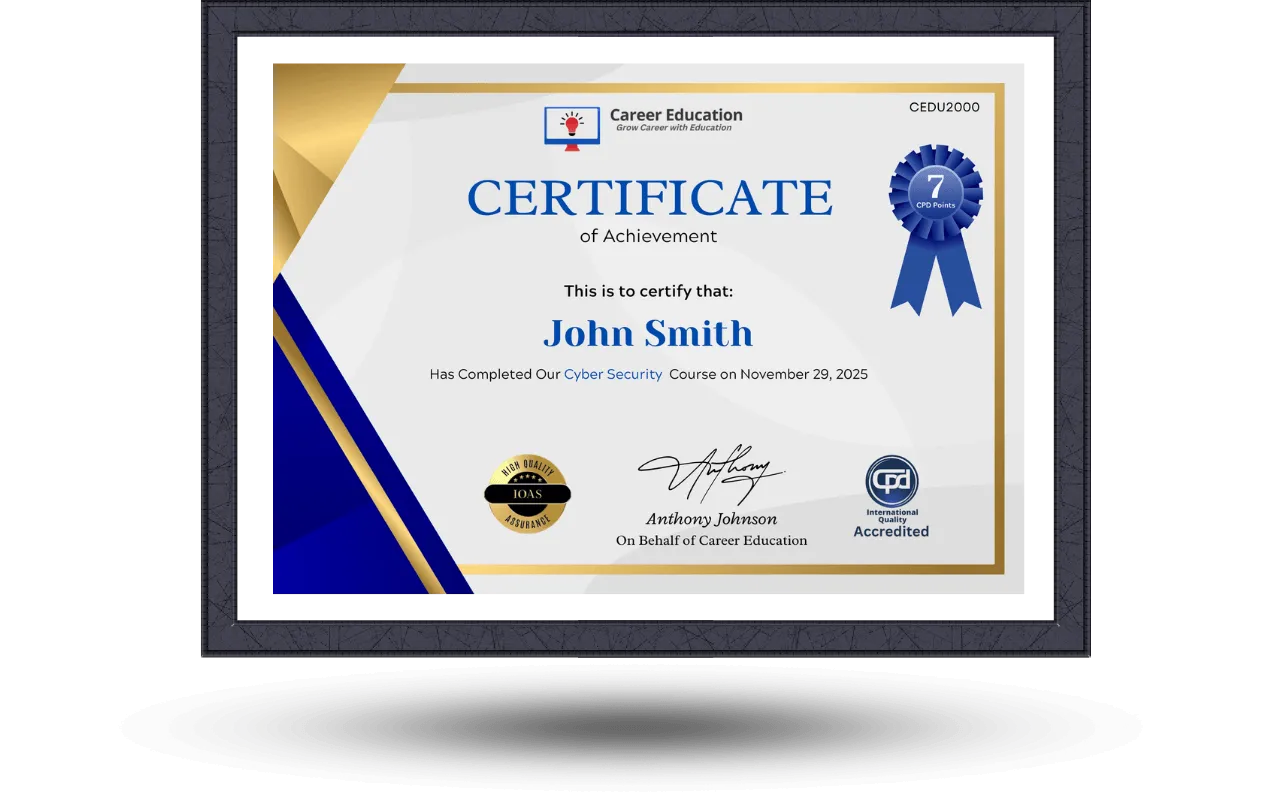
Upon completion of any course, all students are entitled to a CPD IQ Accredited e-certificate that will be issued by Career Education signifying the completion of your course.
After you complete the course and assignment, you will be eligible to order a free certificate accredited by CPD International Quality by completing the form below.
Hardcopy certificates and transcripts are also available for a small additional fee. More information is disclosed upon course completion.
Similar Courses


Frequently Asked Questions
The lifetime membership includes unlimited access to all courses, resources, and updates for a one-time fee.
You can purchase the membership directly from our website using a secure checkout process.
Yes, selected courses can be downloaded for offline access through our mobile app.
Yes, all future updates and new courses are included at no extra cost.
Yes, we offer a 30-day money-back guarantee if you are not satisfied with the membership.