
Housing Support Worker
- Lifetime Access
- All Levels
- PDF Certificate
Free
14-Day Money-Back Guarantee
Learn With Confidence








Insurance Advisory Skills Training
Insurance plays an important role in helping individuals and businesses manage uncertainty, protect valuable assets, and prepare for unexpected financial losses. However, choosing suitable insurance cover can be challenging when customers are faced with different policies, levels of protection, exclusions, premiums, and regulatory requirements. Effective insurance professionals need more than basic product knowledge—they need the ability to assess needs, understand risk, communicate clearly, and provide informed guidance.
The Insurance Advisory Skills Training course is designed to help learners build a practical understanding of insurance and develop the knowledge and skills needed to support customers through insurance-related decisions. Covering insurance fundamentals, policy types, underwriting, risk assessment, claims, loss adjustment, and legal and regulatory considerations, the course provides a structured introduction to important areas of insurance advisory work.
Whether you are looking to enter the insurance sector, strengthen your existing knowledge, move into an advisory role, or improve your understanding of insurance processes, this course can help you develop a stronger foundation for professional growth.
What Is Insurance Advisory Skills Training?
Insurance Advisory Skills Training focuses on the knowledge and practical understanding required to communicate effectively about insurance products, customer needs, risks, claims, and regulatory responsibilities.
Insurance advisers and professionals often work with customers who may have limited knowledge of insurance terminology or may be unsure about the level and type of cover they require. Strong advisory skills can help professionals explain options clearly, identify relevant considerations, and support better-informed decisions.
This course introduces learners to the wider insurance environment while exploring key areas such as policy types, underwriting, risk assessment, claims management, loss adjustment, and regulatory issues.
Rather than focusing solely on theoretical definitions, the course is designed around practical outcomes. Learners can develop an understanding of how insurance works and how different stages of the insurance process connect with one another.
Why Develop Insurance Advisory Skills?
Insurance is a complex field where accuracy, communication, attention to detail, and an understanding of risk are particularly important. Professionals may need to discuss policies with customers, understand underwriting decisions, assist with claims, or work within strict legal and regulatory frameworks.
Developing strong insurance advisory skills can help you:
-
Understand the fundamental principles of insurance
-
Recognise different types of insurance policies
-
Develop an understanding of underwriting processes
-
Assess factors that can influence insurance risk
-
Understand how claims are handled
-
Explore the role of loss adjusters
-
Recognise important legal and regulatory responsibilities
-
Communicate insurance information more effectively
-
Support customers in making informed insurance decisions
-
Build knowledge that can contribute to professional development in the insurance sector
A solid foundation can also make it easier to understand more advanced insurance concepts as you progress in your career.
What Will You Learn?
The Insurance Advisory Skills Training course covers five core modules, providing learners with a broad introduction to essential insurance concepts and professional responsibilities.
Module 1: Introduction to Insurance
The course begins with an introduction to insurance and the principles that underpin the industry.
You will explore the purpose of insurance and why individuals and organisations use insurance to manage financial uncertainty. Understanding these fundamentals can help you develop the context needed for more advanced topics later in the course.
This module can help you understand:
-
The basic purpose of insurance
-
How insurance supports risk management
-
Fundamental insurance concepts
-
The relationship between risk and insurance
-
Key parties involved in insurance arrangements
-
The importance of insurance in personal and commercial contexts
By completing this module, learners can establish a stronger foundation for understanding how insurance products and processes operate.
Module 2: Types of Insurance Policies
Insurance is not a one-size-fits-all solution. Different risks require different forms of protection, and policies can vary significantly depending on the customer, circumstances, and type of risk involved.
This module introduces learners to different types of insurance policies and helps develop an understanding of how insurance products are designed to address particular risks.
You will explore the characteristics and purposes of different insurance policies and consider why selecting appropriate cover is important.
This knowledge can help you become more confident when discussing insurance options and explaining the general purpose of different forms of cover.
By the end of this module, learners can be better prepared to:
-
Recognise common categories of insurance
-
Understand why different policies exist
-
Identify the general purpose of different types of cover
-
Consider customer needs when discussing insurance options
-
Understand the importance of policy terms and conditions
-
Appreciate the role of exclusions and limitations
A stronger understanding of insurance products can support clearer communication between professionals and customers.
Module 3: Underwriting and Risk Assessment
Underwriting is a fundamental part of the insurance process. Insurers need to understand and evaluate risks before deciding whether and under what terms to provide cover.
This module introduces learners to underwriting and risk assessment, helping them understand how insurers evaluate information associated with potential risks.
You will explore the importance of gathering relevant information, assessing risk factors, and understanding how risk can influence insurance decisions.
The module can help you develop knowledge of:
-
The purpose of underwriting
-
The role of risk assessment
-
Factors that can affect insurance risk
-
The importance of accurate information
-
How insurers evaluate potential risks
-
The relationship between risk and policy terms
-
The importance of careful assessment in insurance
Understanding underwriting can help learners appreciate why insurers may ask detailed questions before offering cover and why individual circumstances can influence insurance arrangements.
These skills are particularly valuable for anyone interested in insurance advisory, underwriting, brokerage, customer service, or related roles.
Module 4: Claims and Loss Adjustments
A key moment in the insurance journey occurs when a customer needs to make a claim. Understanding how claims are assessed and managed is therefore an important part of insurance knowledge.
This module explores claims and loss adjustments, helping learners understand the processes that can occur when an insured event results in a potential loss.
You will develop an understanding of the role of claims handling and the importance of assessing losses accurately and fairly. The module also introduces the concept of loss adjustment and its relevance within the claims process.
You can learn about:
-
The general claims process
-
The importance of accurate claims information
-
The assessment of insured losses
-
The role of loss adjusters
-
Factors considered when evaluating claims
-
The importance of documentation and evidence
-
Professional considerations when handling claims
This knowledge can help learners understand what customers may experience when making a claim and why careful assessment is necessary.
For professionals working with policyholders, insurers, brokers, or claims teams, understanding claims processes can contribute to more effective communication and customer support.
Module 5: Regulatory and Legal Issues in Insurance
Insurance professionals operate within an environment shaped by laws, regulations, professional standards, and consumer protection requirements. Understanding these responsibilities is essential for anyone involved in insurance-related activities.
The final module introduces learners to regulatory and legal issues in insurance. It highlights why compliance matters and why insurance professionals must conduct their work responsibly and appropriately.
You will explore the importance of:
-
Insurance regulation
-
Legal responsibilities
-
Regulatory compliance
-
Consumer protection
-
Professional conduct
-
Accurate communication
-
Responsible advisory practices
-
Maintaining appropriate standards within insurance activities
This module can help you recognise the importance of working within applicable rules and understanding the responsibilities associated with providing insurance information and advice.
Regulatory knowledge is particularly valuable because insurance professionals must consider both customer needs and their professional obligations.
Practical Outcomes of Insurance Advisory Skills Training
The main value of Insurance Advisory Skills Training is the opportunity to develop knowledge that can be applied to realistic professional situations.
After completing the course, learners can have a stronger understanding of how insurance works from the initial consideration of risk through to policy selection, underwriting, claims, and regulatory responsibilities.
You can develop the ability to:
Understand insurance terminology and concepts: Build a foundation that makes insurance discussions and documentation easier to understand.
Recognise different policy types: Develop knowledge of the broad range of insurance products and the risks they are designed to address.
Understand risk assessment: Gain insight into how insurers evaluate risks and why specific information can influence insurance decisions.
Appreciate underwriting decisions: Understand the role of underwriting in determining whether risks can be accepted and on what terms.
Understand claims processes: Learn about the general journey from making a claim to assessing a potential loss.
Recognise loss adjustment responsibilities: Develop an understanding of how losses may be evaluated as part of the claims process.
Work with greater regulatory awareness: Recognise why compliance, professional conduct, and consumer protection are important in insurance.
Communicate more confidently: Build a knowledge base that can help you explain insurance concepts in a clearer and more structured way.
Who Can Benefit from This Course?
The Insurance Advisory Skills Training course can be suitable for a wide range of learners interested in insurance and related professional activities.
It may be particularly useful for:
-
Aspiring insurance advisers
-
Insurance administrators
-
Insurance customer service professionals
-
Insurance brokers and support staff
-
Individuals considering an insurance career
-
Professionals working with insurance products
-
Claims support staff
-
People interested in underwriting
-
Financial services professionals seeking broader insurance knowledge
-
Business owners who want to understand insurance more effectively
-
Learners pursuing professional development
No matter where you are in your learning journey, developing a clearer understanding of insurance can help you approach insurance-related responsibilities with greater confidence.
Build a Stronger Foundation for an Insurance Career
Starting or progressing within the insurance sector requires a combination of technical knowledge, communication ability, analytical thinking, and professional awareness.
The Insurance Advisory Skills Training course provides an accessible way to explore these areas in a structured format. By working through the five modules, learners can gain insight into the complete insurance environment rather than focusing on just one part of the industry.
Understanding the connection between risk assessment, insurance policies, claims, and regulatory requirements can give you a more complete picture of how insurance professionals operate.
This broader perspective can be valuable when preparing for roles where you may need to communicate with customers, process information, support insurance decisions, or work alongside experienced industry professionals.
Improve Your Professional Confidence
Confidence in insurance comes from understanding both the products and the processes behind them.
A customer may ask why certain information is required, how a policy works, what happens when a claim is submitted, or why particular terms apply. While different professional roles have different responsibilities, having a solid foundation in insurance can make it easier to understand these questions and communicate appropriately.
The Insurance Advisory Skills Training course helps learners build that foundation by covering the major stages of insurance activity.
Instead of learning isolated concepts, you can develop an understanding of how the different areas relate to one another. Risk influences underwriting. Underwriting affects policy arrangements. Policy arrangements influence claims. Claims may involve loss assessment. All of these activities operate within legal and regulatory frameworks.
Seeing these connections can help you develop a more complete understanding of the insurance industry.
Support Your Continuing Professional Development
Professional learning is increasingly important in industries where knowledge, regulations, customer expectations, and business practices can evolve.
Completing training in insurance advisory skills can demonstrate your commitment to developing your professional knowledge. It can also provide a useful learning foundation for those who want to explore additional insurance, financial services, risk management, compliance, or customer-focused training in the future.
Whether you are preparing for a new career direction or strengthening your existing skill set, structured learning can help you identify areas where further development may be beneficial.
Why Choose Insurance Advisory Skills Training?
Choosing the right course means looking for learning that provides both relevant knowledge and practical value.
The Insurance Advisory Skills Training course offers:
-
A structured five-module learning journey
-
An introduction to essential insurance principles
-
Coverage of different insurance policy types
-
Insight into underwriting and risk assessment
-
Understanding of claims and loss adjustment
-
An introduction to legal and regulatory issues
-
Knowledge applicable to a variety of insurance-related roles
-
A foundation for continued professional development
-
Outcome-focused learning designed to build practical understanding
By covering the insurance lifecycle from fundamental principles through to regulation, the course gives learners a well-rounded introduction to the knowledge required in insurance advisory environments.
Take the Next Step in Your Insurance Learning Journey
Insurance professionals play an important role in helping people and organisations understand and manage risk. To perform effectively in this environment, it is important to understand insurance products, risk assessment, claims, and the regulatory responsibilities that shape professional practice.
Insurance Advisory Skills Training provides a structured opportunity to develop this knowledge and strengthen your understanding of the insurance industry.
Whether your goal is to explore a career in insurance, improve your current professional skills, broaden your knowledge of financial services, or prepare for further learning, this course can help you move forward with a stronger foundation.
Develop your understanding of insurance, build greater professional confidence, and prepare yourself for the opportunities that can come with stronger industry knowledge. Enrol in Insurance Advisory Skills Training and take the next step towards developing valuable insurance advisory skills.
Free
14-Day Money-Back Guarantee
Course Modules
Course Content
Module 1 Introduction to the Role of a Housing Support Worker.
-
Lesson 1 Introduction to the Role of a Housing Support Worker.
Module 2 Understanding and Assessing the Needs of Clients.
Module 3 Housing Resources and Referral.
Module 4 Case Management.
Module 5 Advocacy and Systems Navigation.
What our students say
Excellent
4.9 average
158 Reviews

Earn an Accredited Certificate
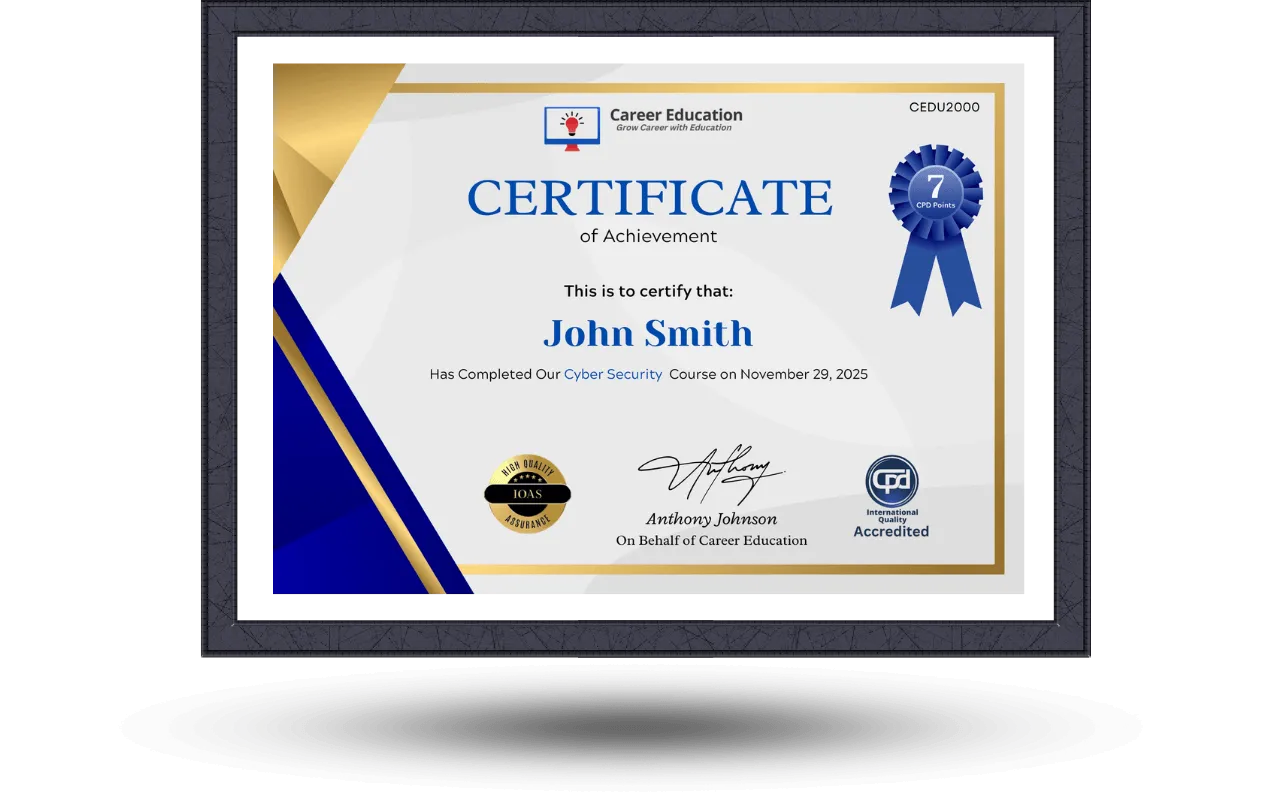
Upon completion of any course, all students are entitled to a CPD IQ Accredited e-certificate that will be issued by Career Education signifying the completion of your course.
After you complete the course and assignment, you will be eligible to order a free certificate accredited by CPD International Quality by completing the form below.
Hardcopy certificates and transcripts are also available for a small additional fee. More information is disclosed upon course completion.
Similar Courses


Frequently Asked Questions
The lifetime membership includes unlimited access to all courses, resources, and updates for a one-time fee.
You can purchase the membership directly from our website using a secure checkout process.
Yes, selected courses can be downloaded for offline access through our mobile app.
Yes, all future updates and new courses are included at no extra cost.
Yes, we offer a 30-day money-back guarantee if you are not satisfied with the membership.