
94%
OFF
OFF
Health and Social Care Diplomas – Levels 3, 4 and 5
- Lifetime Access
- All Levels
- PDF Certificate
£296
£19
14-Day Money-Back Guarantee
Learn With Confidence









Health and Social Care Diplomas – Levels 3, 4 and 5
If you are looking to build a rewarding career in health and social care, developing the right knowledge, practical understanding, and professional skills can make a significant difference. The Health and Social Care Diplomas – Levels 3, 4 and 5 course is designed to help learners develop a broad understanding of care practice, safeguarding, communication, wellbeing, leadership, professional responsibilities, and evidence-based approaches.
Health and social care professionals work with people who may have different needs, abilities, backgrounds, and life experiences. Providing effective support requires much more than compassion. It involves understanding individual needs, communicating appropriately, protecting people’s rights, following legal and professional responsibilities, managing risks, maintaining accurate records, and working effectively with other professionals.
The Health and Social Care Diplomas – Levels 3, 4 and 5 provide a structured learning pathway covering essential principles through to more advanced areas of professional practice. Whether you are developing your existing care knowledge, preparing for greater responsibility, or seeking to strengthen your professional development, this course can provide valuable learning across a wide range of health and social care topics.
What Are Health and Social Care Diplomas – Levels 3, 4 and 5?
The Health and Social Care Diplomas – Levels 3, 4 and 5 are designed around key areas of knowledge relevant to care environments. The curriculum progresses from foundational concepts to more advanced responsibilities, allowing learners to explore how high-quality care is planned, delivered, monitored, and improved.
The course covers communication, equality and diversity, safeguarding, person-centred care, health and safety, mental health, disabilities, dementia, medication, documentation, leadership, end-of-life care, and professional development.
A major focus is on understanding how care professionals can support individuals safely, respectfully, and effectively while maintaining their dignity, independence, rights, and wellbeing.
Build a Strong Foundation in Health and Social Care
The first stage of effective care practice is understanding the sector itself. Module 1: Introduction to Health and Social Care introduces important principles and concepts within health and social care. You can develop an understanding of the responsibilities involved in supporting individuals and the importance of professional standards.
This foundation can help learners understand how different aspects of care connect and why professional knowledge is essential when working with individuals who may require support.
Develop Effective Communication Skills
Communication is central to almost every care role. Professionals need to communicate with individuals receiving care, relatives, colleagues, managers, and other professionals.
Module 2: Communication in Care Settings explores communication within care environments and helps learners understand the importance of clear, respectful, and appropriate interactions.
Effective communication can help professionals:
-
Understand individual needs and preferences
-
Build professional relationships
-
Reduce misunderstandings
-
Share important information
-
Encourage individuals to express their views
-
Support collaborative care
-
Promote dignity and respect
Strong communication skills can therefore contribute to safer and more person-centred care.
Understand Equality, Diversity and Individual Rights
Every individual should be treated with dignity and respect. Care professionals must understand how equality, diversity, and individual rights influence the way support should be provided.
Module 3: Equality, Diversity and Rights explores these important principles and their relevance to professional care practice. Learners can develop greater awareness of respecting individual differences and supporting people without discrimination.
This knowledge can help you approach care with greater sensitivity and professionalism while recognising that every individual has their own preferences, experiences, values, and circumstances.
Strengthen Safeguarding Knowledge
Safeguarding is a fundamental responsibility within health and social care. Professionals need to recognise the importance of protecting individuals from harm, abuse, neglect, and inappropriate treatment.
Module 4: Safeguarding and Protection introduces key safeguarding principles and helps learners understand why vigilance, appropriate reporting, professional boundaries, and effective communication are essential.
Understanding safeguarding can help care professionals contribute to safer environments and respond appropriately when concerns arise.
Learn Person-Centred Approaches
High-quality care should focus on the individual rather than treating everyone in exactly the same way.
Module 5: Person-Centred Approaches explores how care can be tailored around an individual’s needs, preferences, choices, circumstances, and goals.
A person-centred approach can support:
-
Individual choice
-
Independence
-
Dignity
-
Personal preferences
-
Participation in decision-making
-
Respectful relationships
-
Individual wellbeing
This approach is particularly important when supporting people with complex or changing needs.
Understand Duty of Care and Legal Responsibilities
Care professionals have important responsibilities towards the people they support.
Module 6: Duty of Care and Legal Responsibilities explores professional obligations and the importance of working within appropriate legal and organisational frameworks.
Understanding duty of care can help learners recognise the importance of responsible decision-making, professional conduct, accountability, and safe practice.
Improve Health and Safety Awareness
Health and safety is essential in care environments. Professionals need to recognise potential risks and understand how safe working practices contribute to the wellbeing of individuals, colleagues, visitors, and themselves.
Module 7: Health and Safety in Care Settings examines health and safety considerations within care environments. Learners can develop greater awareness of risk, responsibilities, and the importance of following appropriate procedures.
Promote Health and Wellbeing
Supporting people effectively involves considering their overall wellbeing, not simply their immediate care requirements.
Module 8: Promoting Health and Wellbeing explores approaches to supporting healthier lives and positive wellbeing. Learners can consider how physical, emotional, social, and other factors can influence an individual’s quality of life.
This knowledge can support a more holistic approach to care.
Develop Mental Health Awareness
Mental health can influence how individuals think, feel, communicate, behave, and interact with others.
Module 9: Understanding Mental Health provides an opportunity to explore mental health and its relevance within care practice. Developing awareness can help professionals approach individuals with greater understanding, empathy, and respect.
Mental health awareness is valuable across many care settings because individuals may experience different challenges at different stages of their lives.
Understand Partnership Working
Health and social care often involves collaboration between multiple people and organisations.
Module 10: Working in Partnership explores the importance of effective collaboration. Care professionals may need to work with colleagues, families, healthcare professionals, social care professionals, community services, and other relevant parties.
Effective partnership working can help information, responsibilities, and support remain coordinated around the needs of the individual.
Support Individuals with Learning Disabilities
Module 11: Supporting Individuals with Learning Disabilities focuses on understanding the support needs of people with learning disabilities.
Learners can explore approaches that promote dignity, inclusion, communication, independence, choice, and participation. This knowledge can help professionals provide support that recognises each person’s individuality rather than making assumptions about their abilities or needs.
Understand Physical Disabilities
Module 12: Understanding Physical Disabilities explores considerations associated with supporting individuals with physical disabilities.
The module can help learners understand the importance of accessibility, independence, appropriate support, dignity, and individual needs when providing care.
Develop Dementia Awareness
Dementia can affect memory, communication, thinking, behaviour, and everyday life. Supporting someone living with dementia requires patience, understanding, and an individualised approach.
Module 13: Dementia Awareness and Support introduces important considerations for supporting individuals affected by dementia. Learners can develop greater awareness of appropriate approaches and the importance of maintaining dignity and quality of life.
Strengthen Infection Prevention and Control Knowledge
Preventing the spread of infection is an important aspect of safe care practice.
Module 14: Infection Prevention and Control explores key principles associated with infection prevention and control in care environments.
Learners can develop awareness of why appropriate hygiene, procedures, responsibilities, and safe working practices are important for protecting individuals and maintaining safer care environments.
Understand Medication Handling and Administration
Medication can play an important role in supporting health, but it also requires careful professional practice.
Module 15: Medication Handling and Administration introduces key considerations surrounding medication within care settings. Learners can develop awareness of the importance of appropriate procedures, accuracy, responsibility, documentation, and safe practice.
Any real-world medication practice must always follow the relevant legislation, organisational procedures, professional requirements, and appropriate supervision.
Improve Record Keeping and Documentation
Accurate documentation is an essential part of professional care.
Module 16: Record Keeping and Documentation explores the importance of maintaining appropriate records and documentation. Good record keeping can support communication, continuity of care, accountability, and informed decision-making.
Learners can develop a stronger understanding of why information should be handled responsibly and recorded appropriately.
Develop Supervision and Leadership Skills
As professionals gain experience, they may take on additional responsibilities involving supervision, coordination, or leadership.
Module 17: Supervision and Leadership in Care introduces leadership-related principles within care environments. Learners can explore how effective supervision and leadership can contribute to professional standards, teamwork, staff development, and quality care.
This can be particularly valuable for individuals interested in progressing towards roles with greater responsibility.
Explore End-of-Life Care
End-of-life care requires professionalism, sensitivity, compassion, and respect.
Module 18: Supporting End-of-Life Care explores considerations involved in supporting individuals during the final stages of life. Learners can develop greater awareness of dignity, individual preferences, communication, emotional support, and respectful care.
The module encourages an understanding of the importance of treating individuals and those close to them with sensitivity during a particularly significant period.
Support Your Professional Development
Health and social care is a constantly evolving field. Regulations, professional expectations, research, technologies, and approaches to care can change over time.
Module 19: Professional Development in Care Roles focuses on the importance of continued learning and professional development. Developing a reflective approach to your own knowledge and skills can help you identify areas for improvement and prepare for changing responsibilities.
Explore Research and Evidence-Based Practice
Effective care should be informed by reliable knowledge and appropriate evidence.
Module 20: Research and Evidence-Based Practice introduces the importance of using evidence to inform professional approaches. Learners can develop an understanding of why research, evaluation, reflection, and reliable information matter when considering care practices.
Evidence-based thinking can support continuous improvement and encourage professionals to question whether approaches remain appropriate and effective.
What Can You Gain from the Health and Social Care Diplomas – Levels 3, 4 and 5?
Completing the Health and Social Care Diplomas – Levels 3, 4 and 5 can help you build a broad knowledge base covering many areas of professional care practice.
By the end of the course, you can develop knowledge that may help you:
-
Understand fundamental principles of health and social care
-
Communicate more effectively in care environments
-
Recognise the importance of equality, diversity, and individual rights
-
Develop greater safeguarding awareness
-
Apply person-centred principles to care
-
Understand duty of care and professional responsibilities
-
Recognise key health and safety considerations
-
Promote health and wellbeing
-
Develop mental health awareness
-
Understand partnership working
-
Explore support considerations for learning and physical disabilities
-
Build awareness of dementia support
-
Understand infection prevention principles
-
Develop knowledge of medication-related responsibilities
-
Appreciate the importance of accurate documentation
-
Explore supervision and leadership within care
-
Understand considerations around end-of-life care
-
Recognise the importance of continuing professional development
-
Explore evidence-based approaches to care practice
Who Can Benefit from This Course?
The Health and Social Care Diplomas – Levels 3, 4 and 5 may be suitable for learners who want to develop their understanding of the health and social care sector or strengthen knowledge relevant to existing or future care-related responsibilities.
It can be useful for people interested in areas such as care work, support work, health and social care services, community support, care coordination, supervision, and leadership.
It may also be valuable for learners who want to broaden their understanding before pursuing further education, training, or professional development in a relevant field.
The course is designed around a wide range of topics, making it useful for learners at different stages who want to develop a more comprehensive understanding of care practice.
Take the Next Step in Your Health and Social Care Learning
A successful career in health and social care requires a commitment to learning, professionalism, responsibility, and person-centred support. Knowledge of safeguarding, communication, equality, wellbeing, disabilities, dementia, health and safety, leadership, and evidence-based practice can help you approach care responsibilities with greater confidence and awareness.
The Health and Social Care Diplomas – Levels 3, 4 and 5 bring these important areas together in one comprehensive learning programme. From foundational principles to leadership and research, the curriculum gives you the opportunity to explore the knowledge required across a broad range of care-related topics.
Whether you are preparing for a new direction, developing existing knowledge, or working towards greater professional responsibility, investing in your learning can be an important step towards your future goals.
Enrol in the Health and Social Care Diplomas – Levels 3, 4 and 5 today and develop a stronger foundation for your health and social care journey.
Course Modules
Course Content
Module 1_ Introduction to Health and Social Care
-
Lesson 1_ Introduction to Health and Social Care
Module 2_ Communication in Care Settings
Module 3_ Equality, Diversity and Rights
Module 4_ Safeguarding and Protection
Module 5_ Person-Centred Approaches
Module 6_ Duty of Care and Legal Responsibilities
Module 7_ Health and Safety in Care Settings
Module 8_ Promoting Health and Wellbeing
Module 9_ Understanding Mental Health
Module 10_ Working in Partnership
Module 11_ Supporting Individuals with Learning Disabilities
Module 12_ Understanding Physical Disabilities
Module 13_ Dementia Awareness and Support
Module 14_ Infection Prevention and Control
Module 15_ Medication Handling and Administration
Module 16_ Record Keeping and Documentation
Module 17_ Supervision and Leadership in Care
Module 18_ Supporting End-of-Life Care
Module 19_ Professional Development in Care Roles
Module 20_ Research and Evidence-Based Practice
What our students say
Excellent
4.9 average
158 Reviews

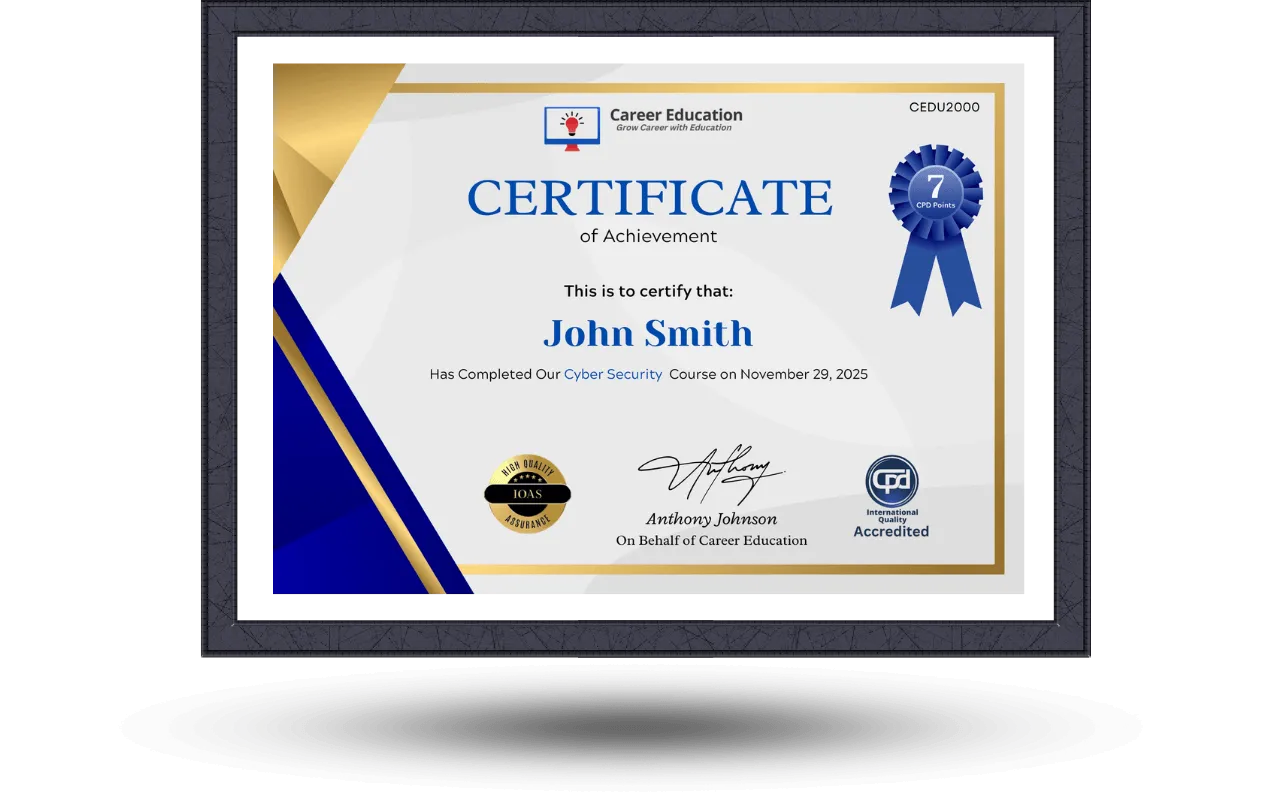
Earn an Accredited Certificate
Upon completion of any course, all students are entitled to a CPD IQ Accredited e-certificate that will be issued by Career Education signifying the completion of your course.
After you complete the course and assignment, you will be eligible to order a free certificate accredited by CPD International Quality by completing the form below.
Hardcopy certificates and transcripts are also available for a small additional fee. More information is disclosed upon course completion.
Similar Courses




Frequently Asked Questions
The lifetime membership includes unlimited access to all courses, resources, and updates for a one-time fee.
You can purchase the membership directly from our website using a secure checkout process.
Yes, selected courses can be downloaded for offline access through our mobile app.
Yes, all future updates and new courses are included at no extra cost.
Yes, we offer a 30-day money-back guarantee if you are not satisfied with the membership.