
94%
OFF
OFF
HAZWOPER Emergency Response Refresher Essentials
- Lifetime Access
- All Levels
- PDF Certificate
£296
£19
14-Day Money-Back Guarantee
Learn With Confidence









HAZWOPER Emergency Response Refresher Essentials
Emergency response work involving hazardous substances requires preparation, sound judgement, effective communication, and a clear understanding of established procedures. When an incident occurs, emergency responders may need to assess hazards, protect themselves and others, control exposure, coordinate with multiple response teams, and support recovery activities after the immediate danger has passed.
The HAZWOPER Emergency Response Refresher Essentials course provides a practical refresher for personnel involved in hazardous substance emergency response. It revisits essential concepts surrounding emergency response planning, hazard recognition, PPE, response procedures, post-emergency activities, and coordination with other responders.
This outcome-focused course is designed to reinforce existing knowledge rather than replace site-specific training, emergency response plans, or applicable regulatory requirements. It encourages learners to review established procedures, recognise changing hazards, communicate effectively, and maintain a disciplined approach during emergency operations.
Whether responding to chemical releases, hazardous material incidents, spills, fires, transportation accidents, or other emergencies involving hazardous substances, responders need to understand both their responsibilities and their limitations. The HAZWOPER Emergency Response Refresher Essentials course supports that understanding through a structured review of key emergency response principles.
Why HAZWOPER Emergency Response Refresher Essentials Matters
Hazardous substance emergencies can develop rapidly and conditions may change from one moment to the next.
A response team may encounter:
-
Toxic substances
-
Flammable materials
-
Unknown chemicals
-
Hazardous vapours
-
Contaminated surfaces
-
Fire or explosion risks
-
Unstable containers
-
Electrical hazards
-
Confined spaces
-
Damaged infrastructure
-
Environmental contamination
Responders must therefore be able to recognise hazards before committing themselves to an operation.
A refresher course provides an opportunity to reinforce essential knowledge and review the principles that support safe emergency response.
The HAZWOPER Emergency Response Refresher Essentials course focuses on the importance of planning, hazard assessment, PPE, communication, coordinated response, and post-emergency procedures.
It also reinforces a fundamental principle: responders should never take unnecessary risks or exceed their training, equipment, or assigned responsibilities.
What You Will Learn
By completing the HAZWOPER Emergency Response Refresher Essentials course, learners will be able to:
-
Review the fundamentals of hazardous substance emergency response.
-
Understand the importance of emergency response planning.
-
Recognise potential hazards during an emergency.
-
Understand basic hazard assessment principles.
-
Review the role of PPE in emergency response.
-
Understand the importance of following established response procedures.
-
Recognise the need for ongoing situational awareness.
-
Understand post-emergency response considerations.
-
Appreciate the importance of decontamination and incident follow-up.
-
Understand the value of effective responder communication.
-
Recognise the importance of coordination between response organisations.
-
Support safer and more organised emergency operations.
Course Curriculum
Module 1: Introduction to Emergency Response
Lesson 1: Introduction to Emergency Response
The course begins with a review of the fundamentals of emergency response involving hazardous substances.
Learners will explore the characteristics of hazardous substance emergencies and the challenges that responders may encounter.
The module introduces concepts including:
-
Emergency recognition
-
Initial assessment
-
Hazard identification
-
Responder safety
-
Incident control
-
Communication
-
PPE
-
Evacuation
-
Containment
-
Decontamination
Learners will understand that emergency response begins with protecting people rather than immediately attempting to control the source of an incident.
The initial response should involve gathering available information, establishing appropriate control zones, identifying potential hazards, and following the applicable incident response plan.
The module also highlights the importance of situational awareness.
Conditions at an emergency scene can change quickly. A substance that initially appears contained may begin to leak, a fire may spread, or weather conditions may alter the movement of vapours.
Responders therefore need to continually reassess the situation.
By completing this module, participants will refresh their understanding of the fundamental principles behind safe hazardous substance emergency response.
Module 2: Emergency Response Planning
Effective emergency response begins before an incident occurs.
This module focuses on the importance of emergency response planning and preparedness.
Learners will explore elements that may form part of an emergency response plan, including:
-
Emergency contacts
-
Roles and responsibilities
-
Communication procedures
-
Evacuation arrangements
-
Emergency equipment
-
PPE requirements
-
Hazard information
-
Decontamination procedures
-
Medical response
-
Coordination arrangements
-
Recovery procedures
The module emphasises the importance of site-specific planning.
Different facilities may contain different hazardous substances, equipment, processes, and physical layouts. Emergency procedures should therefore reflect the actual risks present.
Learners will also explore the importance of training and exercises.
A plan that exists only on paper may not provide effective protection if personnel are unfamiliar with their responsibilities.
Regular training, drills, equipment checks, and plan reviews can help organisations identify weaknesses before an actual emergency occurs.
The course also highlights the importance of keeping emergency information accessible and current.
By completing this module, participants will understand how preparedness can improve the effectiveness and safety of emergency response operations.
Module 3: Hazard Recognition and Assessment
Hazard recognition is one of the most important skills for emergency responders.
This module focuses on identifying and assessing hazards before and during response activities.
Learners will explore potential hazards such as:
-
Chemical exposure
-
Toxic gases
-
Flammable materials
-
Reactive substances
-
Oxygen-deficient atmospheres
-
Fire
-
Explosion
-
Electrical hazards
-
Structural instability
-
Contaminated equipment
-
Environmental conditions
The module introduces the importance of gathering information from multiple sources.
Responders may use:
-
Labels
-
Safety information
-
Site personnel
-
Shipping documents
-
Monitoring equipment
-
Facility records
-
Incident reports
-
Visual observations
However, responders should recognise that information available during an emergency may be incomplete or inaccurate.
The course encourages a cautious approach to unknown substances and changing conditions.
Learners will also understand the importance of considering routes of exposure, including inhalation, skin contact, ingestion, and injection.
By completing this module, participants will refresh their ability to identify potential hazards and understand why risk assessment should continue throughout an emergency response.
Module 4: Personal Protective Equipment (PPE)
PPE is an important component of hazardous emergency response, but it must be appropriate for the identified hazards and the work being performed.
This module reviews the role of PPE in protecting emergency responders.
Learners will revisit different categories of protective equipment, including:
-
Protective clothing
-
Gloves
-
Safety footwear
-
Eye protection
-
Face protection
-
Respiratory protection
-
Head protection
-
Chemical-resistant equipment
-
Other task-specific PPE
The module emphasises that PPE selection should be based on hazard assessment rather than convenience.
Responders may encounter chemical splash hazards, toxic vapours, contaminated surfaces, fire hazards, or other risks requiring specialised protection.
Learners will also review important PPE considerations such as:
-
Proper selection
-
Correct fit
-
Inspection
-
Donning and doffing
-
Maintenance
-
Decontamination
-
Storage
-
Replacement
The course reinforces that PPE has limitations.
Protective equipment should form part of a broader response strategy involving hazard controls, safe distances, isolation, monitoring, communication, and appropriate procedures.
By completing this module, participants will refresh their understanding of how PPE contributes to responder protection.
Module 5: Emergency Response Procedures
This module focuses on the practical procedures that may be followed during a hazardous substance emergency.
Learners will review key response activities such as:
-
Establishing control zones
-
Raising alarms
-
Evacuating affected personnel
-
Establishing safe access
-
Conducting atmospheric monitoring
-
Controlling exposure
-
Containing releases where appropriate
-
Decontamination
-
Communication
-
Medical assistance
-
Incident documentation
The course emphasises the importance of following established incident command and emergency response procedures.
Responders should understand who has authority to make operational decisions and how information should flow between team members.
The module also reinforces the importance of reassessing conditions throughout the response.
If monitoring results change, weather conditions shift, a container becomes unstable, or new hazards are discovered, the response strategy may need to be modified.
Learners will understand why emergency response should be deliberate and controlled rather than driven by urgency alone.
By completing this module, participants will refresh their understanding of how structured procedures support safer emergency operations.
Module 6: Post-Emergency Response
Emergency response does not necessarily end when the immediate hazard is controlled.
This module focuses on activities that may take place after the emergency phase.
Learners will explore areas such as:
-
Decontamination
-
Medical evaluation
-
Exposure reporting
-
Equipment inspection
-
PPE handling
-
Waste management
-
Incident documentation
-
Site recovery
-
Lessons learned
-
Follow-up actions
Post-emergency procedures can help ensure that responders are not exposed to residual contamination after the incident.
Equipment and PPE may require appropriate decontamination, disposal, or further inspection before being returned to service.
Learners will also explore the importance of documenting the incident.
Accurate records can help organisations understand what happened, identify contributing factors, and improve future emergency response procedures.
The course encourages a learning-focused approach to incident review.
Rather than simply asking who was responsible, organisations can examine what happened, why controls succeeded or failed, and what improvements should be made.
By completing this module, participants will understand the importance of recovery and learning after an emergency.
Module 7: Coordination with Other Responders
Hazardous substance emergencies often involve multiple organisations and response teams.
These may include:
-
Fire services
-
Emergency medical services
-
Law enforcement
-
Environmental agencies
-
Facility personnel
-
Specialist contractors
-
Hazardous materials teams
-
Utility providers
-
Local authorities
This module explores the importance of coordination and communication between different responders.
Learners will examine principles such as:
-
Clear roles
-
Incident command
-
Information sharing
-
Communication protocols
-
Operational coordination
-
Resource management
-
Safety briefings
-
Handover procedures
Effective coordination can reduce confusion and prevent different teams from working against one another.
For example, one response team may need to know what chemicals are present before beginning an operation, while another team may need information about evacuation zones or access restrictions.
The module also emphasises the importance of communicating known hazards and limitations.
Responders should not assume that other teams have the same information.
By completing this module, participants will understand why coordinated response is essential when multiple organisations are involved in hazardous substance emergencies.
Who Is This Course For?
The HAZWOPER Emergency Response Refresher Essentials course is suitable for personnel who have responsibilities related to hazardous substance emergency response and need to refresh their knowledge.
It may be particularly useful for:
-
Emergency responders
-
HAZWOPER personnel
-
Hazardous materials workers
-
Fire service personnel
-
Environmental response workers
-
Remediation workers
-
Industrial emergency teams
-
Safety professionals
-
Environmental health and safety personnel
-
Site emergency coordinators
-
Emergency response supervisors
-
Contractors
-
Facility response teams
-
Workplace safety representatives
It can also benefit organisations that want to reinforce emergency response principles among existing personnel.
Practical Learning Outcomes
The HAZWOPER Emergency Response Refresher Essentials course is designed to reinforce practical emergency response knowledge.
After completing the course, learners should have a stronger understanding of how to approach hazardous substance emergencies systematically.
Participants will be better prepared to recognise potential hazards, understand the importance of PPE, follow established emergency procedures, and communicate effectively with other responders.
They will also appreciate why post-emergency activities are important for worker protection, incident documentation, equipment management, and organisational learning.
The course encourages responders to maintain awareness throughout the entire incident rather than focusing only on the immediate emergency.
Strengthen Emergency Preparedness
Effective emergency response begins long before an incident occurs.
Organisations should regularly review their plans, inspect emergency equipment, train personnel, practise communication procedures, and ensure workers understand their roles.
A strong preparedness programme can help responders react more confidently when an actual emergency occurs.
The HAZWOPER Emergency Response Refresher Essentials course reinforces the importance of preparedness by reviewing the key elements of emergency planning and response.
Maintain Situational Awareness
Emergency scenes are dynamic.
Conditions can change rapidly due to weather, chemical reactions, equipment failure, fire, structural instability, or the movement of hazardous substances.
Responders should therefore continuously evaluate whether the situation remains within the limits of their training, equipment, and assigned responsibilities.
If conditions become unsafe, personnel should follow established withdrawal, evacuation, or escalation procedures.
The HAZWOPER Emergency Response Refresher Essentials course encourages this safety-first approach.
Improve Communication and Coordination
Communication is one of the most important elements of successful emergency response.
Responders need accurate information about:
-
What happened
-
What substances may be involved
-
Where hazards are located
-
Which areas are affected
-
What controls are in place
-
What actions are being taken
-
What additional resources are required
Poor communication can create unnecessary risks, while clear information sharing can support more coordinated decision-making.
The course helps learners understand the importance of communication within response teams and between different responding organisations.
Learn From Emergency Incidents
A well-managed post-emergency review can provide valuable information for future preparedness.
Organisations can examine:
-
What happened?
-
Which controls worked?
-
Which controls failed?
-
Were communication procedures effective?
-
Was PPE appropriate?
-
Were emergency resources available?
-
Did responders understand their roles?
-
What should be improved?
These lessons can then be incorporated into future training, procedures, emergency plans, and equipment requirements.
The HAZWOPER Emergency Response Refresher Essentials course reinforces the value of treating incidents as opportunities to strengthen future preparedness.
Support Safer Emergency Operations
Hazardous substance emergency response requires preparation, discipline, teamwork, and continuous awareness.
Responders need to understand hazards, use appropriate PPE, follow established procedures, communicate effectively, and recognise when conditions exceed their capabilities.
The HAZWOPER Emergency Response Refresher Essentials course provides a structured review of these critical principles.
By completing the training, participants can reinforce their existing knowledge and develop greater confidence in recognising the factors that contribute to safer emergency response operations.
Enrol in HAZWOPER Emergency Response Refresher Essentials Today
Hazardous substance emergencies can create complex and rapidly changing conditions. Effective response requires more than technical knowledge—it requires preparation, communication, hazard awareness, appropriate protective measures, and coordinated decision-making.
The HAZWOPER Emergency Response Refresher Essentials course provides a practical refresher covering emergency response fundamentals, planning, hazard recognition, PPE, emergency procedures, post-emergency activities, and coordination with other responders.
Whether you are part of an emergency response team, hazardous materials operation, industrial facility, environmental organisation, or other workplace where hazardous substance incidents may occur, this course can help reinforce essential response principles.
Enrol in the HAZWOPER Emergency Response Refresher Essentials course today and refresh the knowledge needed to support safer, more organised, and better-coordinated hazardous substance emergency response operations.
Course Modules
Course Content
Module 1_ Introduction to Emergency Response
-
Lesson 1_ Introduction to Emergency Response
Module 2_ Emergency Response Planning
Module 3_ Hazard Recognition and Assessment
Module 4_ Personal Protective Equipment (PPE)
Module 5_ Emergency Response Procedures
Module 6_ Post-Emergency Response
Module 7_ Coordination with Other Responders
What our students say
Excellent
4.9 average
158 Reviews

Earn an Accredited Certificate
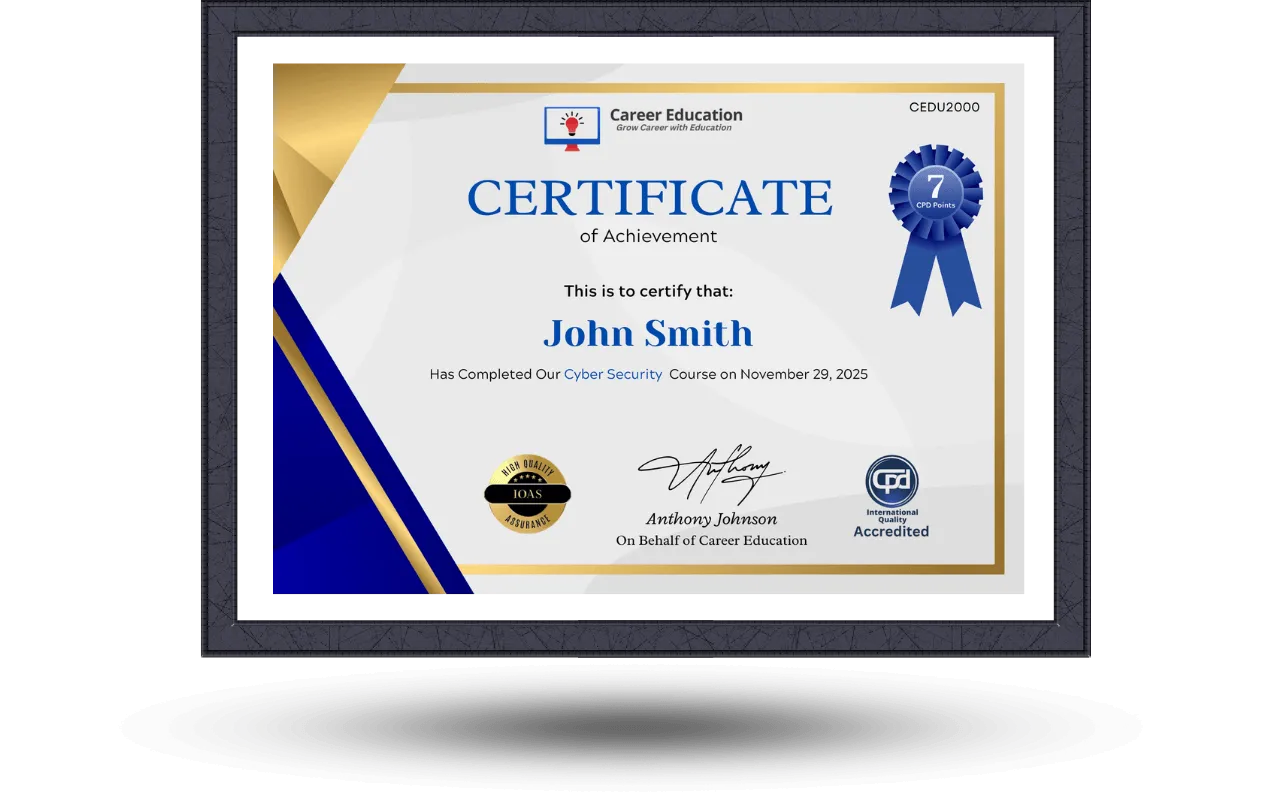
Upon completion of any course, all students are entitled to a CPD IQ Accredited e-certificate that will be issued by Career Education signifying the completion of your course.
After you complete the course and assignment, you will be eligible to order a free certificate accredited by CPD International Quality by completing the form below.
Hardcopy certificates and transcripts are also available for a small additional fee. More information is disclosed upon course completion.
Similar Courses



Frequently Asked Questions
The lifetime membership includes unlimited access to all courses, resources, and updates for a one-time fee.
You can purchase the membership directly from our website using a secure checkout process.
Yes, selected courses can be downloaded for offline access through our mobile app.
Yes, all future updates and new courses are included at no extra cost.
Yes, we offer a 30-day money-back guarantee if you are not satisfied with the membership.