OFF
Functional Skills Mathematics Course
- Lifetime Access
- All Levels
- PDF Certificate
Learn With Confidence









Overview
Functional Skills Mathematics Course
Build Practical Maths Skills for Work, Education and Everyday Life
Mathematics is one of the most useful skills you can develop, whether you are preparing for further education, looking to improve your career prospects, or simply want greater confidence when dealing with numbers in everyday situations. The Functional Skills Mathematics Course is designed to help learners develop practical mathematical knowledge that can be applied to real-life situations, the workplace, further study and personal decision-making.
Rather than focusing only on abstract mathematical theory, the Functional Skills Mathematics Course encourages learners to understand how mathematics works in practical contexts. From working with numbers and measurements to interpreting information, solving problems and making calculations, the course can help you become more confident when approaching everyday mathematical challenges.
Why Choose a Functional Skills Mathematics Course?
Mathematical confidence can make a significant difference in both professional and personal situations. Many workplace roles require employees to understand figures, calculate quantities, interpret data, manage measurements or make decisions based on numerical information.
The Functional Skills Mathematics Course provides an opportunity to strengthen these essential abilities in a structured learning environment. It can be particularly useful for learners who want to refresh their existing knowledge, improve their practical numeracy skills or prepare themselves for future learning and employment opportunities.
By developing your mathematical understanding, you can approach numerical tasks with greater confidence and reduce the uncertainty that often comes with calculations and problem-solving.
What You Can Learn
The course curriculum is structured across ten modules, providing learners with a broad opportunity to develop practical mathematical skills. Although the individual module topics are not specified in the supplied curriculum, the ten-module structure is designed to support progressive learning and development.
Throughout your studies, you can expect to work towards outcomes such as:
-
Improving your confidence with mathematical concepts
-
Developing stronger numerical awareness
-
Applying mathematical knowledge to practical situations
-
Strengthening problem-solving abilities
-
Understanding how calculations can be used in everyday life
-
Improving your ability to work accurately with numerical information
-
Developing skills that can support workplace tasks
-
Preparing for further study that involves mathematics
-
Becoming more confident when interpreting mathematical information
-
Building a stronger foundation in functional numeracy
Develop Practical Problem-Solving Skills
One of the most valuable outcomes of learning mathematics is improved problem-solving. Functional mathematics is not simply about remembering formulas or completing calculations. It is also about understanding a problem, identifying the information that matters, choosing an appropriate approach and reaching a sensible conclusion.
The Functional Skills Mathematics Course can help learners develop a more structured approach to numerical problems. This can be useful when dealing with budgets, measurements, quantities, schedules, prices, workplace figures and other practical situations.
As you develop your understanding, you can become more comfortable breaking complicated problems into smaller, manageable steps. This approach can also help you make more informed decisions when mathematics is involved.
Improve Workplace Numeracy
Numeracy is an important transferable workplace skill. Depending on the role, employees may need to work with measurements, costs, quantities, percentages, schedules, statistics or other numerical information.
Strong functional mathematics skills can therefore complement a wide range of professional abilities. Whether you are entering employment, changing career direction or developing your existing skills, improving your numerical confidence can help you feel better prepared for tasks involving mathematics.
The Functional Skills Mathematics Course focuses on practical application, making the knowledge you develop potentially useful beyond the learning environment.
Build Confidence with Everyday Mathematics
Mathematics is part of everyday life. People regularly encounter numbers when managing money, comparing prices, planning journeys, measuring ingredients, calculating time, understanding bills or interpreting information.
When your mathematical skills are stronger, these situations can become easier to manage. Instead of avoiding numerical tasks, you can approach them using a clearer and more confident method.
The Functional Skills Mathematics Course can support this development by helping you strengthen the underlying skills needed to handle practical numerical challenges.
Support Your Future Learning
A solid foundation in mathematics can also support continued education and professional development. Many further learning pathways involve some level of numeracy, even when mathematics is not the main subject.
Completing the Functional Skills Mathematics Course can be a useful way to revisit fundamental mathematical concepts and develop greater confidence before progressing to additional learning.
For learners who have not studied mathematics for some time, structured training can also provide an opportunity to rebuild familiarity with mathematical terminology, calculations and problem-solving approaches.
A Structured Ten-Module Learning Experience
The course consists of ten modules, giving learners a structured pathway through their training. A multi-module format allows learners to approach their development progressively rather than attempting to absorb everything at once.
Module 1
The first stage of the Functional Skills Mathematics Course begins the learning journey and establishes a foundation for developing practical mathematical understanding. It provides an opportunity to engage with the subject in a structured way and begin building confidence.
Module 2
The second module continues the learning process, helping learners build upon the knowledge introduced earlier. Progressing through the course allows mathematical concepts to become increasingly familiar and easier to apply.
Module 3
Module three provides another stage of development, encouraging learners to continue strengthening their mathematical abilities. Consistent practice and structured learning can help improve accuracy and confidence.
Module 4
At this stage, learners continue developing their understanding of practical mathematics. The course structure supports the gradual development of skills that can be applied in different situations.
Module 5
The fifth module forms part of the central learning journey. Learners can continue reinforcing their mathematical knowledge while developing a more confident approach to numerical tasks and problem-solving.
Module 6
Module six provides further opportunities to develop functional mathematical skills. Continued learning can help learners become more comfortable applying mathematical thinking to practical challenges.
Module 7
As learners progress through the seventh module, they can continue consolidating the knowledge and skills developed throughout the course. This progressive approach encourages greater confidence and independence.
Module 8
Module eight contributes to the broader learning experience by continuing the development of practical mathematics skills. Learners can use the course to strengthen their understanding and prepare for real-world numerical situations.
Module 9
The ninth module takes learners further along their mathematical learning journey. Continued engagement with the course can help reinforce knowledge and improve confidence when approaching numerical problems.
Module 10
The final module completes the ten-module learning structure. By reaching the end of the Functional Skills Mathematics Course, learners have had the opportunity to work through a structured programme designed around practical mathematical development.
Who Can Benefit from This Course?
The Functional Skills Mathematics Course can be suitable for a variety of learners who want to improve their practical numeracy skills. It may be particularly useful for:
-
Learners looking to strengthen their mathematics foundation
-
People returning to education after a period away from study
-
Individuals preparing for further learning
-
Job seekers who want to develop transferable workplace skills
-
Employees who want greater confidence with numerical tasks
-
Career changers looking to refresh their core skills
-
Anyone who wants to become more comfortable with everyday mathematics
-
Learners interested in improving their general problem-solving abilities
You do not need to view mathematics as something that is only useful in a classroom. Functional numeracy can support many aspects of professional and personal life.
Career and Professional Benefits
Employers value transferable skills that help people work accurately, solve problems and make sensible decisions. Mathematical ability can contribute to all three.
By completing a Functional Skills Mathematics Course, learners can demonstrate a commitment to personal development and improving an important core skill. Stronger numeracy can complement communication, organisation, teamwork, digital skills and other abilities that employers may look for.
The course can therefore form part of a broader professional development strategy, particularly for individuals who want to strengthen their overall employability.
Develop Accuracy and Confidence
Accuracy matters whenever numbers are involved. A small mistake in a calculation can sometimes affect a larger task, particularly in workplace environments.
Developing stronger mathematical foundations can encourage you to check your work, understand the steps involved and approach numerical information more carefully. The Functional Skills Mathematics Course can help you develop a more confident and methodical attitude towards mathematical tasks.
Confidence does not mean knowing every calculation immediately. It means having the skills and strategies to work through a problem logically.
Learn Skills You Can Apply Beyond the Classroom
The greatest strength of functional mathematics is its practical nature. Mathematical knowledge becomes more valuable when you understand how to use it.
The skills developed through the Functional Skills Mathematics Course can be applied to situations involving money, measurements, quantities, planning, numerical information and problem-solving. These are not skills that disappear when the course ends; they can become part of your broader everyday and professional skill set.
Take the Next Step in Your Learning
Improving your mathematics skills can open the door to greater confidence, stronger problem-solving ability and better preparation for future opportunities. Whether your goal is personal development, workplace improvement, further education or career progression, building a solid numeracy foundation can be a worthwhile investment.
The Functional Skills Mathematics Course provides a structured ten-module learning experience focused on helping learners develop practical mathematical understanding. By working through the course, you can strengthen your confidence with numbers, improve your approach to problem-solving and develop skills that can be useful in a wide range of situations.
If you are ready to improve your mathematical confidence and develop practical numeracy skills, the Functional Skills Mathematics Course can be a valuable step towards your personal and professional development. Start learning today and work towards becoming more confident, capable and comfortable when mathematics is part of the task.
Course Modules
Course Content
Module 1
-
Lesson 1
Module 10
Module 2
Module 3
Module 4
Module 5
Module 6
Module 7
Module 8
Module 9
What our students say

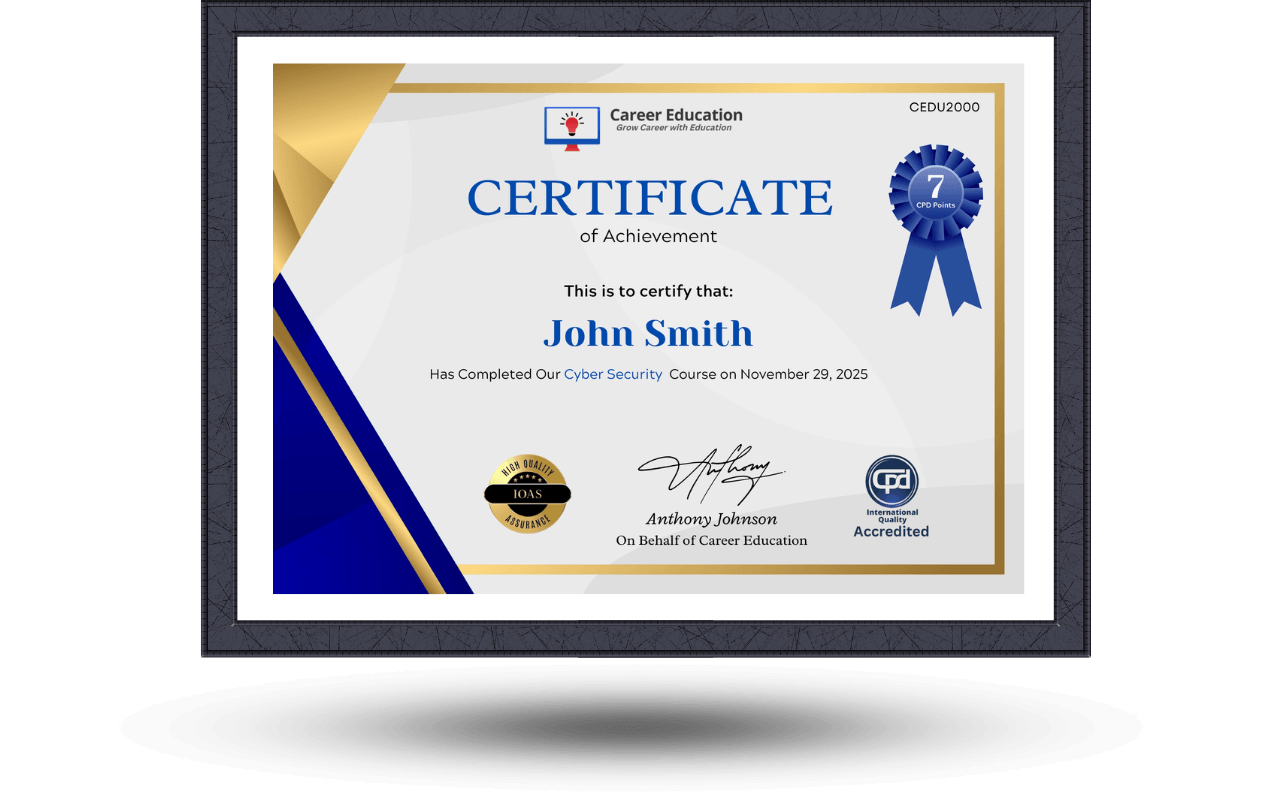
Earn an Accredited Certificate
Upon completion of the course, an e-certificate will be downloadable from Khan Education signifying the completion of your course. But, the course is CPD Accredited and after you complete the assignment, you will be eligible to order a certificate accredited by CPD International Quality for £5.99 only. If you want a hardcopy certificate accredited by CPD IQ, you can get it for only £15.99.
Get your CertificateSimilar Courses