
94%
OFF
OFF
Focus and Attention Skills for Video Games
- Lifetime Access
- All Levels
- PDF Certificate
£296
£19
14-Day Money-Back Guarantee
Learn With Confidence









Focus and Attention Skills for Video Games
In fast-paced video games, success is rarely determined by reaction speed alone. Players must observe changing environments, identify important information, make decisions under pressure, remember objectives, manage emotions, and maintain concentration over extended periods. Focus and Attention Skills for Video Games is designed to help learners understand the cognitive skills that influence gameplay and develop practical strategies for improving attention, concentration, decision-making, and mental performance.
Whether you are interested in competitive gaming, game-related cognitive training, psychology, education, or simply want to understand how attention works during gameplay, this course provides a structured introduction to the mental processes behind effective gaming performance. Rather than focusing solely on game mechanics, the course explores the cognitive foundations that help players process information and respond effectively to changing situations.
Why Focus and Attention Matter in Video Games
Modern video games can place significant demands on attention. A player may need to track multiple objects, monitor a minimap, listen for audio cues, remember previous events, anticipate an opponent’s actions, and make decisions within seconds. Losing concentration at the wrong moment can affect performance, while excessive stress or emotional distraction can make it harder to process information accurately.
The Focus and Attention Skills for Video Games course explores these challenges from a cognitive perspective. Learners will examine how attention operates during gameplay, how cognitive processes contribute to performance, and how training can support the development of relevant skills.
The course also considers the relationship between attention, emotions, arousal, stress, and gaming. This broader perspective helps learners understand that effective attention is not simply about “trying harder” to concentrate. It involves understanding how the brain processes information, how distractions influence performance, and how emotional states can affect decision-making.
What You Will Learn
By completing Focus and Attention Skills for Video Games, learners can develop a stronger understanding of:
-
The role of focus and attention in video game performance
-
Different forms of attention involved in gameplay
-
How cognitive processes influence player decisions
-
The relationship between attention and skill acquisition
-
How cognitive training can support gameplay-related skills
-
The influence of attentional biases on perception and decision-making
-
How emotions can affect attention during gaming
-
The relationship between arousal, stress, and performance
-
How attention-related difficulties may influence gaming experiences
-
The importance of understanding individual differences in attention and gaming
The course is designed around practical learning outcomes, allowing students to connect cognitive concepts with situations commonly encountered during video games.
Module 1: Introduction to Focus and Attention in Video Games
The course begins by establishing a foundation in focus and attention. Learners will explore what attention means and why it is important when interacting with complex and rapidly changing game environments.
Video games can require selective attention, sustained attention, divided attention, and rapid shifts in focus. Understanding these different aspects can help learners recognize why certain situations feel mentally demanding.
This module introduces the fundamental concepts needed to understand attention during gameplay. Learners will explore how players identify relevant information while filtering out distractions and how maintaining focus can contribute to effective performance.
By the end of this module, learners should have a clearer understanding of the cognitive demands created by different types of gameplay and the importance of attention in navigating those demands.
Module 2: Cognitive Processes and Gameplay
Gameplay involves much more than visual perception and physical reactions. Players continuously use cognitive processes to interpret information, remember details, predict outcomes, evaluate options, and choose appropriate responses.
In this module, learners examine the relationship between cognition and gameplay. Topics include the ways players process information, make decisions, use working memory, recognize patterns, and adapt to changing circumstances.
Understanding these processes can help learners appreciate why experienced players may appear to make decisions automatically. Through practice and repeated exposure, certain skills can become more efficient, allowing players to devote cognitive resources to more complex tasks.
The module provides insight into how cognitive processes interact during gameplay and how different types of games may place different demands on attention and decision-making.
Module 3: Cognitive Training and Skill Acquisition
Developing gaming-related cognitive skills involves more than simply playing for longer periods. Effective learning requires an understanding of how skills are acquired, practiced, refined, and adapted.
This module explores cognitive training and skill acquisition in the context of video games. Learners will consider how repetition, feedback, practice, attention, and task difficulty can contribute to learning.
The module encourages a structured approach to skill development. Instead of approaching performance as something that depends entirely on natural ability, learners can explore how deliberate practice and awareness of cognitive processes may contribute to improvement.
Learners will also gain a better understanding of how attention can shift as a person becomes more familiar with a task. Activities that initially require considerable conscious effort may become more efficient with practice, potentially changing the way cognitive resources are allocated.
By completing this module, learners will be better positioned to understand the cognitive foundations of skill development and the importance of purposeful practice.
Module 4: Attentional Biases and Emotion in Video Games
Attention is influenced not only by the information presented on screen but also by expectations, experiences, emotions, and individual tendencies. This module explores attentional biases and the role of emotion in gameplay.
Learners will investigate how players may automatically prioritize certain types of information and how emotional reactions can influence what receives attention. For example, an unexpected event, perceived threat, failure, or exciting development can immediately shift a player’s focus.
Understanding these processes provides valuable insight into decision-making during emotionally demanding gaming situations. Learners can explore why maintaining awareness and making rational decisions may become more challenging when emotions become particularly strong.
The module also helps learners recognize that emotional responses are part of the broader cognitive experience of gaming. Understanding their influence can contribute to greater awareness of attention and performance.
Module 5: Arousal and Stress Responses in Video Games
High-pressure gaming situations can create significant mental demands. Competitive matches, difficult challenges, time limits, unexpected events, and performance expectations can all influence a player’s level of arousal and stress.
Module 5 examines the relationship between arousal, stress responses, attention, and gameplay. Learners will explore how different levels of arousal may influence concentration, information processing, and decision-making.
The goal is not to suggest that stress is always negative. Some levels of arousal can accompany engagement and alertness, while excessive stress may interfere with effective attention and cognitive processing. Understanding this relationship gives learners a more balanced view of performance under pressure.
This module can be particularly valuable for anyone interested in the psychological side of competitive gaming or the ways environmental and emotional factors can affect cognitive performance.
Module 6: Attention Disorders and Gaming
The final module considers attention-related difficulties and their relationship with gaming. Learners will explore how differences in attention can influence the gaming experience and why individuals may respond differently to the same gaming environment.
This module provides an educational perspective on attention disorders and gaming rather than presenting gaming as a diagnostic or treatment tool. Learners will consider the importance of recognizing individual differences and understanding that attention can vary across people, tasks, and situations.
The module also reinforces the importance of responsible interpretation of cognitive and behavioral concepts. Understanding attention-related challenges can encourage more informed discussions about gaming, concentration, learning, and individual needs.
Outcome-Focused Learning Experience
Focus and Attention Skills for Video Games is designed to provide knowledge that can be applied beyond simply understanding gaming terminology. Throughout the course, learners will connect cognitive concepts with practical gameplay situations.
After completing the course, learners should be able to:
-
Explain why attention is important for effective gameplay.
-
Identify different cognitive processes involved in gaming.
-
Recognize how attention can shift between competing sources of information.
-
Understand the role of working memory and decision-making in gameplay.
-
Describe how cognitive training relates to skill development.
-
Explain how emotions can influence attention and performance.
-
Understand the relationship between arousal, stress, and cognitive performance.
-
Recognize how individual differences may affect attention during gaming.
-
Discuss attention and gaming using appropriate cognitive concepts.
-
Apply a more informed perspective when analyzing gameplay and player performance.
These outcomes make the course useful for learners who want to develop their knowledge of gaming psychology, cognitive performance, attention, and skill acquisition.
Who Is This Course For?
Focus and Attention Skills for Video Games can be suitable for a wide range of learners interested in the cognitive side of gaming.
It may be particularly useful for:
-
Gaming enthusiasts interested in the psychology of gameplay
-
Learners studying attention and cognitive psychology
-
Students interested in gaming and human performance
-
Individuals interested in competitive gaming concepts
-
Educators exploring cognitive skills and interactive learning
-
Professionals interested in game-based cognitive research
-
Anyone seeking a structured introduction to attention and gaming
No advanced background in cognitive psychology is required to engage with the core concepts. The curriculum progresses from foundational ideas to more specialized topics involving emotion, stress, arousal, and attention-related difficulties.
Build a Deeper Understanding of Gaming Performance
Gaming performance is influenced by a complex combination of perception, attention, memory, decision-making, emotion, practice, and environmental demands. By understanding these factors, learners can move beyond simply asking whether a player performed well and begin examining why certain cognitive processes may support or interfere with performance.
The Focus and Attention Skills for Video Games course provides a structured pathway for exploring these questions. From the foundations of attention to cognitive training, attentional biases, emotional responses, stress, arousal, and attention disorders, each module contributes to a broader understanding of the mental processes associated with gaming.
Instead of treating gaming as purely a test of reflexes, this course explores it as a complex cognitive activity that requires continuous information processing and adaptation.
Enrol in Focus and Attention Skills for Video Games
Develop your understanding of the cognitive principles behind gaming performance with Focus and Attention Skills for Video Games. Explore how attention works, discover the cognitive processes involved in gameplay, understand how skills are developed, and examine the influence of emotion, arousal, stress, and individual differences.
Whether your interest lies in gaming, psychology, cognitive science, education, or human performance, this course can provide a valuable foundation for understanding the relationship between attention and interactive digital experiences.
Start your learning journey today and gain a clearer, more informed perspective on the mental skills that shape gameplay.
Course Modules
Course Content
Module 1_ Introduction to Focus and Attention in Video Games.
-
Lesson 1_ Introduction to Focus and Attention in Video Games.
Module 2_ Cognitive Processes and Gameplay.
Module 3_ Cognitive Training and Skill Acquisition.
Module 4_ Attentional Biases and Emotion in Video Games.
Module 5_ Arousal and Stress Responses in Video Games.
Module 6_ Attention Disorders and Gaming.
What our students say
Excellent
4.9 average
158 Reviews

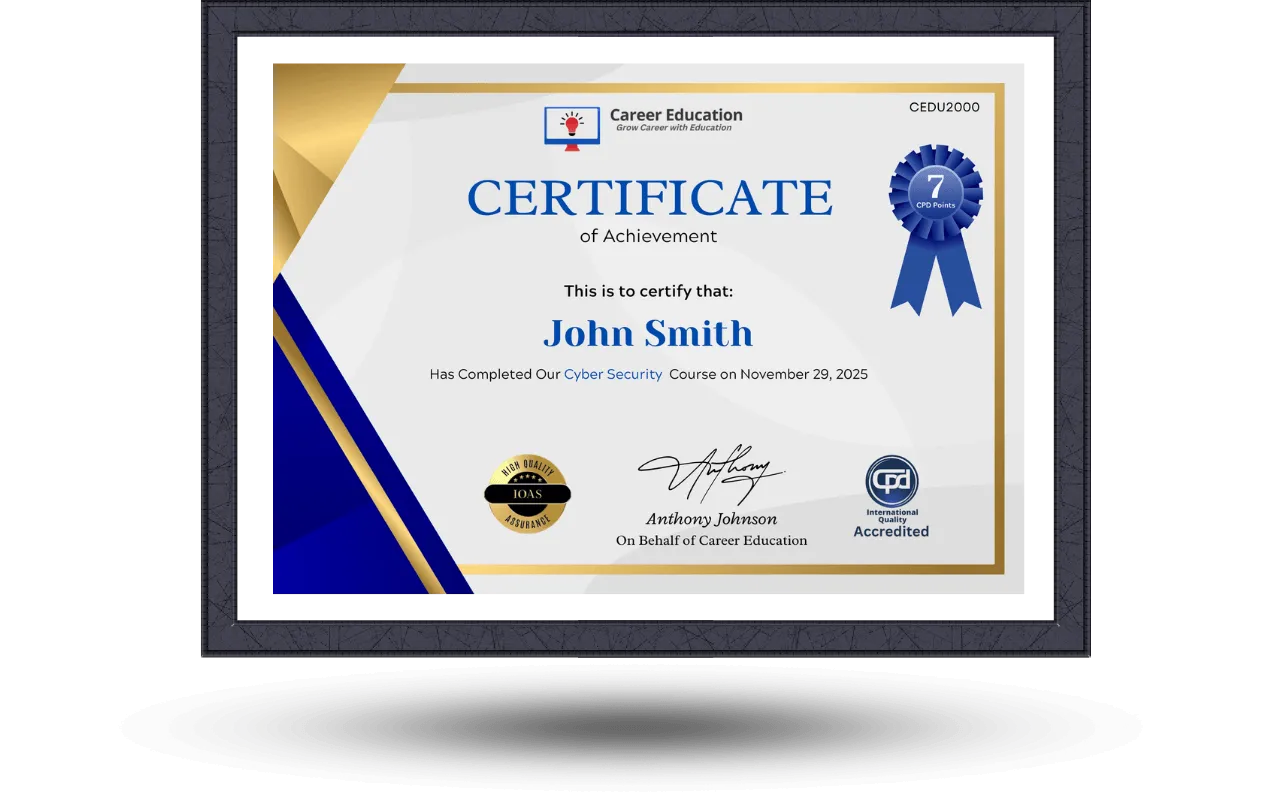
Earn an Accredited Certificate
Upon completion of any course, all students are entitled to a CPD IQ Accredited e-certificate that will be issued by Career Education signifying the completion of your course.
After you complete the course and assignment, you will be eligible to order a free certificate accredited by CPD International Quality by completing the form below.
Hardcopy certificates and transcripts are also available for a small additional fee. More information is disclosed upon course completion.
Similar Courses




Frequently Asked Questions
The lifetime membership includes unlimited access to all courses, resources, and updates for a one-time fee.
You can purchase the membership directly from our website using a secure checkout process.
Yes, selected courses can be downloaded for offline access through our mobile app.
Yes, all future updates and new courses are included at no extra cost.
Yes, we offer a 30-day money-back guarantee if you are not satisfied with the membership.