
94%
OFF
OFF
Fitness and Wellness Essentials
- Lifetime Access
- All Levels
- PDF Certificate
£296
£19
14-Day Money-Back Guarantee
Learn With Confidence









# Fitness and Wellness Essentials
Building a healthier and more active lifestyle requires more than simply exercising from time to time. Sustainable fitness depends on understanding how the body responds to exercise, how nutrition supports performance and recovery, and how different forms of training can be combined into a balanced programme.
**Fitness and Wellness Essentials** is a practical, outcome-focused course designed to provide learners with a strong foundation in fitness, exercise, nutrition, strength training, cardiovascular conditioning, flexibility, and mobility.
Whether you are beginning your fitness journey, interested in improving your general wellbeing, working in a fitness-related environment, or simply want to understand the principles behind effective exercise, this course provides a structured introduction to essential fitness and wellness concepts.
Across seven focused modules, learners will explore the foundations of fitness and wellness, exercise physiology, nutrition, exercise programming, strength training, cardiovascular training, and flexibility and mobility. The course is designed to help learners understand *why* different approaches to exercise matter and how they can contribute to a balanced approach to physical wellbeing.
—
## Why Fitness and Wellness Essentials Matters
Fitness is not limited to appearance or athletic performance. Physical fitness can support everyday movement, functional ability, energy, endurance, strength, mobility, and overall quality of life.
At the same time, wellness involves a broader understanding of healthy lifestyle habits.
A well-rounded approach can involve:
* Regular physical activity
* Strength development
* Cardiovascular conditioning
* Flexibility and mobility
* Appropriate nutrition
* Recovery
* Consistency
* Healthy lifestyle choices
**Fitness and Wellness Essentials** introduces learners to these interconnected areas and explains how they contribute to a balanced fitness foundation.
The course focuses on education and practical understanding rather than quick fixes or unrealistic promises. Learners develop knowledge that can help them make more informed decisions about exercise and wellness.
—
# What You Will Learn
By completing **Fitness and Wellness Essentials**, learners will be able to:
* Explain fundamental concepts of fitness and wellness.
* Understand basic exercise physiology.
* Recognise how the body responds and adapts to exercise.
* Understand the role of nutrition in fitness and wellbeing.
* Explore the principles of effective exercise programming.
* Understand fundamental strength-training concepts.
* Explore cardiovascular training principles.
* Understand the importance of flexibility and mobility.
* Recognise the value of balanced and sustainable fitness routines.
* Apply foundational fitness concepts to personal activity and general wellness planning.
—
# Course Curriculum
## Module 1: Introduction to Fitness and Wellness
### Lesson 1: Introduction to Fitness and Wellness
The course begins by establishing a clear understanding of what fitness and wellness mean.
Learners will explore the different components of physical fitness and consider how they relate to everyday health and physical performance.
Key concepts include:
* Physical fitness
* Wellness
* Exercise
* Physical activity
* Health-related fitness
* Functional fitness
* Lifestyle habits
* Recovery and rest
Participants will learn that fitness has several dimensions rather than being defined by one measure.
Strength, endurance, cardiovascular fitness, flexibility, mobility, and body composition can all contribute to physical fitness in different ways.
The module also introduces the importance of setting realistic and sustainable goals.
Rather than focusing solely on short-term results, learners will explore the value of consistency, progressive development, appropriate recovery, and long-term lifestyle habits.
By completing this module, participants will have a stronger foundation for understanding the relationship between physical activity, fitness, and overall wellness.
—
# Module 2: Exercise Physiology
Understanding how the body responds to exercise can make fitness training more purposeful.
This module introduces learners to the basic principles of exercise physiology.
Participants will explore how systems within the body respond during physical activity and how regular training can lead to adaptation.
Topics include:
* Muscular activity
* Cardiovascular responses
* Respiratory responses
* Energy systems
* Exercise intensity
* Recovery
* Training adaptation
Learners will explore how the body requires energy to perform physical activity and how different types and intensities of exercise place different demands on the body.
The module also introduces the concept of progressive adaptation.
When an appropriate training stimulus is applied consistently, the body can adapt over time. However, effective training also requires sufficient recovery.
Participants will therefore consider the relationship between training, workload, recovery, and adaptation.
Understanding exercise physiology can help learners appreciate why different workouts produce different effects.
By completing this module, participants will develop a foundational understanding of how the body responds to exercise and adapts to regular physical activity.
—
# Module 3: Nutrition for Fitness and Wellness
Nutrition plays an important role in supporting physical activity and general wellbeing.
This module introduces learners to the fundamentals of nutrition as they relate to fitness.
Participants will explore key nutritional concepts including:
* Macronutrients
* Micronutrients
* Carbohydrates
* Protein
* Dietary fats
* Hydration
* Energy intake
* Energy expenditure
* Meal planning principles
Learners will examine the general roles of carbohydrates, protein, and fats in supporting body functions and physical activity.
The module also explores hydration and why adequate fluid intake is important for normal physiological function.
Rather than promoting restrictive diets or one-size-fits-all nutrition plans, the course focuses on understanding basic principles that can support balanced eating habits.
Participants will also explore how nutritional needs can vary depending on factors such as activity levels, individual goals, lifestyle, and personal circumstances.
By completing this module, learners will have a stronger foundation in the relationship between nutrition, exercise, recovery, and wellness.
—
# Module 4: Exercise Programming
Knowing individual exercises is not the same as knowing how to structure an effective programme.
This module introduces the principles of exercise programming and explains how different training components can be organised into a balanced routine.
Learners will explore concepts such as:
* Training goals
* Frequency
* Intensity
* Time
* Type of exercise
* Progression
* Recovery
* Exercise selection
* Training balance
Participants will consider why an exercise programme should reflect the individual’s goals, current fitness level, available resources, and practical circumstances.
The module also introduces progression.
Progressive training involves gradually adjusting the training stimulus rather than increasing workload without consideration.
Learners will explore why excessive increases in training demand can compromise recovery and increase the likelihood of problems.
The importance of variety and balance is also addressed.
A well-rounded programme can incorporate strength, cardiovascular exercise, mobility, and recovery rather than focusing exclusively on one training method.
By completing this module, learners will understand the basic principles involved in developing structured and sustainable exercise routines.
—
# Module 5: Strength Training
Strength training is an important component of physical fitness and functional ability.
This module introduces the fundamentals of resistance and strength training.
Learners will explore:
* Resistance training
* Muscular strength
* Muscular endurance
* Exercise technique
* Training volume
* Repetitions
* Sets
* Resistance
* Progressive overload
* Recovery
Participants will learn why technique and controlled movement are important when performing resistance exercises.
The module also explores the difference between training for strength and training for muscular endurance.
Learners will consider how exercise selection, resistance, repetitions, sets, and rest periods can influence training outcomes.
Progressive overload is another key concept.
The body can adapt to repeated training demands, so appropriate progression may be required to continue developing fitness.
However, progression should be appropriate to the individual’s experience and capabilities.
The course emphasises learning sound principles rather than encouraging unsafe or excessive training.
By completing this module, participants will understand the fundamental concepts behind effective strength training.
—
# Module 6: Cardiovascular Training
Cardiovascular fitness supports the body’s ability to perform sustained physical activity.
This module explores the principles of cardiovascular training and how different forms of aerobic activity can contribute to fitness.
Learners will explore activities such as:
* Walking
* Jogging
* Cycling
* Swimming
* Rowing
* Aerobic exercise
* Other endurance-based activities
Participants will consider factors such as:
* Training frequency
* Duration
* Intensity
* Exercise selection
* Progression
* Recovery
The module explains why cardiovascular training should be adjusted according to individual fitness levels and goals.
Learners will also explore the concept of exercise intensity and how it can influence training demands.
The course encourages gradual progression and sustainable participation rather than unnecessarily intense workouts.
Participants will understand how cardiovascular exercise can complement strength training and contribute to a balanced fitness programme.
By completing this module, learners will have a stronger foundation in cardiovascular training principles and how they can be incorporated into a broader exercise routine.
—
# Module 7: Flexibility and Mobility
Flexibility and mobility are important components of functional movement.
This module explores the differences between flexibility and mobility and their roles in physical activity.
Learners will examine:
* Flexibility
* Mobility
* Range of motion
* Dynamic movement
* Stretching
* Movement preparation
* Recovery
Participants will explore why mobility can be relevant to movement quality and why flexibility should not be considered in isolation.
The module also introduces different approaches to stretching and movement preparation.
Learners will consider how mobility activities can be incorporated into warm-ups, exercise sessions, and recovery routines as appropriate.
The emphasis is on controlled, comfortable movement rather than forcing a joint or muscle beyond a safe range.
By completing this module, participants will understand the role of flexibility and mobility in a well-rounded fitness programme.
—
# Who Is This Course For?
**Fitness and Wellness Essentials** is designed for a broad audience and can be particularly useful for:
* Fitness beginners
* Wellness enthusiasts
* Personal development learners
* Exercise professionals seeking foundational knowledge
* Fitness instructors
* Gym users
* Sports and recreation participants
* Health and wellness learners
* Workplace wellness participants
* Individuals developing healthier lifestyle habits
The course can also provide a useful starting point for learners considering further study in fitness, exercise, nutrition, or wellness-related subjects.
—
# Practical Learning Outcomes
The course is designed around knowledge that learners can connect with real-world fitness and wellness situations.
After completing **Fitness and Wellness Essentials**, learners will be better prepared to:
### Understand Fitness Foundations
Recognise the major components of physical fitness and understand how they contribute to overall wellbeing.
### Understand Exercise Responses
Explain basic physiological responses to physical activity and the concept of training adaptation.
### Appreciate Nutrition Principles
Understand the role of major nutrients and hydration in supporting physical activity and general wellbeing.
### Structure Exercise More Effectively
Understand the basic principles of frequency, intensity, duration, exercise selection, progression, and recovery.
### Develop Strength Training Knowledge
Understand resistance-training fundamentals and the role of progressive overload.
### Improve Cardiovascular Training Awareness
Understand how aerobic exercise can be structured according to individual fitness goals and abilities.
### Support Better Movement
Understand the role of flexibility and mobility in maintaining functional movement and supporting a balanced fitness routine.
—
# Build a Balanced Approach to Fitness
Fitness does not have to mean following complicated programmes or pursuing extreme goals.
A sustainable approach can be built around fundamental principles: move regularly, train progressively, recover appropriately, maintain balanced nutrition, and adapt activities to individual needs.
**Fitness and Wellness Essentials** gives learners the knowledge to understand these principles and make more informed choices about their fitness journey.
—
# Develop Knowledge That Supports Long-Term Wellness
Short-term motivation can help someone begin exercising, but knowledge and sustainable habits can help support long-term participation.
This course encourages learners to understand *why* different types of training matter rather than simply following a list of exercises.
By learning about exercise physiology, nutrition, programming, strength, cardiovascular conditioning, flexibility, and mobility, participants can develop a more complete understanding of physical fitness.
—
# Enrol in Fitness and Wellness Essentials Today
A strong fitness foundation starts with understanding the principles behind effective exercise and healthy lifestyle choices.
**Fitness and Wellness Essentials** provides a structured seven-module learning experience covering the core areas needed to understand fitness and wellness.
From exercise physiology and nutrition to strength training, cardiovascular conditioning, flexibility, mobility, and exercise programming, the course helps learners develop a well-rounded foundation that can support more informed fitness decisions.
The course is designed for general educational purposes and does not replace individual medical advice, clinical assessment, or personalised guidance from a qualified healthcare or fitness professional. Exercise and nutrition choices should be adapted to individual circumstances, capabilities, goals, and relevant professional advice where appropriate.
Whether you are starting your fitness journey, strengthening your existing knowledge, or exploring fitness and wellness as a professional interest, this course can help you build a stronger understanding of the fundamentals.
**Enrol in Fitness and Wellness Essentials today and develop the knowledge to understand exercise, make informed fitness choices, build balanced training habits, and support a healthier, more active lifestyle.**
Course Modules
Course Content
Module 1_ Introduction to Fitness and Wellness
-
Lesson 1_ Introduction to Fitness and Wellness
Module 2_ Exercise Physiology
Module 3_ Nutrition for Fitness and Wellness
Module 4_ Exercise Programming
Module 5_ Strength Training
Module 6_ Cardiovascular Training
Module 7_ Flexibility and Mobility
What our students say
Excellent
4.9 average
158 Reviews

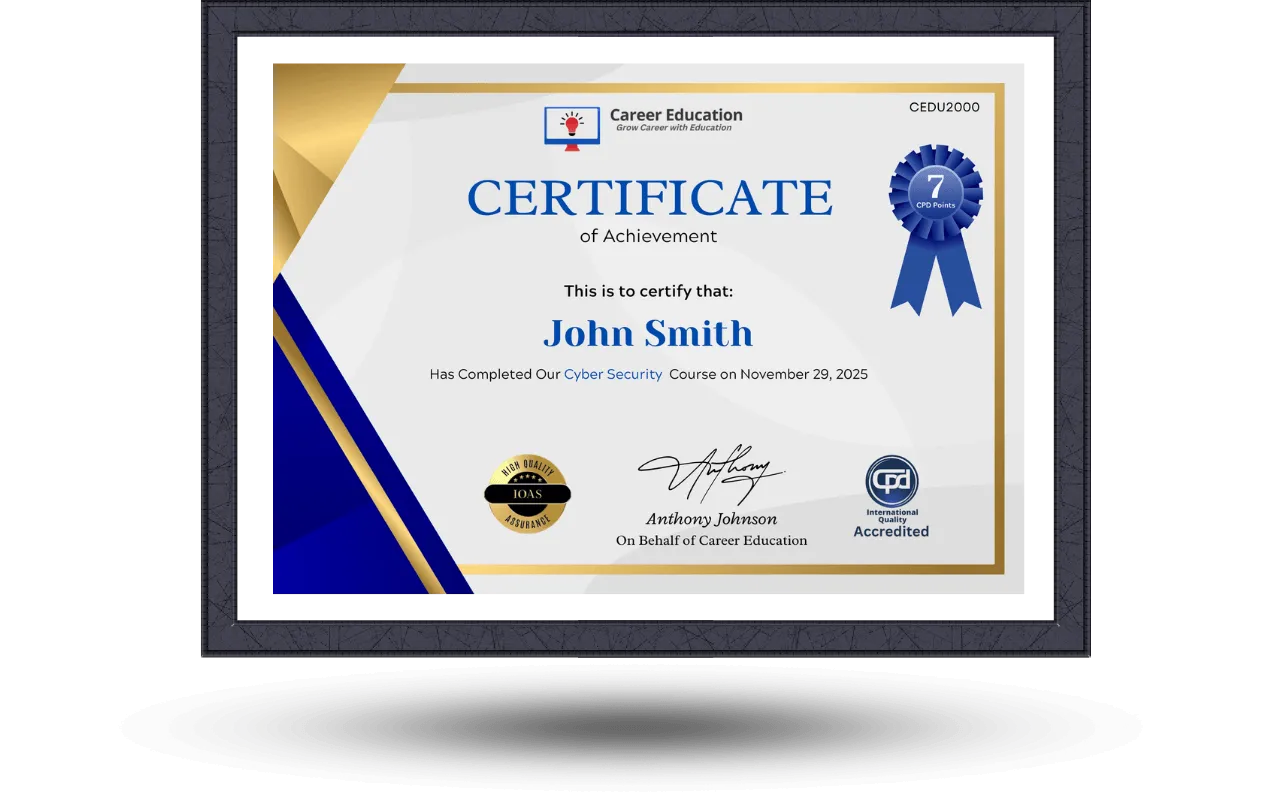
Earn an Accredited Certificate
Upon completion of any course, all students are entitled to a CPD IQ Accredited e-certificate that will be issued by Career Education signifying the completion of your course.
After you complete the course and assignment, you will be eligible to order a free certificate accredited by CPD International Quality by completing the form below.
Hardcopy certificates and transcripts are also available for a small additional fee. More information is disclosed upon course completion.
Similar Courses




Frequently Asked Questions
The lifetime membership includes unlimited access to all courses, resources, and updates for a one-time fee.
You can purchase the membership directly from our website using a secure checkout process.
Yes, selected courses can be downloaded for offline access through our mobile app.
Yes, all future updates and new courses are included at no extra cost.
Yes, we offer a 30-day money-back guarantee if you are not satisfied with the membership.