
94%
OFF
OFF
Fire Extinguisher Safety
- Lifetime Access
- All Levels
- PDF Certificate
£296
£19
14-Day Money-Back Guarantee
Learn With Confidence









# Fire Extinguisher Safety
## Build Essential Knowledge for Fire Prevention, Extinguisher Selection and Emergency Response
A fire can develop rapidly, turning a small incident into a serious emergency within a short period of time. Knowing how fires start, understanding fire classifications and recognising the correct type of fire extinguisher can help people respond more appropriately when an emergency occurs.
**Fire Extinguisher Safety** provides learners with foundational knowledge about fire behaviour, portable fire extinguishers, extinguisher selection, safe operating techniques and basic maintenance. The course explores the fire triangle, fire classifications, how extinguishers work, the PASS technique, practical extinguisher use, maintenance requirements and specific considerations for confined spaces and flammable liquid fires.
The course is designed to help learners develop awareness and confidence around fire extinguishers while emphasising an essential principle: **personal safety and evacuation always come first**. A fire extinguisher should only be used when the fire is small and appropriate to tackle, the correct extinguisher is available, an escape route is accessible and the person using it has been trained and is able to act safely.
> **Important:** This course provides general educational information and does not replace site-specific fire training, local fire regulations, emergency procedures or practical training delivered by a qualified fire-safety professional. In a fire emergency, follow your workplace or building’s evacuation procedure and contact the appropriate emergency services. Never attempt to fight a fire if doing so would put you or others at risk.
—
# Why Fire Extinguisher Safety Matters
Fire extinguishers are common pieces of fire-protection equipment found in workplaces, commercial buildings, public facilities and other environments.
However, simply having an extinguisher available does not mean people know how to use it safely.
Effective **Fire Extinguisher Safety** involves understanding several important factors:
* What type of fire is present
* Which extinguisher is appropriate
* How extinguishers operate
* How to position yourself safely
* How to operate an extinguisher correctly
* When not to attempt firefighting
* How extinguishers should be inspected and maintained
* How different environments can change the risks
Developing this knowledge can help learners respond more intelligently during fire-related situations.
—
# Who Is This Course For?
**Fire Extinguisher Safety** is suitable for anyone who may need basic awareness of portable fire extinguishers as part of workplace or general fire-safety arrangements.
It may be particularly useful for:
* Workplace employees
* Supervisors and team leaders
* Facilities staff
* Property managers
* Hospitality workers
* Retail employees
* Warehouse staff
* Construction workers
* Office personnel
* Business owners
* Building occupants
* Fire-safety representatives
* Anyone interested in basic fire-safety awareness
The course is particularly valuable as a foundation for learners who want to understand the principles behind extinguisher selection and operation.
—
# What You Will Learn
By completing **Fire Extinguisher Safety**, you will develop a stronger understanding of portable fire extinguishers and basic fire behaviour.
You will learn how to:
* Understand what fire is
* Explain the basic purpose of a fire extinguisher
* Recognise why correct extinguisher use matters
* Understand the fire triangle
* Explore how extinguishers interrupt combustion
* Recognise common fire classifications
* Understand the importance of selecting the appropriate extinguisher
* Learn the PASS operating sequence
* Develop awareness of practical extinguisher use
* Understand why extinguishers require regular inspection and maintenance
* Explore basic maintenance considerations
* Recognise additional hazards associated with confined spaces
* Understand considerations for flammable liquid fires
* Recognise situations where attempting to extinguish a fire may be unsafe
—
# Course Curriculum
## Module 1 – Definition of Fire and Fire Extinguishers
The course begins by establishing the fundamentals of **fire and fire extinguishers**.
You will explore what fire is and understand the basic conditions required for combustion.
The module introduces portable fire extinguishers and explains their role within broader fire-safety arrangements.
You will consider how extinguishers are designed to help control or suppress certain types of small fires.
The module also establishes an important distinction between emergency response and general fire protection. Fire extinguishers are only one component of a wider fire-safety system that can include prevention measures, detection systems, alarms, emergency lighting, evacuation procedures and fire-protection equipment.
### Learning Outcome
By completing Module 1, you will understand the basic characteristics of fire and the purpose of portable fire extinguishers within a wider fire-safety system.
—
# Module 2 – Importance of Proper Fire Extinguisher Use
Using the wrong extinguisher or using one incorrectly can create additional hazards.
This module explores the **importance of proper fire extinguisher use**.
You will learn why extinguisher selection matters and why users must understand the limitations of portable extinguishers.
The module emphasises that not every fire should be tackled with an extinguisher.
Factors such as fire size, smoke, location, available escape routes, fire type and the user’s training can all influence whether an extinguisher should be used.
You will also develop awareness of the importance of following workplace procedures and manufacturer instructions.
### Learning Outcome
By completing Module 2, you will understand why correct extinguisher selection and safe operating practices are essential when responding to a small fire.
—
# Module 3 – The Fire Triangle
The **fire triangle** is a fundamental concept in fire safety.
This module explores the three elements required for combustion:
* **Oxygen**
* **Fuel**
* **Heat**
You will learn how these three elements interact to support a fire.
Understanding the fire triangle provides a foundation for understanding how fire extinguishers work.
If one of the necessary elements is removed or controlled, combustion may be reduced or stopped.
The module helps learners understand why different extinguishing agents work in different ways.
### Learning Outcome
By completing Module 3, you will understand the fire triangle and recognise the relationship between oxygen, fuel and heat in the combustion process.
—
# Module 4 – How Fire Extinguishers Interrupt Chemical Reactions
Different extinguishing agents work through different mechanisms.
This module explores **how fire extinguishers interrupt chemical reactions** and control combustion.
You will learn how extinguishing agents may work by removing heat, separating the fuel from the fire, reducing oxygen availability or interrupting the combustion process.
Understanding these mechanisms can help explain why a particular extinguisher is suitable for one fire classification but inappropriate for another.
The module provides the scientific foundation needed to understand extinguisher selection more effectively.
### Learning Outcome
By completing Module 4, you will understand the basic mechanisms by which fire extinguishers can suppress combustion and recognise why different extinguishing agents have different applications.
—
# Module 5 – Different Classifications of Fires
Not all fires behave in the same way.
This module introduces common **fire classifications**, including:
* **Class A**
* **Class B**
* **Class C**
* **Class D**
* **Class K**
The exact classification system and terminology can vary by jurisdiction, so learners should always follow the classifications and extinguisher labels applicable to their local regulations and workplace.
The module explores the general types of materials associated with different fire classes and explains why identifying the fuel involved is essential.
You will learn why using an inappropriate extinguishing agent can be ineffective or potentially dangerous.
### Learning Outcome
By completing Module 5, you will understand the purpose of fire classifications and recognise why identifying the type of fuel involved is essential when selecting firefighting equipment.
—
# Module 6 – How to Choose the Appropriate Extinguisher
Choosing an extinguisher requires more than simply picking the nearest one.
This module focuses on **selecting the appropriate extinguisher**.
You will learn how fire classification, extinguisher labels, operating environment and manufacturer instructions can influence selection.
The module also explores the importance of understanding the limitations of extinguishers.
For example, an extinguisher suitable for one type of fire may be inappropriate for another.
You will develop awareness of why extinguishers should be clearly identified, accessible and maintained according to applicable requirements.
### Learning Outcome
By completing Module 6, you will understand the basic factors involved in extinguisher selection and recognise the importance of matching the extinguisher to the fire hazard.
—
# Module 7 – The PASS System
The **PASS system** provides a commonly taught sequence for operating certain portable fire extinguishers:
**P – Pull** the pin or activate the relevant safety mechanism.
**A – Aim** the nozzle or hose toward the appropriate part of the fire, generally at the base when applicable.
**S – Squeeze** the operating handle.
**S – Sweep** the discharge across the appropriate area while maintaining a safe position.
This module introduces the PASS method and explores how it can help users remember the basic operating sequence.
Learners should always follow the specific operating instructions printed on the extinguisher and any site-specific training provided.
### Learning Outcome
By completing Module 7, you will understand the PASS sequence and develop awareness of the basic steps involved in operating an appropriate portable fire extinguisher.
—
# Module 8 – Hands-On Practice with a Fire Extinguisher
Knowledge is important, but practical familiarity can also be valuable.
This module focuses on **hands-on practice with a fire extinguisher**.
Learners are introduced to the practical considerations involved in handling and operating an extinguisher.
Practical training should ideally be conducted under the supervision of a competent and appropriately trained instructor using suitable training equipment.
You will consider how to approach a small fire safely, maintain an escape route and operate the equipment according to instructions.
The module reinforces that practical exercises should never involve unnecessary exposure to live fire.
### Learning Outcome
By completing Module 8, you will understand the practical principles of extinguisher operation and recognise the importance of supervised practical training.
—
# Module 9 – Importance of Regularly Maintaining Fire Extinguishers
A fire extinguisher must be ready to function when needed.
This module explores the **importance of regular extinguisher maintenance**.
You will learn why extinguishers should be routinely inspected and professionally serviced according to applicable regulations, standards and manufacturer requirements.
Maintenance can help identify problems such as:
* Physical damage
* Corrosion
* Missing components
* Pressure problems
* Blocked discharge equipment
* Incorrect positioning
* Expired or damaged units
* Tampering
Regular checks help ensure that fire-protection equipment remains accessible and suitable for its intended purpose.
### Learning Outcome
By completing Module 9, you will understand why regular inspection, servicing and maintenance are essential components of fire extinguisher safety.
—
# Module 10 – How to Perform Basic Maintenance
This module explores **basic fire extinguisher maintenance considerations**.
You will learn what users may be expected to check during routine visual inspections, while recognising that detailed servicing and repairs should be carried out by appropriately qualified or competent personnel as required by local rules.
Basic awareness may include checking whether extinguishers are:
* Accessible
* Clearly identified
* Properly positioned
* Visibly damaged
* Missing safety components
* Showing obvious signs of leakage or corrosion
* Within their required inspection or service period
The course emphasises that defective extinguishers should not simply be ignored or repaired without appropriate expertise.
### Learning Outcome
By completing Module 10, you will understand basic visual inspection considerations and recognise when professional servicing or replacement may be required.
—
# Module 11 – Using a Fire Extinguisher in a Confined Space
Confined spaces can introduce additional hazards during a fire.
This module explores **fire extinguisher use in confined spaces** and highlights the importance of recognising environmental risks.
Limited access, restricted movement, poor visibility, smoke, toxic gases, heat and difficulties with evacuation can make fire response significantly more dangerous.
The course emphasises that entering or remaining in a dangerous confined space to fight a fire should never be taken lightly.
Specific confined-space procedures, risk assessments, emergency arrangements and specialist training may be required.
### Learning Outcome
By completing Module 11, you will understand why confined spaces can increase fire-response risks and recognise the importance of prioritising evacuation, emergency procedures and specialist controls.
—
# Module 12 – Using a Fire Extinguisher on a Flammable Liquid Fire
The final module focuses on **flammable liquid fires**.
Flammable liquids can create serious fire hazards because vapours may ignite rapidly and fires can spread across liquid surfaces.
You will explore the importance of identifying the fuel involved and selecting an extinguisher that is specifically rated for the relevant fire classification.
The module also highlights the risks associated with inappropriate extinguishing techniques.
Learners will develop awareness of why flammable liquid fires require careful assessment and why evacuation and professional emergency response may be necessary when the fire is beyond the capability of a portable extinguisher.
### Learning Outcome
By completing Module 12, you will understand the specific hazards associated with flammable liquid fires and recognise the importance of appropriate extinguisher selection and safe emergency decision-making.
—
# Know When Not to Use a Fire Extinguisher
One of the most important lessons in **Fire Extinguisher Safety** is knowing when **not** to fight a fire.
A portable extinguisher is not a substitute for evacuation or professional firefighting.
You should not attempt to fight a fire when:
* The fire is spreading rapidly
* The fire is too large for a portable extinguisher
* Smoke is making the area unsafe
* You do not have a clear escape route
* You are not trained to use the extinguisher
* The extinguisher is unsuitable for the fire
* You are unsure what material is burning
* The environment presents additional hazards
* Your safety or the safety of others could be compromised
When in doubt, prioritise evacuation and follow the established emergency procedure.
—
# Develop Fire-Safety Awareness
**Fire Extinguisher Safety** goes beyond learning how to operate a piece of equipment.
It helps learners understand the principles behind fire behaviour and emergency response.
Understanding the fire triangle, fire classifications and extinguishing mechanisms provides a foundation for making better decisions.
This knowledge can help you recognise why a particular extinguisher may be appropriate and why another may create additional danger.
—
# Improve Workplace Preparedness
Workplaces can contain many different fire hazards, including electrical equipment, combustible materials, cooking equipment, machinery and flammable substances.
Employees who understand basic fire-safety principles may be better prepared to follow emergency procedures.
However, workplace fire safety should always be based on the site’s specific fire risk assessment, emergency plan and applicable legal requirements.
**Fire Extinguisher Safety** can complement—not replace—those arrangements.
—
# Why Study Fire Extinguisher Safety?
Studying **Fire Extinguisher Safety** can provide valuable benefits for workplace and personal awareness.
The course can help you:
**Understand fire behaviour:** Learn the fundamental principles behind combustion and the fire triangle.
**Recognise fire classifications:** Understand why different fires require different approaches.
**Choose equipment appropriately:** Develop awareness of how extinguisher selection relates to fire type.
**Understand PASS:** Learn the commonly taught Pull, Aim, Squeeze and Sweep sequence.
**Improve emergency awareness:** Recognise when an extinguisher may and may not be appropriate.
**Understand maintenance:** Learn why fire extinguishers require regular inspection and servicing.
**Recognise environmental hazards:** Explore additional considerations associated with confined spaces and flammable liquids.
**Support workplace safety:** Develop foundational knowledge that can complement workplace fire-safety procedures.
—
# Build Your Fire Extinguisher Safety Knowledge
Fire safety depends on preparation, appropriate equipment, effective procedures and informed decision-making.
**Fire Extinguisher Safety** provides learners with a structured introduction to fire extinguishers, covering fire fundamentals, the fire triangle, fire classifications, extinguisher selection, the PASS technique, practical use, maintenance and specific fire-response considerations.
The course is designed to help you understand the principles behind portable fire extinguishers while reinforcing the importance of personal safety, evacuation and professional emergency response.
Whether you are an employee, supervisor, business owner, facilities worker, hospitality professional or simply someone who wants to develop better fire-safety awareness, this course can provide a valuable foundation.
Develop your **Fire Extinguisher Safety** knowledge and gain a stronger understanding of fire behaviour, extinguisher selection, safe operating principles and the responsible use and maintenance of portable fire-protection equipment.
Course Modules
Course Content
Module 1_ Definition of fire and fire extinguishers.
-
Lesson 1_ Definition of fire and fire extinguishers.
Module 2_ Importance of proper fire extinguisher use.
Module 3_ The fire triangle (oxygen, fuel, and heat).
Module 4_ How fire extinguishers interrupt chemical reactions.
Module 5_ Different classifications of fires (A, B, C, D, and K).
Module 6_ How to choose the appropriate extinguisher.
Module 7_ The PASS system (Pull, Aim, Squeeze, Sweep).
Module 8_ Hands-on practice with a fire extinguisher.
Module 9_ The importance of regularly maintaining fire extinguishers.
Module 10_ How to perform basic maintenance.
Module 11_ Using a fire extinguisher in a confined space.
Module 12_ Using a fire extinguisher on a flammable liquid fire.
What our students say
Excellent
4.9 average
158 Reviews

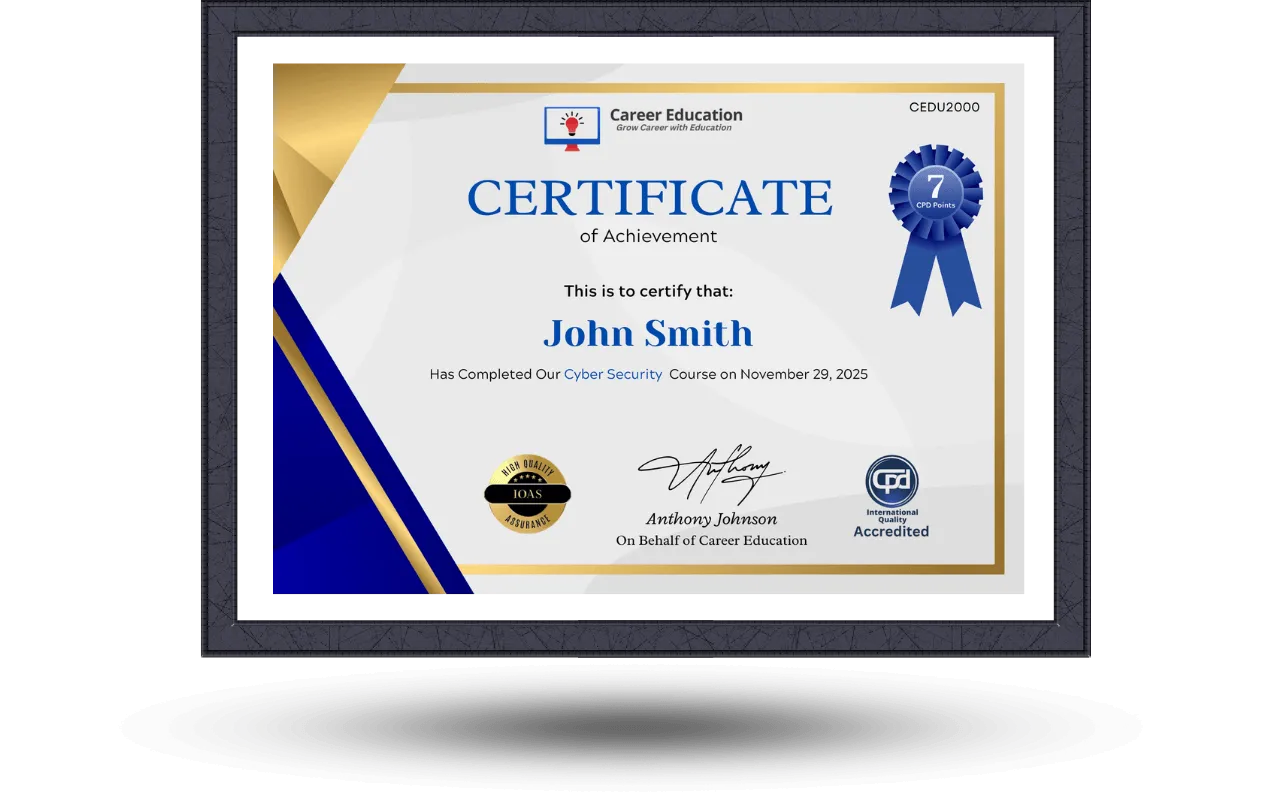
Earn an Accredited Certificate
Upon completion of any course, all students are entitled to a CPD IQ Accredited e-certificate that will be issued by Career Education signifying the completion of your course.
After you complete the course and assignment, you will be eligible to order a free certificate accredited by CPD International Quality by completing the form below.
Hardcopy certificates and transcripts are also available for a small additional fee. More information is disclosed upon course completion.
Similar Courses



Frequently Asked Questions
The lifetime membership includes unlimited access to all courses, resources, and updates for a one-time fee.
You can purchase the membership directly from our website using a secure checkout process.
Yes, selected courses can be downloaded for offline access through our mobile app.
Yes, all future updates and new courses are included at no extra cost.
Yes, we offer a 30-day money-back guarantee if you are not satisfied with the membership.