
94%
OFF
OFF
Emotional Intelligence for Effective Leadership
- Lifetime Access
- All Levels
- PDF Certificate
£296
£19
14-Day Money-Back Guarantee
Learn With Confidence









# Emotional Intelligence for Effective Leadership
Effective leadership is not only about knowledge, authority, technical expertise, or strategic thinking. Leaders work with people every day, and their ability to understand emotions, manage reactions, communicate effectively, build trust, and respond appropriately to different situations can have a significant influence on team performance and workplace relationships.
**Emotional Intelligence for Effective Leadership** is an outcome-focused course designed to help current and aspiring leaders develop the emotional and interpersonal capabilities needed to lead people more effectively. The course explores emotional intelligence, self-awareness, self-management, social awareness, relationship management, decision-making, leadership styles, and team dynamics.
In today’s workplace, leaders regularly face pressure, competing priorities, difficult conversations, conflict, uncertainty, change, and diverse personalities. Emotional intelligence can help leaders respond thoughtfully rather than reacting impulsively. It can also support stronger communication, better relationships, more constructive decision-making, and healthier team environments.
Whether you are a manager, supervisor, team leader, entrepreneur, HR professional, project leader, or aspiring executive, **Emotional Intelligence for Effective Leadership** provides a practical foundation for understanding and applying emotional intelligence in leadership situations.
—
## Why Emotional Intelligence Matters in Leadership
Leadership involves constant interaction with people.
A leader may need to provide feedback to an employee, resolve a disagreement between team members, motivate a struggling team, communicate organisational change, manage pressure, or make an important decision with incomplete information.
Technical knowledge alone may not be enough to handle these situations effectively.
Emotional intelligence can help leaders recognise what they are feeling, understand how emotions influence behaviour, identify the emotional needs of others, and choose more constructive responses.
Developing emotional intelligence can help leaders:
* Communicate with greater clarity.
* Manage workplace pressure.
* Build stronger relationships.
* Recognise emotional triggers.
* Handle difficult conversations.
* Understand team dynamics.
* Make more considered decisions.
* Resolve conflicts constructively.
* Build trust.
* Support employee engagement.
* Adapt leadership approaches.
* Create more positive workplace interactions.
**Emotional Intelligence for Effective Leadership** helps learners develop these capabilities through a structured seven-module curriculum.
—
# What You Will Learn
By completing **Emotional Intelligence for Effective Leadership**, learners will be able to:
* Explain the fundamentals of emotional intelligence and its role in leadership.
* Develop greater self-awareness.
* Recognise personal emotional triggers and responses.
* Apply self-management strategies.
* Improve awareness of other people’s emotions and perspectives.
* Strengthen workplace relationships.
* Communicate more effectively.
* Apply emotional intelligence to decision-making.
* Understand the relationship between leadership styles and emotional intelligence.
* Support healthier team dynamics.
* Manage interpersonal challenges more constructively.
* Develop a more emotionally intelligent leadership approach.
—
# Course Curriculum
## Module 1: Introduction to Emotional Intelligence (EI) and Leadership
### Lesson 1: Introduction to Emotional Intelligence (EI) and Leadership
The course begins by introducing emotional intelligence and examining its connection to effective leadership.
Learners will explore the key concepts associated with emotional intelligence, including:
* Self-awareness.
* Self-management.
* Social awareness.
* Relationship management.
* Emotional responses.
* Empathy.
* Interpersonal effectiveness.
Participants will examine how emotions can influence communication, behaviour, relationships, and decision-making.
Leaders may experience frustration, pressure, uncertainty, disappointment, excitement, or anxiety during their work. These emotions are normal, but how leaders respond to them can influence the people around them.
The module also explores why emotional intelligence should not be confused with simply being agreeable or avoiding difficult conversations.
An emotionally intelligent leader can still establish boundaries, make difficult decisions, challenge inappropriate behaviour, and hold people accountable while maintaining professionalism and respect.
By completing this module, learners will understand the fundamentals of emotional intelligence and why it is relevant to effective leadership.
—
# Module 2: Self-Awareness and Self-Management
Strong leadership begins with understanding yourself.
This module focuses on two essential components of emotional intelligence: self-awareness and self-management.
Learners will explore:
* Emotional awareness.
* Personal strengths.
* Development areas.
* Emotional triggers.
* Personal reactions.
* Self-control.
* Stress responses.
* Adaptability.
* Personal accountability.
Self-awareness involves recognising emotions and understanding how they can influence thoughts, behaviour, communication, and decisions.
For example, a manager who recognises that frustration affects their communication can take steps to pause, reflect, and respond more constructively.
Self-management involves applying strategies that help regulate emotional responses.
The goal is not to eliminate emotions. Instead, effective self-management allows leaders to acknowledge emotions without allowing them to automatically control their behaviour.
Participants will explore how self-awareness and self-management can support professionalism, resilience, and better workplace interactions.
By completing this module, learners will develop a stronger understanding of their own emotional responses and how those responses can affect leadership effectiveness.
—
# Module 3: Social Awareness
Leadership requires more than understanding yourself. Leaders also need to understand the people around them.
This module focuses on social awareness and the ability to recognise and respond appropriately to the emotions, perspectives, and needs of others.
Learners will explore:
* Empathy.
* Active listening.
* Perspective-taking.
* Emotional cues.
* Workplace relationships.
* Social context.
* Individual differences.
* Communication awareness.
Participants will learn why people may respond differently to the same situation.
An employee who appears disengaged may be experiencing uncertainty, workload pressure, lack of clarity, or another concern. An emotionally intelligent leader avoids immediately making assumptions and instead seeks to understand the situation.
The module also explores active listening.
Listening effectively involves more than waiting for someone else to stop speaking. It requires attention, curiosity, appropriate questioning, and an effort to understand what the other person is communicating.
By completing this module, learners will develop greater awareness of how social and emotional factors influence workplace interactions.
—
# Module 4: Relationship Management
Leadership depends heavily on relationships.
Managers and leaders need to build trust, communicate expectations, provide feedback, resolve disagreements, and collaborate with different people.
This module explores relationship management as a key component of emotional intelligence.
Learners will examine:
* Trust building.
* Communication.
* Conflict management.
* Feedback.
* Collaboration.
* Influence.
* Difficult conversations.
* Relationship repair.
Participants will explore how leaders can maintain constructive relationships even when disagreements occur.
Conflict is a natural part of many workplaces. The objective is not necessarily to eliminate every disagreement but to manage differences in a professional and productive manner.
Emotionally intelligent leaders can acknowledge concerns, listen to different perspectives, clarify expectations, and focus conversations on solutions.
The module also explores the role of trust.
Trust develops through consistent behaviour, reliability, honesty, respectful communication, and appropriate accountability.
By completing this module, learners will be better equipped to develop and maintain productive professional relationships.
—
# Module 5: Emotional Intelligence and Decision Making
Leaders make decisions every day.
Some decisions are routine, while others involve significant consequences, uncertainty, pressure, or competing priorities.
This module examines how emotional intelligence can influence decision-making.
Learners will explore:
* Emotional influences on decisions.
* Bias and assumptions.
* Stress and decision-making.
* Reflection.
* Perspective.
* Critical thinking.
* Balanced judgement.
* Stakeholder considerations.
Emotions can provide useful information, but they can also influence judgement in ways that may not always be helpful.
For example, frustration may cause a leader to respond too quickly, while fear may lead to excessive caution. Recognising these emotional influences can help leaders pause and consider their options more carefully.
The module encourages learners to combine emotional awareness with rational analysis.
Emotionally intelligent decision-making does not mean ignoring emotions. Instead, it involves recognising emotions, understanding their influence, evaluating relevant information, and making considered choices.
By completing this module, participants will develop greater awareness of how emotional intelligence can support thoughtful leadership decisions.
—
# Module 6: Leadership Styles and Emotional Intelligence
Different leadership situations may require different approaches.
This module examines the relationship between leadership styles and emotional intelligence.
Learners will explore:
* Leadership approaches.
* Adaptability.
* Situational awareness.
* Employee needs.
* Communication styles.
* Leadership flexibility.
* Emotional intelligence.
Participants will consider how emotionally intelligent leaders adapt their approach according to the circumstances and the needs of their teams.
For example, a new employee may require more guidance, while an experienced employee may benefit from greater autonomy.
Similarly, a team facing a crisis may require clear direction, while a creative project may benefit from collaboration and open discussion.
The module highlights the importance of understanding when different leadership approaches may be appropriate.
Emotional intelligence can help leaders recognise how their behaviour affects others and determine when an adjustment may be useful.
By completing this module, learners will have a stronger understanding of how emotional intelligence can support flexible and effective leadership.
—
# Module 7: Emotional Intelligence in Team Dynamics
Teams are made up of individuals with different personalities, experiences, communication styles, motivations, and emotional responses.
This module focuses on applying emotional intelligence to team dynamics.
Learners will explore:
* Team communication.
* Trust.
* Collaboration.
* Team morale.
* Conflict.
* Psychological safety.
* Motivation.
* Group relationships.
* Emotional climate.
Participants will examine how emotions can spread within teams.
A leader who consistently communicates calmly and constructively can contribute to a more stable team environment. Conversely, unpredictable or highly reactive leadership behaviour can create uncertainty and tension.
The module also explores how leaders can recognise team concerns and support constructive collaboration.
Participants will consider how to respond when disagreements arise, how to encourage open communication, and how to support team members while maintaining appropriate performance expectations.
By completing this module, learners will be better prepared to apply emotional intelligence to everyday team leadership.
—
# Who Is This Course For?
**Emotional Intelligence for Effective Leadership** is suitable for professionals who want to strengthen their leadership and interpersonal capabilities.
It can benefit:
* Managers.
* Supervisors.
* Team leaders.
* Department heads.
* Entrepreneurs.
* Business owners.
* HR professionals.
* Project managers.
* Operations leaders.
* Emerging leaders.
* Executives.
* Professionals preparing for management roles.
The course can also benefit individuals who want to improve workplace communication, relationships, self-awareness, and professional effectiveness.
—
# Practical Learning Outcomes
The course is designed around practical leadership outcomes.
After completing **Emotional Intelligence for Effective Leadership**, learners will be better prepared to:
### Develop Self-Awareness
Recognise personal emotions, triggers, behavioural patterns, strengths, and areas for development.
### Manage Emotional Responses
Apply greater self-control and thoughtful responses during stressful or challenging workplace situations.
### Understand Others
Use empathy, active listening, and perspective-taking to better understand colleagues and employees.
### Strengthen Relationships
Build trust, communicate effectively, manage conflict, and maintain productive professional relationships.
### Improve Decisions
Recognise how emotions and assumptions can influence judgement and use greater reflection when making important decisions.
### Adapt Leadership Approaches
Understand how different situations and employee needs may require different leadership behaviours.
### Support Team Dynamics
Use emotional intelligence to encourage collaboration, manage interpersonal challenges, and contribute to a healthier team environment.
—
# Build Stronger Leadership Relationships
People remember how leaders make them feel as well as what leaders tell them.
A manager who listens carefully, communicates respectfully, acknowledges concerns, and responds consistently can create stronger working relationships.
Emotional intelligence helps leaders understand that every interaction can influence trust and engagement.
Through **Emotional Intelligence for Effective Leadership**, learners can develop greater awareness of the emotional side of leadership and apply it to everyday workplace interactions.
—
# Handle Difficult Situations More Effectively
Leadership inevitably involves challenging situations.
Employees may disagree with decisions. Teams may experience conflict. Performance concerns may need to be addressed. Organisational changes may create uncertainty.
Emotionally intelligent leadership does not mean avoiding these situations.
Instead, it involves approaching them with awareness, professionalism, empathy, and appropriate firmness.
Leaders can learn to pause before reacting, listen to different perspectives, clarify concerns, and focus discussions on constructive outcomes.
—
# Support a More Positive Team Environment
Team performance is influenced by more than individual skills.
Trust, communication, morale, relationships, and emotional climate can all affect how effectively people work together.
Leaders who understand emotional intelligence can become more aware of these factors and respond to them more effectively.
This can help create teams where people feel respected, communication is encouraged, and disagreements can be addressed constructively.
—
# Develop More Adaptive Leadership
No single leadership style works perfectly in every situation.
Effective leaders need to understand their own approach while also recognising the needs of different employees and circumstances.
Emotional intelligence can support this adaptability by helping leaders read situations, understand people, and adjust their communication and behaviour when appropriate.
—
# Enrol in Emotional Intelligence for Effective Leadership Today
Leadership is fundamentally about people.
**Emotional Intelligence for Effective Leadership** provides a structured seven-module learning experience covering emotional intelligence fundamentals, self-awareness, self-management, social awareness, relationship management, decision-making, leadership styles, and team dynamics.
The course is intended for general professional development and does not replace professional psychological, medical, legal, HR, or organisational advice where such expertise is required.
Whether you are an experienced manager, an aspiring leader, a business owner, or a professional looking to strengthen your interpersonal effectiveness, **Emotional Intelligence for Effective Leadership** can help you build a stronger foundation for people-centred leadership.
**Enrol today and develop the emotional intelligence to understand yourself, connect with others, make more thoughtful decisions, build stronger relationships, adapt your leadership approach, and create healthier, more effective teams.**
Course Modules
Course Content
Module 1_ Introduction to Emotional Intelligence (EI) and Leadership
-
Lesson 1_ Introduction to Emotional Intelligence (EI) and Leadership
Module 2_ Self-Awareness and Self-Management
Module 3_ Social Awareness
Module 4_ Relationship Management
Module 5_ Emotional Intelligence and Decision Making
Module 6_ Leadership Styles and Emotional Intelligence
Module 7_ Emotional Intelligence in Team Dynamics
What our students say
Excellent
4.9 average
158 Reviews

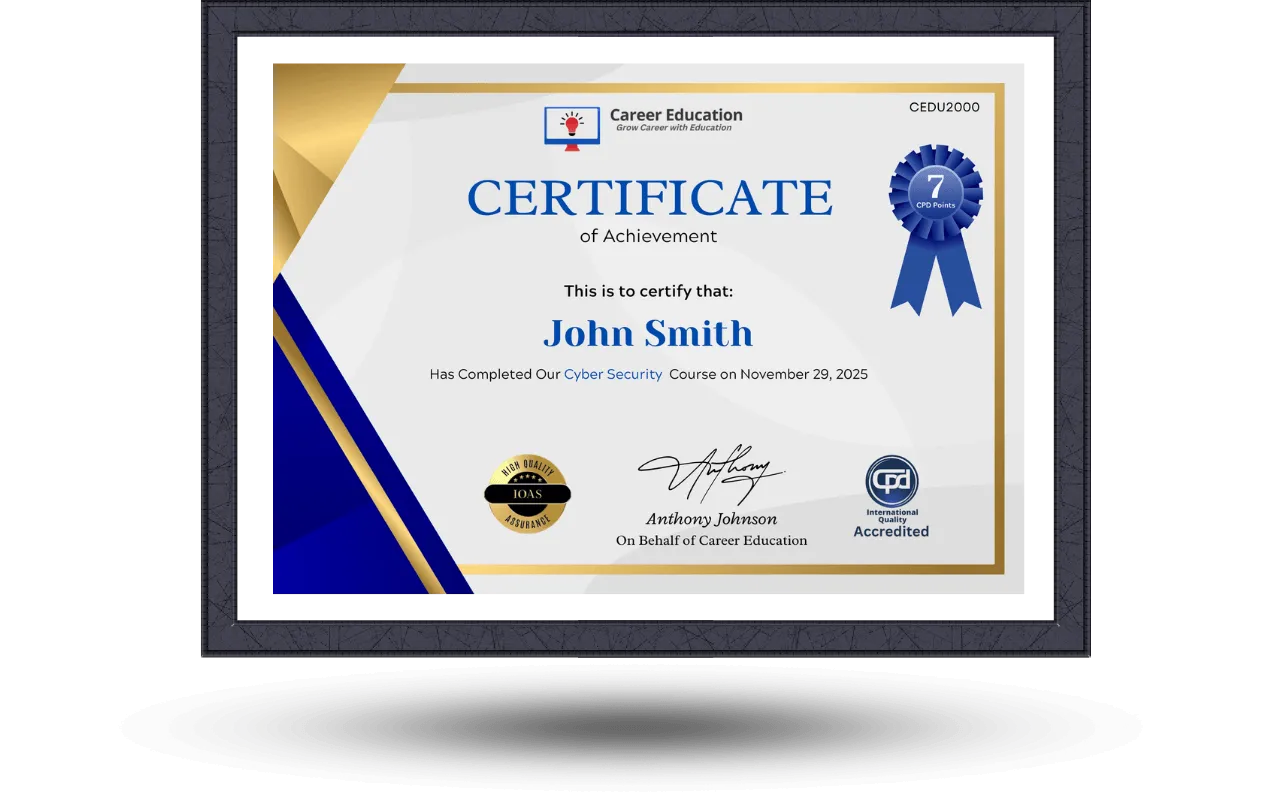
Earn an Accredited Certificate
Upon completion of any course, all students are entitled to a CPD IQ Accredited e-certificate that will be issued by Career Education signifying the completion of your course.
After you complete the course and assignment, you will be eligible to order a free certificate accredited by CPD International Quality by completing the form below.
Hardcopy certificates and transcripts are also available for a small additional fee. More information is disclosed upon course completion.
Similar Courses




Frequently Asked Questions
The lifetime membership includes unlimited access to all courses, resources, and updates for a one-time fee.
You can purchase the membership directly from our website using a secure checkout process.
Yes, selected courses can be downloaded for offline access through our mobile app.
Yes, all future updates and new courses are included at no extra cost.
Yes, we offer a 30-day money-back guarantee if you are not satisfied with the membership.