
94%
OFF
OFF
Emergency Response Planning
- Lifetime Access
- All Levels
- PDF Certificate
£296
£19
14-Day Money-Back Guarantee
Learn With Confidence









Emergency Response Planning
Emergencies can happen with little warning, and organisations that are unprepared may struggle to respond effectively when people, property, operations, or the surrounding environment are at risk. A well-developed emergency response plan provides a structured framework for identifying hazards, assigning responsibilities, communicating critical information, coordinating response activities, and managing resources during an incident.
The Emergency Response Planning course provides practical, outcome-focused knowledge for understanding how effective emergency response plans are developed, implemented, tested, and maintained. Learners will explore the essential components of emergency preparedness, from risk assessment and hazard identification to emergency team responsibilities, communication systems, response procedures, training exercises, and resource management.
The course is suitable for individuals who have responsibility for workplace safety, emergency preparedness, operational continuity, facilities, security, or team coordination. It can also provide valuable foundational knowledge for employees who may have a role during an emergency.
Why Emergency Response Planning Matters
An emergency can quickly create confusion. People may not know who is responsible for making decisions, where they should go, how information should be communicated, or what resources are available.
Emergency Response Planning helps organisations prepare for these challenges before an incident occurs.
A well-structured plan can provide clear procedures for responding to foreseeable emergencies while allowing sufficient flexibility to address unexpected circumstances. It can help employees understand their responsibilities and provide a framework for coordinating people, equipment, communications, and external assistance.
Effective planning is not simply about creating a document. Emergency preparedness requires regular training, exercises, reviews, updates, and communication.
The Emergency Response Planning course explores these principles and helps learners understand how the different components of an emergency management system work together.
Specific emergency planning requirements vary by country, industry, workplace, and type of hazard. Organisations should always ensure that their plans comply with applicable laws, regulations, standards, professional guidance, and site-specific requirements.
What You Will Learn
Throughout the Emergency Response Planning course, learners will develop an understanding of:
-
The purpose and importance of emergency response plans
-
How to identify potential workplace hazards
-
Basic principles of risk assessment
-
Emergency response team structures
-
Roles and responsibilities during an incident
-
Communication protocols and emergency communication systems
-
Procedures for different types of emergencies
-
The importance of employee training
-
How emergency drills and exercises can test preparedness
-
Resource management and emergency logistics
-
How to review and improve emergency response plans
-
The importance of coordination and clear decision-making during emergencies
The course focuses on practical knowledge that can help learners support stronger emergency preparedness within their organisations.
Module 1: Introduction to Emergency Response Plans
The course begins by introducing the purpose and structure of emergency response plans.
Learners will explore why organisations need planned approaches for dealing with emergencies and how effective planning can reduce confusion during an incident.
The introductory lesson considers different types of emergencies that organisations may need to prepare for. These can include fires, severe weather, hazardous material incidents, medical emergencies, security threats, utility failures, equipment incidents, natural disasters, and other events relevant to the specific workplace.
Learners will examine the fundamental components of an emergency response plan, including emergency contacts, responsibilities, communication methods, evacuation arrangements, response procedures, and resource requirements.
The module also highlights the importance of making emergency information accessible to employees and ensuring that people understand what is expected of them.
By completing this module, learners will have a solid foundation for understanding emergency response planning and its role in organisational safety.
Module 2: Risk Assessment and Hazard Identification
Effective emergency planning begins with understanding what could go wrong.
This module focuses on hazard identification and risk assessment as key components of emergency preparedness.
Learners will explore how organisations can identify potential emergency scenarios by examining workplace activities, equipment, materials, facilities, environmental conditions, previous incidents, and other relevant factors.
The course introduces the importance of considering both the likelihood of an incident and its potential consequences.
Learners will also consider how different areas of a workplace may have different risks. For example, a manufacturing facility may face different emergency scenarios from an office, warehouse, construction site, laboratory, or healthcare environment.
The module encourages learners to consider vulnerable people, critical equipment, important operations, access routes, and other factors that may affect emergency response.
By completing this module, learners will understand how risk assessment can help organisations prioritise emergency planning and develop appropriate response measures.
Module 3: Emergency Response Team Roles and Responsibilities
Clear responsibilities are essential during an emergency.
This module focuses on the roles and responsibilities of emergency response teams and other personnel involved in incident management.
Learners will explore why everyone involved in an emergency response should understand their responsibilities before an incident occurs.
Depending on the organisation, emergency response roles may include incident coordinators, evacuation personnel, first aiders, communications personnel, security staff, facilities teams, managers, and other designated responders.
The course examines the importance of establishing clear chains of communication and decision-making authority.
Learners will also consider the importance of coordinating internal personnel with external emergency services when required.
Effective role allocation can help prevent duplicated efforts, conflicting instructions, and gaps in responsibility.
By completing this module, learners will have a clearer understanding of how defined roles can contribute to a more coordinated emergency response.
Module 4: Communication Protocols and Systems
During an emergency, accurate and timely communication can be critical.
This module examines the communication protocols and systems that organisations can use to share important information during an incident.
Learners will explore the importance of identifying communication channels before an emergency occurs and ensuring that employees know how to access them.
Emergency communication systems may include alarms, public address systems, telephones, radios, messaging systems, digital platforms, signage, and other communication methods.
The course also considers the importance of having backup communication methods in case the primary system becomes unavailable.
Learners will explore the characteristics of effective emergency communication, including clarity, accuracy, timeliness, and consistency.
The module highlights the importance of avoiding confusing or contradictory instructions and ensuring that information is communicated to the people who need it.
By completing this module, learners will understand how effective communication supports coordinated emergency response activities.
Module 5: Emergency Procedures and Protocols
Different emergencies require different response strategies.
This module focuses on developing and implementing appropriate emergency procedures and protocols.
Learners will explore how response procedures can be structured around foreseeable scenarios identified during the risk assessment process.
Depending on the workplace, procedures may address evacuation, shelter-in-place arrangements, medical emergencies, fires, hazardous material releases, severe weather, power failures, security incidents, or other hazards.
The course emphasises the importance of making procedures clear, practical, accessible, and appropriate for the workplace.
Learners will also consider the importance of emergency routes, assembly areas, accountability procedures, access for emergency services, and arrangements for people who may require additional assistance.
The module reinforces that emergency procedures should be reviewed regularly and updated when workplace conditions, equipment, personnel, hazards, or regulatory requirements change.
By completing this module, learners will have a stronger understanding of how emergency procedures can provide structure during stressful and unpredictable situations.
Module 6: Training and Exercises
Even the best emergency response plan may be ineffective if employees do not know how to use it.
This module focuses on training, drills, exercises, and preparedness activities.
Learners will explore why employees should receive appropriate information about emergency procedures and understand their responsibilities.
Training can help employees become familiar with evacuation routes, emergency communication methods, alarm systems, assembly points, reporting procedures, and other relevant arrangements.
The module also examines the value of exercises and drills. Simulated scenarios can help organisations identify weaknesses in their plans without waiting for a real emergency to expose them.
Learners will consider how exercises can be evaluated and how lessons identified during drills can be incorporated into future improvements.
The course encourages organisations to treat exercises as learning opportunities rather than simply compliance activities.
By completing this module, learners will understand how regular training and practical exercises can improve emergency readiness.
Module 7: Resource Management and Logistics
Emergency response requires appropriate resources.
The final module focuses on resource management and logistics during emergency preparedness and response.
Learners will explore how organisations can identify the equipment, supplies, personnel, facilities, and external support needed to respond to foreseeable emergencies.
Depending on the workplace, resources may include emergency communication equipment, first aid supplies, fire safety equipment, protective equipment, lighting, emergency power, spill response materials, transport arrangements, documentation, and other specialised resources.
The course also considers the importance of maintaining emergency resources so that they are available and usable when needed.
Logistical planning may include determining where resources are stored, who has access to them, how they can be transported, and how additional resources can be obtained during a prolonged incident.
Learners will understand that resource planning should be based on realistic scenarios and regularly reviewed as organisational needs change.
By completing this module, learners will have a broader understanding of how logistics supports effective emergency response.
Practical Outcomes of the Course
The Emergency Response Planning course is designed to provide practical knowledge that learners can apply within appropriate workplace environments.
After completing the course, learners should be able to:
-
Explain the purpose of an emergency response plan
-
Identify common workplace emergency scenarios
-
Understand basic risk assessment principles
-
Recognise potential hazards that may require emergency planning
-
Understand the importance of defined emergency response roles
-
Support clear allocation of responsibilities
-
Understand emergency communication requirements
-
Recognise the importance of backup communication methods
-
Understand how emergency procedures can be developed
-
Support evacuation and other appropriate response arrangements
-
Appreciate the importance of training and emergency exercises
-
Understand how drills can identify weaknesses in emergency plans
-
Identify important emergency resources and logistical requirements
-
Understand why emergency plans should be regularly reviewed and updated
-
Contribute more effectively to organisational emergency preparedness
These outcomes can help learners develop a more structured approach to emergency planning and response.
Who Should Take This Course?
The Emergency Response Planning course can benefit professionals across a wide range of industries and organisations.
It may be particularly suitable for:
-
Health and safety professionals
-
Emergency response coordinators
-
Workplace safety managers
-
Facility managers
-
Operations managers
-
Supervisors
-
Team leaders
-
Security personnel
-
Business continuity professionals
-
Emergency preparedness personnel
-
HR professionals
-
Site managers
-
Business owners
-
Employees with emergency response responsibilities
It can also be useful for organisations that want to provide employees with foundational awareness of emergency planning principles.
Strengthen Your Organisation’s Emergency Preparedness
An effective emergency response begins long before an emergency occurs. Planning, risk assessment, communication, training, defined responsibilities, and appropriate resources can all contribute to a more organised response.
The Emergency Response Planning course provides a structured learning experience covering the key elements required to develop and maintain effective emergency preparedness arrangements.
From identifying potential hazards and assigning emergency response roles to establishing communication systems, developing procedures, conducting exercises, and managing resources, learners will gain a broader understanding of how emergency planning works in practice.
The course also reinforces the importance of continuous improvement. Emergency plans should not remain unchanged for years. They need to be reviewed after exercises, incidents, organisational changes, new hazards, and changes in applicable requirements.
Preparedness is ultimately about helping people know what to do before they need to do it. Clear procedures and regular practice can improve confidence, coordination, and organisational readiness.
Enrol in Emergency Response Planning today and develop the practical knowledge needed to identify emergency risks, organise response responsibilities, strengthen communication, improve preparedness, and support more effective workplace emergency management.
Course Modules
Course Content
Module 1_ Introduction to Emergency Response Plans.
-
Lesson 1_ Introduction to Emergency Response Plans.
Module 2_ Risk Assessment and Hazard Identification.
Module 3_ Emergency Response Team Roles and Responsibilities.
Module 4_ Communication Protocols and Systems.
Module 5_ Emergency Procedures and Protocols.
Module 6_ Training and Exercises.
Module 7_ Resource Management and Logistics.
What our students say
Excellent
4.9 average
158 Reviews

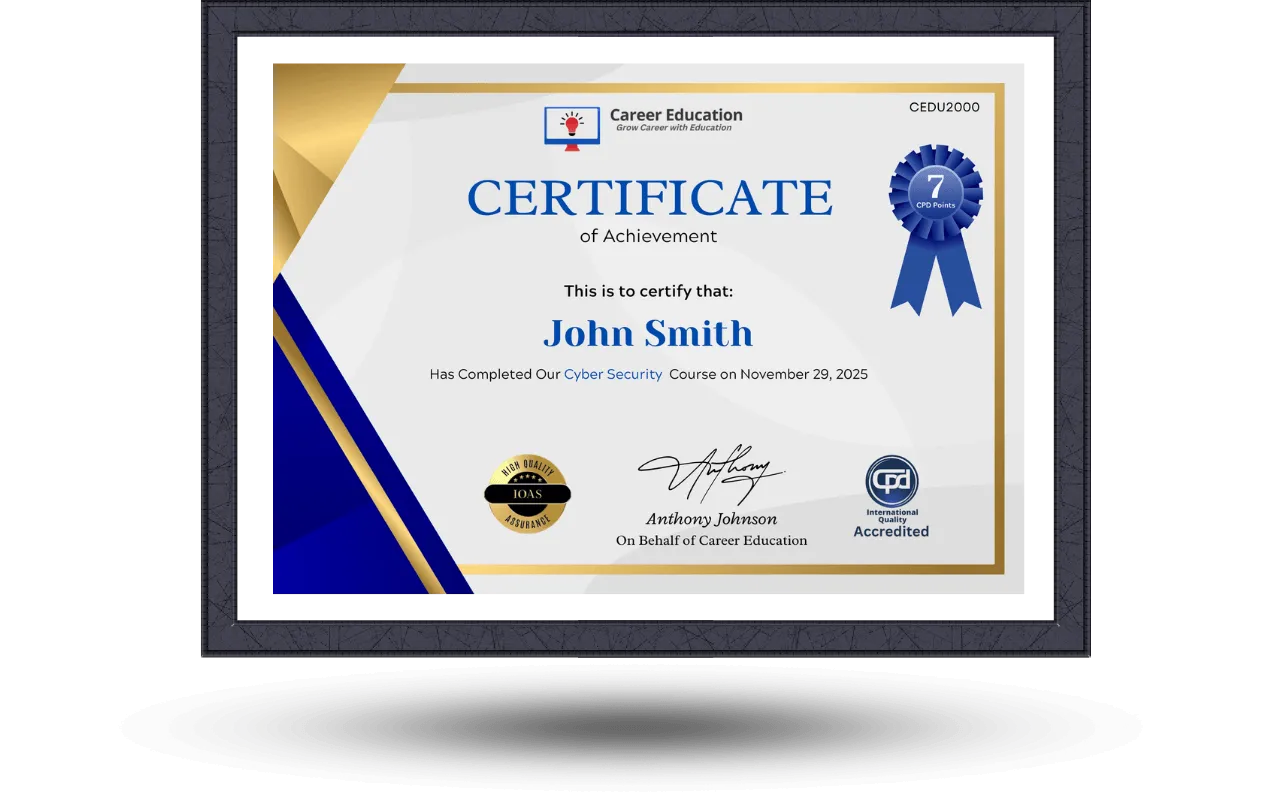
Earn an Accredited Certificate
Upon completion of any course, all students are entitled to a CPD IQ Accredited e-certificate that will be issued by Career Education signifying the completion of your course.
After you complete the course and assignment, you will be eligible to order a free certificate accredited by CPD International Quality by completing the form below.
Hardcopy certificates and transcripts are also available for a small additional fee. More information is disclosed upon course completion.
Similar Courses




Frequently Asked Questions
The lifetime membership includes unlimited access to all courses, resources, and updates for a one-time fee.
You can purchase the membership directly from our website using a secure checkout process.
Yes, selected courses can be downloaded for offline access through our mobile app.
Yes, all future updates and new courses are included at no extra cost.
Yes, we offer a 30-day money-back guarantee if you are not satisfied with the membership.