
94%
OFF
OFF
Emergency Planning Essentials
- Lifetime Access
- All Levels
- PDF Certificate
£296
£19
14-Day Money-Back Guarantee
Learn With Confidence









# Emergency Planning Essentials
Emergencies can disrupt workplaces, organisations, communities, and essential operations with little or no warning. While no organisation can predict every incident, effective preparation can make a significant difference in how people respond, communicate, protect resources, and recover.
**Emergency Planning Essentials** is an outcome-focused course designed to provide learners with a practical foundation in emergency planning, risk assessment, response procedures, resource management, crisis communication, emergency training, exercises, recovery, and continuity planning.
An effective emergency plan is more than a document stored in a folder. It should help people understand potential risks, know their responsibilities, communicate during disruptions, access appropriate resources, and take structured action when an incident occurs.
This course takes learners through the essential stages of emergency planning, from identifying hazards and developing response procedures to testing plans and supporting recovery. It is suitable for managers, supervisors, business owners, workplace safety professionals, emergency coordinators, team leaders, and employees who may contribute to organisational emergency preparedness.
Whether your goal is to strengthen workplace readiness, improve organisational resilience, or develop a stronger understanding of emergency management principles, **Emergency Planning Essentials** provides a structured learning experience to help you prepare more effectively.
—
## Why Emergency Planning Matters
An unexpected event can quickly create confusion and disruption.
A fire, severe weather event, power failure, hazardous incident, security event, infrastructure disruption, or other emergency can affect employees, facilities, customers, equipment, information, and business operations.
Without appropriate planning, people may be uncertain about:
* What actions to take.
* Who is responsible for making decisions.
* How emergency information should be communicated.
* Where resources are located.
* How people should evacuate or shelter.
* How critical operations should be maintained.
* What happens after the immediate emergency.
Emergency planning helps organisations consider these questions before an incident occurs.
Effective planning can contribute to:
* Faster and more organised responses.
* Clearer roles and responsibilities.
* Better hazard awareness.
* Improved communication.
* More effective resource use.
* Greater employee preparedness.
* Reduced operational disruption.
* More structured recovery.
* Improved organisational resilience.
**Emergency Planning Essentials** explores the key components that support these outcomes.
—
# What You Will Learn
By completing **Emergency Planning Essentials**, learners will be able to:
* Explain the fundamental principles of emergency planning.
* Identify potential hazards and assess associated risks.
* Understand emergency response procedures.
* Recognise resource and logistical requirements.
* Apply basic principles of crisis communication.
* Understand the role of training and emergency exercises.
* Identify important recovery considerations.
* Understand business and operational continuity principles.
* Contribute more effectively to emergency planning activities.
* Support a more organised and resilient workplace response.
—
# Course Curriculum
## Module 1: Introduction to Emergency Planning
### Lesson 1: Introduction to Emergency Planning
The course begins with an introduction to emergency planning and its role in organisational preparedness.
Learners will explore the purpose of emergency plans and examine the different types of situations that may require a coordinated response.
Key concepts include:
* Emergency preparedness.
* Emergency planning.
* Emergency response.
* Roles and responsibilities.
* Organisational readiness.
* Emergency procedures.
* Preparedness resources.
* Recovery planning.
Participants will consider why organisations should plan for foreseeable emergencies rather than relying entirely on decisions made during a crisis.
A well-developed emergency plan can provide a framework for responding to an incident and help individuals understand what is expected of them.
The module also introduces the importance of reviewing emergency plans regularly.
Organisations change over time. Employees move into new roles, facilities are modified, equipment changes, new hazards may emerge, and operational priorities can evolve. Emergency plans should therefore be reviewed and updated when necessary.
By completing this module, learners will understand the purpose of emergency planning and its importance in supporting organisational readiness.
—
# Module 2: Risk Assessment and Hazard Analysis
Effective emergency planning begins with understanding what could happen.
This module focuses on identifying hazards and assessing potential risks.
Learners will explore:
* Hazard identification.
* Risk assessment.
* Hazard analysis.
* Likelihood and consequences.
* Vulnerability.
* Risk prioritisation.
* Preventive measures.
* Mitigation strategies.
Participants will examine why different organisations face different emergency risks.
For example, a manufacturing facility may have different hazards from an office, warehouse, school, healthcare environment, construction site, or retail business.
Risk assessment helps organisations identify potential emergencies and consider their possible impact.
Learners will explore how to consider factors such as people, facilities, equipment, processes, information, infrastructure, and business operations when evaluating emergency risks.
The module also introduces mitigation.
Mitigation involves taking reasonable measures to reduce the likelihood of an incident or limit its potential consequences.
By completing this module, learners will be better prepared to contribute to structured hazard identification and risk assessment activities.
—
# Module 3: Emergency Response Procedures
Once potential risks have been identified, organisations need procedures for responding to them.
This module focuses on the practical elements of emergency response procedures.
Learners will explore:
* Emergency response actions.
* Roles and responsibilities.
* Evacuation.
* Shelter-in-place considerations.
* Emergency notifications.
* Incident coordination.
* Accountability.
* Emergency services.
* Post-incident actions.
Participants will examine why response procedures should be clear and accessible.
During an emergency, people may experience stress, uncertainty, or confusion. Clear procedures can provide useful guidance and establish expectations.
The module also explores the importance of defining responsibilities.
Emergency response may involve managers, employees, emergency coordinators, security personnel, facilities teams, first aid personnel, contractors, emergency services, and other relevant parties.
Learners will consider how clearly defined responsibilities can support coordination.
By completing this module, participants will develop greater awareness of the components that contribute to effective emergency response procedures.
—
# Module 4: Resource Management and Logistics
Emergency response depends on having appropriate resources available when they are needed.
This module explores resource management and logistics as important elements of emergency planning.
Learners will examine:
* Emergency equipment.
* Supplies.
* Resource inventories.
* Emergency facilities.
* Communication resources.
* Personnel.
* Transportation.
* Resource allocation.
* Logistics coordination.
Participants will consider why emergency resources should be identified and maintained before an incident occurs.
Depending on the organisation and its hazards, resources may include emergency lighting, first aid supplies, communication equipment, protective equipment, evacuation materials, backup systems, emergency contact information, and other relevant resources.
The module also explores resource prioritisation.
During a major emergency, resources may be limited or difficult to access. Organisations may therefore need to establish priorities and identify alternative arrangements.
By completing this module, learners will understand how resource planning can support effective emergency response and reduce unnecessary delays.
—
# Module 5: Crisis Communication
Communication is one of the most important components of emergency planning.
During a crisis, employees and other stakeholders need timely and reliable information.
This module focuses on crisis communication principles.
Learners will explore:
* Emergency notifications.
* Internal communication.
* External communication.
* Communication channels.
* Clear messaging.
* Information accuracy.
* Communication responsibilities.
* Stakeholder communication.
* Communication challenges.
Participants will learn why emergency communication should be planned in advance rather than improvised during an incident.
An organisation should consider who is authorised to communicate official information, which communication methods should be used, and how updates will be distributed.
The module also considers potential communication barriers.
Power failures, network disruptions, limited access to technology, language differences, misinformation, and rapidly changing circumstances can all complicate emergency communication.
Learners will explore the importance of having appropriate communication alternatives and keeping messages clear and relevant.
By completing this module, participants will have a stronger understanding of how communication supports emergency coordination.
—
# Module 6: Training and Exercises
An emergency plan is only useful if people understand it and can apply it.
This module focuses on training, drills, exercises, and continuous improvement.
Learners will explore:
* Emergency training.
* Employee awareness.
* Emergency drills.
* Scenario-based exercises.
* Tabletop exercises.
* Plan testing.
* Performance evaluation.
* Lessons learned.
* Continuous improvement.
Participants will examine why organisations should test emergency procedures rather than assuming that written plans will automatically work during a real incident.
Exercises can reveal practical problems.
For example, an evacuation route may be inaccessible, an emergency contact number may be outdated, employees may not understand their responsibilities, or communication systems may not work as expected.
Testing provides an opportunity to identify and correct these issues.
The module also explores the importance of learning from exercises.
After an exercise or incident, organisations can review what worked well, identify gaps, and update procedures accordingly.
By completing this module, learners will understand how training and exercises can strengthen emergency preparedness and improve organisational readiness.
—
# Module 7: Recovery and Continuity Planning
Emergency response is only one stage of emergency management.
Once the immediate threat has been addressed, organisations may need to restore facilities, resume operations, support employees, communicate with stakeholders, and recover from disruption.
This module focuses on recovery and continuity planning.
Learners will explore:
* Emergency recovery.
* Business continuity.
* Critical operations.
* Operational priorities.
* Recovery strategies.
* Alternative arrangements.
* Data and information considerations.
* Communication during recovery.
* Plan review and improvement.
Participants will examine the importance of identifying critical activities before an emergency occurs.
If an incident interrupts normal operations, organisations need to understand which functions are essential and how they can be maintained or restored.
Continuity planning may involve alternative work arrangements, backup resources, alternate facilities, communication procedures, data protection, supplier considerations, and recovery priorities.
The module also highlights that recovery can take time.
An organisation may need to manage short-term disruption while simultaneously developing longer-term recovery strategies.
By completing this module, learners will understand how recovery and continuity planning contribute to organisational resilience.
—
# Who Is This Course For?
**Emergency Planning Essentials** is suitable for individuals who want to understand the fundamentals of emergency planning and organisational preparedness.
It can benefit:
* Managers.
* Supervisors.
* Business owners.
* Emergency coordinators.
* Workplace safety professionals.
* Facility managers.
* Operations managers.
* Team leaders.
* HR professionals.
* Security personnel.
* Project managers.
* Employees.
* Community organisation staff.
* Professionals responsible for emergency planning.
The course can also provide useful general awareness for employees who may have responsibilities during an emergency.
—
# Practical Learning Outcomes
The course is designed around practical knowledge that can be applied to emergency planning activities.
After completing **Emergency Planning Essentials**, learners will be better prepared to:
### Identify Emergency Risks
Recognise potential hazards and understand how risk assessment contributes to emergency preparedness.
### Develop Response Awareness
Understand the essential components of emergency response procedures, roles, responsibilities, and coordination.
### Plan Resources
Recognise the importance of identifying emergency equipment, personnel, supplies, communication systems, and logistical requirements.
### Communicate During a Crisis
Understand how clear, accurate, and timely communication can support emergency response.
### Test Emergency Plans
Recognise the value of drills, exercises, training, evaluation, and continuous improvement.
### Support Recovery
Understand how recovery planning and continuity strategies can help organisations restore critical operations following disruption.
—
# Strengthen Organisational Preparedness
Emergency preparedness should not be viewed as a one-time project.
Organisations need to continually review their risks, update procedures, train employees, test plans, and learn from incidents and exercises.
**Emergency Planning Essentials** introduces learners to this continuous cycle of preparedness, response, evaluation, and improvement.
By understanding how the different elements of emergency planning connect, learners can contribute more effectively to organisational readiness.
—
# Improve Emergency Response Coordination
A coordinated response requires people to understand their responsibilities.
Managers and employees should know where to find emergency information, who has specific responsibilities, how communication works, and what procedures apply to their environment.
Clear planning can help reduce uncertainty and support more structured decision-making during an emergency.
—
# Prepare for Business Disruption
Emergencies can affect more than physical safety.
They can interrupt operations, damage equipment, affect supply chains, disrupt communications, restrict access to facilities, and impact customers and employees.
Continuity planning helps organisations think about how essential activities can be maintained or restored when normal operations are disrupted.
Through this course, learners will gain greater awareness of how emergency planning and continuity planning work together.
—
# Build a Culture of Preparedness
Emergency planning is most effective when preparedness becomes part of organisational culture.
Employees should understand that emergency readiness is a shared responsibility.
Regular training, clear procedures, practical exercises, updated contact information, accessible emergency resources, and management support can all contribute to a stronger preparedness culture.
**Emergency Planning Essentials** helps learners understand their role in that process.
—
# Enrol in Emergency Planning Essentials Today
Emergencies are unpredictable, but preparedness does not have to be.
**Emergency Planning Essentials** provides a structured seven-module learning experience covering emergency planning fundamentals, risk assessment and hazard analysis, emergency response procedures, resource management and logistics, crisis communication, training and exercises, and recovery and continuity planning.
The course is intended for general educational and professional development purposes. It does not replace organisation-specific emergency plans, professional emergency management advice, legal requirements, emergency services, or applicable local regulations. Organisations should develop and maintain procedures appropriate to their specific hazards, operations, location, and regulatory requirements.
Whether you are responsible for workplace preparedness, manage a team, operate a business, coordinate facilities, or simply want to develop your emergency planning knowledge, **Emergency Planning Essentials** can provide a valuable foundation.
**Enrol today and develop the knowledge to identify risks, plan effective responses, coordinate resources, communicate during crises, test emergency procedures, and support recovery and continuity when unexpected events disrupt normal operations.**
Course Modules
Course Content
Module 1_ Introduction to Emergency Planning
-
Lesson 1_ Introduction to Emergency Planning
Module 2_ Risk Assessment and Hazard Analysis
Module 3_ Emergency Response Procedures
Module 4_ Resource Management and Logistics
Module 5_ Crisis Communication
Module 6_ Training and Exercises
Module 7_ Recovery and Continuity Planning
What our students say
Excellent
4.9 average
158 Reviews

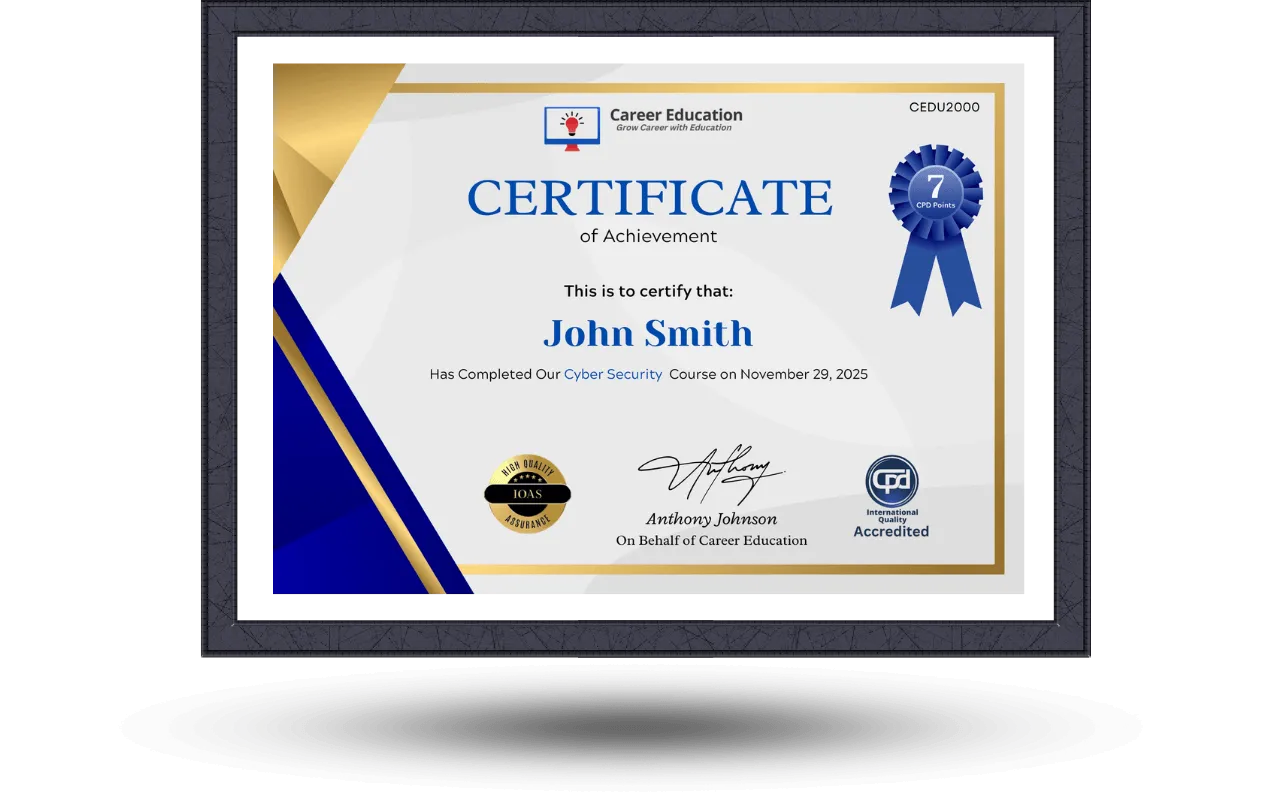
Earn an Accredited Certificate
Upon completion of any course, all students are entitled to a CPD IQ Accredited e-certificate that will be issued by Career Education signifying the completion of your course.
After you complete the course and assignment, you will be eligible to order a free certificate accredited by CPD International Quality by completing the form below.
Hardcopy certificates and transcripts are also available for a small additional fee. More information is disclosed upon course completion.
Similar Courses



Frequently Asked Questions
The lifetime membership includes unlimited access to all courses, resources, and updates for a one-time fee.
You can purchase the membership directly from our website using a secure checkout process.
Yes, selected courses can be downloaded for offline access through our mobile app.
Yes, all future updates and new courses are included at no extra cost.
Yes, we offer a 30-day money-back guarantee if you are not satisfied with the membership.