
94%
OFF
OFF
Effective Teaching and Classroom Management Skills
- Lifetime Access
- All Levels
- PDF Certificate
£296
£19
14-Day Money-Back Guarantee
Learn With Confidence







Effective Teaching and Classroom Management Skills
Teaching is about much more than delivering lessons. An effective teacher creates an environment where students feel supported, understand expectations, participate actively, and have opportunities to make meaningful progress. Strong classroom management and teaching skills can make a significant difference to the learning experience, teacher confidence, and overall classroom atmosphere.
The Effective Teaching and Classroom Management Skills course is designed to help educators develop practical strategies for creating organised, positive, inclusive, and engaging learning environments. Whether you are new to teaching, working to strengthen your classroom practice, supporting learners in an educational setting, or looking to refresh your existing skills, this course provides a structured foundation for improving your approach.
Throughout the course, you will explore classroom management principles, positive classroom culture, routines and procedures, behaviour management, student motivation, discipline, communication, inclusion, assessment, and feedback. The focus is on practical outcomes, helping you understand how to apply effective approaches in real classroom situations.
Why Effective Teaching and Classroom Management Skills Matter
A well-managed classroom provides a foundation for effective learning. When expectations are clear, routines are consistent, communication is respectful, and students understand how they are expected to participate, teachers can spend more time focusing on learning rather than constantly responding to disruptions.
Developing Effective Teaching and Classroom Management Skills can help you become more confident in handling everyday classroom challenges while building stronger relationships with learners.
Effective classroom management can support teachers in:
-
Establishing clear expectations and boundaries
-
Creating positive and respectful learning environments
-
Developing consistent classroom routines
-
Responding appropriately to challenging behaviour
-
Encouraging student participation
-
Supporting different learning needs
-
Communicating more effectively with students
-
Providing constructive feedback
-
Monitoring learner progress
-
Creating an inclusive classroom experience
Rather than relying on a single classroom management technique, this course introduces a range of strategies that can be adapted to different learners, subjects, and educational environments.
What You Will Learn
The Effective Teaching and Classroom Management Skills course covers nine important areas of classroom practice. Each module contributes to your understanding of how effective teaching and classroom management work together.
Module 1: Introduction to Classroom Management
The course begins by establishing a strong foundation in classroom management.
You will explore what classroom management means, why it matters, and how effective management can influence student learning and classroom relationships. You will consider the responsibilities of teachers in establishing an environment that supports learning and understand the importance of planning, consistency, expectations, and professional behaviour.
By completing this module, you can develop a clearer understanding of the principles behind effective classroom management and recognise areas where stronger management practices can improve the learning environment.
Module 2: Creating a Positive Classroom Culture
A positive classroom culture can encourage students to participate, communicate, collaborate, and take greater responsibility for their learning.
This module explores practical approaches to creating a classroom environment based on respect, trust, cooperation, and clear expectations. You will consider how teacher behaviour, classroom relationships, shared expectations, and positive interactions can contribute to a productive learning culture.
You will learn how to create an atmosphere where students understand what is expected of them while feeling supported and encouraged to engage with learning.
The outcome is a stronger foundation for building positive teacher-student relationships and maintaining a constructive classroom atmosphere.
Module 3: Developing Classroom Routines and Procedures
Consistent routines can make classrooms more organised and predictable. When students know what to do and how to do it, valuable teaching and learning time can be used more effectively.
This module focuses on developing classroom routines and procedures that support smooth day-to-day teaching. You will explore how to establish expectations for activities such as entering the classroom, starting lessons, transitioning between tasks, participating in discussions, completing work, and ending sessions.
You will also consider the importance of teaching, modelling, reinforcing, and reviewing routines.
By the end of this module, you will have a stronger understanding of how effective procedures can reduce confusion, support consistency, and create a more structured learning environment.
Module 4: Behaviour Management Strategies
Managing behaviour is one of the most important aspects of classroom practice. Teachers need strategies that allow them to respond to behavioural challenges calmly, consistently, and appropriately.
This module explores different behaviour management strategies and helps you understand the importance of identifying expectations, responding consistently, and encouraging positive behaviour.
You will consider how to respond to common classroom behaviour challenges while maintaining professionalism and respect. You will also explore approaches that can help prevent unnecessary disruption by establishing clear expectations and encouraging positive participation.
The goal is to help you develop greater confidence in responding to behaviour while maintaining a supportive learning environment.
Module 5: Engaging and Motivating Students
Student engagement plays an important role in successful learning. Even a well-organised classroom can struggle if learners are not interested, involved, or motivated to participate.
This module focuses on strategies for increasing student engagement and encouraging active participation. You will explore ways to make learning more interactive and consider how teacher communication, lesson activities, learner interests, achievable goals, encouragement, and variety can influence participation.
You will develop an understanding of how motivation can be supported through an environment where learners understand the purpose of their learning and receive appropriate encouragement.
By applying these principles, you can work towards creating lessons where students are more actively involved in the learning process.
Module 6: Classroom Discipline and Authority
Teachers need to establish authority while maintaining respectful relationships with students. Effective discipline is not simply about responding to problems; it also involves establishing clear expectations and applying them consistently.
This module explores classroom discipline and teacher authority. You will consider the importance of boundaries, consistency, fairness, professionalism, and appropriate responses to classroom issues.
You will learn why a teacher’s approach to authority can influence classroom relationships and student behaviour. The module encourages a balanced approach that combines clear expectations with respect and effective communication.
The outcome is greater awareness of how to maintain classroom order without unnecessarily damaging positive teacher-student relationships.
Module 7: Communication in the Classroom
Communication is central to effective teaching. Teachers communicate instructions, expectations, feedback, explanations, encouragement, and information every day.
This module examines communication in the classroom and explores how clear and purposeful communication can improve teaching and learning. You will consider verbal and non-verbal communication, active listening, clarity of instructions, questioning, and respectful interactions.
You will also explore how communication can help prevent misunderstandings and support stronger relationships with learners.
By developing your classroom communication skills, you can deliver instructions more effectively, encourage participation, and create opportunities for students to express their questions and ideas.
Module 8: Inclusive Classroom Management
Every classroom can include learners with different experiences, abilities, learning preferences, backgrounds, and support needs. Effective classroom management should recognise and respond to this diversity.
This module explores inclusive classroom management and the importance of creating learning environments where students can participate and feel respected.
You will consider how classroom expectations, teaching approaches, communication, activities, and management strategies can be adapted to support diverse learners. The module encourages a thoughtful approach to classroom practice that recognises individual differences while maintaining clear and consistent expectations.
By completing this module, you can develop greater awareness of inclusive approaches and consider how your classroom management strategies can support participation and belonging.
Module 9: Classroom Assessment and Feedback
Assessment and feedback provide valuable information about student learning and can help teachers make informed decisions about future teaching.
This final module explores classroom assessment and feedback. You will consider how assessment can be used to monitor progress, identify learning needs, and support improvement.
You will also explore the role of constructive feedback in helping learners understand their strengths, recognise areas for development, and work towards improvement.
Effective assessment is not simply about measuring performance. It can also become part of the learning process. By using appropriate assessment and feedback strategies, teachers can gain a clearer understanding of student progress and adapt their teaching accordingly.
Practical Outcomes of the Course
The Effective Teaching and Classroom Management Skills course is designed with practical outcomes in mind. By completing the course, you can develop knowledge and strategies that may help you:
Build More Organised Classrooms
Learn how routines, procedures, expectations, and consistent approaches can contribute to a structured classroom environment.
Manage Behaviour More Effectively
Develop a broader understanding of behaviour management strategies and how to respond to classroom challenges appropriately.
Strengthen Student Engagement
Explore approaches for encouraging participation, motivation, collaboration, and active involvement in learning.
Improve Classroom Communication
Develop techniques for communicating instructions, expectations, feedback, and information more clearly.
Establish Positive Relationships
Understand how respect, consistency, encouragement, and professional communication can contribute to stronger classroom relationships.
Support Inclusive Learning
Recognise the importance of adapting classroom approaches to support diverse learners and encourage meaningful participation.
Use Feedback More Effectively
Understand how assessment and constructive feedback can support student development and inform teaching decisions.
Increase Teaching Confidence
Build a stronger foundation of classroom management knowledge that can help you approach teaching situations with greater preparation and confidence.
Who Can Benefit From This Course?
The Effective Teaching and Classroom Management Skills course can be valuable for a wide range of people interested in developing their teaching and classroom management knowledge.
It may be particularly useful for:
-
New and aspiring teachers
-
Teaching assistants and classroom support staff
-
Tutors and private educators
-
Trainers and learning facilitators
-
Education professionals
-
Individuals preparing for teaching-related roles
-
Teachers looking to refresh their classroom management knowledge
-
Professionals who regularly deliver learning sessions
You do not need to rely on one particular classroom management style. The course introduces core principles and practical strategies that can be considered and adapted according to the learning environment and the needs of students.
Why Choose Effective Teaching and Classroom Management Skills?
Teaching environments can be challenging. Different learners respond to different approaches, classroom dynamics can change quickly, and teachers often need to balance instruction, behaviour, communication, assessment, and student support.
The Effective Teaching and Classroom Management Skills course brings these areas together in one structured learning experience.
Instead of focusing only on discipline, the course takes a broader approach to classroom effectiveness. It explores how classroom culture, routines, behaviour management, engagement, communication, inclusion, and assessment work together.
This holistic approach can help you think more strategically about classroom management. You can move beyond simply reacting to problems and consider how planning, relationships, expectations, routines, and communication can help create better learning conditions from the beginning.
Develop a More Effective Teaching Approach
Successful teaching requires continuous development. Even experienced educators can benefit from reviewing their classroom practices, exploring new strategies, and reflecting on how different approaches affect learners.
The Effective Teaching and Classroom Management Skills course provides an opportunity to strengthen your understanding of essential classroom practices in a structured and accessible way.
You will explore how to establish a positive classroom culture, develop effective routines, manage behaviour, motivate students, communicate clearly, maintain appropriate discipline, support inclusion, and use assessment and feedback effectively.
These skills can contribute to a classroom environment that is organised, respectful, engaging, and focused on learning.
Take the Next Step in Your Professional Development
Strong classroom management can transform the way teaching and learning take place. When teachers are prepared with effective strategies, students can benefit from clearer expectations, stronger communication, greater engagement, and a more supportive learning environment.
The Effective Teaching and Classroom Management Skills course gives you the opportunity to develop practical knowledge across the key areas of effective classroom practice.
Whether your goal is to strengthen your current teaching approach, prepare for an education-related role, improve your classroom confidence, or expand your professional knowledge, this course can provide a valuable foundation.
Start developing your Effective Teaching and Classroom Management Skills today and build the knowledge needed to create more organised, positive, inclusive, and engaging learning environments.
Course Modules
Course Content
Module 1_ Introduction to Classroom Management.
-
Lesson 1_ Introduction to Classroom Management.
Module 2_ Creating a Positive Classroom Culture.
Module 3_ Developing Classroom Routines and Procedures.
Module 4_ Behaviour Management Strategies.
Module 5_ Engaging and Motivating Students.
Module 6_ Classroom Discipline and Authority.
Module 7_ Communication in the Classroom.
Module 8_ Inclusive Classroom Management.
Module 9_ Classroom Assessment and Feedback.
What our students say
Excellent
4.9 average
158 Reviews

Earn an Accredited Certificate
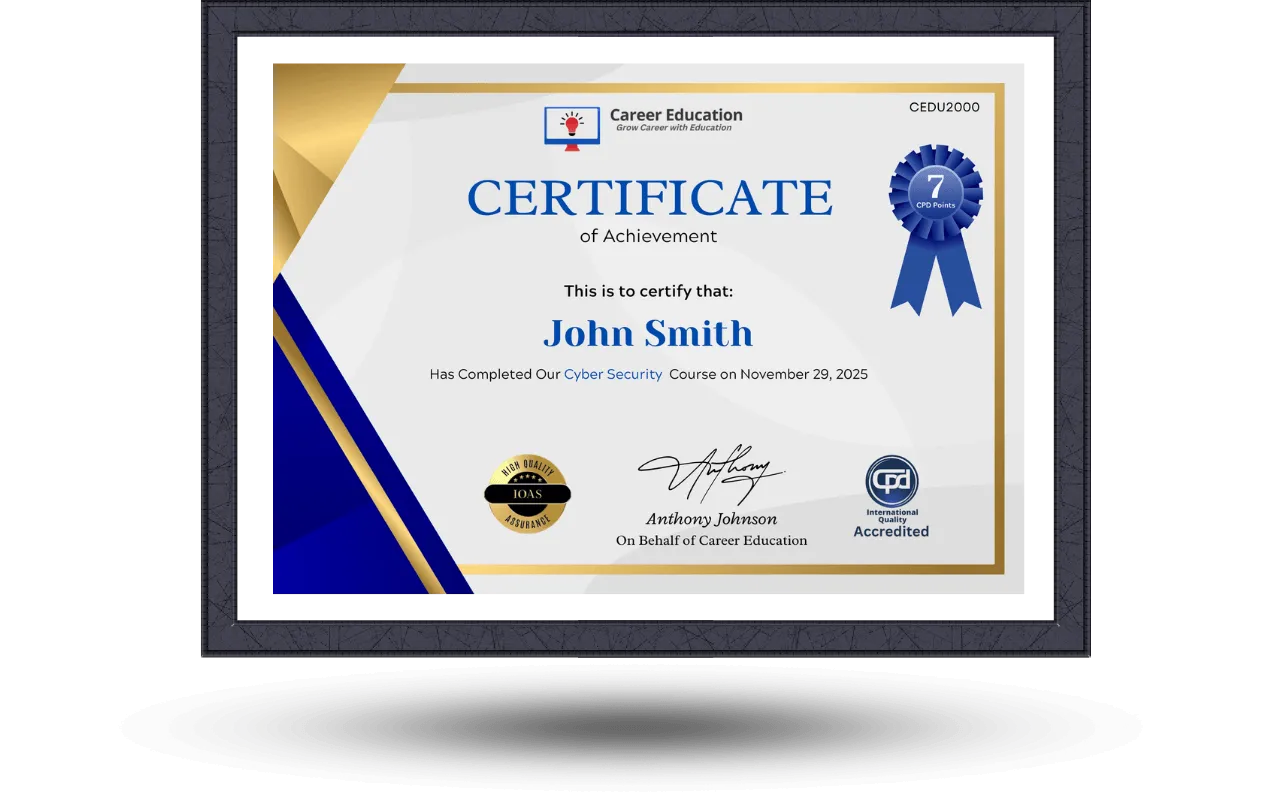
Upon completion of any course, all students are entitled to a CPD IQ Accredited e-certificate that will be issued by Career Education signifying the completion of your course.
After you complete the course and assignment, you will be eligible to order a free certificate accredited by CPD International Quality by completing the form below.
Hardcopy certificates and transcripts are also available for a small additional fee. More information is disclosed upon course completion.
Similar Courses




Frequently Asked Questions
The lifetime membership includes unlimited access to all courses, resources, and updates for a one-time fee.
You can purchase the membership directly from our website using a secure checkout process.
Yes, selected courses can be downloaded for offline access through our mobile app.
Yes, all future updates and new courses are included at no extra cost.
Yes, we offer a 30-day money-back guarantee if you are not satisfied with the membership.