
94%
OFF
OFF
Effective Interview Skills
- Lifetime Access
- All Levels
- PDF Certificate
£296
£19
14-Day Money-Back Guarantee
Learn With Confidence



Effective Interview Skills
Landing an interview is an important step in your career journey, but performing well during the interview is what can help you move closer to securing the role you want. Effective Interview Skills is designed to help learners develop the practical knowledge, communication techniques, preparation strategies, and confidence needed to approach interviews successfully.
Whether you are applying for your first job, returning to the workplace, changing careers, or looking to progress into a more senior position, strong interview skills can make a meaningful difference. Employers assess more than qualifications. They also look at how candidates communicate, respond to questions, demonstrate their experience, handle pressure, and present themselves professionally.
This course takes a practical, outcome-focused approach to interview preparation. You will explore how to research an organisation, prepare an effective resume, structure your interview preparation, communicate clearly, respond to behavioural and technical questions, use appropriate body language, adapt to different interview formats, and handle challenging questions and negotiations.
Why Develop Effective Interview Skills?
An interview gives you an opportunity to demonstrate what you can bring to an organisation. However, even highly capable candidates can struggle if they are not prepared to communicate their strengths effectively.
Developing Effective Interview Skills can help you approach interviews with greater preparation and clarity. Instead of relying on memorised answers, you can learn how to understand what employers are looking for and communicate relevant examples of your abilities.
Strong interview preparation can help you:
-
Present your experience more effectively
-
Communicate your strengths with greater confidence
-
Prepare relevant answers to common interview questions
-
Research employers before attending an interview
-
Improve your professional communication
-
Understand behavioural and technical interview approaches
-
Use positive and appropriate body language
-
Adapt to different interview formats
-
Respond more effectively to difficult questions
-
Approach salary and employment discussions professionally
-
Make a stronger overall impression on prospective employers
The goal is not simply to answer interview questions. It is to help you develop the skills required to present yourself as a prepared, capable, and professional candidate.
What Will You Learn?
The Effective Interview Skills course covers the key stages of the interview process, from initial preparation through to difficult questions and negotiation.
By working through the modules, you will develop a clearer understanding of how to prepare for interviews and how to communicate your suitability for a role.
Module 1: Introduction to Interview Skills
The course begins with an introduction to the fundamentals of effective interviewing. Understanding what makes an interview successful provides a strong foundation for developing your confidence and performance.
You will explore the purpose of interviews, what employers may assess, and the importance of preparation. You will also develop an awareness of how your qualifications, experience, communication, attitude, and examples can contribute to the impression you make.
This foundation can help you approach interviews more strategically rather than treating them as simple question-and-answer sessions.
Outcome: Develop a stronger understanding of the interview process and the skills that can contribute to effective interview performance.
Module 2: Company Research and Preparing the Resume
Preparation starts before you enter the interview room. Researching the organisation can help you understand its work, values, objectives, industry, and the requirements of the position you are applying for.
This module focuses on company research and resume preparation. You will learn why researching an employer matters and how relevant information can help you provide more targeted and meaningful interview responses.
You will also explore the importance of presenting your experience clearly through your resume. A well-prepared resume can give employers a clearer picture of your background and provide useful areas for discussion during an interview.
Effective preparation means understanding your own experience as well as the organisation’s expectations.
Outcome: Improve your ability to research prospective employers and prepare a resume that communicates relevant experience and skills clearly.
Module 3: Interview Preparation
Good interview performance rarely happens by accident. Preparation can help you organise your thoughts, anticipate areas of discussion, and reduce uncertainty before the interview.
This module examines practical interview preparation techniques. You will learn how to prepare for likely questions, review your experience, identify relevant examples, and organise key information before the interview.
You will also develop a more structured approach to preparation so that you can arrive ready to communicate your strengths rather than trying to think of everything at the last minute.
Preparation can also help you consider the questions you want to ask an employer. Asking thoughtful questions can demonstrate genuine interest in the role and help you decide whether the opportunity is right for you.
Outcome: Build a structured interview preparation approach that helps you feel more organised, informed, and ready to respond.
Module 4: Communication Skills
Communication is at the heart of almost every interview. Employers need to understand your experience, skills, ideas, and suitability for the position, which means being able to communicate information clearly and professionally is essential.
This module focuses on developing effective communication skills for interviews. You will explore how to listen carefully, structure your responses, communicate confidently, and maintain professional interactions.
You will also consider how the way you communicate can influence how your answers are understood. A strong response should be relevant and clear without becoming unnecessarily complicated.
Developing effective communication can also help you explain your achievements and responsibilities in a way that connects them to the requirements of the role.
Outcome: Strengthen verbal communication skills and learn how to deliver clear, relevant, and professional interview responses.
Module 5: Behavioural and Technical Interview
Different positions and organisations may use different interview techniques. Some interviews focus heavily on previous behaviour and workplace experiences, while others assess specific technical knowledge or job-related abilities.
This module explores behavioural and technical interviews, helping you understand how these approaches can differ and how to prepare for them.
Behavioural questions often ask candidates to demonstrate how they have handled situations in the past. Being able to provide relevant examples can help employers understand your approach to teamwork, problem-solving, communication, responsibility, and other workplace situations.
Technical interviews may focus more closely on your knowledge and practical understanding of a particular field or role.
By understanding these formats, you can prepare more appropriately instead of relying on one approach for every interview.
Outcome: Improve your ability to prepare for and respond to behavioural and technical interview questions with relevant evidence and examples.
Module 6: Body Language and Techniques for Different Formats
Your communication extends beyond the words you use. Body language, facial expressions, posture, eye contact, and overall professional presentation can influence how your communication is received.
This module examines body language and techniques that can support a professional interview presence. You will learn why non-verbal communication matters and how to remain aware of your presentation throughout an interview.
You will also explore techniques for different interview formats. Modern recruitment can involve face-to-face interviews, telephone interviews, video interviews, panel interviews, and other approaches. Each format can create different communication challenges.
Understanding how to adapt your approach can help you remain professional and effective regardless of how the interview is conducted.
Outcome: Develop greater awareness of professional body language and learn how to adapt your interview techniques to different formats.
Module 7: Handling Difficult Questions and Negotiation Skills
Some interview questions can be challenging. You may be asked about gaps in your experience, weaknesses, mistakes, career changes, challenging situations, or other topics that require careful responses.
This module focuses on handling difficult questions professionally and constructively. You will learn how preparation and thoughtful communication can help you respond without becoming overwhelmed.
The module also introduces negotiation skills relevant to the recruitment process. Once an employer shows interest in you, discussions may involve aspects of the employment offer. Understanding how to approach these conversations professionally can help you communicate your expectations while maintaining a positive relationship with the employer.
The emphasis is on preparation, professionalism, and constructive communication.
Outcome: Develop strategies for responding to challenging interview questions and approach employment negotiations with greater confidence and professionalism.
Practical Outcomes of Effective Interview Skills
Completing the Effective Interview Skills course can give you a more structured approach to the entire interview process.
You can learn to move from simply hoping an interview goes well to actively preparing for it. This includes researching the employer, reviewing the requirements of the position, preparing relevant examples, improving your communication, and adapting your approach to different interview situations.
By the end of the course, you should have a stronger understanding of how to:
Prepare with purpose: Know what information to research, what experience to review, and which areas to prepare before an interview.
Communicate your value: Present your skills, experience, and achievements in a clear and relevant way.
Respond to different question types: Recognise the difference between behavioural and technical questions and adapt your responses accordingly.
Present yourself professionally: Understand how body language and non-verbal communication can support your overall interview presence.
Adapt to different formats: Prepare appropriately for face-to-face, telephone, video, panel, and other interview settings.
Handle challenging situations: Use thoughtful strategies when faced with difficult questions or unexpected areas of discussion.
Communicate during negotiations: Approach employment-related discussions in a professional and constructive manner.
Who Is This Course For?
Effective Interview Skills can benefit anyone who wants to improve their interview preparation and professional communication.
It may be particularly useful for:
-
Job seekers preparing for upcoming interviews
-
Graduates entering the employment market
-
Individuals applying for new positions
-
Career changers preparing to move into a different field
-
Professionals seeking career progression
-
Individuals returning to work after a career break
-
Learners who want to improve their professional communication
-
Anyone who lacks confidence when answering interview questions
-
Individuals who want a more structured approach to interview preparation
You do not need to be an experienced interviewee to benefit from the course. The modules provide a foundation that can help learners develop their skills progressively.
Why Interview Preparation Matters
Your qualifications and experience may help you reach the interview stage, but an interview gives you the opportunity to demonstrate how those qualities can translate into workplace value.
Preparation allows you to connect your background with the needs of the employer. Instead of giving generic answers, you can provide relevant examples and explain how your skills relate to the position.
Preparation can also help you become more comfortable with the interview environment. Knowing what to research, how to organise your examples, and how to approach different question types can make the process feel more manageable.
The purpose of Effective Interview Skills is therefore not to teach candidates to memorise perfect answers. It is to help them develop transferable skills that can be applied across different roles, employers, industries, and interview formats.
Build Confidence Through Preparation
Confidence in an interview does not have to mean knowing exactly what will happen. It can come from knowing that you have prepared thoroughly and understand how to communicate your experience.
The Effective Interview Skills course provides a framework for developing that preparation. From researching the company and improving your resume to strengthening communication and handling difficult questions, each module addresses an important part of the interview process.
With stronger preparation and a clearer understanding of effective interview techniques, you can approach future opportunities with greater professionalism and readiness.
Start Developing Your Effective Interview Skills
A successful interview is an opportunity to show an employer what you can contribute. The ability to communicate your experience, respond appropriately to questions, demonstrate relevant skills, and maintain a professional presence can help you make the most of that opportunity.
Effective Interview Skills provides practical learning across the key areas of interview preparation and performance. You will explore company research, resume preparation, communication, behavioural and technical interviews, body language, different interview formats, difficult questions, and negotiation skills.
If you want to become better prepared for interviews and develop practical skills that can support your career progression, this course can provide a valuable foundation.
Enrol in Effective Interview Skills today and start building the preparation, communication, and professional techniques you need to approach your next interview with greater confidence and clarity.
Course Modules
Course Content
Module 1_ Introduction to Interview Skills
-
Lesson 1_ Introduction to Interview Skills
Module 2_ Company Research and Preparing the Resume
Module 3_ Interview Preparation
Module 4_ Communication Skills
Module 5_ Behavioural and Technical Interview
Module 6_ Body Language and Techniques for Different Formats
Module 7_ Handling Difficult Questions and Negotiation Skills
What our students say
Excellent
4.9 average
158 Reviews

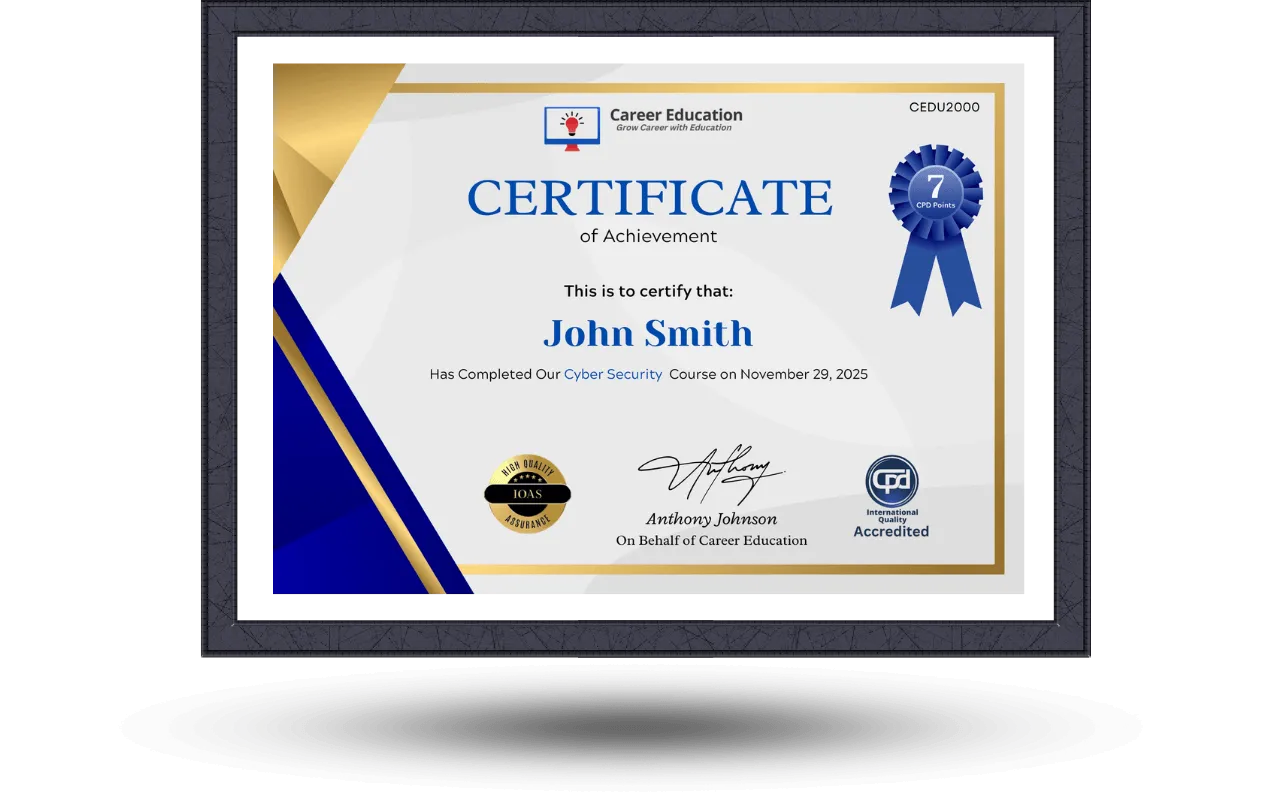
Earn an Accredited Certificate
Upon completion of any course, all students are entitled to a CPD IQ Accredited e-certificate that will be issued by Career Education signifying the completion of your course.
After you complete the course and assignment, you will be eligible to order a free certificate accredited by CPD International Quality by completing the form below.
Hardcopy certificates and transcripts are also available for a small additional fee. More information is disclosed upon course completion.
Similar Courses


Frequently Asked Questions
The lifetime membership includes unlimited access to all courses, resources, and updates for a one-time fee.
You can purchase the membership directly from our website using a secure checkout process.
Yes, selected courses can be downloaded for offline access through our mobile app.
Yes, all future updates and new courses are included at no extra cost.
Yes, we offer a 30-day money-back guarantee if you are not satisfied with the membership.