
94%
OFF
OFF
Dyslexia Awareness Training
- Lifetime Access
- All Levels
- PDF Certificate
£296
£19
14-Day Money-Back Guarantee
Learn With Confidence







# Dyslexia Awareness Training
Develop a deeper understanding of dyslexia and learn how to provide more informed, inclusive and effective support with **Dyslexia Awareness Training**.
Dyslexia is a learning difference that can affect reading, spelling, writing, processing and other aspects of learning. However, dyslexia does not define a person’s intelligence, potential or ability to succeed.
With the right understanding and appropriate support, individuals with dyslexia can develop their strengths, overcome barriers and participate successfully in education, employment and everyday life.
The challenge is that dyslexia can sometimes be misunderstood. Difficulties with reading or written work may be incorrectly interpreted as a lack of effort, motivation or ability. Greater awareness can help educators, employers, families, support workers and other professionals recognise these differences and respond appropriately.
Our **Dyslexia Awareness Training** course provides a structured introduction to understanding dyslexia, assessment and identification, support resources, accommodations and intervention strategies.
Across five focused modules, you will explore the characteristics of dyslexia, how it may be identified, the importance of appropriate support, practical accommodations and strategies that can assist individuals with dyslexia.
Whether you work in education, healthcare, childcare, human resources, support services or another people-focused environment, this course can help you develop greater awareness and confidence when supporting individuals with dyslexia.
## Why Take Dyslexia Awareness Training?
Dyslexia can affect individuals in different ways.
Some people may experience significant difficulties with reading and spelling, while others may develop effective coping strategies that make their difficulties less obvious.
This variation means that assumptions can be misleading.
A person who struggles with written work may have considerable strengths in other areas, including problem-solving, creativity, visual thinking or practical reasoning.
The **Dyslexia Awareness Training** course helps learners understand dyslexia from an informed and supportive perspective.
The focus is not simply on identifying challenges. It is also on understanding how appropriate adjustments, resources and strategies can help individuals participate more effectively.
The course can therefore be valuable for anyone who wants to contribute to a more inclusive learning or working environment.
## Course Learning Outcomes
By completing **Dyslexia Awareness Training**, you will develop the knowledge to:
* Understand what dyslexia is and how it can affect individuals.
* Recognise common characteristics associated with dyslexia.
* Understand that dyslexia can present differently from person to person.
* Explore the importance of assessment and identification.
* Understand the role of appropriate assessment processes.
* Identify resources that can support individuals with dyslexia.
* Explore practical approaches to providing support.
* Understand the importance of reasonable and appropriate accommodations.
* Explore strategies that can make learning and communication more accessible.
* Understand intervention approaches commonly used to support dyslexic learners.
* Recognise the importance of individualised support.
* Promote a more inclusive approach to education and workplace participation.
* Develop greater confidence when communicating with and supporting individuals with dyslexia.
* Challenge common misconceptions about dyslexia.
* Build a foundation for further learning and professional development.
# Module 1: Understanding Dyslexia
The first module introduces dyslexia and establishes the foundation for the rest of the course.
You will explore what dyslexia means and how it can influence learning and everyday activities.
Dyslexia is commonly associated with difficulties involving reading and spelling, but its impact can extend beyond these areas.
Individuals may experience challenges with processing written information, remembering sequences, organising written work or completing tasks that rely heavily on literacy.
Importantly, these challenges do not indicate low intelligence.
You will explore why it is important to distinguish between a learning difference and a person’s overall ability.
The module also considers the individual nature of dyslexia.
Not everyone experiences dyslexia in exactly the same way, and the strategies that help one person may not work equally well for another.
This reinforces the importance of avoiding assumptions and considering individual strengths, needs and circumstances.
You will also explore common misconceptions.
For example, dyslexia is not simply a problem with seeing letters backwards, nor does it mean that someone cannot learn.
Developing accurate knowledge can help reduce stigma and encourage more appropriate support.
By completing this module, you will have a stronger understanding of dyslexia and the ways it may affect individuals.
# Module 2: Assessment and Identification of Dyslexia
Recognising potential signs of dyslexia can be an important step towards appropriate support.
Module 2 explores assessment and identification.
You will develop awareness of why assessment matters and how it can help build a clearer understanding of an individual’s learning needs.
Identification should not be based solely on a single behaviour or difficulty.
Many factors can influence reading, writing and learning performance.
For this reason, formal assessment may involve a broader consideration of the individual’s skills and difficulties.
The module explores the importance of appropriate assessment and the role of qualified professionals.
It also helps learners understand the difference between recognising possible indicators and making a diagnosis.
This distinction is particularly important for teachers, support workers, managers and other professionals who may notice potential difficulties but are not qualified to diagnose dyslexia.
You will explore why early recognition can be beneficial.
When learning needs are identified, individuals may be better able to access appropriate strategies and support.
The module also encourages a strengths-based perspective.
Assessment should not simply focus on what a person finds difficult. Understanding areas of strength can also help inform effective support.
By completing this module, you will develop greater awareness of the assessment and identification process and understand the importance of appropriate professional input.
# Module 3: Resources and Support for Dyslexia
Support can make a significant difference to an individual’s experience of education and work.
Module 3 explores resources and support available to individuals with dyslexia.
Support may take many forms.
It can include assistive technology, adapted learning materials, additional guidance, alternative ways of presenting information and appropriate educational or workplace resources.
The most effective support is often tailored to the individual.
You will explore why understanding a person’s specific needs is important when selecting resources.
For example, one person may benefit from text-to-speech technology, while another may benefit more from audio information, structured instructions or additional time.
The module also encourages learners to consider the wider support network.
Families, teachers, employers, colleagues and specialist professionals can all contribute to a supportive environment.
Communication between relevant people can help ensure that strategies are applied consistently where appropriate.
You will develop greater awareness of the importance of making support accessible rather than expecting individuals to overcome every barrier independently.
By completing this module, you will have a stronger understanding of the types of resources and support that may assist individuals with dyslexia.
# Module 4: Accommodations and Support for Individuals with Dyslexia
Module 4 focuses on practical accommodations and support.
An accommodation is an adjustment that can help an individual access learning, work or communication more effectively.
The appropriate accommodation will depend on the person’s needs and the environment in which they are operating.
You will explore why flexibility can be important.
For example, written instructions may be supplemented with verbal explanations, information may be presented in accessible formats, or individuals may be given appropriate opportunities to process information.
In educational settings, support may involve adapting teaching materials or providing additional learning strategies.
In workplaces, appropriate adjustments may involve changes to communication methods, documentation, technology or task organisation.
The objective is not to lower expectations.
Instead, appropriate accommodations can help remove unnecessary barriers so that individuals have a fair opportunity to demonstrate their abilities.
The module encourages learners to focus on accessibility and inclusion.
You will also explore the importance of involving the individual when considering support.
The person experiencing the difficulty often has valuable insight into what helps them learn and work effectively.
By completing this module, you will develop greater awareness of practical accommodations and how they can contribute to a more inclusive environment.
# Module 5: Treating Dyslexia – Strategies and Interventions
The final module explores strategies and interventions that may be used to support individuals with dyslexia.
It is important to recognise that dyslexia is not something that can simply be “cured”.
Instead, support generally focuses on developing skills, reducing barriers and helping individuals use effective strategies.
You will explore approaches that can support literacy development and learning.
Structured and appropriately targeted teaching can be particularly valuable for individuals experiencing difficulties with reading and spelling.
The module also considers the importance of adapting strategies to the individual’s needs.
There is no universal solution that works for everyone.
Effective support may require ongoing observation, adjustment and collaboration between the individual and relevant professionals.
You will also explore the importance of strengths-based support.
Individuals with dyslexia should not be defined exclusively by their difficulties.
Recognising strengths and providing opportunities to use them can contribute to confidence, engagement and motivation.
By completing this module, you will have greater awareness of intervention strategies and the importance of personalised support.
# Understand Dyslexia With Greater Confidence
The **Dyslexia Awareness Training** course provides a structured pathway from understanding dyslexia through to practical support.
## Recognise Potential Difficulties
You will develop greater awareness of the ways dyslexia can affect reading, writing and learning.
## Challenge Misconceptions
The course encourages an informed perspective that separates dyslexia from assumptions about intelligence, motivation or ability.
## Understand Assessment
You will learn why appropriate assessment and professional identification are important when dyslexia is suspected.
## Explore Support Resources
You will develop awareness of resources, technologies and approaches that may help individuals access information more effectively.
## Understand Accommodations
You will explore how appropriate adjustments can help reduce unnecessary barriers in education and employment.
## Explore Intervention Strategies
You will develop knowledge of strategies and interventions designed to support learning and literacy development.
# Who Is Dyslexia Awareness Training For?
**Dyslexia Awareness Training** can be suitable for:
* Teachers.
* Teaching assistants.
* Education professionals.
* Tutors.
* Childcare professionals.
* Parents and caregivers.
* HR professionals.
* Managers.
* Workplace support staff.
* Healthcare and care professionals.
* Community workers.
* Support workers.
* Employers.
* Volunteers.
* Students.
* Anyone interested in learning more about dyslexia.
The course is particularly useful for individuals who regularly interact with children, young people or adults who may have dyslexia.
## Valuable for Education Professionals
Teachers and teaching assistants may encounter learners with different literacy needs every day.
Understanding dyslexia can help education professionals recognise potential barriers and consider more inclusive approaches to teaching and communication.
The course can complement existing educational knowledge and specialist training.
## Useful for Employers and Managers
Dyslexia does not disappear when someone enters employment.
Adults with dyslexia may encounter challenges with written communication, documentation, organisation or other tasks.
Greater awareness can help managers communicate more effectively and consider appropriate workplace support.
## Helpful for Parents and Caregivers
Parents and caregivers can benefit from understanding the difference between a child struggling with a task and a child simply not trying.
Greater awareness can support more constructive conversations with education professionals and help families explore appropriate resources.
# Promote Inclusive Learning
An inclusive environment recognises that people learn and process information differently.
The **Dyslexia Awareness Training** course helps learners understand how small changes in communication, resources and expectations can make learning more accessible.
Inclusion does not mean treating everyone identically.
It means recognising individual needs and providing appropriate opportunities for participation.
# Support Individual Strengths
Dyslexia can create challenges, but individuals with dyslexia also have diverse skills and abilities.
A strengths-based approach recognises that literacy difficulties do not define a person’s complete skill set.
Encouraging individuals to identify and develop their strengths can support confidence and engagement.
# Improve Communication
Clear communication is valuable when supporting anyone with a learning difference.
You will explore why information may sometimes need to be presented in different formats or reinforced through alternative communication methods.
This awareness can improve interactions in educational, workplace and support environments.
# Develop Greater Professional Awareness
For professionals, dyslexia awareness can complement wider knowledge of inclusion, equality, education, safeguarding and workplace support.
It can help you approach potential learning difficulties with greater sensitivity and avoid making assumptions about a person’s ability.
# Why Choose Dyslexia Awareness Training?
The **Dyslexia Awareness Training** course provides a five-module learning journey covering:
1. Understanding Dyslexia.
2. Assessment and Identification of Dyslexia.
3. Resources and Support for Dyslexia.
4. Accommodations and Support for Individuals with Dyslexia.
5. Treating Dyslexia: Strategies and Interventions.
The curriculum moves from foundational knowledge to practical support, giving learners a broad understanding of dyslexia and the ways individuals may be assisted.
The course also reinforces an important principle: support should be individualised.
There is no single strategy that works for every person with dyslexia.
# Build a More Supportive Environment
Awareness can change how people respond to learning difficulties.
Instead of interpreting mistakes as laziness or lack of effort, an informed individual can consider whether there may be an underlying learning barrier.
Instead of expecting everyone to use the same learning method, an inclusive approach recognises that different people may benefit from different resources.
This shift in perspective can make a meaningful difference.
# Continue Your Professional Development
**Dyslexia Awareness Training** can serve as a foundation for further learning in areas such as special educational needs, inclusive education, learning support, workplace inclusion, teaching and support work.
For professionals with responsibilities involving assessment, diagnosis or specialist intervention, additional accredited qualifications and appropriate professional training will be required.
# Start Your Dyslexia Awareness Journey Today
Understanding dyslexia is an important step towards creating more inclusive educational, professional and social environments.
The **Dyslexia Awareness Training** course provides a structured introduction to what dyslexia is, how it may be identified, the resources that can provide support, appropriate accommodations and strategies for intervention.
You will develop greater awareness of the challenges that individuals with dyslexia may experience while also recognising the importance of focusing on strengths, abilities and individual potential.
Whether you are an educator, parent, employer, manager, support professional or simply someone who wants to understand dyslexia better, this course can provide valuable foundational knowledge.
**Enrol in Dyslexia Awareness Training today and develop the awareness, understanding and practical knowledge to recognise dyslexia, promote inclusion and provide more informed support to individuals with dyslexia.**
Course Modules
Course Content
Module 1_ Understanding Dyslexia
-
Lesson 1_ Understanding Dyslexia
Module 2_ Assessment and Identification of Dyslexia
Module 3_ Resources and Support for Dyslexia
Module 4_ Accommodations and Support for Individuals with Dyslexia
Module 5_ Treating Dyslexia_ Strategies and Interventions
What our students say
Excellent
4.9 average
158 Reviews

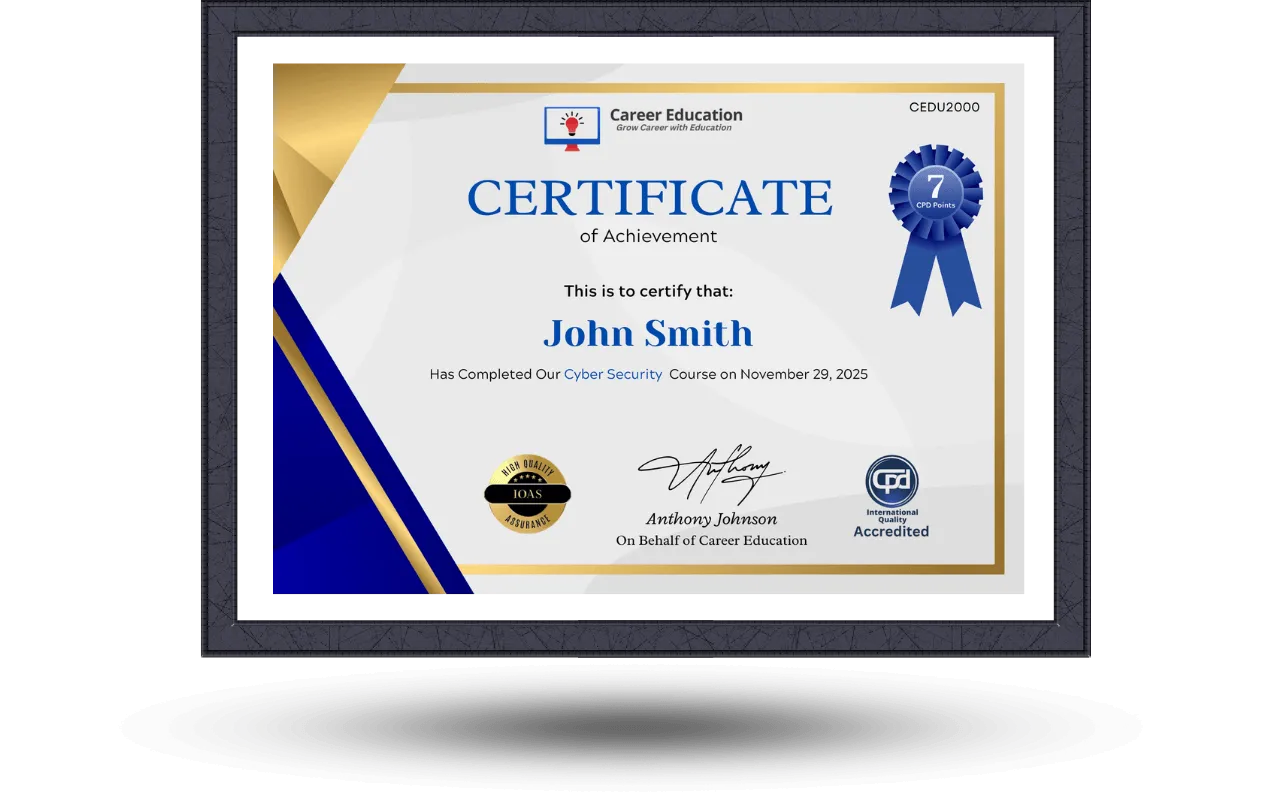
Earn an Accredited Certificate
Upon completion of any course, all students are entitled to a CPD IQ Accredited e-certificate that will be issued by Career Education signifying the completion of your course.
After you complete the course and assignment, you will be eligible to order a free certificate accredited by CPD International Quality by completing the form below.
Hardcopy certificates and transcripts are also available for a small additional fee. More information is disclosed upon course completion.
Similar Courses




Frequently Asked Questions
The lifetime membership includes unlimited access to all courses, resources, and updates for a one-time fee.
You can purchase the membership directly from our website using a secure checkout process.
Yes, selected courses can be downloaded for offline access through our mobile app.
Yes, all future updates and new courses are included at no extra cost.
Yes, we offer a 30-day money-back guarantee if you are not satisfied with the membership.