
OFF
Data Analytics and Business Intelligence
- Lifetime Access
- All Levels
- PDF Certificate
Learn With Confidence









Overview
Data Analytics and Business Intelligence Course
Overview
The Data Analytics and Business Intelligence course is designed to help learners develop the knowledge, practical skills, and analytical mindset required to transform raw data into meaningful business insights. In today’s data-driven world, organisations rely on professionals who can collect, analyse, interpret, and communicate information effectively to support smarter decisions. This comprehensive course provides a structured learning pathway for anyone looking to understand how data analytics and business intelligence can improve business performance, efficiency, and strategic planning.
Through this Data Analytics and Business Intelligence course, learners will explore essential concepts in data analysis, statistical methods, predictive modelling, business intelligence tools, and data-driven decision-making. The course focuses on practical outcomes, enabling learners to understand how businesses use data to identify trends, solve problems, forecast future outcomes, and gain competitive advantages.
Whether you are beginning your journey in analytics, looking to improve your existing data skills, or aiming to support business decisions with accurate insights, this course will provide the essential foundation needed to work confidently with data.
Course Description
The Data Analytics and Business Intelligence course introduces learners to the complete process of turning data into actionable business intelligence. From understanding data sources and preparing datasets to performing advanced analytics and presenting insights, this course covers the key stages involved in modern data-driven decision-making.
Businesses across industries generate vast amounts of data every day. However, data only becomes valuable when it is properly collected, organised, analysed, and interpreted. This course teaches learners how to approach data strategically and use analytical techniques to uncover patterns, understand performance, and support effective business decisions.
Throughout the Data Analytics and Business Intelligence course, learners will develop an understanding of descriptive, exploratory, statistical, and predictive analytics. They will discover how organisations use historical data to understand past performance, identify opportunities, anticipate future trends, and optimise operations.
The course also introduces important business intelligence concepts, including reporting, dashboards, data visualisation, and communicating insights to different audiences. Learners will understand how analysts transform complex datasets into clear recommendations that decision-makers can use.
By completing this course, learners will gain practical knowledge of:
-
The role of data analytics in modern organisations
-
Different types of business data and data sources
-
Data preparation and cleaning techniques
-
Methods for analysing and interpreting datasets
-
Statistical approaches for understanding business trends
-
Predictive analytics and forecasting concepts
-
Business intelligence tools and reporting methods
-
Data-driven decision-making strategies
-
Communicating analytical findings effectively
The Data Analytics and Business Intelligence course is suitable for professionals, students, entrepreneurs, managers, and anyone interested in developing valuable analytical skills for the modern workplace.
What You Will Learn
By completing the Data Analytics and Business Intelligence course, learners will be able to:
-
Understand the fundamentals of data analytics and business intelligence
-
Identify how organisations use data to improve performance
-
Explore different methods of collecting and managing data
-
Prepare datasets for accurate analysis
-
Apply descriptive and exploratory analytics techniques
-
Understand statistical analysis and business forecasting
-
Explore predictive analytics concepts and applications
-
Learn how business intelligence tools support decision-making
-
Develop effective reporting and data communication skills
-
Translate analytical findings into practical business recommendations
This course focuses on developing real-world analytical thinking, helping learners understand not only how to analyse data but also how to use insights to create meaningful business outcomes.
Course Curriculum
Module 1: Introduction to Data and Business Analysis
This module introduces the foundations of data analytics and business analysis. Learners will explore the importance of data in modern organisations and understand how businesses use information to improve processes, solve challenges, and identify opportunities.
Topics covered include:
-
Understanding data analytics concepts
-
The role of business analysis in organisations
-
Types of data and analytical approaches
-
The relationship between data, insights, and decision-making
-
The importance of data-driven business strategies
By the end of this module, learners will understand how data analytics supports organisational growth and how analysts contribute to business success.
Module 2: Data Collection and Sources
Reliable analysis begins with high-quality data. This module explores how organisations collect data from different sources and how analysts evaluate data quality and relevance.
Learners will discover:
-
Different types of data sources
-
Primary and secondary data collection methods
-
Internal and external business data
-
Data gathering techniques
-
Challenges associated with data collection
-
The importance of accurate and reliable datasets
This module helps learners understand how effective data collection creates a strong foundation for meaningful analysis.
Module 3: Data Preparation and Cleaning
Raw data often contains errors, missing information, inconsistencies, or duplicate records. This module focuses on preparing data for analysis by improving accuracy and quality.
Learners will explore:
-
The importance of data cleaning
-
Identifying and handling missing data
-
Removing inconsistencies and duplicates
-
Data transformation techniques
-
Preparing datasets for analytical projects
Through this module, learners will understand how clean and organised data improves the reliability of analytical results.
Module 4: Descriptive Analytics
Descriptive analytics focuses on understanding what has happened by analysing historical data. This module introduces techniques used to summarise and interpret business performance.
Learners will learn about:
-
Key descriptive analytics concepts
-
Data summaries and measurements
-
Performance analysis
-
Identifying trends and patterns
-
Using historical information to understand business outcomes
This module enables learners to analyse past performance and create valuable insights from existing data.
Module 5: Exploratory Data Analysis (EDA)
Exploratory Data Analysis helps analysts discover relationships, patterns, and trends within datasets. This module introduces methods for investigating data before making conclusions.
Learners will explore:
-
The purpose of exploratory analysis
-
Identifying patterns and relationships
-
Data visualisation techniques
-
Understanding distributions and variations
-
Finding important insights within datasets
By completing this module, learners will develop the ability to explore data effectively and identify opportunities for deeper analysis.
Module 6: Statistical Analysis and Inference
Statistical analysis helps businesses understand relationships, measure uncertainty, and make informed decisions. This module introduces essential statistical concepts used in data analysis.
Learners will study:
-
Fundamentals of statistical analysis
-
Probability and statistical reasoning
-
Sampling concepts
-
Understanding relationships between variables
-
Statistical inference principles
This module provides learners with the ability to use statistical thinking when analysing business information and evaluating potential outcomes.
Module 7: Predictive Analytics and Forecasting
Predictive analytics uses historical data to estimate future trends and possible outcomes. This module introduces learners to forecasting techniques and predictive approaches used by organisations.
Topics include:
-
Introduction to predictive analytics
-
Forecasting business trends
-
Identifying future opportunities and risks
-
Understanding predictive models
-
Applications of predictive analytics in business
Learners will understand how organisations use data to prepare for future challenges and make proactive decisions.
Module 8: Business Intelligence Tools
Business intelligence tools help organisations analyse data, create reports, and monitor performance. This module introduces the role of BI technologies in modern businesses.
Learners will explore:
-
The purpose of business intelligence systems
-
Data dashboards and reporting
-
Visualising business information
-
Monitoring key performance indicators (KPIs)
-
How BI tools support strategic decisions
This module helps learners understand how technology enables organisations to convert data into accessible and useful business insights.
Module 9: Decision Analysis and Optimization
Effective decision-making requires more than information; it requires the ability to evaluate options and choose the best solutions. This module focuses on using analytics to improve decisions and optimise business processes.
Learners will explore:
-
Decision-making frameworks
-
Using data to compare alternatives
-
Optimisation concepts
-
Improving operational efficiency
-
Supporting strategic planning through analytics
By the end of this module, learners will understand how analytics can help organisations make smarter and more effective decisions.
Module 10: Reporting, Communication, and Business Insights
Analytical findings must be communicated clearly to create value. This module focuses on presenting insights effectively to stakeholders and decision-makers.
Learners will learn:
-
Creating effective analytical reports
-
Communicating data findings
-
Presenting insights through visual storytelling
-
Making recommendations based on analysis
-
Turning data into actionable business strategies
This final module helps learners develop the communication skills needed to present analytical results professionally.
Who Is This Course For?
The Data Analytics and Business Intelligence course is suitable for:
-
Individuals interested in starting a career in data analytics
-
Business professionals who want to improve decision-making skills
-
Managers seeking to understand data-driven strategies
-
Entrepreneurs who want to use data for business growth
-
Students developing modern workplace skills
-
Marketing, finance, operations, and management professionals
-
Anyone interested in business intelligence and analytical thinking
No advanced technical background is required. The course is designed to introduce concepts clearly and build confidence step by step.
Requirements
There are no strict prerequisites for enrolling in the Data Analytics and Business Intelligence course. Learners only need:
-
A basic understanding of business concepts
-
An interest in working with data and insights
-
A willingness to learn analytical approaches
-
Basic computer skills
The course is suitable for beginners as well as professionals looking to expand their knowledge of data-driven business practices.
Career Path
Completing the Data Analytics and Business Intelligence course can support career development in a wide range of data-focused roles. As organisations increasingly rely on information to guide decisions, professionals with analytical skills are becoming valuable across industries.
Potential career opportunities include:
-
Data Analyst
-
Business Intelligence Analyst
-
Business Analyst
-
Reporting Analyst
-
Data Consultant
-
Market Research Analyst
-
Operations Analyst
-
Analytics Specialist
The skills gained from this course can also benefit professionals working in finance, marketing, healthcare, technology, retail, education, and management by helping them make better decisions using data.
The ability to understand, analyse, and communicate data insights is becoming one of the most valuable professional skills in the modern workplace. By completing this Data Analytics and Business Intelligence course, learners can develop the confidence to contribute to data-driven strategies and support organisational success.
Frequently Asked Questions
What is the Data Analytics and Business Intelligence course about?
The Data Analytics and Business Intelligence course teaches learners how to collect, analyse, interpret, and communicate data insights to support better business decisions. It covers analytics techniques, business intelligence concepts, forecasting, reporting, and decision-making.
Who can enrol in this course?
This course is suitable for beginners, professionals, managers, students, entrepreneurs, and anyone interested in learning how data can be used to improve business performance.
Do I need previous experience in data analysis?
No. The course is designed for learners at different levels and introduces key concepts step by step, making it suitable for those new to data analytics.
What skills will I gain from this course?
You will gain skills in data preparation, analysis, statistical thinking, business intelligence, forecasting, reporting, and communicating data-driven insights.
Can this course help with career development?
Yes. The knowledge gained from this Data Analytics and Business Intelligence course can support career opportunities in analytics, business intelligence, reporting, management, and other data-related fields.
Will I receive a certificate after completing the course?
Yes, learners who successfully complete the course can receive a certificate demonstrating their knowledge and commitment to developing data analytics and business intelligence skills.
The Data Analytics and Business Intelligence course provides a complete introduction to using data as a strategic resource. By developing analytical skills, understanding business intelligence methods, and learning how to communicate insights effectively, learners can prepare themselves for a future where data plays a central role in business success.
Course Modules
Course Content
Module 1_ Introduction to Data and Business Analysis
-
Lesson 1_ Introduction to Data and Business Analysis
Module 2_ Data Collection and Sources
Module 3_ Data Preparation and Cleaning
Module 4_ Descriptive Analytics
Module 5_ Exploratory Data Analysis (EDA)
Module 6_ Statistical Analysis and Inference
Module 7_ Predictive Analytics and Forecasting
Module 8_ Business Intelligence Tools
Module 9_ Decision Analysis and Optimization
Module 10_ Reporting, Communication, and Business Insights
What our students say

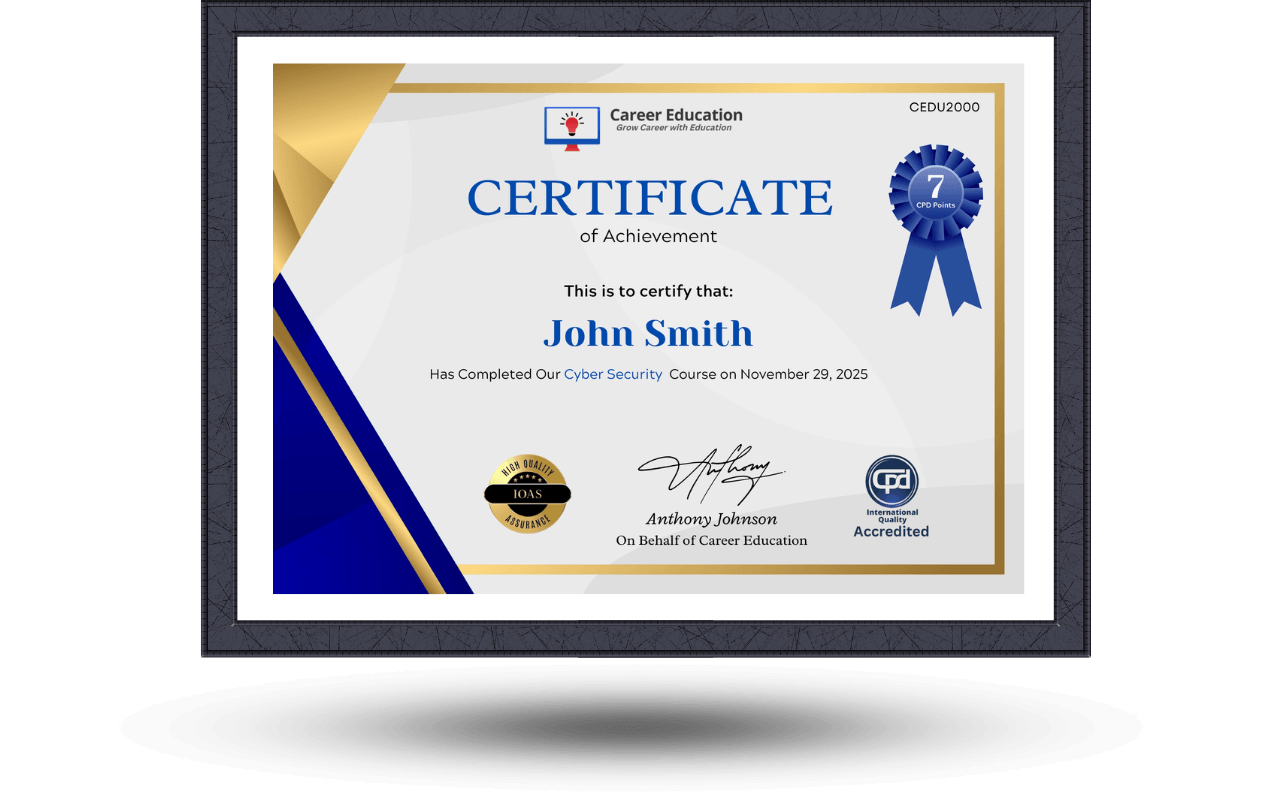
Earn an Accredited Certificate
Upon completion of the course, an e-certificate will be downloadable from Khan Education signifying the completion of your course. But, the course is CPD Accredited and after you complete the assignment, you will be eligible to order a certificate accredited by CPD International Quality for £5.99 only. If you want a hardcopy certificate accredited by CPD IQ, you can get it for only £15.99.
Get your CertificateSimilar Courses