
94%
OFF
OFF
Customer Service Course
- Lifetime Access
- All Levels
- PDF Certificate
£296
£19
14-Day Money-Back Guarantee
Learn With Confidence









Customer Service Course
Develop Professional Customer Service Skills and Learn How to Create Positive Customer Experiences
Exceptional customer service can make the difference between a one-time transaction and a long-term customer relationship.
Customers expect more than simply receiving a product or service. They want to feel heard, respected and valued. They expect businesses to respond promptly, understand their needs, solve problems effectively and communicate clearly across different channels.
The Customer Service Course is designed to help learners develop the practical knowledge and communication skills needed to deliver professional, customer-focused service.
Whether you work in retail, hospitality, sales, administration, e-commerce, banking, healthcare, telecommunications or another customer-facing environment, strong customer service skills can have a direct impact on customer satisfaction and business performance.
This course takes a structured approach to customer service, beginning with the fundamentals and progressing through customer needs assessment, problem solving, relationship management, complaint handling, service recovery and multi-channel customer service.
You will learn how to understand customer expectations, communicate more effectively, handle challenging situations professionally and contribute to stronger customer relationships.
By completing the Customer Service Course, you can develop a more confident, organised and customer-focused approach to everyday interactions.
What Is the Customer Service Course?
The Customer Service Course provides an introduction to the principles, skills and practices involved in delivering effective customer service.
Customer service is not limited to answering questions or resolving complaints. It includes every interaction a customer has with an organisation and can influence how customers perceive a brand.
A positive experience can encourage loyalty and repeat business, while a poor experience can damage trust and reputation.
The course explores the customer service journey from understanding basic principles through to managing complex interactions across multiple channels.
You will learn about:
-
Customer service fundamentals
-
Customer needs assessment
-
Problem solving
-
Customer engagement
-
Relationship management
-
Complaint handling
-
Service recovery
-
Multi-channel customer service
-
Global customer service
-
Professional communication
-
Customer-focused problem resolution
These skills can be applied across a wide variety of industries and customer-facing roles.
Why Study Customer Service?
Customers have more choices than ever before. Businesses that provide consistently positive experiences can stand out from competitors and develop stronger relationships with their customers.
For employees, strong customer service skills can also improve workplace performance and professional confidence.
The Customer Service Course can help you:
-
Understand the principles of excellent customer service
-
Identify and respond to customer needs
-
Improve your communication skills
-
Solve customer problems more effectively
-
Build stronger customer relationships
-
Handle complaints professionally
-
Recover customer trust after service failures
-
Communicate effectively across different channels
-
Understand the challenges of global customer service
-
Create more consistent customer experiences
These capabilities are valuable in almost any organisation where employees interact with customers, clients, service users or members of the public.
What You Will Learn
Module 1: Introduction to Customer Service
The course begins with Introduction to Customer Service, establishing the foundation for understanding what effective customer service means.
Customer service is an essential part of the customer experience. Every interaction can influence a customer’s perception of an organisation.
In this module, you will explore the purpose of customer service and why customer expectations matter.
You will consider the characteristics of effective customer service and examine the role that communication, professionalism, responsiveness and empathy can play in creating positive interactions.
The module also helps learners understand that customer service is not solely the responsibility of one department. Everyone who interacts with customers can contribute to the overall customer experience.
Learning outcomes
By completing this module, you should be able to:
-
Explain the meaning of customer service
-
Understand why customer service matters
-
Recognise the characteristics of effective service
-
Understand the importance of customer expectations
-
Appreciate the role of professionalism and communication
-
Recognise how customer interactions influence business reputation
-
Develop a customer-focused mindset
This foundation prepares you for the more practical topics covered throughout the course.
Module 2: Customer Needs Assessment and Problem Solving
Good customer service begins with understanding what the customer actually needs.
The Customer Needs Assessment and Problem Solving module focuses on identifying customer requirements and developing appropriate solutions.
Customers may not always communicate their needs clearly. A customer might describe a problem without explaining the underlying issue, or they may not know what solution would best meet their needs.
Effective customer service professionals therefore need to listen carefully, ask appropriate questions and analyse the situation before offering a solution.
You will explore the importance of understanding the customer’s perspective and approaching problems systematically.
The module also introduces principles that can help you respond to problems without becoming defensive or unnecessarily focused on blame.
Learning outcomes
By completing this module, you can develop the ability to:
-
Identify customer needs
-
Use effective questioning and listening
-
Clarify customer concerns
-
Analyse customer problems
-
Identify appropriate solutions
-
Communicate solutions clearly
-
Manage customer expectations
-
Approach problems in a structured way
These skills can help transform difficult customer interactions into opportunities to demonstrate professionalism and reliability.
Module 3: Effective Customer Engagement and Relationship Management
Customer service is not simply about solving problems. It is also about building relationships.
The Effective Customer Engagement and Relationship Management module explores how organisations and employees can create meaningful, positive interactions with customers.
Customer engagement involves understanding the customer, communicating appropriately and creating experiences that encourage trust and loyalty.
You will explore the importance of active listening, empathy, responsiveness and personalised communication.
Strong relationship management also involves understanding that different customers may have different expectations and communication preferences.
The module helps learners develop a customer-focused approach that prioritises long-term relationships rather than viewing each interaction as an isolated transaction.
Learning outcomes
You will learn how to:
-
Engage customers professionally
-
Build rapport
-
Communicate with greater empathy
-
Develop stronger customer relationships
-
Understand different customer expectations
-
Adapt communication appropriately
-
Encourage customer trust and loyalty
-
Create more positive customer experiences
These skills can be particularly valuable for employees in sales, account management, hospitality, retail and other relationship-driven environments.
Module 4: Handling Complaints and Service Recovery
Complaints are an inevitable part of customer service.
Even organisations with excellent products and services can experience situations where customers are dissatisfied.
The Handling Complaints and Service Recovery module teaches learners how to approach complaints professionally and constructively.
A complaint can represent more than an immediate problem. It can also provide valuable information about customer expectations and potential weaknesses in an organisation’s processes.
The way a complaint is handled can significantly influence the customer’s perception of the organisation.
You will explore how to listen to dissatisfied customers, understand their concerns, respond appropriately and work towards practical solutions.
The module also examines service recovery and the importance of rebuilding trust following a negative experience.
Learning outcomes
By completing this module, you should be able to:
-
Respond professionally to customer complaints
-
Remain calm during difficult conversations
-
Listen actively to dissatisfied customers
-
Identify the underlying issue
-
Communicate appropriate responses
-
Manage customer expectations
-
Work towards suitable resolutions
-
Understand the principles of service recovery
-
Support the rebuilding of customer trust
These skills can help you handle challenging interactions without allowing them to escalate unnecessarily.
Module 5: Multi-Channel and Global Customer Service
Customers now interact with businesses through a wide variety of channels.
They may contact an organisation by telephone, email, live chat, social media, websites or face-to-face interactions.
The Multi-Channel and Global Customer Service module explores the challenges and opportunities associated with delivering consistent service across different communication channels.
Each channel has its own characteristics.
A telephone conversation allows for immediate verbal interaction, while email requires careful written communication. Social media can involve public conversations and rapid responses, while live chat requires efficiency and clarity.
You will explore the importance of maintaining consistent standards while adapting communication to the specific channel.
The module also considers global customer service and the challenges of communicating with customers from different countries, cultures and backgrounds.
Learning outcomes
By completing this module, you can develop an understanding of how to:
-
Deliver customer service across multiple channels
-
Adapt communication to different platforms
-
Maintain consistency across customer touchpoints
-
Communicate professionally in writing
-
Respond appropriately through digital channels
-
Consider cultural differences in customer interactions
-
Support customers from diverse backgrounds
-
Create more consistent global customer experiences
Develop Professional Customer Communication Skills
Communication is at the heart of customer service.
Customers want to know that their concerns are being understood and taken seriously.
The Customer Service Course helps learners develop a more deliberate approach to communication.
This includes listening carefully, asking relevant questions, explaining information clearly and adapting communication to the customer’s situation.
Strong communication can reduce misunderstandings, improve problem resolution and create more positive interactions.
Learn to Understand Customer Needs
Customers do not always tell you exactly what they need.
A customer may ask for one thing when the underlying problem is something else.
Developing effective needs assessment skills allows you to explore the situation more carefully before suggesting a solution.
The course encourages learners to focus on understanding the customer rather than immediately providing a standard response.
This can lead to more relevant solutions and better customer experiences.
Become More Confident at Problem Solving
Customer service professionals regularly face unexpected problems.
A product may not work as expected. A customer may have received incorrect information. A delivery may have been delayed. A service may not have met expectations.
The ability to remain calm, understand the issue and identify practical solutions is an important customer service skill.
The Customer Service Course helps you develop a structured approach to problem solving that can be applied across different situations.
Build Stronger Customer Relationships
Customer loyalty is often influenced by how people feel about their interactions with a business.
Customers who feel respected and valued are more likely to develop confidence in an organisation.
The course introduces principles of customer engagement and relationship management that can help employees contribute to stronger long-term relationships.
You will learn why personalisation, responsiveness, empathy and consistency can all influence customer perceptions.
Handle Complaints With Greater Confidence
Complaints can be stressful, particularly when customers are frustrated or emotional.
However, responding defensively can make a difficult situation worse.
The course helps learners understand the importance of listening, remaining professional and focusing on resolution.
By developing complaint-handling skills, you can become better prepared to manage difficult interactions while protecting the customer relationship.
Understand Service Recovery
A service failure does not necessarily mean that the customer relationship has to end.
Effective service recovery can provide an opportunity to address the problem, acknowledge the customer’s experience and rebuild confidence.
The Customer Service Course introduces the principles behind service recovery and encourages learners to think beyond simply closing a complaint.
The objective is to understand how an organisation can respond constructively when expectations have not been met.
Deliver Consistent Multi-Channel Service
Modern customers expect organisations to provide convenient ways to communicate.
A customer might begin an interaction through social media, continue by email and then speak to an employee on the telephone.
Maintaining consistency across these touchpoints is increasingly important.
The course helps learners understand how communication should be adapted to different channels while maintaining professional customer service standards.
Develop Global Customer Service Awareness
Serving customers across different cultures and regions requires awareness and adaptability.
Communication styles, expectations and customer preferences can vary.
The course introduces learners to the importance of respecting cultural differences and avoiding assumptions when interacting with customers from diverse backgrounds.
This can help support more inclusive and effective customer service.
Who Is the Customer Service Course For?
The course is suitable for a wide range of learners and professionals.
Customer Service Professionals
Existing customer service employees can use the course to strengthen their communication, problem-solving and complaint-handling skills.
Retail Employees
Retail workers can benefit from understanding how to identify customer needs, resolve problems and build positive customer experiences.
Hospitality Professionals
Hotels, restaurants and hospitality businesses depend heavily on customer satisfaction, making customer service knowledge particularly valuable.
Sales Professionals
Salespeople can use customer engagement and relationship management skills to develop stronger relationships with prospects and customers.
Call Centre and Contact Centre Staff
Professionals who communicate with customers by telephone, email or digital channels can benefit from learning structured approaches to customer interactions.
Administrative Professionals
Receptionists, office staff and administrators frequently interact with customers and clients and can benefit from improved service skills.
Business Owners and Managers
Business owners and managers can use the course to develop a better understanding of the principles that support consistent customer experiences.
Career Changers and Job Seekers
Customer service skills are transferable across many industries, making this course useful for people looking to strengthen their employability.
What You Can Gain From This Course
By completing the Customer Service Course, you can develop practical knowledge and skills that can be applied in a wide range of customer-facing environments.
You can expect to develop an understanding of how to:
-
Deliver professional customer service
-
Identify customer needs
-
Listen and communicate effectively
-
Solve customer problems
-
Build rapport and trust
-
Manage customer relationships
-
Handle complaints calmly
-
Support service recovery
-
Adapt communication across channels
-
Communicate with diverse and global customers
-
Improve the consistency of customer interactions
-
Contribute to positive customer experiences
Turn Customer Interactions Into Positive Experiences
Every customer interaction represents an opportunity.
A simple question can become an opportunity to demonstrate expertise. A complaint can become an opportunity to rebuild trust. A difficult problem can become an opportunity to demonstrate reliability.
The Customer Service Course helps learners understand how to approach these interactions strategically and professionally.
Instead of simply responding to customers, you can learn to listen, understand, engage and resolve.
Build Skills That Transfer Across Industries
Customer service skills are not limited to one sector.
Retail, hospitality, finance, healthcare, education, telecommunications, technology, professional services and countless other industries depend on effective customer interactions.
This makes customer service knowledge highly transferable.
Whether you are starting a new career or developing your existing professional skills, the principles covered in this course can support your ability to communicate effectively and handle customer needs.
Start Your Customer Service Learning Journey
Excellent customer service starts with understanding the customer.
The Customer Service Course provides a structured learning experience covering the essential skills required to create positive customer interactions and manage challenging situations professionally.
From Introduction to Customer Service and Customer Needs Assessment and Problem Solving to Effective Customer Engagement and Relationship Management, Handling Complaints and Service Recovery, and Multi-Channel and Global Customer Service, the course provides a broad foundation for developing customer service capability.
Whether you work directly with customers or want to strengthen your employability, the knowledge gained can help you become more confident, responsive and customer-focused.
Learn how to listen more effectively. Understand customer needs. Solve problems systematically. Handle complaints professionally. Build stronger relationships. Adapt to different communication channels and customer expectations.
Enrol in the Customer Service Course today and develop the practical skills needed to deliver professional, consistent and memorable customer experiences.
Course Modules
Course Content
Module 1_ Introduction to Customer Service
-
Lesson 1_ Introduction to Customer Service
Module 2_ Customer Needs Assessment and Problem Solving
Module 3_ Effective Customer Engagement and Relationship Management
Module 4_ Handling Complaints and Service Recovery
Module 5_ Multi-Channel and Global Customer Service
What our students say
Excellent
4.9 average
158 Reviews

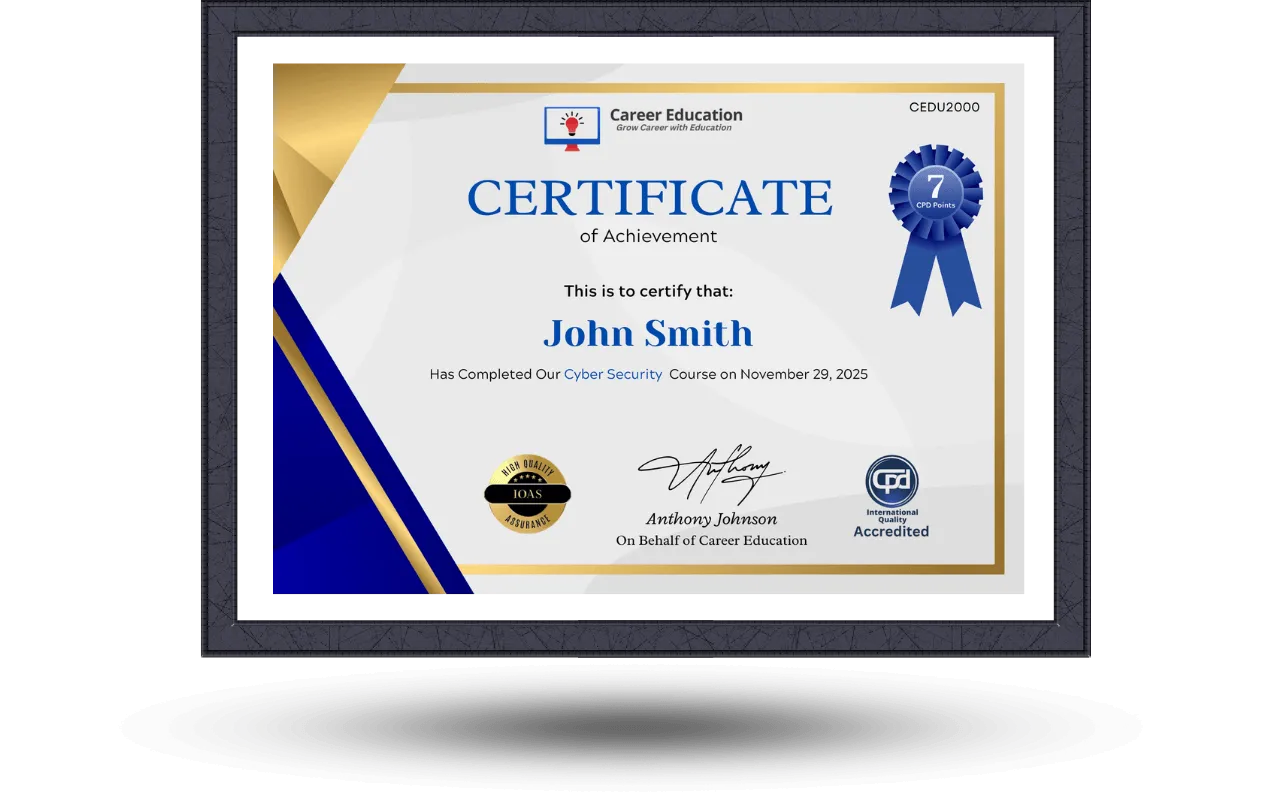
Earn an Accredited Certificate
Upon completion of any course, all students are entitled to a CPD IQ Accredited e-certificate that will be issued by Career Education signifying the completion of your course.
After you complete the course and assignment, you will be eligible to order a free certificate accredited by CPD International Quality by completing the form below.
Hardcopy certificates and transcripts are also available for a small additional fee. More information is disclosed upon course completion.
Similar Courses



Frequently Asked Questions
The lifetime membership includes unlimited access to all courses, resources, and updates for a one-time fee.
You can purchase the membership directly from our website using a secure checkout process.
Yes, selected courses can be downloaded for offline access through our mobile app.
Yes, all future updates and new courses are included at no extra cost.
Yes, we offer a 30-day money-back guarantee if you are not satisfied with the membership.