
94%
OFF
OFF
Crisis Management Training Course
- Lifetime Access
- All Levels
- PDF Certificate
£296
£19
14-Day Money-Back Guarantee
Learn With Confidence






Crisis Management Training Course
In today’s fast-changing business environment, organisations can face unexpected challenges ranging from operational disruptions and reputational issues to workplace incidents, cybersecurity concerns, supply chain problems, and other emergencies. Knowing how to respond effectively can make a significant difference to business continuity, employee wellbeing, customer confidence, and long-term success. The Crisis Management Training Course is designed to help learners develop practical knowledge and skills for identifying risks, responding to incidents, supporting business leaders, and contributing to effective crisis planning.
This outcome-focused course provides a structured introduction to crisis management and explores the processes organisations can use to prepare for, manage, and recover from challenging situations. Whether you are interested in business leadership, risk management, human resources, operations, security, or developing a career in crisis management, the course offers valuable knowledge that can be applied across a range of professional environments.
What Is Crisis Management?
Crisis management is the process of preparing for, responding to, and recovering from events that could significantly affect an organisation. A well-prepared organisation does not simply react when something goes wrong. It identifies potential threats, assesses their possible impact, establishes response procedures, and ensures that relevant people understand their responsibilities.
Effective crisis management can help organisations respond in a more organised and confident manner. It can also support informed decision-making, reduce disruption, protect important resources, and help maintain communication with employees, customers, stakeholders, and other relevant parties.
The Crisis Management Training Course introduces learners to the principles behind effective crisis preparation and response. Rather than focusing solely on theory, the course explores practical processes and skills that can help learners understand how crisis management works within a business environment.
What Will You Learn?
By completing the Crisis Management Training Course, learners can develop a stronger understanding of how organisations identify and manage potential crises. The curriculum covers crisis audits, risk analysis, incident management, leadership responsibilities, crisis planning, career development, and the role of HR.
You will explore how to:
-
Understand the fundamental principles of crisis management
-
Identify potential vulnerabilities through a crisis audit
-
Analyse different levels of organisational risk
-
Understand techniques used when managing incidents
-
Develop important crisis management skills for leadership roles
-
Understand the components of an effective crisis management plan
-
Explore career opportunities related to crisis management
-
Recognise the role HR can play before, during, and after a crisis
-
Apply structured approaches to organisational preparedness
-
Support more effective decision-making during challenging situations
Course Curriculum
Module 1 – Introduction to Crisis Management
The course begins by establishing a strong foundation in crisis management. You will explore what constitutes a crisis, why organisations need effective crisis management processes, and how preparation can influence an organisation’s ability to respond to unexpected events.
This module helps you understand the importance of having appropriate structures and responsibilities in place before a crisis occurs. You will also gain insight into how crisis management connects with organisational resilience, communication, decision-making, and business continuity.
By completing this module, you can build the foundational knowledge needed to understand the more advanced topics covered throughout the course.
Module 2 – Conducting the Crisis Audit
Preparation is an important part of effective crisis management. Module 2 focuses on conducting a crisis audit, helping learners understand how organisations can review their existing preparedness and identify areas that may require improvement.
You will explore how a crisis audit can help organisations examine potential vulnerabilities, existing procedures, resources, responsibilities, and response capabilities. This knowledge can help you recognise gaps before they become significant problems.
By the end of this module, you should have a clearer understanding of how a structured audit can contribute to better organisational preparedness and more informed crisis planning.
Module 3 – Performing a Risk Level Analysis
Not every potential threat presents the same level of risk. Module 3 introduces risk level analysis and explores how organisations can assess potential threats according to their likelihood and possible consequences.
You will develop an understanding of why risk assessment is important when prioritising crisis preparedness activities. The module can help you think more systematically about potential scenarios and consider which risks may require greater attention.
This knowledge can support more effective planning because organisations can focus their resources and preparedness efforts on areas of greatest importance.
Module 4 – Incident Management Techniques
When an incident occurs, an organisation needs an organised response. Module 4 explores incident management techniques and provides learners with knowledge of how incidents can be approached in a structured way.
You will examine the importance of responding appropriately, coordinating relevant people, communicating information, and making decisions under challenging circumstances. Understanding incident management can help learners appreciate how preparation and clearly defined processes can support a more effective response.
The module is particularly useful for learners who want to understand how crisis management principles can be applied when dealing with real-world organisational incidents.
Module 5 – Crisis Management Skills for Business Leaders
Leadership can have a major influence on how an organisation responds to a crisis. Module 5 focuses on the skills business leaders may need when navigating challenging and uncertain situations.
You will explore the importance of effective communication, decision-making, leadership, adaptability, and maintaining a structured approach when circumstances change rapidly. Leaders may need to evaluate information, communicate priorities, coordinate teams, and make informed decisions while managing competing demands.
By studying this module, learners can develop a better understanding of the human and leadership factors involved in effective crisis management.
Module 6 – Crisis Management Plan
A crisis management plan provides an organisation with a framework for responding to potential emergencies and disruptive events. Module 6 explores the purpose and importance of crisis management planning.
You will learn about the key considerations involved in developing a structured crisis management approach. The module helps you understand why responsibilities, communication processes, response procedures, and recovery considerations should be addressed as part of organisational preparedness.
Completing this module can help you recognise the value of having clear procedures established before an unexpected situation occurs.
Module 7 – How to Get a Career in Crisis Management
Crisis management can be relevant to a variety of professional areas, including business management, risk, compliance, operations, security, emergency planning, human resources, and organisational resilience.
Module 7 focuses on developing an understanding of career opportunities in crisis management. You will explore how the knowledge and skills developed through relevant training can support professional development and help you identify potential career directions.
Whether you are considering entering the field, expanding your existing responsibilities, or developing transferable business skills, this module can help you think about how crisis management knowledge may contribute to your career goals.
Module 8 – The HR Role in Crisis Management – Process & Tips
Human resources can play an important role in organisational crisis management. Employees may be directly affected by disruptive events, while HR teams may be involved in communication, employee support, policies, workforce coordination, and recovery activities.
Module 8 explores the HR role in crisis management and examines relevant processes and practical considerations. You will develop an understanding of how HR professionals can contribute to organisational preparedness and help manage people-related responsibilities during difficult situations.
This module is particularly relevant for learners working in or interested in HR, people management, business administration, and organisational leadership.
Who Is This Course For?
The Crisis Management Training Course can be suitable for a wide range of learners who want to develop their understanding of organisational crisis preparedness and response.
It may benefit:
-
Aspiring crisis management professionals
-
Business owners and entrepreneurs
-
Managers and team leaders
-
HR professionals and aspiring HR professionals
-
Business administration professionals
-
Operations professionals
-
Risk and compliance professionals
-
Individuals interested in organisational resilience
-
Professionals seeking transferable leadership skills
-
Learners considering a career related to crisis management
No matter your current role, understanding how organisations prepare for and respond to challenging situations can be a valuable professional skill.
Why Study Crisis Management?
Unexpected events can place significant pressure on organisations. Without appropriate preparation, businesses may struggle to coordinate their response, communicate effectively, protect essential operations, or recover efficiently.
Studying crisis management helps you understand the importance of preparation rather than relying entirely on reactive decision-making. You can learn how risk assessment, crisis audits, incident management, leadership, planning, and HR processes fit together as part of a wider organisational response.
The knowledge gained from the Crisis Management Training Course can also strengthen your professional awareness. It can help you approach organisational challenges more systematically and understand the responsibilities involved in preparing for potential disruptions.
Outcome-Focused Learning
The Crisis Management Training Course is designed around practical learning outcomes. Instead of simply introducing terminology, the course takes you through the major areas involved in understanding organisational crisis management.
After completing the course, you can expect to have a clearer understanding of how to:
-
Recognise the fundamentals of crisis management
-
Examine organisational preparedness through a crisis audit
-
Assess and prioritise potential risks
-
Understand structured incident management techniques
-
Identify important leadership skills for crisis situations
-
Understand the purpose and structure of crisis management planning
-
Explore professional pathways within crisis management
-
Recognise HR responsibilities in organisational crisis situations
These outcomes can help you build a useful foundation for further learning and professional development.
Build Valuable Professional Skills
Crisis management involves more than responding to emergencies. It requires communication, critical thinking, organisation, planning, leadership, adaptability, and an ability to evaluate situations carefully.
Through the Crisis Management Training Course, learners can develop awareness of these interconnected skills while exploring how they are applied within organisational environments. These skills can also be relevant beyond crisis management, particularly in management, HR, administration, operations, and business-related roles.
Support Your Career Development
If you are considering a career in crisis management, this course can provide a structured starting point for exploring the field. It introduces key concepts and responsibilities while helping you understand the relationship between risk, incidents, leadership, planning, and people management.
For professionals already working in business, HR, operations, or management, the course can also provide an opportunity to broaden your existing knowledge. Understanding crisis management can help you appreciate how different departments may need to work together when an organisation faces a significant challenge.
Start Learning Today
Being prepared for unexpected challenges is an important consideration for organisations of every size. Effective crisis management requires planning, awareness, communication, leadership, and coordinated action.
The Crisis Management Training Course brings these areas together in a comprehensive learning experience covering crisis fundamentals, crisis audits, risk analysis, incident management, leadership skills, crisis planning, career development, and HR responsibilities.
If you want to develop your knowledge of organisational crisis management and build practical skills that can support your professional development, this course offers a valuable opportunity to get started. Enrol in the Crisis Management Training Course today and take the next step towards building your knowledge, confidence, and career potential in this important area of business.
Course Modules
Course Content
Module 1 – Introduction to Crisis Management
-
Lesson 1 – Introduction to Crisis Management
Module 2 – Conducting the Crisis Audit
Module 3 – Performing a Risk Level Analysis
Module 4 – Incident Management Techniques
Module 5 – Crisis Management Skills for Business Leaders
Module 6 – Crisis Management Plan
Module 7 – How to Get a Career in Crisis Management
Module 8 – The HR Role in Crisis Management – Process & Tips
What our students say
Excellent
4.9 average
158 Reviews

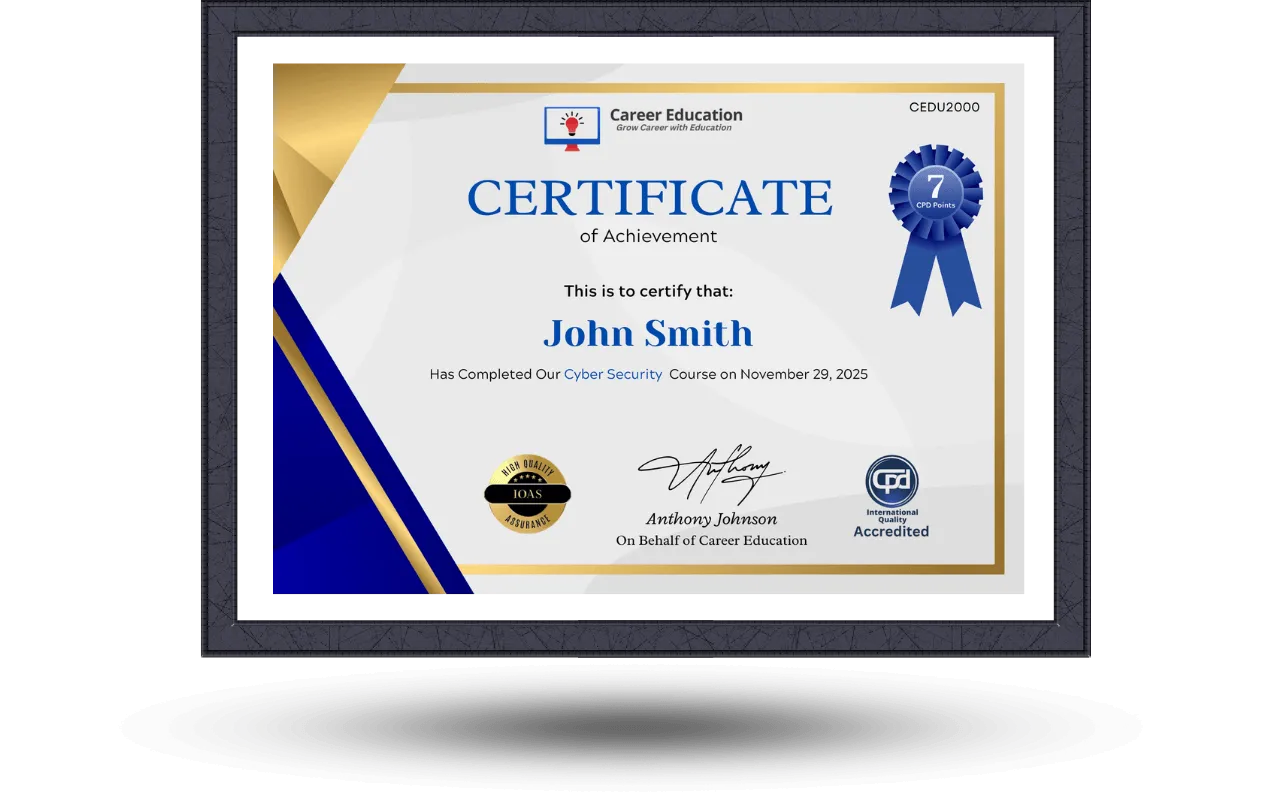
Earn an Accredited Certificate
Upon completion of any course, all students are entitled to a CPD IQ Accredited e-certificate that will be issued by Career Education signifying the completion of your course.
After you complete the course and assignment, you will be eligible to order a free certificate accredited by CPD International Quality by completing the form below.
Hardcopy certificates and transcripts are also available for a small additional fee. More information is disclosed upon course completion.
Similar Courses


Frequently Asked Questions
The lifetime membership includes unlimited access to all courses, resources, and updates for a one-time fee.
You can purchase the membership directly from our website using a secure checkout process.
Yes, selected courses can be downloaded for offline access through our mobile app.
Yes, all future updates and new courses are included at no extra cost.
Yes, we offer a 30-day money-back guarantee if you are not satisfied with the membership.