
94%
OFF
OFF
Construction Management: Planning, Coordination & Control
- Lifetime Access
- All Levels
- PDF Certificate
£296
£19
14-Day Money-Back Guarantee
Learn With Confidence







Enrollment Guide & Course Foundation
Overview
Construction Management: Planning, Coordination & Control is a comprehensive course designed to provide learners with a practical understanding of how construction projects are planned, coordinated, executed, monitored, and controlled. Successful construction projects depend on effective management of people, materials, budgets, schedules, contracts, quality standards, risks, and communication. Strong construction management helps ensure that projects are delivered safely, efficiently, on time, within budget, and to the required standard.
The course introduces the key principles and professional practices used to manage construction projects from initial planning through execution and completion. Learners will explore project planning, contracts and legal considerations, cost management, quality management, site operations, communication, and risk management. The content is structured to help learners understand how different construction management functions work together throughout the project lifecycle.
Practical construction scenarios help learners connect management principles with real site and project situations. The course considers the responsibilities of project managers, site managers, contractors, consultants, supervisors, and other stakeholders, while highlighting the importance of coordination and effective decision-making.
By the end of the course, learners will confidently understand the fundamentals of construction management and be able to contribute more effectively to planning, coordinating, monitoring, and controlling construction projects.
Description
Construction projects involve numerous moving parts, including design requirements, labour, materials, equipment, subcontractors, budgets, schedules, legal obligations, quality standards, health and safety considerations, and client expectations. Without effective management and coordination, even well-designed projects can experience delays, cost overruns, disputes, rework, quality problems, and inefficient resource use.
Construction Management: Planning, Coordination & Control provides learners with a practical foundation in the principles required to manage construction projects effectively. The course is suitable for people entering the construction industry as well as professionals who want to strengthen their knowledge of construction planning, coordination, project control, and site management.
The course begins with an introduction to construction management and examines the role of management throughout the construction project lifecycle. Learners explore the responsibilities of key project stakeholders and discover how effective coordination between clients, designers, contractors, suppliers, consultants, and site teams contributes to successful project delivery.
Project planning is a central component of construction management. Before construction begins, managers need to establish project objectives, define activities, allocate resources, develop schedules, identify dependencies, and anticipate potential challenges. Learners explore practical planning principles that help construction teams establish realistic and achievable project programmes.
Construction contracts and legal issues are also essential areas of professional practice. Contracts establish responsibilities, obligations, payment arrangements, deliverables, timelines, and procedures for dealing with changes or disputes. Learners develop an awareness of common contractual concepts and the importance of maintaining accurate documentation and complying with relevant legal requirements.
The course then moves into project execution, where planning is translated into practical construction activities. Learners explore resource coordination, subcontractor management, site supervision, progress monitoring, work sequencing, and project controls. Effective execution requires managers to coordinate multiple teams while responding to changing site conditions and project requirements.
Cost management is another major focus. Construction projects must be carefully monitored to prevent unnecessary expenditure and maintain financial control. Learners explore budgeting, cost estimation, expenditure monitoring, cash flow considerations, variation management, and cost reporting. These skills help managers recognise potential financial problems before they become significant.
Quality management plays an equally important role. Poor-quality construction can result in rework, delays, increased costs, customer dissatisfaction, and potential safety concerns. Learners examine quality planning, inspection processes, quality assurance, quality control, documentation, defect management, and continuous improvement.
Construction site management brings together many of the practical responsibilities involved in daily project operations. Learners explore site organisation, workforce coordination, materials management, equipment use, housekeeping, productivity monitoring, site records, and communication between site and office teams.
Effective communication is essential throughout every stage of construction. Project information must be shared accurately and promptly between stakeholders to reduce misunderstandings and support informed decisions. The course examines meetings, progress reporting, documentation, instructions, stakeholder communication, and professional collaboration.
Risk management is also a fundamental part of construction project control. Construction projects can face risks involving cost, scheduling, resources, design changes, supply chains, weather, contractors, quality, and other project conditions. Learners explore how risks can be identified, assessed, prioritised, monitored, and managed throughout the project lifecycle.
You’ll discover how to use Construction Management: Planning, Coordination & Control for:
- Planning construction projects
- Developing construction schedules
- Coordinating project resources
- Managing construction contracts
- Understanding contractual responsibilities
- Controlling project costs
- Monitoring construction budgets
- Managing project quality
- Coordinating construction site activities
- Managing contractors and subcontractors
- Tracking project progress
- Improving construction productivity
- Managing project documentation
- Communicating with project stakeholders
- Identifying construction project risks
- Supporting risk mitigation
- Managing project changes
- Improving overall project control
Throughout the programme, learners explore professional construction management workflows that begin with project planning and continue through contract administration, execution, cost control, quality management, site coordination, communication, and risk monitoring.
Best practices include establishing clear project objectives, maintaining accurate documentation, coordinating stakeholders effectively, monitoring progress regularly, controlling costs, maintaining quality standards, identifying risks early, and ensuring that project decisions are supported by reliable information.
The course also addresses common construction management challenges such as unrealistic schedules, poor communication, inadequate planning, uncontrolled variations, inaccurate cost estimates, weak documentation, insufficient coordination, and failure to monitor risks. Understanding these issues enables learners to contribute to more efficient and controlled construction projects.
Hands-on learning is supported through practical examples and realistic construction scenarios. Learners can examine planning challenges, project coordination issues, cost-control situations, quality problems, contractual considerations, communication breakdowns, and risk-management decisions.
Industry examples demonstrate how construction management principles can be applied across residential developments, commercial buildings, infrastructure projects, civil engineering works, renovation projects, and large-scale construction programmes.
The course also emphasises professional coordination. Construction management is rarely performed by one person or one department. Successful projects require collaboration between clients, architects, engineers, contractors, subcontractors, suppliers, consultants, project managers, site managers, and workers.
Continuous improvement is another important theme. Construction managers should regularly review project performance, learn from completed activities, identify recurring problems, and improve processes. By combining effective planning, coordination, monitoring, and control, construction teams can improve project outcomes and create more predictable delivery environments.
Course Modules
Module 1: Introduction to Construction Management
- Understanding construction management
- Construction project lifecycle
- Roles and responsibilities of project stakeholders
- Construction management principles
- Project objectives and deliverables
- Construction management processes
- Coordination between project teams
- Key factors in successful project delivery
Module 2: Construction Project Planning
- Construction planning fundamentals
- Defining project scope
- Developing project objectives
- Work breakdown structures
- Construction scheduling
- Resource planning
- Activity sequencing
- Monitoring project programmes
Module 3: Construction Contracts and Legal Issues
- Understanding construction contracts
- Types of construction contracts
- Contract responsibilities
- Tendering and procurement
- Contract documentation
- Variations and change orders
- Dispute management
- Legal and regulatory considerations
Module 4: Construction Project Execution
- Moving from planning to execution
- Coordinating construction activities
- Managing contractors and subcontractors
- Workforce coordination
- Materials and equipment management
- Progress monitoring
- Managing project changes
- Controlling project execution
Module 5: Construction Project Cost Management
- Construction cost management fundamentals
- Preparing project budgets
- Cost estimation principles
- Monitoring project expenditure
- Cash flow management
- Managing variations and additional costs
- Cost reporting
- Controlling cost overruns
Module 6: Construction Project Quality Management
- Understanding construction quality
- Quality planning
- Quality assurance
- Quality control
- Inspection and testing
- Managing defects and rework
- Quality documentation
- Continuous quality improvement
Module 7: Construction Site Management
- Site organisation and planning
- Daily site operations
- Workforce management
- Materials management
- Equipment coordination
- Site productivity
- Construction site records
- Managing site activities effectively
Module 8: Construction Project Communication
- Principles of construction communication
- Stakeholder communication
- Site meetings
- Progress reporting
- Project documentation
- Instructions and information flow
- Managing communication challenges
- Professional collaboration
Module 9: Project Risk Management
- Understanding construction project risks
- Risk identification
- Risk assessment and prioritisation
- Construction risk registers
- Risk response strategies
- Monitoring and controlling risks
- Managing project uncertainties
- Developing proactive risk-management practices
Course Modules
Course Content
Module 1_ Introduction to Construction Management
-
Lesson 1_ Introduction to Construction Management
Module 2_ Construction Project Planning
Module 3_ Construction Contracts and Legal Issues
Module 4_ Construction Project Execution
Module 5_ Construction Project Cost Management
Module 6_ Construction Project Quality Management
Module 7_ Construction Site Management
Module 8_ Construction Project Communication
Module 9_ Project Risk Management
What our students say
Excellent
4.9 average
158 Reviews

Earn an Accredited Certificate
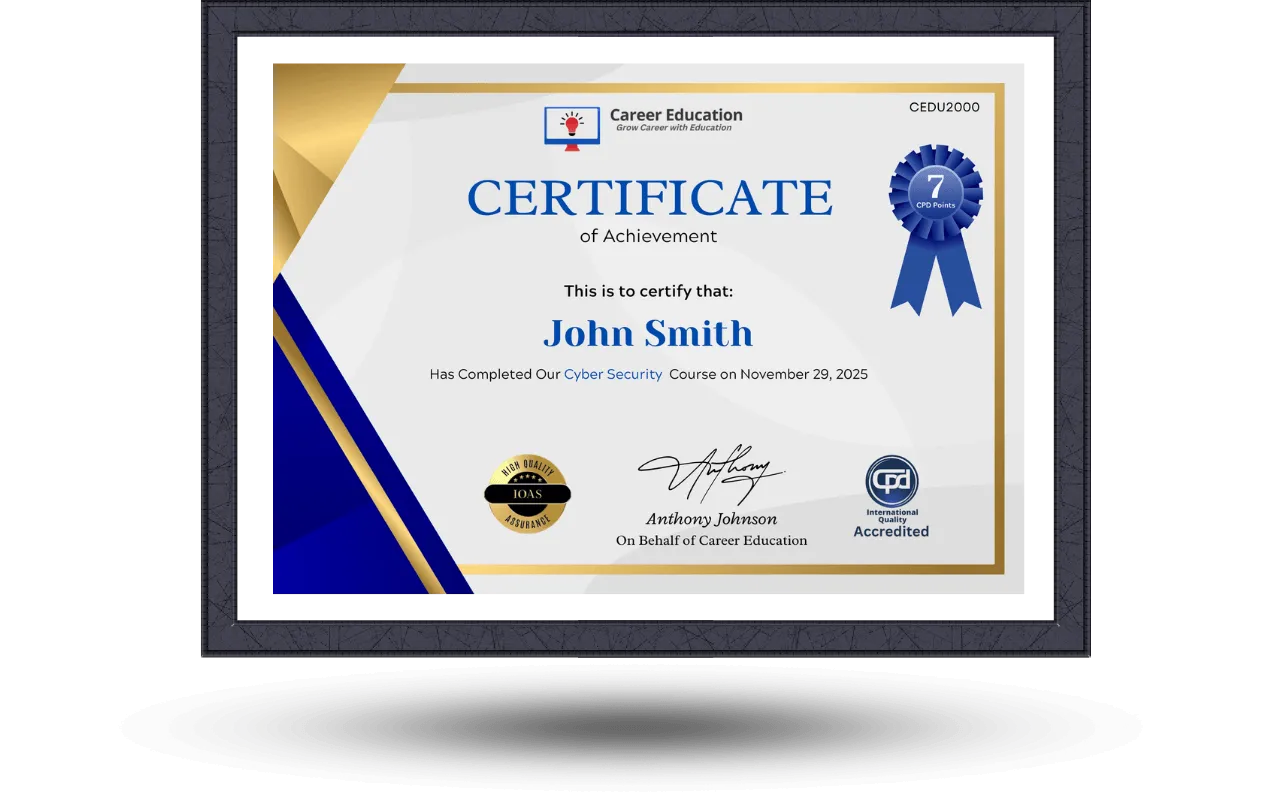
Upon completion of any course, all students are entitled to a CPD IQ Accredited e-certificate that will be issued by Career Education signifying the completion of your course.
After you complete the course and assignment, you will be eligible to order a free certificate accredited by CPD International Quality by completing the form below.
Hardcopy certificates and transcripts are also available for a small additional fee. More information is disclosed upon course completion.
Similar Courses




Frequently Asked Questions
The lifetime membership includes unlimited access to all courses, resources, and updates for a one-time fee.
You can purchase the membership directly from our website using a secure checkout process.
Yes, selected courses can be downloaded for offline access through our mobile app.
Yes, all future updates and new courses are included at no extra cost.
Yes, we offer a 30-day money-back guarantee if you are not satisfied with the membership.