
94%
OFF
OFF
Conflict Management and Mediation Skills
- Lifetime Access
- All Levels
- PDF Certificate
£296
£19
14-Day Money-Back Guarantee
Learn With Confidence



Conflict Management and Mediation Skills
Workplace disagreements, team tensions, misunderstandings, and competing interests are a natural part of professional and personal environments. What makes the difference is how effectively those conflicts are recognised, communicated, and resolved. The Conflict Management and Mediation Skills course is designed to help learners develop practical capabilities for managing disputes constructively, facilitating productive conversations, and supporting mutually acceptable solutions.
Rather than viewing conflict solely as a problem, this course explores how disagreements can become opportunities to improve communication, strengthen relationships, clarify expectations, and create more collaborative environments. Through structured learning, learners will develop a clearer understanding of why conflicts arise and how appropriate management and mediation techniques can help prevent disputes from escalating.
Why Learn Conflict Management and Mediation Skills?
Unresolved conflict can affect communication, teamwork, productivity, morale, and organisational relationships. When disagreements are ignored or handled poorly, relatively small issues can develop into more serious disputes. Effective conflict management provides a structured way to understand different perspectives, identify underlying concerns, and work towards constructive outcomes.
The Conflict Management and Mediation Skills course gives learners the knowledge and practical framework to approach difficult situations with greater confidence and professionalism. You will explore communication techniques, negotiation strategies, mediation processes, legal considerations, and cross-cultural factors that can influence conflict resolution.
By completing this course, you can develop skills that are useful across workplaces, community settings, leadership roles, customer-facing environments, education, human resources, management, and other situations where people need to work through disagreements.
What Will You Learn?
The course is structured into seven comprehensive modules, each focusing on an important aspect of effective conflict management and mediation.
Module 1: Introduction to Conflict Management and Mediation
The course begins by establishing a strong foundation in conflict management and mediation. You will explore the meaning of conflict, common causes of disagreements, and the role that effective intervention can play in resolving disputes.
You will also learn about the differences between conflict management, conflict resolution, negotiation, and mediation. Understanding these distinctions can help you identify the most appropriate approach for different situations.
By the end of this module, you will have a clearer understanding of:
-
The fundamentals of conflict management
-
The purpose and principles of mediation
-
Common sources of conflict
-
The importance of early and constructive intervention
-
Different approaches to managing disputes
-
The role and responsibilities of individuals involved in mediation
This foundation will prepare you to approach subsequent topics with a structured understanding of conflict and resolution.
Module 2: Understanding Conflict Dynamics
Effective conflict management begins with understanding what drives a disagreement. In this module, you will examine conflict dynamics and explore how perceptions, emotions, communication patterns, interests, values, and relationships can influence disputes.
You will learn to look beyond the visible disagreement and consider the underlying factors contributing to a conflict. This can help you identify potential causes before attempting to develop solutions.
The module will help you understand how conflicts can develop and escalate, as well as how different people may respond to challenging situations. You will gain a more systematic approach to assessing disputes and identifying areas where constructive intervention may be possible.
The knowledge gained here can help you:
-
Recognise different stages and patterns of conflict
-
Identify underlying interests and concerns
-
Understand different perspectives
-
Recognise factors that may escalate disagreements
-
Assess conflict situations more objectively
-
Identify opportunities for constructive intervention
Module 3: Communication Skills in Conflict Resolution
Communication is at the heart of successful conflict resolution. Even a well-designed solution can fail if people do not feel heard, respected, or understood.
This module focuses on developing communication skills that can support more productive conversations during difficult situations. You will explore techniques for active listening, asking appropriate questions, expressing concerns clearly, and reducing misunderstandings.
You will also learn why tone, language, non-verbal communication, empathy, and careful questioning can influence the direction of a conflict conversation.
The module is designed to help you become more confident when dealing with challenging discussions while maintaining professionalism and respect.
You will develop an understanding of how to:
-
Listen actively to different perspectives
-
Ask constructive and clarifying questions
-
Communicate concerns clearly
-
Reduce misunderstandings
-
Encourage respectful dialogue
-
Recognise communication barriers
-
Support more productive conversations
These skills can be valuable not only during formal mediation but also in everyday workplace communication, leadership, teamwork, and customer interactions.
Module 4: Negotiation Strategies
Negotiation is an important component of many conflict situations. Finding a workable outcome often requires people to understand their priorities, explore alternatives, and identify areas of potential agreement.
In this module, you will explore negotiation strategies that can support constructive problem-solving. You will learn how to approach negotiations with preparation, clarity, and a focus on sustainable outcomes.
Rather than treating negotiation simply as a competition between opposing positions, the course encourages learners to consider interests, options, communication, and potential areas of mutual benefit.
You will explore how to:
-
Prepare effectively for negotiations
-
Identify key interests and priorities
-
Establish realistic objectives
-
Explore possible solutions
-
Respond constructively to opposing positions
-
Manage difficult negotiation conversations
-
Work towards mutually acceptable outcomes
These skills can help you approach disagreements with greater structure and reduce the likelihood of conversations becoming unnecessarily confrontational.
Module 5: Mediation Process and Techniques
This module takes a closer look at the mediation process and the techniques used to facilitate constructive discussions between parties.
You will explore how mediation can provide a structured environment in which participants have an opportunity to explain their perspectives, consider the concerns of others, and work towards potential solutions.
The module examines important stages and techniques associated with mediation, helping learners understand how a mediator can support communication without simply imposing a decision.
You will develop knowledge of:
-
The stages of a mediation process
-
The role of a mediator
-
Preparing participants for mediation
-
Facilitating constructive discussions
-
Managing challenging conversations
-
Identifying common ground
-
Supporting solution-focused dialogue
-
Working towards appropriate agreements
This knowledge can be particularly valuable for learners interested in roles involving people management, workplace relations, dispute resolution, or organisational communication.
Module 6: Legal Aspects of Mediation
Understanding the legal context surrounding mediation is an important part of responsible conflict management. This module introduces learners to key legal considerations that may influence mediation and dispute-resolution processes.
You will explore the importance of understanding relevant legal principles, responsibilities, confidentiality considerations, agreements, and professional boundaries. The course encourages learners to recognise when a matter may require appropriate legal or professional advice rather than assuming that mediation is suitable for every situation.
By completing this module, you will be better prepared to consider the legal context when approaching mediation and understand why ethical and professional standards are important.
You will explore topics such as:
-
Legal considerations relevant to mediation
-
Confidentiality and professional responsibilities
-
The importance of appropriate documentation
-
Mediator responsibilities and boundaries
-
Agreements and outcomes
-
Situations where additional professional guidance may be appropriate
This knowledge can help learners approach mediation more responsibly and recognise the importance of working within appropriate legal and professional frameworks.
Module 7: Cross-Cultural Mediation
Modern workplaces and communities often bring together people with different cultural backgrounds, experiences, communication styles, values, and expectations. These differences can enrich collaboration, but they can also create misunderstandings when they are not recognised.
The final module explores cross-cultural mediation and the importance of cultural awareness when managing conflict.
You will learn how cultural differences can influence communication, expectations, negotiation styles, perceptions of authority, and approaches to disagreement. The goal is not to make assumptions about individuals based on their cultural background, but to develop greater awareness and encourage respectful, flexible communication.
You will explore how to:
-
Recognise the influence of culture on communication
-
Avoid assumptions and stereotypes
-
Encourage respectful dialogue
-
Adapt communication approaches appropriately
-
Understand different perspectives
-
Support inclusive conflict-resolution processes
These skills can be especially useful for professionals working in diverse organisations and multicultural environments.
Practical Outcomes of the Course
The Conflict Management and Mediation Skills course is designed with practical outcomes in mind. By the end of your learning journey, you should have a stronger framework for approaching disagreements calmly, systematically, and constructively.
You can expect to develop the ability to:
-
Understand the causes and dynamics of conflict
-
Recognise potential sources of disagreement
-
Communicate more effectively during difficult conversations
-
Apply active listening and questioning techniques
-
Approach negotiations with greater structure
-
Understand the key stages of mediation
-
Facilitate more constructive discussions
-
Identify potential areas of agreement
-
Consider important legal and professional factors
-
Communicate more effectively across cultural differences
-
Approach disputes with greater confidence and professionalism
These outcomes can support both professional development and everyday interpersonal effectiveness.
Who Can Benefit from Conflict Management and Mediation Skills?
This course can be valuable for anyone who regularly communicates with different people or has responsibilities that involve managing disagreements.
It may be particularly relevant to:
-
Managers and team leaders
-
Human resources professionals
-
Supervisors and workplace coordinators
-
Business owners and entrepreneurs
-
Customer service professionals
-
Educators and support professionals
-
Project and team managers
-
Professionals working in diverse environments
-
Individuals interested in mediation and dispute resolution
-
Anyone seeking to strengthen their communication and negotiation abilities
No matter your current role, the ability to understand conflict and communicate effectively can contribute to stronger professional relationships and more productive environments.
Build Confidence for Challenging Conversations
Difficult conversations can be uncomfortable, especially when emotions are high or people have strongly different perspectives. Avoiding these conversations does not necessarily resolve the underlying issue.
The Conflict Management and Mediation Skills course provides a structured learning experience that can help you approach challenging situations with greater awareness and preparation. Instead of reacting impulsively, you can learn to assess the situation, listen carefully, communicate clearly, explore interests, and consider constructive options.
The result is a more thoughtful approach to disagreement—one that focuses on understanding, communication, problem-solving, and appropriate resolution.
Strengthen Your Professional Skill Set
Conflict management is a transferable skill. It can support leadership, teamwork, negotiation, communication, relationship management, and decision-making across many professional settings.
Learning Conflict Management and Mediation Skills can help you become better equipped to contribute to healthier workplace interactions and more constructive approaches to disagreement. It can also complement existing professional knowledge in areas such as management, HR, education, business, customer service, and organisational development.
Rather than waiting until conflict becomes difficult to manage, developing these skills can help you recognise challenges earlier and respond more effectively.
Start Developing Your Conflict Management and Mediation Skills
Successful conflict resolution requires more than simply finding a quick compromise. It involves understanding the dynamics of disagreement, communicating effectively, listening to different perspectives, negotiating thoughtfully, following an appropriate mediation process, recognising relevant legal considerations, and remaining culturally aware.
The Conflict Management and Mediation Skills course brings these essential areas together in one structured learning experience. Through seven focused modules, you can build a stronger understanding of conflict and develop practical approaches for handling challenging situations.
Whether you want to strengthen your existing professional abilities, prepare for greater responsibilities, improve workplace communication, or develop a deeper understanding of mediation, this course provides a valuable opportunity to expand your skill set.
Enrol in the Conflict Management and Mediation Skills course today and start building the knowledge, communication strategies, negotiation techniques, and mediation awareness needed to approach conflict more constructively and professionally.
Course Modules
Course Content
Module 1_ Introduction to Conflict Management and Mediation
-
Lesson 1_ Introduction to Conflict Management and Mediation
Module 2_ Understanding Conflict Dynamics
Module 3_ Communication Skills in Conflict Resolution
Module 4_ Negotiation Strategies
Module 5_ Mediation Process and Techniques
Module 6_ Legal Aspects of Mediation
Module 7_ Cross-cultural Mediation
What our students say
Excellent
4.9 average
158 Reviews

Earn an Accredited Certificate
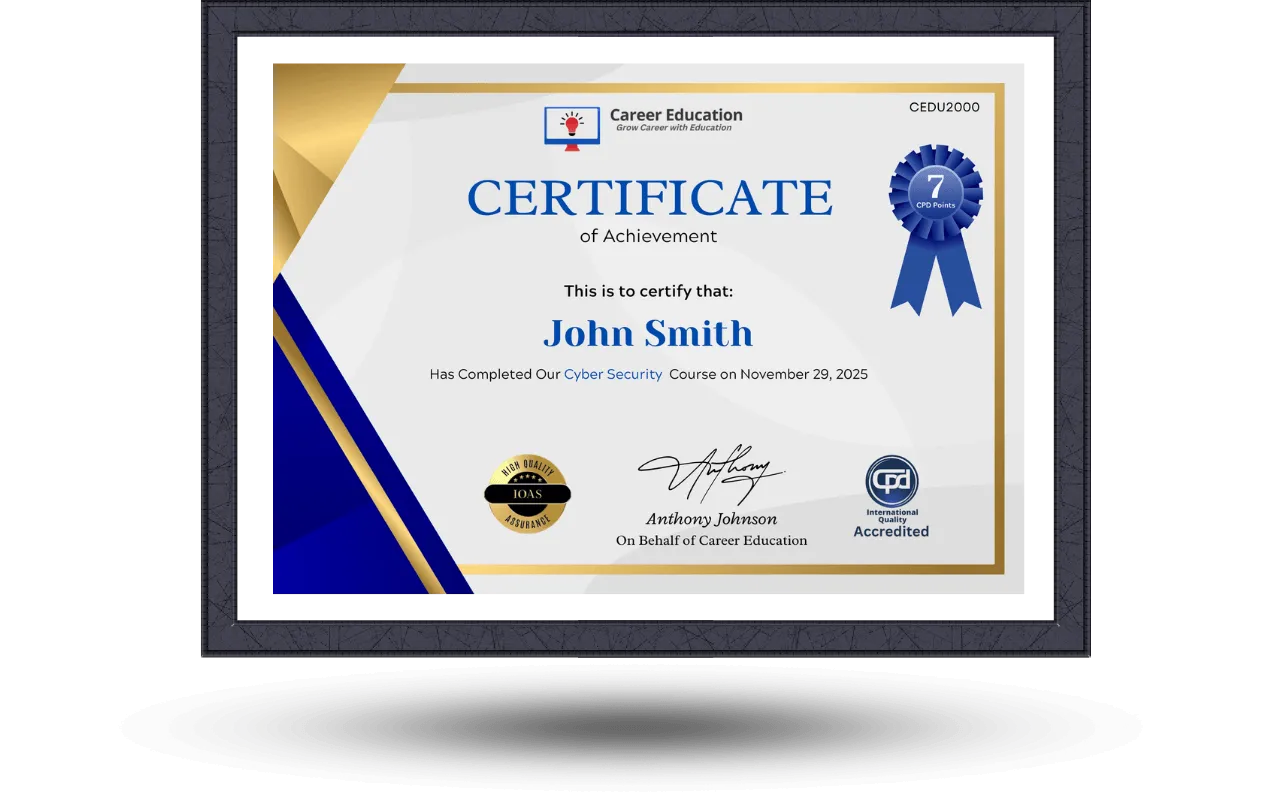
Upon completion of any course, all students are entitled to a CPD IQ Accredited e-certificate that will be issued by Career Education signifying the completion of your course.
After you complete the course and assignment, you will be eligible to order a free certificate accredited by CPD International Quality by completing the form below.
Hardcopy certificates and transcripts are also available for a small additional fee. More information is disclosed upon course completion.
Similar Courses




Frequently Asked Questions
The lifetime membership includes unlimited access to all courses, resources, and updates for a one-time fee.
You can purchase the membership directly from our website using a secure checkout process.
Yes, selected courses can be downloaded for offline access through our mobile app.
Yes, all future updates and new courses are included at no extra cost.
Yes, we offer a 30-day money-back guarantee if you are not satisfied with the membership.