
94%
OFF
OFF
Communication Skills for Video Game Professionals
- Lifetime Access
- All Levels
- PDF Certificate
£296
£19
14-Day Money-Back Guarantee
Learn With Confidence









Communication Skills for Video Game Professionals
The video game industry is built on creativity, technology, collaboration, and player engagement. Behind every successful game is a team of designers, writers, developers, artists, producers, testers, marketers, and other professionals who must communicate effectively to turn ideas into enjoyable player experiences. Communication Skills for Video Game Professionals is designed to help learners develop the practical communication abilities needed to contribute confidently and effectively across the game development process.
Strong communication is more than simply exchanging information. In game development, professionals need to communicate design ideas clearly, understand player expectations, write engaging dialogue, create intuitive interface messages, collaborate with teams, and consider how every piece of information affects the player experience. When communication breaks down, even great ideas can become difficult to implement. When communication is clear and purposeful, teams can work more efficiently and players can interact with games more naturally.
This Communication Skills for Video Game Professionals course explores communication from both the professional and player perspectives. It provides learners with a structured understanding of how communication works within video games, how to create player-centred messages, how to write effective game dialogue and narratives, and how communication influences UI and UX design. It also examines communication in multiplayer environments and collaborative game development.
Whether you are interested in game design, game writing, UI/UX, development, testing, production, or another area of the gaming industry, this course can help you build communication skills that support better teamwork and stronger player experiences.
Why Communication Skills Matter in the Video Game Industry
Modern game development is highly collaborative. A single project may involve people with very different technical backgrounds, creative responsibilities, and professional priorities. A designer may need to explain a gameplay mechanic to a programmer. A writer may need to communicate narrative requirements to a designer. A UX professional may need to explain usability concerns to a development team. A producer may need to coordinate multiple departments around deadlines and project goals.
Clear communication helps reduce misunderstandings and allows teams to make better decisions.
Communication also plays a direct role in the player’s experience. Players receive information through dialogue, tutorials, menus, prompts, notifications, objectives, visual cues, sound, and multiplayer interactions. If these communication methods are unclear or poorly designed, players may become confused or frustrated.
The Communication Skills for Video Game Professionals course helps learners understand these different communication challenges and develop approaches for handling them effectively.
What You Will Learn
Throughout the course, learners will explore six important areas of communication within the video game environment. Each module builds knowledge that can be applied to professional game development and player-facing experiences.
Module 1: Introduction to Game Communication
The course begins with an introduction to communication within video games. Learners will explore how games communicate information to players and how professionals communicate with one another during the development process.
You will develop an understanding of different forms of game communication and consider how communication supports gameplay, storytelling, instructions, feedback, and engagement.
This module provides a foundation for understanding why communication is such an important part of successful game development. You will also begin to recognise how clarity, context, timing, and audience can influence the effectiveness of a message.
By completing this module, you can develop a stronger awareness of the role communication plays across different areas of the gaming industry.
Module 2: Player-Centric Game Design and Communication
Successful games are designed around the needs, expectations, and experiences of their players. Module 2 focuses on player-centric game design and the importance of communicating information in ways that players can understand and use.
You will explore how communication can be adapted to different audiences and gameplay situations. This includes considering what players need to know, when they need to know it, and how information can be presented without unnecessarily interrupting the gaming experience.
The module encourages learners to think from the player’s perspective rather than focusing only on what the development team wants to communicate.
By developing this perspective, you can become better equipped to create or evaluate game communication that supports usability, understanding, engagement, and player satisfaction.
Module 3: Writing for Video Games: Dialogue and Narratives
Writing is one of the most visible forms of communication in many games. Dialogue and narrative can establish characters, explain situations, build worlds, provide information, and encourage emotional engagement.
Module 3 explores writing for video games, with a focus on dialogue and narratives. You will learn about the role of effective written communication within interactive entertainment and how writing differs from communication in more traditional forms of storytelling.
You will consider how dialogue can support gameplay and character development while contributing to the overall player experience. You will also explore how narrative communication can be structured to deliver information in an engaging and understandable way.
This module can be particularly useful for learners interested in game writing, narrative design, content development, or other creative roles where written communication is important.
Module 4: Communication for Game User Interfaces (UI)
The user interface is a critical communication channel between a game and its players. Menus, buttons, prompts, notifications, status information, objectives, and other interface elements must communicate clearly and efficiently.
Module 4 focuses on communication for game UI and helps learners understand how language and information presentation can influence usability.
You will explore the importance of clear interface communication and consider how UI content can guide players without creating unnecessary confusion. The module encourages a practical approach to presenting information in ways that fit the context of gameplay.
By understanding the communication principles behind effective game interfaces, you can better contribute to UI-related discussions and recognise how interface messaging influences the overall player experience.
Module 5: Collaborative Communication in Multiplayer Games
Multiplayer games introduce additional communication challenges because players interact not only with the game but also with other people. Effective communication can influence teamwork, coordination, social interaction, and the overall multiplayer experience.
Module 5 examines collaborative communication in multiplayer games. You will explore the ways players communicate and how game systems can support meaningful interaction between players.
The module also encourages consideration of how communication features can contribute to cooperation and coordinated gameplay. Understanding these principles can be valuable for professionals working on multiplayer systems, game design, community experiences, and player interaction.
You will develop greater awareness of the relationship between communication, collaboration, and multiplayer engagement.
Module 6: User Experience (UX) and Communication Design
The final module brings together communication and user experience. UX focuses on how players experience and interact with a game, while communication design considers how information is delivered throughout that experience.
You will explore how communication contributes to intuitive and engaging player journeys. This includes considering how players understand systems, respond to feedback, navigate interfaces, and interpret information during gameplay.
By connecting communication principles with UX thinking, you can develop a more complete understanding of how small communication choices can influence the overall quality of a game.
Practical Outcomes of the Course
Completing the Communication Skills for Video Game Professionals course can help you develop a range of practical skills that are relevant to modern game development.
You can learn to:
-
Communicate game-related ideas more clearly and effectively.
-
Understand communication from the player’s perspective.
-
Recognise the role of communication in player-centred game design.
-
Develop more purposeful dialogue and narrative communication.
-
Understand how UI language can support player navigation and interaction.
-
Consider communication challenges within multiplayer environments.
-
Connect communication principles with UX and player experience.
-
Collaborate more effectively with professionals from different disciplines.
-
Evaluate whether game information is clear, relevant, and appropriately presented.
-
Develop a stronger understanding of communication as part of the complete game experience.
These outcomes can help learners approach game-related projects with greater confidence and a clearer understanding of how communication influences both development and gameplay.
Who Is This Course For?
The Communication Skills for Video Game Professionals course is suitable for anyone who wants to strengthen their understanding of communication within the gaming environment.
It may be particularly useful for:
-
Aspiring game designers
-
Game developers
-
Game writers and narrative designers
-
UI designers
-
UX professionals
-
Game producers
-
Quality assurance professionals
-
Content creators working in gaming
-
Students interested in the video game industry
-
Creative professionals exploring game development
-
Professionals who collaborate with game development teams
-
Anyone interested in player communication and game experience
You do not need to be a specialist in every area of game development to benefit from the course. The curriculum provides a broad perspective that can help learners understand how different communication responsibilities connect across the industry.
Build More Effective Professional Communication
Game development depends on people working together toward a shared vision. Technical expertise and creative talent are important, but these strengths become more effective when team members can communicate their ideas, requirements, concerns, and feedback clearly.
The Communication Skills for Video Game Professionals course can help you develop a communication-focused mindset that supports collaboration. Instead of viewing communication as a secondary skill, you will learn to recognise it as an important part of game design, development, and player experience.
Clear communication can help teams understand objectives, reduce avoidable misunderstandings, exchange feedback, and create more consistent experiences. These abilities can be valuable whether you are contributing to a small independent project or working within a larger multidisciplinary development environment.
Improve the Player Experience Through Better Communication
A game communicates constantly. It tells players what they can do, what is happening, where they should go, what they have achieved, and how different systems work. Good communication can make these interactions feel natural. Poor communication can make even well-designed systems difficult to understand.
This course helps you consider communication as part of the complete player journey. From narrative dialogue and interface instructions to multiplayer interactions and UX design, each communication element can influence how players perceive and engage with a game.
Developing this awareness can help you make more informed decisions when creating, reviewing, or discussing game communication.
Develop Skills for a Collaborative Industry
The video game industry brings together many different professional disciplines. Effective collaboration requires professionals to understand not only their own responsibilities but also how their work connects with others.
The Communication Skills for Video Game Professionals course provides an opportunity to develop knowledge that crosses traditional role boundaries. You can explore communication through design, writing, UI, multiplayer interaction, and UX, giving you a broader perspective on the game development process.
This wider understanding can help you communicate more effectively with colleagues and contribute more confidently to conversations about player experience and game design.
Take the Next Step in Your Game Industry Development
The ability to communicate effectively can make a meaningful difference in how ideas are developed, understood, implemented, and experienced. For aspiring and established video game professionals alike, communication is a practical skill that can support stronger collaboration and more engaging player experiences.
The Communication Skills for Video Game Professionals course provides a structured opportunity to explore this important area through six focused modules. From understanding the fundamentals of game communication to exploring player-centric design, dialogue and narratives, UI communication, multiplayer collaboration, and UX communication design, the course offers a comprehensive foundation for developing communication awareness in the gaming industry.
If you want to strengthen your professional communication skills, understand how games communicate with players, and develop a more player-focused approach to game-related work, this course can help you move forward with greater confidence.
Enrol in Communication Skills for Video Game Professionals today and start developing communication skills that can support better collaboration, clearer game experiences, and more effective player engagement.
Course Modules
Course Content
Communication Skills for Video GamesModule 1_ Introduction to Game Communication
-
Communication Skills for Video GamesLesson 1_ Introduction to Game Communication
Communication Skills for Video GamesModule 2_ PlayerCentric Game Design and Communication
Communication Skills for Video GamesModule 3_ Writing for Video Games_ Dialogue and Narratives
Communication Skills for Video GamesModule 4_ Communication for Game User Interfaces (UI)
Communication Skills for Video GamesModule 5_ Collaborative Communication in Multiplayer Games
Communication Skills for Video GamesModule 6_ User Experience (UX) and Communication Design
What our students say
Excellent
4.9 average
158 Reviews

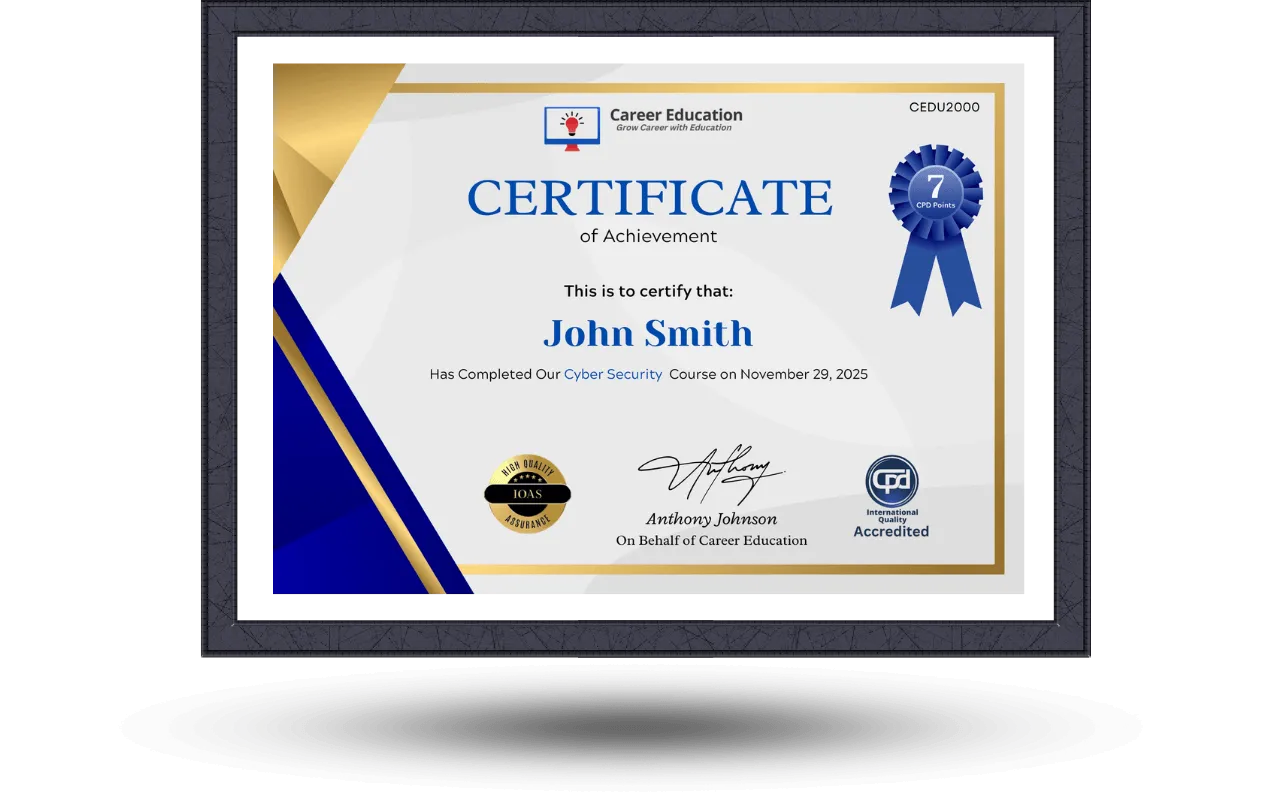
Earn an Accredited Certificate
Upon completion of any course, all students are entitled to a CPD IQ Accredited e-certificate that will be issued by Career Education signifying the completion of your course.
After you complete the course and assignment, you will be eligible to order a free certificate accredited by CPD International Quality by completing the form below.
Hardcopy certificates and transcripts are also available for a small additional fee. More information is disclosed upon course completion.
Similar Courses




Frequently Asked Questions
The lifetime membership includes unlimited access to all courses, resources, and updates for a one-time fee.
You can purchase the membership directly from our website using a secure checkout process.
Yes, selected courses can be downloaded for offline access through our mobile app.
Yes, all future updates and new courses are included at no extra cost.
Yes, we offer a 30-day money-back guarantee if you are not satisfied with the membership.