
OFF
Chemical Engineering Training
- Lifetime Access
- All Levels
- PDF Certificate
Learn With Confidence









Overview
# Chemical Engineering Training
Build a stronger understanding of the principles used to design, analyse and improve chemical processes with **Chemical Engineering Training**.
Chemical engineering is a multidisciplinary field that combines chemistry, mathematics, physics and engineering principles to understand how materials are transformed into useful products and how industrial processes can be designed and operated effectively.
From pharmaceuticals and food production to energy, materials, water treatment and manufacturing, chemical engineering principles influence a wide range of industries.
Understanding how fluids move through equipment, how heat is transferred, how materials separate and how chemical processes are controlled can provide valuable insight into modern industrial operations.
Our **Chemical Engineering Training** course introduces the core concepts that underpin chemical engineering. Across five focused modules, you will explore the fundamentals of chemical engineering, chemical process principles, fluid mechanics, heat transfer and mass transfer.
The course is designed to provide learners with a structured foundation and help them understand how fundamental engineering principles apply to chemical processes and industrial systems.
Whether you are exploring chemical engineering for the first time, studying an engineering-related subject, working in manufacturing or processing, or looking to broaden your technical knowledge, this course can help you develop a clearer understanding of the field.
## Why Study Chemical Engineering Training?
Chemical engineering plays an important role in turning raw materials into useful products.
However, industrial processing is rarely as simple as mixing ingredients together.
Engineers need to understand how materials behave, how energy moves through systems, how fluids flow through pipes and equipment, and how components can be transferred or separated.
These principles are essential for designing and analysing processes.
The **Chemical Engineering Training** course introduces these areas in a structured way.
You will explore the fundamentals of chemical engineering before progressing into core engineering concepts that are widely relevant to chemical processing.
The course covers:
* Chemical engineering fundamentals.
* Chemical process principles.
* Fluid mechanics.
* Heat transfer.
* Mass transfer.
Together, these subjects provide an important foundation for understanding how chemical processes operate.
## Course Learning Outcomes
By completing **Chemical Engineering Training**, you will develop the knowledge to:
* Understand the role and scope of chemical engineering.
* Explore how chemical engineering differs from pure chemistry.
* Recognise the importance of engineering principles in industrial processing.
* Understand fundamental chemical process principles.
* Explore how material and energy considerations influence processes.
* Develop awareness of fluid behaviour in engineering systems.
* Understand basic principles of fluid mechanics.
* Explore how heat moves through chemical engineering systems.
* Understand fundamental heat transfer concepts.
* Explore the principles behind mass transfer.
* Recognise the importance of transport phenomena in chemical processes.
* Connect fundamental engineering concepts to industrial applications.
* Develop a foundation for further study in chemical engineering.
* Communicate more confidently about basic chemical engineering concepts.
# Module 1: Introduction to Chemical Engineering
The first module introduces the discipline of chemical engineering.
Chemical engineering sits at the intersection of science and engineering.
While chemistry focuses heavily on understanding substances and chemical reactions, chemical engineering is concerned with applying scientific knowledge to processes that can operate safely and efficiently at larger scales.
You will explore the role of chemical engineers and the types of problems they may address.
Chemical engineers can work with processes involving chemical reactions, separation, heating, cooling, mixing, fluid movement and material transformation.
These activities can occur across a wide range of industries.
The module introduces the relationship between chemistry and engineering and explains why mathematical and physical principles are important in chemical processing.
You will also develop awareness of how chemical engineers think about processes as interconnected systems.
A change in one part of a process can affect other parts.
For example, temperature can influence reaction behaviour, fluid properties and energy requirements.
Understanding these relationships is an important part of engineering analysis.
By completing this module, you will have a clearer understanding of what chemical engineering involves and why it is important across modern industry.
# Module 2: Chemical Process Principles
Module 2 explores fundamental chemical process principles.
Chemical processes involve materials entering, changing and leaving systems.
Engineers need to understand what happens to those materials throughout the process.
You will explore the importance of analysing chemical processes systematically.
This includes developing awareness of how materials and energy interact within process systems.
Understanding process principles provides a foundation for analysing industrial operations and identifying opportunities for improvement.
The module introduces concepts that help learners think about processes in terms of inputs, outputs, transformations and operating conditions.
You will also explore why accurate process analysis matters.
Engineers may need to determine how much material is required, what products are produced and how different operating conditions affect the overall process.
These principles can support process design, optimisation and troubleshooting.
The module provides a foundation for understanding more advanced chemical engineering concepts.
By completing this module, you will have greater awareness of the principles used to analyse chemical processes and material flows.
# Module 3: Fluid Mechanics
Fluids are fundamental to many chemical engineering operations.
Materials may need to be pumped through pipes, transported between process units, mixed in tanks or moved through specialised equipment.
Module 3 introduces fluid mechanics and explores how fluids behave within engineering systems.
You will develop an understanding of why fluid movement matters in chemical processing.
Factors such as pressure, flow, velocity and fluid properties can influence how a system operates.
Understanding these relationships can help engineers analyse equipment and process conditions.
You will explore foundational fluid mechanics concepts and their relevance to chemical engineering.
The module also encourages you to think about fluids as part of larger process systems.
A fluid does not simply move from one point to another.
Its movement interacts with pipes, pumps, valves, tanks and other equipment.
Engineers therefore need to consider the complete system.
By completing this module, you will develop a stronger conceptual understanding of fluid mechanics and its importance in chemical engineering applications.
# Module 4: Heat Transfer
Temperature control is critical in many chemical engineering processes.
Industrial systems may need to heat materials, cool products, maintain specific operating temperatures or remove excess heat.
Module 4 introduces heat transfer.
You will explore the fundamental principles behind the movement of thermal energy.
Understanding heat transfer is important because temperature can influence physical properties, reaction rates, phase changes and overall process performance.
You will develop awareness of how heat moves between materials and through different systems.
The module introduces the importance of understanding thermal behaviour when analysing chemical processes.
Heat transfer also has implications for equipment design.
Industrial processes may use heat exchangers, heating systems or cooling systems to control temperatures.
Engineers need to understand how these systems transfer energy and how operating conditions affect their performance.
By completing this module, you will have a stronger foundation in heat transfer and its role in chemical engineering.
# Module 5: Mass Transfer
The final module focuses on mass transfer.
Mass transfer is an important concept in many chemical engineering processes where components move from one phase or location to another.
This can occur in processes involving gases, liquids and solids.
You will explore the fundamental principles behind mass transfer and understand why it is important in industrial processing.
Mass transfer can play a role in separation and purification processes.
For example, industrial operations may need to separate components from mixtures or transfer a substance between phases.
Understanding how and why mass moves can help engineers analyse these processes.
The module also reinforces the connection between mass transfer and other chemical engineering principles.
Fluid movement, temperature, concentration and material properties can all influence how mass is transferred.
This illustrates why chemical engineering is a multidisciplinary field.
By completing this module, you will have greater awareness of mass transfer and its importance in chemical processing and separation operations.
# Develop Core Chemical Engineering Knowledge
The **Chemical Engineering Training** course provides an introduction to several fundamental areas of chemical engineering.
## Understand Chemical Engineering Fundamentals
Develop awareness of the role of chemical engineers and how engineering principles are applied to industrial processes.
## Explore Process Principles
Understand how engineers analyse materials, energy and process systems.
## Build Fluid Mechanics Knowledge
Explore how fluids behave and move through engineering systems.
## Understand Heat Transfer
Develop awareness of how thermal energy moves through processes and why temperature control matters.
## Explore Mass Transfer
Understand the fundamental principles behind the movement of components within and between systems.
# Understand Transport Phenomena
Fluid mechanics, heat transfer and mass transfer are often considered important areas of transport phenomena.
These concepts help explain how momentum, energy and mass move through engineering systems.
Understanding these principles can provide a valuable foundation for analysing chemical processes.
The **Chemical Engineering Training** course introduces all three areas in a structured sequence.
This allows learners to begin developing an integrated understanding of how different physical processes interact.
# Who Is Chemical Engineering Training For?
**Chemical Engineering Training** can be suitable for:
* Aspiring chemical engineers.
* Engineering students.
* Science students.
* Manufacturing professionals.
* Process technicians.
* Production professionals.
* Laboratory professionals.
* Industrial workers.
* Energy-sector professionals.
* Manufacturing managers.
* Technical professionals.
* Individuals considering an engineering career.
* Professionals seeking to broaden their technical knowledge.
The course can also be useful for beginners who want to understand the fundamentals of chemical engineering before progressing to more advanced technical study.
# Build a Foundation for Further Study
Chemical engineering is a broad technical discipline.
Further study may involve advanced mathematics, thermodynamics, reaction engineering, process control, process design, separation processes and specialised engineering subjects.
The **Chemical Engineering Training** course provides an introductory foundation that can help learners become familiar with core concepts before pursuing more advanced learning.
# Understand How Industrial Processes Work
One of the most useful aspects of chemical engineering is its connection to real-world industrial processes.
Many everyday products rely on chemical engineering principles.
Manufacturing facilities need to control materials, energy, temperature, pressure and flow.
Engineers use these principles to design and analyse processes that transform raw materials into useful products.
By studying the fundamentals, you can begin to understand the engineering concepts behind these systems.
# Develop Systems Thinking
Chemical engineering requires more than understanding individual scientific concepts.
Engineers need to consider how different parts of a process interact.
For example, changing temperature can affect material properties and heat transfer. Changing flow conditions can influence pressure and equipment performance.
Developing systems thinking can therefore help learners understand why engineering processes need to be analysed as interconnected systems.
The course introduces this perspective across its modules.
# Understand the Importance of Fluid Flow
Fluid movement is central to many industrial processes.
Liquids and gases may be transported through pipelines, pumps, reactors and processing equipment.
Understanding basic fluid mechanics can therefore help you recognise the factors that influence process performance.
The course provides a foundation for understanding these relationships.
# Explore Thermal Processes
Heat is used extensively in industry.
Heating and cooling can be required for reactions, separation processes, product preparation and temperature control.
The heat transfer module helps you understand the fundamental principles behind these processes.
# Understand Separation and Mass Movement
Industrial processes frequently involve separating materials or transferring components between phases.
Mass transfer principles help explain these operations.
Developing an understanding of mass transfer can provide insight into how chemical engineers approach separation and purification challenges.
# Connect Science With Engineering
Chemical engineering demonstrates how scientific knowledge can be transformed into practical engineering solutions.
Chemistry provides knowledge about substances and reactions, while engineering provides methods for designing and operating processes.
The **Chemical Engineering Training** course introduces learners to this relationship and shows how multiple scientific principles contribute to process engineering.
# Why Choose Chemical Engineering Training?
The **Chemical Engineering Training** course provides a focused five-module learning journey covering:
1. Introduction to Chemical Engineering.
2. Chemical Process Principles.
3. Fluid Mechanics.
4. Heat Transfer.
5. Mass Transfer.
The curriculum provides a logical progression from fundamental concepts to core transport processes.
You will develop awareness of how materials move, how energy is transferred and how chemical processes can be understood from an engineering perspective.
# A Practical Foundation for Technical Development
If you are new to chemical engineering, the subject can initially appear highly technical.
This course provides a structured way to approach the discipline by introducing key concepts one area at a time.
You can develop foundational knowledge before progressing to more advanced subjects.
For professionals already working in technical or industrial environments, the course can also provide an opportunity to broaden your understanding of the engineering principles behind processing operations.
# Expand Your Engineering Knowledge
Understanding chemical engineering can complement knowledge in areas such as manufacturing, environmental technology, energy, materials science and industrial operations.
The principles introduced in this course can help you recognise how engineering concepts are applied across different industries.
# Take the Next Step Towards Chemical Engineering Knowledge
Chemical engineering helps turn scientific principles into practical processes that produce useful materials and products.
From fluid flow and heat transfer to mass movement and process analysis, chemical engineering involves understanding how different physical and chemical systems interact.
**Chemical Engineering Training** provides a structured introduction to these essential concepts.
Through five focused modules, you will explore the foundations of chemical engineering, chemical process principles, fluid mechanics, heat transfer and mass transfer.
Whether you are preparing for further study, exploring an engineering career or developing your technical knowledge, this course can provide a valuable starting point.
**Enrol in Chemical Engineering Training today and develop a stronger foundation in the engineering principles that help explain, analyse and improve chemical and industrial processes.**
Course Modules
Course Content
Module 1_ Introduction to Chemical Engineering
-
Lesson 1_ Introduction to Chemical Engineering
Module 2_ Chemical Process Principles
Module 3_ Fluid Mechanics
Module 4_ Heat Transfer
Module 5_ Mass Transfer
What our students say

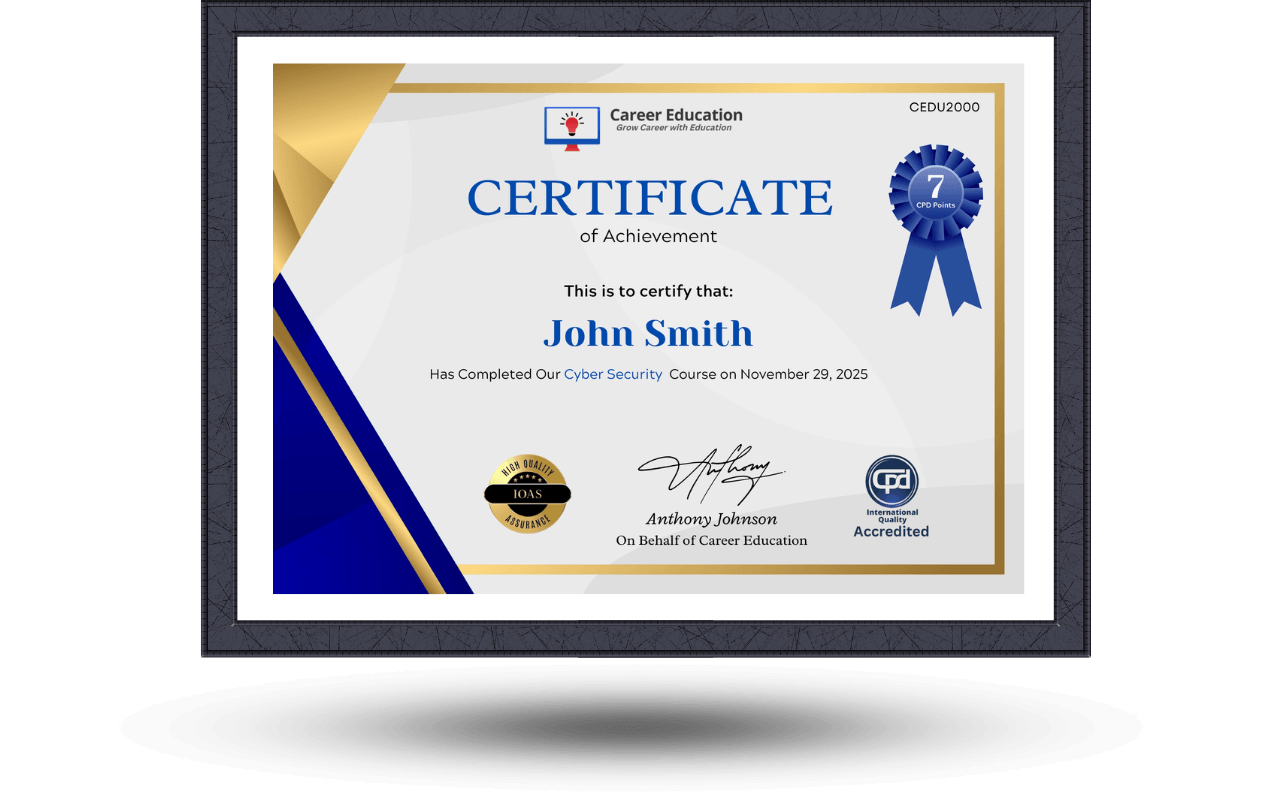
Earn an Accredited Certificate
Upon completion of the course, an e-certificate will be downloadable from Khan Education signifying the completion of your course. But, the course is CPD Accredited and after you complete the assignment, you will be eligible to order a certificate accredited by CPD International Quality for £5.99 only. If you want a hardcopy certificate accredited by CPD IQ, you can get it for only £15.99.
Get your CertificateSimilar Courses


