
94%
OFF
OFF
Business Administration Training
- Lifetime Access
- All Levels
- PDF Certificate
£296
£19
14-Day Money-Back Guarantee
Learn With Confidence







# Business Administration Training
Develop the practical knowledge and professional skills needed to understand how modern organisations operate with **Business Administration Training**. This comprehensive course is designed for aspiring business professionals, administrators, managers, entrepreneurs and anyone who wants to build a stronger foundation in business administration and organisational management.
Every successful organisation depends on effective administration. Behind day-to-day business activity are people coordinating resources, managing teams, supporting customers, monitoring finances, promoting products and services, and ensuring that operational processes run efficiently. Business administration brings these functions together and provides the structure needed to keep an organisation moving towards its objectives.
**Business Administration Training** gives you a broad introduction to the essential areas of business management. Rather than focusing on one narrow function, the course explores organisational behaviour, management principles, human resources, marketing, finance and operations. This gives learners a more complete understanding of how different business functions connect and contribute to organisational success.
Whether you are starting your first business, preparing for an administrative career, looking to move into management or simply want to improve your understanding of business, this course provides a valuable foundation for further learning and professional development.
## Why Business Administration Matters
Business administration is essential across virtually every industry. From small businesses and start-ups to large corporations, organisations need effective systems and people who understand how business activities work together.
An administrator may be involved in coordinating information, supporting teams, managing documentation, communicating with customers, organising resources or assisting with operational activities. As responsibilities increase, professionals may also become involved in planning, budgeting, human resources, marketing and management.
Understanding the wider business environment can help you make better decisions and communicate more effectively with different departments.
The **Business Administration Training** course is designed to develop that wider perspective.
## Course Learning Outcomes
By completing **Business Administration Training**, you will develop knowledge that can help you:
* Understand the fundamentals of business administration.
* Explain how organisations are structured and managed.
* Understand key principles of organisational behaviour.
* Explore effective management practices.
* Develop awareness of human resource management.
* Understand the role of marketing in business.
* Explore fundamental financial management concepts.
* Understand the principles of operations management.
* Recognise how different business functions work together.
* Improve your professional business vocabulary.
* Develop stronger decision-making awareness.
* Build a foundation for further business and management study.
* Strengthen your preparation for business administration-related roles.
## Module 1: Introduction to Business Administration
The first module provides an introduction to business administration and establishes the foundation for the course.
You will explore what business administration involves and why it is important to organisational success. Business administration covers a broad range of activities, including planning, coordination, communication, resource management and support for organisational objectives.
You will develop a clearer understanding of how businesses are organised and how different departments contribute to overall performance.
This module also introduces important business concepts that can help you understand the relationship between people, processes and resources.
Whether you are new to business or already working in an administrative environment, this foundation can help you see business activities from a broader perspective.
By completing this module, you will have a stronger understanding of the purpose of business administration and its role in supporting effective organisations.
## Module 2: Organisational Behavior
Businesses are ultimately made up of people, making organisational behaviour an important part of business administration.
Module 2 explores how individuals and groups behave within organisations and how workplace environments can influence performance, communication and collaboration.
You will develop greater awareness of factors that can affect employee behaviour, teamwork, motivation and workplace relationships.
Understanding organisational behaviour can help professionals communicate more effectively and recognise why people may respond differently to particular situations.
The module also encourages you to consider the importance of organisational culture and the working environment.
A positive workplace culture can support collaboration, engagement and productivity, while poor communication and unclear expectations can create challenges.
By developing knowledge of organisational behaviour, you can become better prepared to work effectively with colleagues, support teams and contribute to a constructive workplace environment.
## Module 3: Management Principles
Effective management provides direction and structure within an organisation.
Module 3 introduces key management principles and explores the responsibilities associated with managing people, resources and organisational activities.
You will explore concepts relating to planning, organising, decision-making, leadership, delegation and performance.
Management is not simply about telling people what to do. Effective managers need to communicate expectations, allocate resources, solve problems, support employees and make informed decisions.
This module helps you understand the principles that underpin these responsibilities.
You will also develop an appreciation of the importance of setting objectives and aligning day-to-day activities with broader organisational goals.
The knowledge gained can be useful for anyone preparing to move into a supervisory or management position, as well as business owners who need to manage teams and resources effectively.
## Module 4: Human Resource Management
Employees are among an organisation’s most important resources, making human resource management a key business function.
Module 4 introduces the principles of Human Resource Management (HRM) and explores how organisations manage and support their workforce.
You will develop awareness of areas such as recruitment, employee development, performance, workplace relationships and employee support.
Effective HR management can help organisations attract suitable employees, develop talent and create an environment where people can contribute effectively.
You will also explore why clear policies, communication and fair workplace practices are important to organisational success.
Understanding HRM can be valuable even if you do not work directly in human resources. Managers, supervisors and administrators frequently interact with HR processes and employee-related responsibilities.
By completing this module, you will develop a broader understanding of how people management supports organisational performance.
## Module 5: Marketing Management
A successful organisation needs to understand its customers and communicate the value of its products or services effectively.
Module 5 focuses on marketing management and introduces the role of marketing within business.
You will explore how organisations identify customer needs, develop marketing strategies and communicate with their target audiences.
Marketing involves much more than advertising. It can include understanding markets, developing products and services, positioning a brand, communicating value and building relationships with customers.
This module helps you understand how marketing contributes to business objectives.
You will also develop greater awareness of the relationship between marketing and other business functions. For example, marketing activities can influence sales, operations, finance and customer service.
By understanding these connections, you can develop a more complete view of how organisations attract and retain customers.
## Module 6: Financial Management
Financial awareness is essential for effective business administration.
Module 6 introduces fundamental financial management concepts and explores the importance of managing money and financial resources responsibly.
You will develop a greater understanding of how financial information supports business decision-making. Organisations need to monitor income and expenditure, manage resources, evaluate performance and plan for future financial requirements.
Financial management helps businesses understand whether their activities are sustainable and where improvements may be needed.
You will explore fundamental financial concepts and develop a stronger appreciation of the role finance plays across an organisation.
Even if you are not pursuing a specialist accounting career, financial literacy can be extremely valuable. Administrators, managers and business owners often need to understand budgets, costs, financial reports and resource allocation.
This module can therefore help you develop practical financial awareness that supports wider business decision-making.
## Module 7: Operations Management
The final module focuses on operations management and explores how organisations deliver products and services efficiently.
Operations are concerned with the processes, resources and activities required to produce goods or deliver services. Effective operations management can contribute to productivity, quality, customer satisfaction and cost control.
You will explore the importance of coordinating resources and processes to achieve organisational objectives.
The module also helps you understand why operational efficiency matters. Delays, poor resource allocation, inefficient processes and inconsistent quality can affect customer experiences and business performance.
By developing knowledge of operations management, you can better understand what happens behind the scenes of a successful organisation.
This knowledge can be valuable for administrators and managers working in a wide range of sectors, including retail, hospitality, professional services, manufacturing, healthcare, education and technology.
## Develop a Complete Understanding of Business
One of the major advantages of **Business Administration Training** is its broad coverage.
Rather than studying business administration from a single perspective, you will explore seven interconnected areas:
* Business administration.
* Organisational behaviour.
* Management.
* Human resource management.
* Marketing management.
* Financial management.
* Operations management.
These areas do not operate independently.
Marketing needs financial resources. Operations depend on people. Human resources support organisational capability. Managers coordinate activities across departments. Financial information influences decisions. Administration provides the systems and coordination that allow everyday business activities to function.
Understanding these connections can help you develop a more complete business mindset.
## Build Transferable Professional Skills
Business administration knowledge can support a wide range of transferable skills.
As you explore the course material, you can develop greater awareness of:
* Business communication.
* Organisation and coordination.
* Decision-making.
* Problem-solving.
* Resource management.
* Teamwork.
* Leadership.
* Planning.
* Customer awareness.
* Financial awareness.
* Operational thinking.
These capabilities can be valuable across many industries and job roles.
## Prepare for Business Administration Careers
A strong understanding of business administration can support career development in numerous areas.
Depending on your experience, qualifications and employer requirements, potential career pathways may include:
* Business administrator.
* Administrative assistant.
* Office administrator.
* Business support professional.
* Operations coordinator.
* HR administrator.
* Marketing assistant.
* Management support officer.
* Customer service administrator.
* Office manager.
* Business operations assistant.
* Team leader or supervisor.
The course does not guarantee employment or replace role-specific qualifications where required, but it can provide useful foundational knowledge for learners exploring business-related careers.
## Support Your Entrepreneurial Goals
Business Administration Training can also be valuable for entrepreneurs.
Running a small business requires knowledge across multiple functions. An entrepreneur may need to understand customers, marketing, finances, employees and operations even when they have limited resources.
The broad perspective provided by this course can help business owners recognise how these areas connect.
For example, a marketing decision can affect sales and cash flow. Hiring decisions can affect operational capacity. Operational improvements can influence customer satisfaction and profitability.
Understanding these relationships can help entrepreneurs approach business challenges more strategically.
## Improve Your Management Knowledge
If you already work in an administrative or business environment, **Business Administration Training** can help strengthen your understanding of the wider organisation.
You may have responsibility for a particular function but still need to communicate with finance, HR, marketing or operations teams.
Understanding the fundamentals of these departments can make cross-functional communication easier and help you see how your responsibilities contribute to broader organisational goals.
For aspiring managers, the course can also provide a foundation for understanding the responsibilities associated with managing people and resources.
## Who Is This Course For?
**Business Administration Training** is suitable for:
* Aspiring business administrators.
* Administrative professionals.
* Office support staff.
* Entrepreneurs and business owners.
* New and aspiring managers.
* Team leaders and supervisors.
* HR professionals and assistants.
* Marketing professionals.
* Operations staff.
* Students and recent graduates.
* Career changers.
* Anyone interested in business management.
The course is designed to be accessible to learners at different stages, making it suitable for beginners as well as professionals who want to refresh and broaden their knowledge.
## Create Better Business Awareness
A strong business professional needs to understand more than their own job description.
The ability to see how different functions interact can improve decision-making and communication.
**Business Administration Training** helps you develop this wider awareness by exploring the key areas that influence organisational performance.
You will gain insight into how people, finances, marketing, management and operations contribute to business objectives.
## Strengthen Your Professional Development
Continuous learning can help professionals adapt to changing workplace expectations.
Businesses increasingly value people who can communicate across departments, understand organisational priorities and contribute to solving problems.
Developing business administration knowledge can therefore complement existing technical or industry-specific skills.
Whether you want to progress in your current career or explore a new professional direction, the course can give you a broader foundation for continued development.
## Why Choose Business Administration Training?
**Business Administration Training** offers a structured learning journey covering the essential functions of modern business.
You will explore:
* How organisations operate.
* How people behave in the workplace.
* How managers coordinate resources and teams.
* How organisations manage employees.
* How businesses attract and retain customers.
* How financial resources are managed.
* How products and services are delivered efficiently.
This comprehensive approach can help you understand business from both an operational and strategic perspective.
## Start Your Business Administration Journey Today
Successful organisations require people who understand how business functions work together.
Whether you want to develop your administrative career, move towards management, strengthen your entrepreneurial skills or simply gain a better understanding of business, **Business Administration Training** can provide a valuable foundation.
Through seven focused modules, you will explore business administration, organisational behaviour, management principles, human resource management, marketing management, financial management and operations management.
The result is a broader understanding of the systems, people and processes that contribute to organisational success.
**Enrol in Business Administration Training today and build the practical business knowledge, professional confidence and broader organisational understanding you need to take the next step in your career.**
Course Modules
Course Content
Module 1_ Introduction to Business Administration
-
Lesson 1_ Introduction to Business Administration
Module 2_ Organizational Behavior
Module 3_ Management Principles
Module 4_ Human Resource Management
Module 5_ Marketing Management
Module 6_ Financial Management
Module 7_ Operations Management
What our students say
Excellent
4.9 average
158 Reviews

Earn an Accredited Certificate
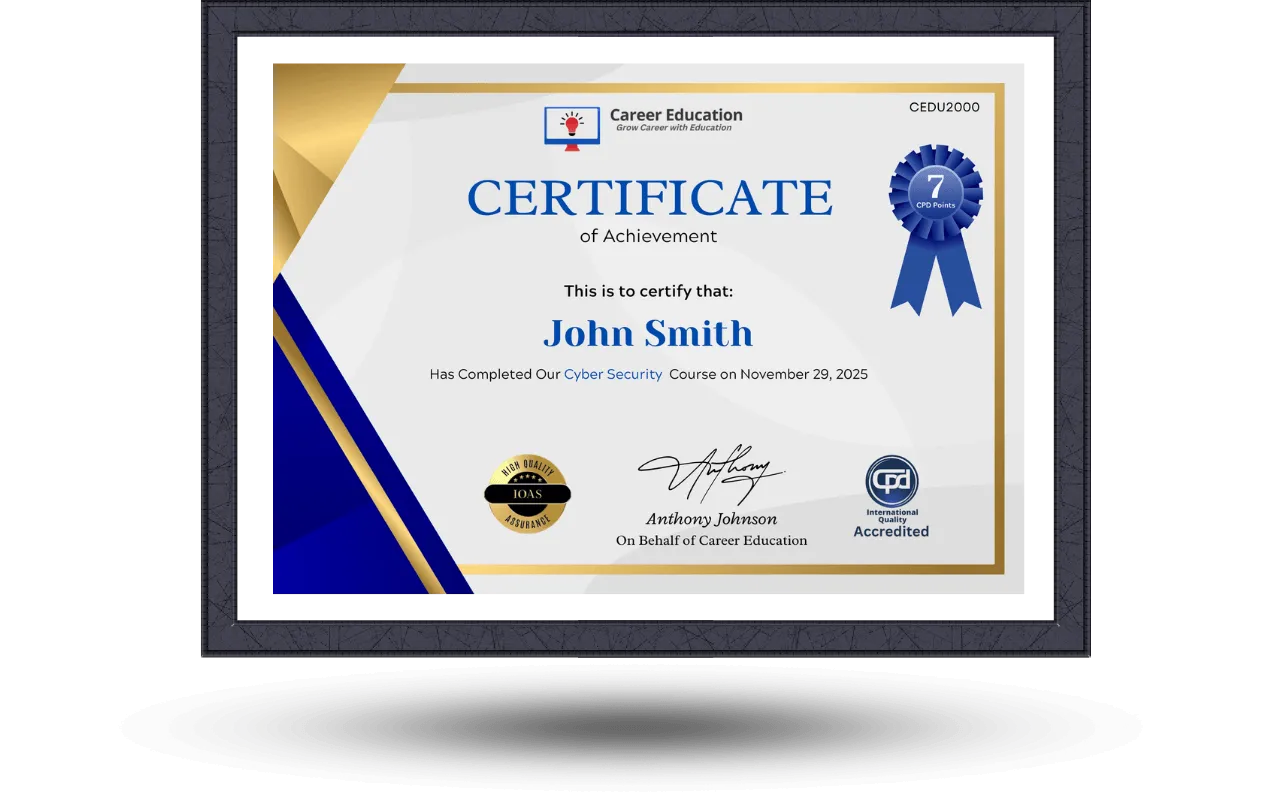
Upon completion of any course, all students are entitled to a CPD IQ Accredited e-certificate that will be issued by Career Education signifying the completion of your course.
After you complete the course and assignment, you will be eligible to order a free certificate accredited by CPD International Quality by completing the form below.
Hardcopy certificates and transcripts are also available for a small additional fee. More information is disclosed upon course completion.
Similar Courses




Frequently Asked Questions
The lifetime membership includes unlimited access to all courses, resources, and updates for a one-time fee.
You can purchase the membership directly from our website using a secure checkout process.
Yes, selected courses can be downloaded for offline access through our mobile app.
Yes, all future updates and new courses are included at no extra cost.
Yes, we offer a 30-day money-back guarantee if you are not satisfied with the membership.