
94%
OFF
OFF
Beginner-Friendly Coding with Python
- Lifetime Access
- All Levels
- PDF Certificate
£296
£19
14-Day Money-Back Guarantee
Learn With Confidence







Beginner-Friendly Coding with Python
Learning to code can feel intimidating when you are faced with unfamiliar syntax, complex concepts, and technical terminology. Beginner-Friendly Coding with Python is designed to make the learning process clearer, more approachable, and practical for people who are starting their programming journey.
Python is one of the most widely used programming languages because of its readable syntax, flexibility, and broad range of applications. Whether you want to understand programming fundamentals, develop problem-solving skills, automate everyday tasks, or build a foundation for more advanced technical learning, Python provides an excellent starting point.
This course takes you through the essential concepts of Python programming step by step. Instead of assuming advanced technical knowledge, the curriculum begins with programming fundamentals and gradually introduces control flow, loops, data structures, functions, modules, and file handling.
By completing Beginner-Friendly Coding with Python, you can develop a stronger understanding of how programs work and gain the confidence to write, read, and modify basic Python code.
Why Learn Beginner-Friendly Coding with Python?
Programming is increasingly useful across many industries. Python is used in areas such as software development, data analysis, automation, artificial intelligence, education, scientific computing, and web development.
However, knowing that Python is useful is only the beginning. New learners also need a structured pathway that explains programming concepts in a logical order.
Beginner-Friendly Coding with Python provides that pathway.
The course starts with the foundations of Python and programming before moving into more practical concepts. You will learn how programs make decisions, repeat instructions, organise information, reuse code, and work with files.
This gradual approach can help you avoid becoming overwhelmed by trying to learn everything at once.
Rather than focusing only on memorising Python commands, the course helps you understand the principles behind the code. This can make it easier to approach programming problems logically and apply what you learn in different situations.
What You Will Learn
Throughout Beginner-Friendly Coding with Python, you will explore seven core areas of Python programming:
-
Python and fundamental programming concepts
-
Control flow and decision making
-
Loops and iteration
-
Lists and tuples
-
Dictionaries and sets
-
Functions and modules
-
File handling
These topics form an important foundation for anyone who wants to continue learning Python or explore other programming-related subjects.
Module 1: Introduction to Python and Programming Basics
The first module introduces you to Python and the fundamental ideas behind programming.
If you are completely new to coding, understanding the basics is essential before moving into more advanced concepts. You will explore how Python works and become familiar with the core principles involved in writing programs.
The module establishes a foundation that can help you understand how instructions are written and executed.
You will learn about essential programming concepts and begin working with Python syntax. This can help you become more comfortable reading simple code and understanding what different instructions are designed to accomplish.
By the end of this module, you should have a clearer understanding of Python programming and the fundamental building blocks used to create programs.
Key outcomes include:
-
Understand the purpose and fundamentals of Python
-
Become familiar with basic programming concepts
-
Recognise common Python syntax
-
Develop a foundation for writing simple Python programs
-
Build confidence when approaching beginner-level coding tasks
Module 2: Control Flow and Decision Making
Programs often need to make decisions based on information or conditions. Control flow allows you to determine which instructions should be executed and when.
In this module, you will explore decision-making concepts in Python and learn how programs can respond differently depending on specific conditions.
Understanding control flow is an important step toward creating programs that behave intelligently rather than simply executing the same instructions from beginning to end.
You will develop an understanding of how conditions can influence the behaviour of your code. These concepts can be applied to a wide range of programming tasks.
By completing this module, you can:
-
Understand the role of control flow in programming
-
Work with conditional logic
-
Create code that responds to different conditions
-
Improve your ability to solve programming problems
-
Build more flexible Python programs
Module 3: Loops and Iteration
Many programming tasks involve repeating an operation multiple times. Instead of writing the same instruction repeatedly, programmers can use loops and iteration.
Module 3 introduces you to these important concepts and explains how Python can repeat instructions efficiently.
You will learn how iteration works and how loops can be used to process information or perform recurring tasks.
Developing a strong understanding of loops can make your programs more efficient and can help you approach repetitive programming challenges more effectively.
You will learn how to:
-
Understand the purpose of loops
-
Work with iteration in Python
-
Handle repetitive programming tasks
-
Apply looping concepts to practical problems
-
Write more efficient and organised code
These skills are particularly useful when working with collections of information, processing multiple items, or performing repeated operations.
Module 4: Data Structures: Lists and Tuples
Programs frequently need to store and organise multiple pieces of information. Python provides several built-in data structures that make this possible.
This module focuses on two important structures: lists and tuples.
You will learn how these structures can be used to store collections of values and understand the differences between them.
Lists and tuples are fundamental Python concepts that appear in many programming tasks. Developing confidence with them can help you work with information more effectively.
This module can help you:
-
Understand what lists and tuples are
-
Store multiple values in organised structures
-
Work with collections of data
-
Understand important differences between lists and tuples
-
Apply data structures to basic programming tasks
By understanding how data can be organised, you can begin writing programs that work with more than individual values.
Module 5: Data Structures: Dictionaries and Sets
The fifth module expands your knowledge of Python data structures by introducing dictionaries and sets.
Dictionaries provide a useful way to organise information through key-value relationships, while sets are designed for working with collections of unique values.
Understanding these structures can give you more options when designing programs and handling different types of information.
You will explore how dictionaries and sets work and when they can be useful in Python programming.
Learning outcomes include:
-
Understand the purpose of dictionaries
-
Work with key-value data
-
Understand the role of sets
-
Work with collections of unique values
-
Choose appropriate data structures for basic programming situations
Combining your knowledge of lists, tuples, dictionaries, and sets gives you a stronger foundation for managing information within Python programs.
Module 6: Functions and Modules
As programs become larger, keeping all your code in one place can make it difficult to understand and maintain. Functions and modules help programmers organise and reuse code.
In this module, you will learn about functions and modules and understand how they can contribute to cleaner and more manageable Python programs.
Functions allow you to group instructions together so that they can be reused when needed. Modules provide a way to organise related code and make functionality available across different parts of a project.
These concepts are important for moving beyond very basic scripts and developing more structured programming habits.
After completing this module, you can:
-
Understand the purpose of functions
-
Organise instructions into reusable blocks
-
Improve code organisation
-
Understand the role of modules
-
Work toward creating cleaner and more maintainable Python programs
Learning to structure your code effectively is an important step in developing good programming practices.
Module 7: File Handling
The final module introduces file handling, an important concept for programs that need to work with information stored outside the immediate execution of the program.
You will learn the fundamentals of working with files in Python and understand how programs can interact with stored information.
File handling can be useful for many practical programming tasks, including working with information that needs to be saved, accessed, or processed later.
This module brings together several concepts from earlier lessons and helps demonstrate how Python can be used for practical tasks beyond simple examples.
You will develop an understanding of:
-
The fundamentals of file handling
-
How Python programs interact with files
-
Working with stored information
-
Applying programming concepts to practical tasks
-
Building confidence with basic file-based operations
Practical Skills You Can Develop
One of the key benefits of Beginner-Friendly Coding with Python is its focus on building practical programming foundations.
By working through the curriculum, you can develop skills that support a variety of future learning goals.
You can learn how to:
-
Read and understand basic Python code
-
Write simple Python programs
-
Use conditional logic
-
Automate repetitive instructions with loops
-
Store and organise information using data structures
-
Create reusable functions
-
Organise code with modules
-
Work with files
-
Approach programming problems more systematically
These skills can provide a foundation for further study in areas such as software development, automation, data analysis, web development, and other Python-related fields.
Build Your Programming Confidence
Starting programming is not simply about learning a programming language. It is also about developing a different way of approaching problems.
Coding encourages you to break larger problems into smaller steps, identify patterns, consider possible outcomes, and create logical instructions.
Beginner-Friendly Coding with Python introduces these ideas gradually, helping you develop a foundation before progressing toward more complex programming concepts.
As you work through the course, you can become more familiar with programming terminology and develop a better understanding of how different parts of a Python program work together.
This foundation can make future learning more manageable because you will have already encountered many of the core concepts used throughout Python programming.
Who Is This Course For?
Beginner-Friendly Coding with Python is suitable for learners who want to build foundational programming knowledge in a structured way.
It can be particularly useful for:
-
Complete beginners interested in learning Python
-
Learners who have little or no programming experience
-
Students exploring programming for the first time
-
Professionals interested in developing technical skills
-
Aspiring programmers who want to strengthen their foundations
-
Individuals preparing for more advanced Python learning
-
Anyone interested in understanding basic programming concepts
You do not need to begin with extensive programming knowledge to work through the core topics covered in this course.
Why Choose a Structured Python Course?
There are countless programming resources available online, but having a structured curriculum can make the learning process easier to follow.
Instead of jumping between unrelated tutorials, you can progress through a logical sequence of topics.
Beginner-Friendly Coding with Python moves from programming fundamentals into increasingly practical concepts. You first learn how Python and programming work, then explore decision making, repetition, data organisation, reusable code, and file handling.
This structure helps connect individual concepts so that you can see how they contribute to real programming.
Take the Next Step in Your Coding Journey
Learning to code is a process. You do not need to understand every programming concept immediately. Building a strong foundation and gradually expanding your knowledge can be a more effective way to develop lasting skills.
Beginner-Friendly Coding with Python gives you an accessible starting point for understanding Python and essential programming principles.
From basic syntax and decision making to loops, data structures, functions, modules, and file handling, the course covers the core concepts you need to begin working with Python more confidently.
By completing the course, you can develop a stronger understanding of how Python programs are structured, how they process information, and how different programming techniques can be combined to solve problems.
Whether your long-term goal is to explore software development, automation, data-related applications, or simply gain a valuable technical skill, learning Python can be a useful first step.
Start Beginner-Friendly Coding with Python today and build the programming foundations you can continue developing as your coding journey progresses.
Course Modules
Course Content
Module 1_ Introduction to Python and Programming Basics
-
Lesson 1_ Introduction to Python and Programming Basics
Module 2_ Control Flow and Decision Making
Module 3_ Loops and Iteration
Module 4_ Data Structures_ Lists and Tuples
Module 5_ Data Structures_ Dictionaries and Sets
Module 6_ Functions and Modules
Module 7_ File Handling
What our students say
Excellent
4.9 average
158 Reviews

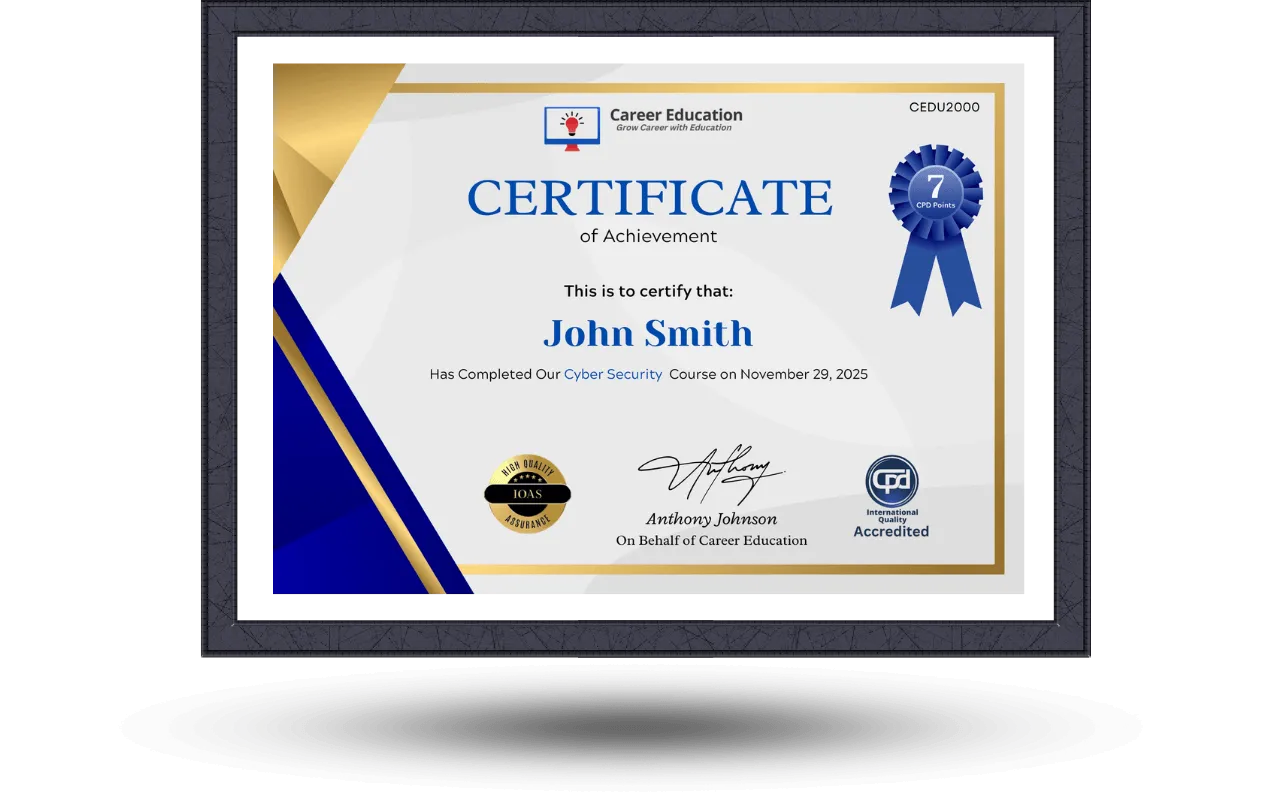
Earn an Accredited Certificate
Upon completion of any course, all students are entitled to a CPD IQ Accredited e-certificate that will be issued by Career Education signifying the completion of your course.
After you complete the course and assignment, you will be eligible to order a free certificate accredited by CPD International Quality by completing the form below.
Hardcopy certificates and transcripts are also available for a small additional fee. More information is disclosed upon course completion.
Similar Courses


Frequently Asked Questions
The lifetime membership includes unlimited access to all courses, resources, and updates for a one-time fee.
You can purchase the membership directly from our website using a secure checkout process.
Yes, selected courses can be downloaded for offline access through our mobile app.
Yes, all future updates and new courses are included at no extra cost.
Yes, we offer a 30-day money-back guarantee if you are not satisfied with the membership.