
94%
OFF
OFF
Audio Typing Skills Course
- Lifetime Access
- All Levels
- PDF Certificate
£296
£19
14-Day Money-Back Guarantee
Learn With Confidence




Audio Typing Skills Course
In today’s fast-paced professional environment, the ability to accurately convert spoken words into written documents is a valuable workplace skill. The Audio Typing Skills Course is designed to help learners develop the practical knowledge, listening ability, typing accuracy, and transcription techniques needed to work confidently with recorded audio.
Audio typing is widely used across administrative, legal, healthcare, business, education, media, and professional services environments. Organisations regularly need meetings, interviews, dictations, notes, reports, and other recordings converted into clear and well-structured written documents. Professionals who can listen carefully, type efficiently, and produce accurate transcripts can contribute to smoother communication and more effective document management.
This Audio Typing Skills Course takes learners through the fundamentals of audio typing, from understanding the process and choosing appropriate equipment to developing transcription speed and applying professional conventions. It also explores how to handle different types of audio, helping learners become more adaptable when working with recordings of varying quality, speakers, accents, terminology, and formats.
Whether you are looking to improve your existing administrative skills, develop transcription capabilities, support your career progression, or build a useful workplace skill from scratch, this course provides a practical foundation for becoming more confident with audio typing.
What Is Audio Typing?
Audio typing involves listening to spoken content from an audio recording and accurately reproducing it in written form. Unlike ordinary typing, audio typing requires learners to combine several skills at once. You need to listen carefully, understand the spoken information, maintain concentration, type accurately, and format the resulting text appropriately.
Professional audio typing can involve many types of recordings. These may include dictated letters, business meetings, interviews, presentations, telephone recordings, training sessions, reports, and professional discussions. Some recordings may contain multiple speakers, background noise, unfamiliar terminology, or varying speaking speeds.
The ability to deal with these challenges can make audio typing a particularly useful skill for administrative and support roles. Developing accuracy and consistency can also help reduce errors, improve documentation, and save valuable time for organisations.
Why Learn an Audio Typing Skills Course?
Strong audio typing skills can support a wide range of professional responsibilities. Employers often value workers who can manage information efficiently, produce accurate documents, and use digital tools confidently.
Completing an Audio Typing Skills Course can help you:
-
Understand the fundamentals of audio typing and transcription
-
Develop stronger listening and concentration skills
-
Improve typing accuracy and consistency
-
Become more familiar with audio typing equipment and software
-
Understand professional transcription conventions
-
Learn how to work with different types and qualities of audio
-
Produce clearer and more organised written documents
-
Improve your confidence when handling recorded information
-
Develop transferable administrative and digital workplace skills
-
Prepare for tasks involving transcription and document production
The course can be useful for learners entering administrative roles as well as professionals who already work with written documentation and want to expand their capabilities.
Who Can Benefit From This Course?
The Audio Typing Skills Course is suitable for a broad range of learners. It can be particularly useful for individuals interested in administration, secretarial work, transcription, office support, data handling, or document management.
It may benefit:
-
Aspiring administrative assistants
-
Office and clerical workers
-
Secretaries and personal assistants
-
Virtual assistants
-
Reception and support staff
-
Transcription beginners
-
Business support professionals
-
Freelancers developing transcription services
-
Individuals returning to the workplace
-
Professionals looking to broaden their digital skills
-
Anyone interested in developing accurate audio typing abilities
No extensive previous experience is required to benefit from the foundational topics covered in this course. Learners can build their understanding progressively as they move through the modules.
Course Curriculum
Module 1: Introduction to Audio Typing
The course begins by introducing the fundamental principles of audio typing. Learners can develop an understanding of what audio typing involves, how the transcription process works, and why accuracy is important when converting spoken information into written documents.
This module establishes the foundation for the rest of the course. You can learn about the relationship between listening, comprehension, typing, proofreading, and document presentation.
By completing this module, you can develop a clearer understanding of the audio typing process and the skills required to approach transcription tasks effectively.
Module 2: Audio Typing Equipment and Software
Modern audio typing often involves digital equipment and specialist software. Knowing how to work with the right tools can make the transcription process more efficient and manageable.
This module introduces learners to the equipment and software commonly associated with audio typing. You can develop an understanding of how audio files are accessed, played, paused, reviewed, and managed during transcription.
You will also gain greater awareness of how technology can support the typing process. Familiarity with relevant tools can help you work more comfortably and efficiently when handling recorded content.
By the end of this module, you can feel more confident about the technological side of audio typing and understand how appropriate equipment and software can support accurate transcription.
Module 3: Developing Audio Typing Skills
Effective audio typing requires more than simply being able to type. Listening accuracy, concentration, typing technique, attention to detail, and the ability to recognise spoken information all play important roles.
This module focuses on developing the practical skills needed for effective audio typing. Learners can work towards improving their typing accuracy while developing the ability to listen and type efficiently.
You can also gain a better understanding of how to manage your attention when working with longer recordings. Developing consistent working habits can help reduce mistakes and improve the quality of completed transcripts.
The outcome is a stronger foundation of practical audio typing skills that can be applied to different transcription tasks.
Module 4: Transcription Conventions and Standards
A professional transcript should be more than a collection of typed words. It should communicate the original information clearly and follow appropriate conventions.
This module introduces transcription conventions and standards that can help learners produce professional-looking written documents. You can explore the importance of punctuation, formatting, consistency, speaker identification, and accurate representation of spoken content.
Understanding transcription standards can help you recognise how different types of spoken material should be presented in written form. It can also encourage greater attention to detail when reviewing and finalising documents.
By completing this module, you can develop a more professional approach to transcription and understand why consistency and accuracy matter.
Module 5: Handling Different Types of Audio
Not every recording is the same. Some audio may be clear and easy to understand, while other recordings may involve background noise, multiple speakers, unfamiliar terminology, different accents, or varying speaking speeds.
The final module focuses on handling different types of audio. Learners can develop greater awareness of the challenges that may occur during transcription and learn how adaptability contributes to effective audio typing.
This module helps prepare you to approach a wider range of recordings with greater confidence. Instead of relying on a single approach, you can develop the awareness needed to adjust your listening and typing process according to the characteristics of each recording.
Develop Accurate and Efficient Typing Skills
Accuracy is one of the most important qualities in audio typing. A minor typing or transcription error can potentially change the meaning of a sentence or create confusion for the person reading the document.
The Audio Typing Skills Course encourages learners to focus on producing accurate written content while developing efficient working habits. As your familiarity with audio typing increases, you can become more comfortable managing the relationship between listening and typing.
This can be particularly valuable in professional environments where documents need to be prepared accurately and within reasonable timeframes.
Improve Your Listening and Concentration
Audio typing requires active listening. You need to pay attention to words, phrases, punctuation cues, changes in speakers, and the overall context of the recording.
Developing stronger listening and concentration skills can have benefits beyond transcription. These are transferable abilities that can support communication, administration, note-taking, and other workplace activities.
The course provides a structured opportunity to understand how these skills contribute to successful audio typing.
Build Transferable Workplace Skills
One of the key benefits of learning audio typing is that it can complement other professional abilities. Accurate typing, document preparation, digital software use, attention to detail, information handling, and time management can all contribute to effective workplace performance.
For someone pursuing an administrative career, these skills can strengthen an existing professional toolkit. For an experienced office worker, they can provide an opportunity to expand responsibilities and take on new types of tasks.
Support Career Development
Learning a practical skill can be an important part of professional development. The Audio Typing Skills Course can help learners demonstrate an interest in improving their ability to work with digital information and professional documents.
Audio typing may be relevant to roles where employees regularly work with:
-
Dictation
-
Business correspondence
-
Meeting records
-
Interviews
-
Reports
-
Notes
-
Digital audio files
-
Written documentation
-
Administrative records
The specific responsibilities associated with these skills will vary between workplaces, but developing a solid foundation can help you approach relevant tasks with greater confidence.
Learn at Your Own Pace
An online course can provide a flexible way to develop new skills alongside existing commitments. Learners can work through the material according to their individual schedules and revisit topics whenever they need additional reinforcement.
This flexibility can make the course suitable for people balancing employment, education, family responsibilities, or other personal commitments.
Rather than trying to master every aspect of audio typing immediately, you can build your knowledge progressively and focus on developing consistent, practical skills.
Your Learning Outcomes
After completing the Audio Typing Skills Course, you can expect to have a stronger understanding of the principles and practical requirements of audio typing.
You can develop the ability to:
-
Explain the fundamentals of audio typing
-
Understand the main stages of transcription
-
Recognise the role of equipment and software in audio typing
-
Develop more effective listening and typing techniques
-
Apply appropriate transcription conventions
-
Understand the importance of accuracy and consistency
-
Approach different audio recordings more confidently
-
Identify common challenges associated with audio transcription
-
Produce clearer and more professionally structured written content
-
Apply your developing skills to relevant workplace tasks
These outcomes can provide a useful foundation for continued learning and professional development.
Take the Next Step Towards Stronger Audio Typing Skills
The ability to transform spoken information into accurate written documents can be a valuable addition to your professional skill set. As workplaces continue to rely on digital communication, recorded meetings, interviews, dictation, and other forms of audio content, efficient transcription remains a useful practical capability.
The Audio Typing Skills Course gives you a structured introduction to the equipment, techniques, standards, and approaches involved in audio typing. From understanding the basics to handling different types of audio, the course is designed around practical outcomes that can help you become more confident and capable.
If you want to improve your typing and listening abilities, strengthen your administrative skill set, or explore transcription-related opportunities, this course can provide a strong starting point.
Enrol in the Audio Typing Skills Course today and start developing practical audio typing skills that can support your personal learning and professional growth.
Course Modules
Course Content
Module 1_ Introduction to Audio Typing.
-
Lesson 1_ Introduction to Audio Typing.
Module 2_ Audio Typing Equipment and Software.
Module 3_ Developing Audio Typing Skills.
Module 4_ Transcription Conventions and Standards.
Module 5_ Handling Different Types of Audio.
What our students say
Excellent
4.9 average
158 Reviews

Earn an Accredited Certificate
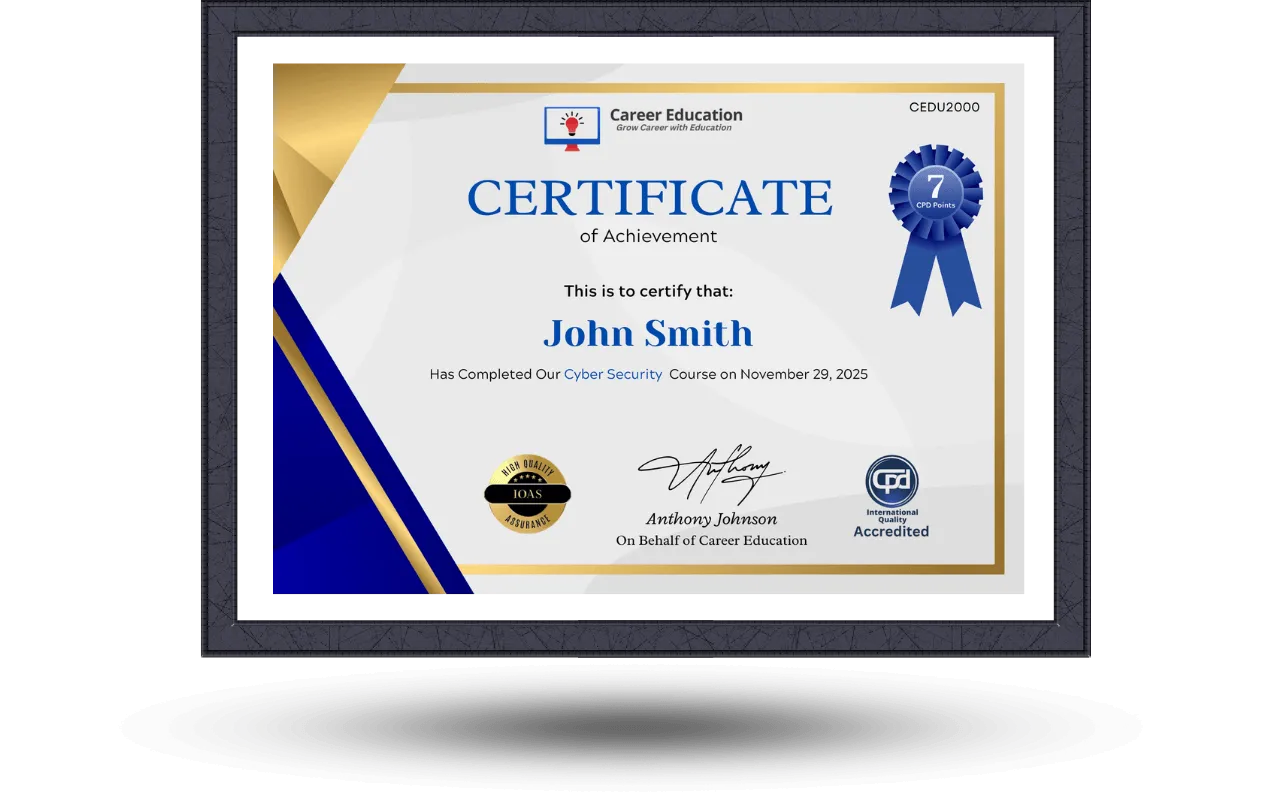
Upon completion of any course, all students are entitled to a CPD IQ Accredited e-certificate that will be issued by Career Education signifying the completion of your course.
After you complete the course and assignment, you will be eligible to order a free certificate accredited by CPD International Quality by completing the form below.
Hardcopy certificates and transcripts are also available for a small additional fee. More information is disclosed upon course completion.
Similar Courses




Frequently Asked Questions
The lifetime membership includes unlimited access to all courses, resources, and updates for a one-time fee.
You can purchase the membership directly from our website using a secure checkout process.
Yes, selected courses can be downloaded for offline access through our mobile app.
Yes, all future updates and new courses are included at no extra cost.
Yes, we offer a 30-day money-back guarantee if you are not satisfied with the membership.