
94%
OFF
OFF
Advanced Speed Reading Skills
- Lifetime Access
- All Levels
- PDF Certificate
£296
£19
14-Day Money-Back Guarantee
Learn With Confidence






# Advanced Speed Reading Skills
## Read More Efficiently, Improve Comprehension and Strengthen Information Retention
In a world filled with books, reports, emails, research papers, online articles and professional documents, the ability to process written information efficiently can be a valuable skill. Many people spend hours reading without having a clear strategy for managing large amounts of information.
**Advanced Speed Reading Skills** is designed to help learners develop more efficient reading habits while maintaining focus, comprehension and retention. Rather than simply encouraging you to read faster, the course explores techniques for improving reading efficiency while adapting your approach according to the type and difficulty of the material.
The course covers the fundamentals of speed reading, foundational techniques, challenging texts, retention and application, specialised reading purposes and strategies for sustaining your progress.
Whether you are a student, professional, researcher, business owner, lifelong learner or someone who regularly works with large amounts of written information, **Advanced Speed Reading Skills** can help you develop a more structured approach to reading.
—
# Why Advanced Speed Reading Skills Matter
Reading is one of the most important skills for learning and professional development.
However, reading more quickly is not necessarily the same as reading effectively.
If you increase your reading speed while losing the meaning of the material, the benefit may be limited. Effective speed reading involves finding an appropriate balance between **speed, comprehension, concentration and retention**.
**Advanced Speed Reading Skills** introduces learners to strategies that can help them become more intentional readers.
You will explore ways to:
* Improve reading efficiency
* Reduce unnecessary reading habits
* Maintain concentration
* Process written information more effectively
* Adapt reading speed to different materials
* Improve comprehension
* Strengthen retention
* Extract key information
* Approach difficult texts strategically
* Apply information after reading
The objective is not to force every type of text into the same reading speed. Instead, you will learn to become more flexible and purposeful in the way you read.
—
# Who Is This Course For?
**Advanced Speed Reading Skills** is suitable for anyone who wants to improve their reading efficiency.
It may be particularly useful for:
* Students
* University learners
* Researchers
* Professionals
* Managers
* Business owners
* Writers
* Teachers
* Consultants
* Administrators
* Exam candidates
* Entrepreneurs
* Lifelong learners
* Anyone who reads frequently
If you regularly need to process reports, textbooks, articles, research materials, emails or other written information, developing stronger reading strategies can help you make better use of your available time.
—
# What You Will Learn
By completing **Advanced Speed Reading Skills**, you will develop a stronger understanding of efficient reading strategies and techniques.
You will learn how to:
* Understand the principles of speed reading
* Identify inefficient reading habits
* Develop foundational speed reading techniques
* Improve reading focus and concentration
* Approach challenging texts more strategically
* Extract important information from complex material
* Improve information retention
* Apply information after reading
* Adapt your reading approach to different purposes
* Develop specialised reading strategies
* Monitor and improve your reading performance
* Build sustainable reading habits
* Continue developing your speed reading abilities
—
# Course Curriculum
## Module 1 – Introduction to Speed Reading
The course begins with an introduction to **speed reading** and the principles behind efficient reading.
You will explore what speed reading means and how it differs from simply reading as quickly as possible.
Effective reading requires a balance between speed and understanding. Different texts have different levels of complexity, and different reading purposes require different approaches.
For example, reading a short news article for general information may require a different strategy from studying a technical textbook or analysing a detailed research paper.
This module introduces the importance of becoming an intentional reader.
### Understanding Reading Habits
Many readers develop habits that can slow them down unnecessarily.
These may include excessive rereading, losing focus, reading every word with the same level of attention or failing to identify the main purpose of a text before starting.
You will explore how awareness of your existing reading habits can help you identify areas for improvement.
### Setting Reading Goals
Effective speed reading also begins with a clear objective.
Before reading, it can be useful to consider what you want to learn from the material.
You will explore how establishing a purpose can help direct your attention towards relevant information.
### Learning Outcome
By completing Module 1, you will understand the principles of speed reading and recognise the importance of balancing reading speed with comprehension, purpose and focus.
—
# Module 2 – Foundational Speed Reading Techniques
The second module introduces **foundational speed reading techniques**.
These techniques provide the building blocks for developing more efficient reading habits.
You will explore approaches that can help you process text more effectively and reduce unnecessary pauses or distractions.
The module focuses on developing greater awareness of how your eyes and attention move across a page.
### Reading Patterns
Efficient readers do not necessarily give every word equal attention.
Depending on the purpose of the reading task, it can be useful to identify key phrases, headings, concepts and supporting information.
You will explore techniques for identifying important information while maintaining an understanding of the overall message.
### Reducing Inefficient Habits
Some reading habits can interfere with efficiency.
Repeatedly returning to previous sentences without a clear reason can disrupt concentration.
You will explore strategies for reducing unnecessary rereading while still recognising when revisiting information is useful.
### Improving Focus
Concentration plays an important role in reading efficiency.
A distracted reader may need to reread the same material multiple times.
The module explores strategies for maintaining attention and approaching reading tasks with greater purpose.
### Learning Outcome
By completing Module 2, you will understand foundational speed reading techniques and develop greater awareness of reading patterns, focus and efficient information processing.
—
# Module 3 – Mastering Challenging Texts
Not every text is easy to read quickly.
Technical documents, academic papers, complex reports and unfamiliar subjects may require greater attention.
This module focuses on **mastering challenging texts**.
You will explore strategies for approaching difficult material without becoming overwhelmed.
### Understanding Complex Material
Complex texts often contain specialised terminology, detailed explanations and interconnected ideas.
Instead of attempting to process everything at the same level, you can learn to identify the structure and purpose of the material.
You will explore how headings, sections, topic sentences and key concepts can help you understand the overall organisation of a text.
### Adjusting Your Reading Speed
One of the most important principles of effective speed reading is flexibility.
Some material can be read quickly, while other sections require slower and more careful analysis.
You will explore why adjusting your reading speed according to the difficulty and importance of information can be more effective than trying to maintain one constant pace.
### Handling Unfamiliar Vocabulary
Unfamiliar words can interrupt reading flow.
The module explores ways to deal with unknown terminology while maintaining overall comprehension.
You will learn to distinguish between words that are essential to understanding a passage and those that may be understood through context.
### Learning Outcome
By completing Module 3, you will understand how to approach challenging texts strategically and recognise when to adjust your reading speed, attention and reading method.
—
# Module 4 – Retention and Application
Reading quickly has limited value if you cannot remember or use the information afterwards.
This module focuses on **retention and application**.
You will explore strategies for strengthening your ability to remember important information and apply what you have learned.
### Identifying Key Information
Effective readers need to distinguish important information from supporting details.
You will explore methods for identifying central ideas, significant facts and useful concepts.
This can help reduce cognitive overload and make later review more efficient.
### Organising Information
Information can be easier to remember when it is organised logically.
You will explore ways to connect ideas and create a clearer mental structure around what you have read.
### Active Recall and Review
Simply rereading material does not always produce strong retention.
The module introduces approaches that encourage active engagement with information.
You will explore the value of summarising, questioning and recalling key ideas after reading.
### Applying What You Read
Reading becomes more valuable when information can be applied.
You will explore ways to connect reading material to practical situations, work tasks, study activities and personal learning goals.
### Learning Outcome
By completing Module 4, you will understand strategies for improving information retention and applying knowledge more effectively after reading.
—
# Module 5 – Speed Reading for Specialised Purposes
Different reading tasks require different strategies.
This module explores **speed reading for specialised purposes**.
You will consider how reading techniques can be adapted for activities such as studying, research, professional reading and information gathering.
### Academic Reading
Students often need to process textbooks, journal articles, lecture materials and research papers.
You will explore ways to identify important information efficiently while maintaining sufficient comprehension for academic work.
### Professional Reading
Professionals may need to process reports, emails, policies, proposals and industry publications.
The module explores how a purposeful reading strategy can help professionals identify relevant information more efficiently.
### Research and Information Gathering
Research often involves reviewing large quantities of material.
You will explore how scanning, selective reading and focused attention can help identify useful sources and information.
### Reading for General Knowledge
Not every reading task requires detailed analysis.
When the goal is to gain a general understanding, a broader and faster approach may be appropriate.
You will explore how to adapt your reading style according to your objective.
### Learning Outcome
By completing Module 5, you will understand how to adapt speed reading strategies for academic, professional, research and general information purposes.
—
# Module 6 – Sustaining and Advancing Your Speed Reading Skills
The final module focuses on **sustaining and advancing your speed reading skills**.
Developing reading efficiency is not a one-time achievement.
Like many skills, improvement requires continued practice, reflection and adjustment.
You will explore how to maintain the techniques introduced throughout the course and incorporate them into your regular reading routine.
### Measuring Progress
Tracking progress can help you understand whether your reading strategies are producing useful results.
You can consider factors such as:
* Reading time
* Comprehension
* Retention
* Concentration
* Ability to summarise information
* Ability to apply what you have learned
The objective is not simply to achieve a higher reading speed. Sustainable improvement should also involve maintaining meaningful comprehension.
### Developing a Reading Routine
Regular practice can help make new techniques more natural.
You will explore how to incorporate speed reading exercises into your daily or weekly routine.
### Continuous Improvement
Your reading needs may change over time.
You may encounter new subjects, more complex documents or different professional requirements.
The module encourages learners to continue adapting their strategies rather than relying on one fixed approach.
### Learning Outcome
By completing Module 6, you will understand how to maintain and develop your speed reading abilities through consistent practice, performance monitoring and continuous improvement.
—
# Read Smarter, Not Simply Faster
One of the central principles of **Advanced Speed Reading Skills** is that effective reading is about more than speed.
A skilled reader knows when to move quickly and when to slow down.
You might skim a familiar article to identify its main points, carefully analyse a technical section and then return to a particularly important passage for deeper understanding.
This flexibility can make reading more efficient without sacrificing comprehension.
—
# Improve Your Information Processing
Modern learners and professionals often face information overload.
There may be more articles, reports, emails, books and online resources available than anyone could realistically read in detail.
Developing better reading strategies can help you make more informed decisions about where to focus your attention.
**Advanced Speed Reading Skills** encourages learners to become more selective and purposeful readers.
Instead of treating every sentence equally, you can learn to identify what deserves your attention.
—
# Strengthen Your Learning Efficiency
Students and lifelong learners can particularly benefit from improved reading strategies.
When you can identify important concepts more efficiently and retain them more effectively, your study process can become more structured.
Speed reading can complement other learning strategies such as note-taking, summarisation, active recall and revision.
The goal is to create a complete reading and learning process rather than simply trying to increase words per minute.
—
# Improve Professional Productivity
Professionals often spend significant amounts of time reading.
Reports, emails, proposals, policies, research documents and industry publications can consume valuable working hours.
Developing more efficient reading habits can help you approach written information with greater purpose.
You can learn to determine:
* What needs detailed attention
* What requires a quick overview
* What can be reviewed later
* What information is most relevant
* What information needs to be remembered
* What information can be applied immediately
This approach can contribute to more organised information processing.
—
# Build Sustainable Reading Habits
The most valuable reading improvements are those that can be maintained over time.
**Advanced Speed Reading Skills** encourages learners to develop practical habits rather than depend on short-term motivation.
With consistent practice, you can continue refining your reading approach and adapting it to new situations.
The objective is to make efficient reading a natural part of your learning and working routine.
—
# Why Study Advanced Speed Reading Skills?
Studying **Advanced Speed Reading Skills** can provide valuable benefits for learning and professional development.
The course can help you:
**Improve reading efficiency:** Develop strategies for processing written information more effectively.
**Strengthen concentration:** Learn techniques for maintaining focus while reading.
**Improve comprehension:** Understand how to balance reading speed with meaningful understanding.
**Develop better retention:** Explore strategies for remembering and recalling important information.
**Handle complex texts:** Learn how to approach challenging material strategically.
**Adapt your reading style:** Develop flexible strategies for different reading purposes.
**Support academic learning:** Apply efficient reading techniques to study and research.
**Improve workplace productivity:** Process professional documents and information more effectively.
**Develop lifelong learning skills:** Build a foundation for continuous improvement.
—
# Build Your Advanced Speed Reading Skills
Reading is an essential skill, but reading effectively requires more than simply moving quickly through a page.
**Advanced Speed Reading Skills** provides a structured approach to developing better reading habits, improving information processing and strengthening retention.
Across six modules, you will explore speed reading fundamentals, foundational techniques, challenging texts, retention, specialised reading strategies and long-term skill development.
The course is designed for students, professionals, researchers, business owners and lifelong learners who want to become more purposeful and efficient readers.
Develop your **Advanced Speed Reading Skills** and learn how to approach written information with greater focus, flexibility and confidence—while keeping comprehension and retention at the centre of the reading process.
Course Modules
Course Content
Module 1_ Introduction to Speed Reading.
-
Lesson 1_ Introduction to Speed Reading.
Module 2_ Foundational Speed Reading Techniques.
Module 3_ Mastering Challenging Texts.
Module 4_ Retention and Application.
Module 5_ Speed Reading for Specialized Purposes.
Module 6_ Sustaining and Advancing Your Speed Reading Skills.
What our students say
Excellent
4.9 average
158 Reviews

Earn an Accredited Certificate
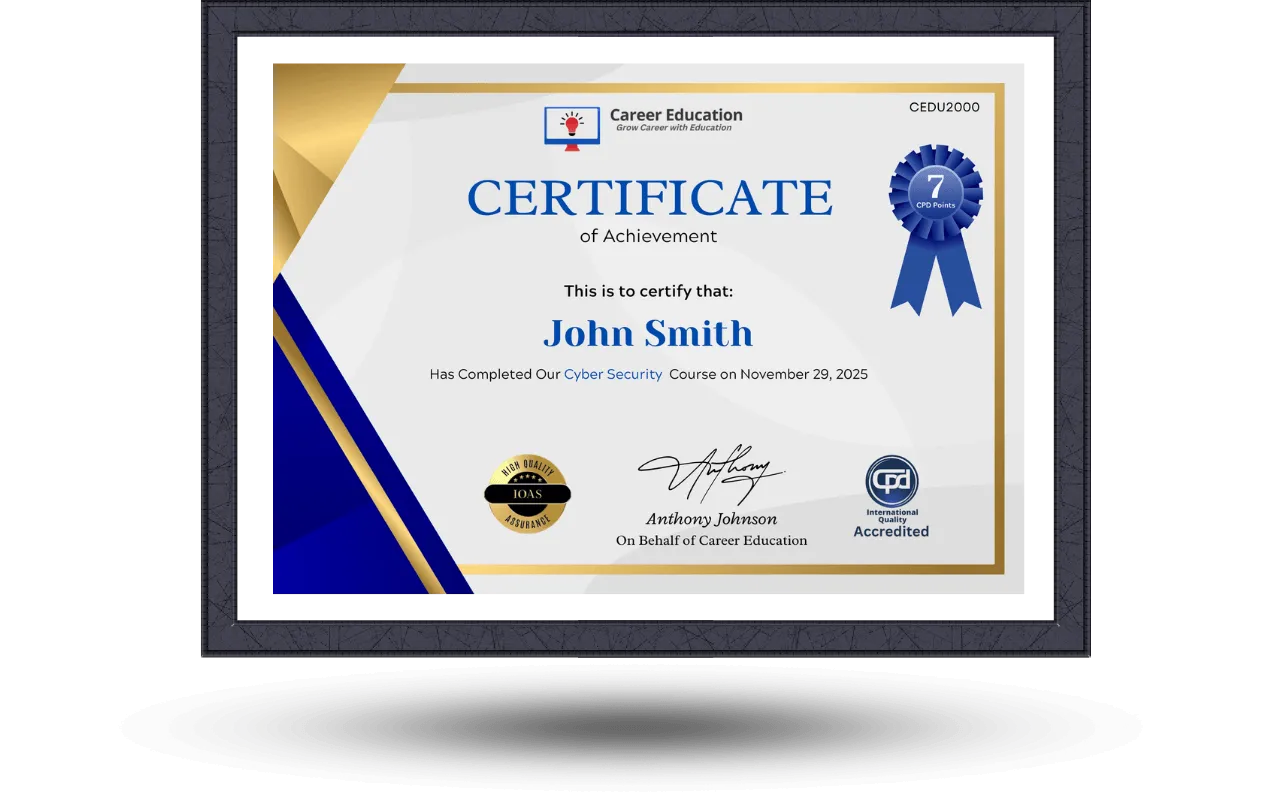
Upon completion of any course, all students are entitled to a CPD IQ Accredited e-certificate that will be issued by Career Education signifying the completion of your course.
After you complete the course and assignment, you will be eligible to order a free certificate accredited by CPD International Quality by completing the form below.
Hardcopy certificates and transcripts are also available for a small additional fee. More information is disclosed upon course completion.
Similar Courses




Frequently Asked Questions
The lifetime membership includes unlimited access to all courses, resources, and updates for a one-time fee.
You can purchase the membership directly from our website using a secure checkout process.
Yes, selected courses can be downloaded for offline access through our mobile app.
Yes, all future updates and new courses are included at no extra cost.
Yes, we offer a 30-day money-back guarantee if you are not satisfied with the membership.