
94%
OFF
OFF
Accidental Release Prevention and Spill Cleanup Safety Procedures
- Lifetime Access
- All Levels
- PDF Certificate
£296
£19
14-Day Money-Back Guarantee
Learn With Confidence






Accidental Release Prevention and Spill Cleanup Safety Procedures
Accidental releases and spills can create serious workplace hazards, damage equipment and property, disrupt operations, and expose employees, visitors, and the surrounding environment to harmful substances. Effective preparation is essential for reducing risks and ensuring that spills are handled quickly, safely, and responsibly. The Accidental Release Prevention and Spill Cleanup Safety Procedures course is designed to help learners develop practical knowledge of spill prevention, emergency response, containment, cleanup, notification, and personal safety procedures.
This outcome-focused course provides a structured introduction to the principles and practices used to prepare for and respond to accidental releases. Learners will explore how to identify potential hazards, assess risks, develop emergency response plans, recognize and report spills, select appropriate containment techniques, and understand the safe use of cleanup methods and equipment.
Whether you work in an industrial, commercial, laboratory, warehouse, manufacturing, facilities, construction, or other workplace environment where accidental releases may occur, understanding appropriate spill response procedures can help you contribute to a safer and more organized workplace.
Why Accidental Release Prevention Matters
An accidental release can happen unexpectedly. A damaged container, equipment failure, incorrect handling, transportation incident, or operational error may result in a substance being released into a workplace or surrounding environment.
Without suitable procedures, even a relatively small spill can become more difficult to manage. Employees may be exposed to hazards, the substance may spread, normal operations may be interrupted, and emergency responders may face additional challenges.
Prevention therefore begins before an incident occurs. Organizations need to understand where releases could happen, what hazards may be present, what controls are available, and how employees should respond when an incident occurs.
The Accidental Release Prevention and Spill Cleanup Safety Procedures course helps learners build awareness of these essential principles so they can approach spill-related situations with greater preparedness and confidence.
What You Will Learn
By completing this course, learners can develop a clearer understanding of how to:
-
Recognize common causes and potential consequences of accidental releases.
-
Understand fundamental spill prevention and cleanup procedures.
-
Identify hazards and assess risks associated with potential releases.
-
Support effective emergency response planning.
-
Understand the importance of timely spill detection and notification.
-
Explore methods for containing spills and limiting their spread.
-
Understand different approaches to spill cleanup.
-
Recognize the role of appropriate cleanup equipment.
-
Understand the importance of Personal Protective Equipment (PPE).
-
Apply safety principles when supporting spill response activities.
-
Contribute to a more prepared and safety-conscious workplace.
Course Curriculum
Module 1: Introduction to Accidental Release Measures & Spill Cleanup Procedures
The course begins by introducing the fundamentals of accidental release prevention and spill cleanup. Learners will explore why release prevention is important and how appropriate procedures can help reduce the potential impact of incidents.
This module establishes the foundation for understanding the different stages of spill response, from prevention and preparation through notification, containment, cleanup, and safety management.
By the end of this module, learners will have a stronger understanding of the importance of organized spill response procedures and the role that preparation plays in reducing workplace risks.
Module 2: Risk Assessment and Prevention
Effective spill prevention requires organizations to identify potential hazards before an incident occurs. This module focuses on risk assessment and preventive measures that can help reduce the likelihood and potential consequences of accidental releases.
Learners will explore how potential release points and hazards can be identified and why risk assessment should form part of workplace safety planning. Understanding the relationship between hazards, risks, preventive controls, and workplace procedures can help employees contribute more effectively to accident prevention.
The outcome is a greater awareness of how proactive safety measures can reduce reliance on emergency action after an incident has already occurred.
Module 3: Emergency Response Planning
When an accidental release occurs, a well-prepared response can make a significant difference. This module introduces the principles of emergency response planning and explains why organizations should establish clear procedures before an incident takes place.
Learners will develop an understanding of the key considerations involved in preparing for spill-related emergencies, including response responsibilities, communication, coordination, and safety priorities.
The module helps learners appreciate how structured emergency planning can support a more coordinated response and reduce confusion during unexpected events.
Module 4: Spill Detection and Notification
Early recognition and appropriate notification are important parts of effective spill management. This module explores the importance of detecting accidental releases promptly and communicating relevant information through appropriate workplace channels.
Learners will understand why employees need to recognize potential spill situations and why timely reporting can help responsible personnel assess the situation and determine the appropriate response.
The module emphasizes the importance of communication and following established workplace reporting procedures rather than allowing an incident to remain unreported or unmanaged.
Module 5: Spill Containment Techniques
Once a spill has been identified and the appropriate response has been initiated, containment may be necessary to limit its spread. This module introduces key concepts related to spill containment.
Learners will explore why containment is important and how suitable containment approaches can help prevent a release from spreading into additional areas or creating further hazards.
The focus is on understanding containment as part of a coordinated response process, alongside risk assessment, communication, appropriate protective measures, and established workplace procedures.
Module 6: Spill Cleanup Methods and Equipment
Safe cleanup requires appropriate methods, equipment, and planning. This module introduces learners to the principles of spill cleanup and the role of suitable equipment in supporting an effective response.
Learners will explore different considerations involved in selecting cleanup approaches and understand why the nature of the released material, workplace conditions, available procedures, and safety requirements must be considered.
The module also highlights the importance of using appropriate equipment and following established safety instructions during cleanup activities. Learners will gain a better understanding of how organized cleanup procedures can help restore affected areas while reducing unnecessary exposure and additional risks.
Module 7: Personal Protective Equipment (PPE) and Safety Measures
Personal safety is a fundamental consideration during spill response. This final module focuses on PPE and other safety measures that may be relevant when dealing with accidental releases.
Learners will understand why PPE selection should be based on the hazards involved and why appropriate protective measures are essential when responding to potentially hazardous substances.
The module reinforces the importance of following workplace safety procedures, recognizing personal limitations, and avoiding unnecessary exposure. It helps learners understand that spill response should always prioritize safety and should be carried out according to appropriate organizational procedures and applicable requirements.
Practical Outcomes of the Course
The Accidental Release Prevention and Spill Cleanup Safety Procedures course is designed around practical workplace outcomes. Rather than focusing only on terminology, the course helps learners understand how different elements of spill management connect together.
After completing the training, learners should be better prepared to:
Recognize potential risks: Understand how accidental releases can occur and identify why preventive controls and risk assessments are important.
Support workplace preparedness: Understand the role of emergency response plans and clear responsibilities in managing unexpected incidents.
Respond through appropriate reporting: Recognize the importance of prompt spill detection, notification, and communication.
Understand containment principles: Appreciate how containment can help limit the spread and potential impact of a release.
Understand cleanup processes: Develop awareness of appropriate cleanup considerations, methods, and equipment.
Prioritize personal safety: Understand the importance of PPE and other safety measures when responding to spill-related hazards.
Contribute to safer operations: Apply the knowledge gained to support a stronger safety culture within the workplace.
Who Can Benefit From This Course?
The Accidental Release Prevention and Spill Cleanup Safety Procedures course can benefit learners who want to improve their understanding of workplace spill prevention and response.
It may be particularly useful for:
-
Employees working in environments where spills or accidental releases could occur.
-
Health and safety personnel seeking additional spill-response awareness.
-
Warehouse and storage personnel.
-
Manufacturing and production employees.
-
Facilities and maintenance teams.
-
Construction and industrial workers.
-
Supervisors and team leaders.
-
Environmental and workplace safety personnel.
-
Individuals responsible for workplace emergency preparedness.
-
Learners seeking foundational knowledge of accidental release prevention.
The course can also be useful as part of broader workplace safety awareness and professional development.
Build Confidence Through Better Preparation
Effective spill management does not begin when a spill occurs. It begins with preparation, risk awareness, prevention, communication, and training.
By understanding the stages of accidental release management, employees can become better equipped to recognize hazards and follow established procedures when incidents occur. Knowledge of spill prevention, emergency planning, detection, notification, containment, cleanup, and PPE can help create a more organized approach to workplace safety.
The Accidental Release Prevention and Spill Cleanup Safety Procedures course brings these essential areas together in one structured learning experience. Learners can build practical awareness that supports safer decision-making and a stronger understanding of workplace emergency procedures.
Develop Essential Workplace Safety Knowledge
Accidental releases can present different challenges depending on the substance, environment, quantity, and circumstances involved. That is why effective training should emphasize preparation, hazard awareness, communication, and the importance of following appropriate procedures.
This course provides learners with a broad foundation covering the complete spill-response process—from prevention and risk assessment to emergency planning, notification, containment, cleanup, and personal protection.
By completing the Accidental Release Prevention and Spill Cleanup Safety Procedures course, learners can strengthen their workplace safety knowledge, improve their awareness of spill-response responsibilities, and become better prepared to support safe and organized procedures when accidental releases occur.
Investing in safety knowledge today can help workplaces prepare more effectively for unexpected incidents tomorrow. Enrol in the Accidental Release Prevention and Spill Cleanup Safety Procedures course and develop the knowledge needed to understand prevention, response, containment, cleanup, and personal safety principles.
Course Modules
Course Content
Module 1_ Introduction to Accidental Release Measures & Spill Cleanup Procedures
-
Lesson 1_ Introduction to Accidental Release Measures & Spill Cleanup Procedures
Module 2_ Risk Assessment and Prevention
Module 3_ Emergency Response Planning
Module 4_ Spill Detection and Notification
Module 5_ Spill Containment Techniques
Module 6_ Spill Cleanup Methods and Equipment
Module 7_ Personal Protective Equipment (PPE) and Safety Measures
What our students say
Excellent
4.9 average
158 Reviews

Earn an Accredited Certificate
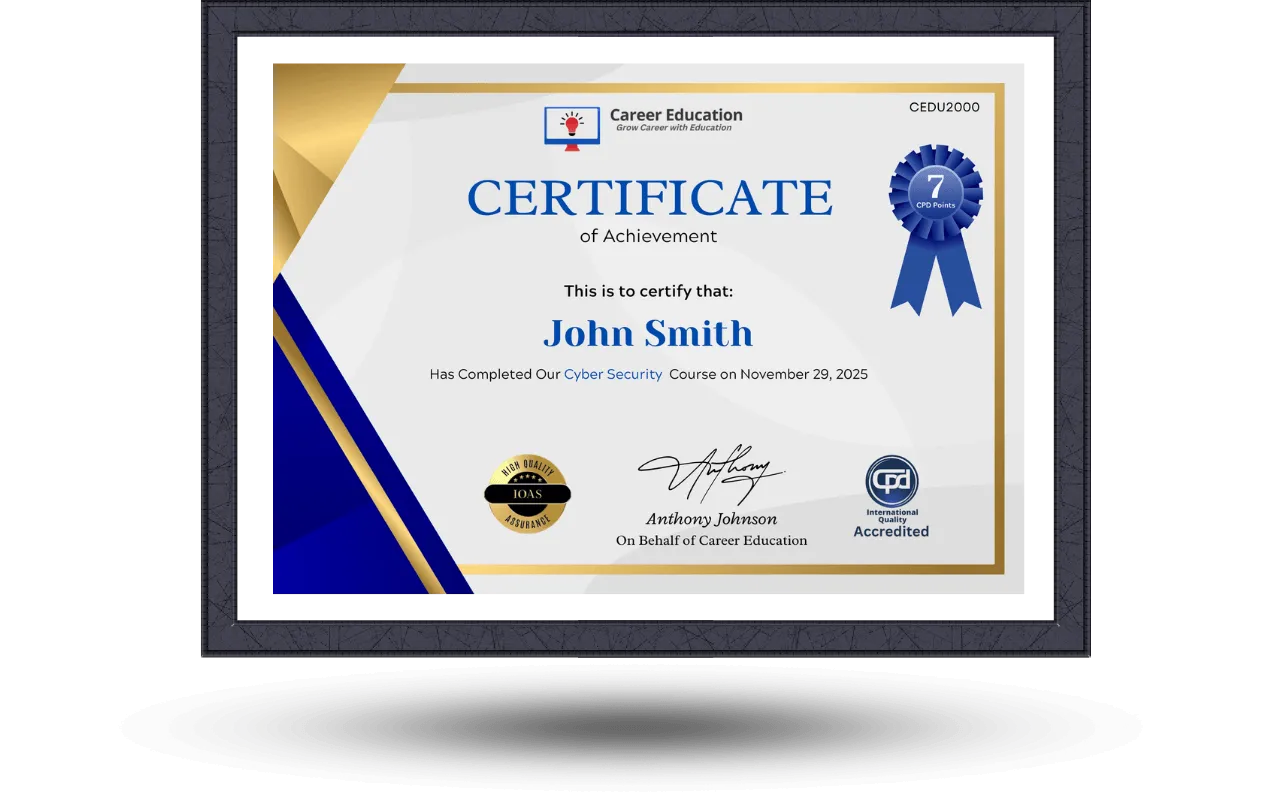
Upon completion of any course, all students are entitled to a CPD IQ Accredited e-certificate that will be issued by Career Education signifying the completion of your course.
After you complete the course and assignment, you will be eligible to order a free certificate accredited by CPD International Quality by completing the form below.
Hardcopy certificates and transcripts are also available for a small additional fee. More information is disclosed upon course completion.
Similar Courses


Frequently Asked Questions
The lifetime membership includes unlimited access to all courses, resources, and updates for a one-time fee.
You can purchase the membership directly from our website using a secure checkout process.
Yes, selected courses can be downloaded for offline access through our mobile app.
Yes, all future updates and new courses are included at no extra cost.
Yes, we offer a 30-day money-back guarantee if you are not satisfied with the membership.