

Computer Numerical Control (CNC) simply means understanding how machine tools can be directed by programmed numerical instructions rather than relying entirely on manual operation. CNC technology is central to modern manufacturing because it allows machines to produce complex parts repeatedly and with a high degree of precision.
CNC is used across engineering, automotive production, aerospace, fabrication, medical-device manufacturing and many other industries. However, learning CNC involves more than memorising machine commands. Operators and programmers need to understand engineering drawings, tooling, materials, measurement, machine safety and the manufacturing process itself.
This guide explains how best CNC course UK works, the main types of machines, CNC programming, essential skills, training routes and career opportunities in the UK.
What Does Computer Numerical Control Mean?
Computer Numerical Control, usually shortened to CNC, is a method of controlling manufacturing machinery using programmed instructions (coded commands).
Instead of an operator manually controlling every movement of a cutting tool, the machine follows numerical commands describing factors such as:
- where the tool should move;
- how quickly it should move;
- spindle speed;
- cutting depth;
- tool changes; and
- the sequence of machining operations.
A best CNC course UK machine still requires people. Someone must plan the job, interpret engineering information, prepare tools and materials, set the machine correctly, check safety arrangements and inspect the finished component.
Automation changes the operator’s role rather than eliminating it.
How Does CNC Machining Work?
If you are wondering how does CNC machining work, it helps to think of the process as a chain that turns a design into controlled machine movements (automated machining actions).
A typical workflow begins with an engineering drawing or digital model. The required machining operations are then planned, tools are selected and instructions are created for the best CNC course UK machine.
Those instructions tell the machine how to move its cutting tool or workpiece.
1. A Component Is Designed
The manufacturing process starts with a specification (design requirement).
This may be a traditional engineering drawing or a three-dimensional CAD model. The design specifies dimensions, geometry, tolerances, materials and other requirements for the finished component.
The machinist or programmer needs to understand what these specifications mean before machining begins.
2. The Manufacturing Process Is Planned
Next, the manufacturer decides how the part will be produced.
Questions can include:
- Which CNC machine is suitable?
- What raw material is required?
- How should the workpiece be held?
- Which cutting tools are needed?
- In what order should features be machined?
- What speeds and feeds are suitable?
- How will the finished part be measured?
Good planning helps reduce errors, wasted material and unnecessary machining time.
3. CNC Instructions Are Created
The machine then needs instructions (programmed commands).
These may be written directly using best CNC course UK code or generated using computer-aided manufacturing software.
The program controls the sequence of movements and machining operations.
4. The Machine Is Set Up
Before production begins, the workpiece and tools must be prepared correctly.
This may involve installing cutting tools, securing the material, entering offsets, identifying reference positions and checking the program.
Machine setup is a critical skill. A correct program can still produce a defective component if the tooling, workholding or offsets are wrong.
5. The Component Is Machined
Once everything has been checked, best CNC course UK machine carries out the programmed operations (automated manufacturing processes).
Depending on the machine, these could include cutting, drilling, turning, milling, boring or other processes.
6. The Part Is Inspected
Machining does not finish when the machine stops.
Components need to be measured against the drawing or specification. Machinists may use instruments such as callipers, micrometers and gauges to check whether dimensions and tolerances have been achieved.
If something is incorrect, the cause needs to be identified before production continues.
Common Types of CNC Machines
best CNC course UK technology can control several types of manufacturing machinery (machine tools).
CNC Milling Machines
best CNC course UK mill typically uses rotating cutting tools to remove material from a stationary or controlled workpiece.
Milling can create surfaces, slots, pockets, holes and complex three-dimensional shapes.
Modern machining centres can operate across several axes and may change tools automatically.
CNC Lathes and Turning Centres
On a lathe, the workpiece normally rotates while cutting tools remove material.
Turning is particularly suitable for cylindrical components such as shafts, bushes and threaded parts.
Modern best CNC course UK turning centres can perform increasingly complex operations and may combine turning with additional machining functions.
CNC Routers
CNC routers are commonly associated with materials such as wood, plastics, composites and some softer metals.
They can cut panels, profiles, lettering and complex shapes using programmed toolpaths (machining paths).
CNC Grinding Machines
Grinding machines use abrasive wheels or other abrasive processes to achieve accurate dimensions and fine surface finishes.
CNC control can improve repeatability (consistent results) and automate complex grinding cycles.
Multi-Axis CNC Machines
More advanced machines can control movement across several axes.
Five-axis machining, for example, can allow the cutting tool to approach a component from multiple directions without repeatedly removing and repositioning the workpiece.
These machines can manufacture complicated parts efficiently but require greater programming, setup and process knowledge.
What Is CNC Programming?
best CNC course UK programming is the process of creating the instructions (machine commands) that tell a CNC machine what operations to perform.
Programming can be completed manually, conversationally through a machine interface or through CAM software.
What Are G-Code and M-Code?
G-code is commonly associated with machine movement and machining functions.
Commands may tell the machine to move to a particular coordinate, follow a linear path or perform another programmed operation.
M-codes commonly control auxiliary functions such as spindle operation, coolant or program stops, although exact implementations can vary between machine controls.
Learning best CNC course UK programming therefore involves more than memorising lists of codes.
A programmer needs to understand the geometry of the part, tool positions, coordinate systems, cutting conditions and machine behaviour.
Manual CNC Programming
For relatively straightforward components, programs may be written directly.
Learning basic manual programming can be useful even where CAM software is normally used because it helps learners understand what the machine is actually being told to do.
Conversational Programming
Some CNC controls allow operators to create machining sequences through prompts and menus rather than manually writing every line of code.
This can make programming common workshop tasks faster and more accessible.
CAD/CAM Programming
For complicated parts, CAD/CAM software can generate toolpaths based on digital component models.
The programmer chooses machining strategies, tools and parameters. Software then generates machine instructions through an appropriate post-processor.
CAM does not remove the need for machining knowledge. Someone must still recognise whether a generated toolpath is safe, efficient and appropriate.
What Are CNC Production Systems?
CNC production systems combine best CNC course UK machinery with the wider processes required to manufacture components efficiently and consistently (reliably and repeatedly).
In a modern factory, CNC machines may form part of a much larger production environment involving:
- CAD and CAM software;
- automated tool changers;
- robotic loading;
- material-handling equipment;
- production scheduling;
- quality-control systems;
- digital measurement;
- manufacturing data;
- automated inspection; and
- computerised production management.
The objective is not simply to make one component correctly. Manufacturers often need to produce many components consistently while controlling cost, quality and production time.
Automation can improve repeatability and productivity, but reliable production still depends on effective process planning, maintenance and skilled people.
What Does CNC Machine Operation Involve?
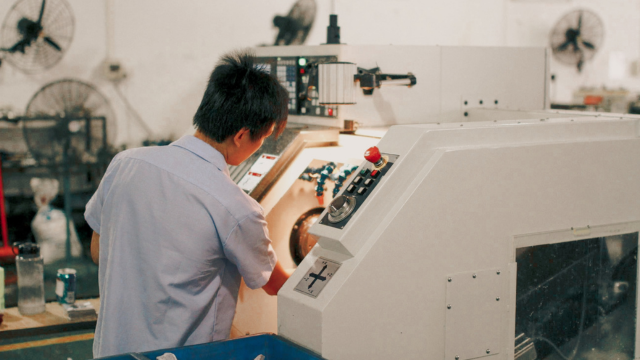
CNC machine operation involves preparing, running and monitoring best CNC course UK equipment safely so that it produces components to specification.
The responsibilities of an operator vary according to the workplace.
A CNC operator may:
- load raw material;
- install or check tooling;
- load programs;
- set work offsets;
- carry out machine checks;
- monitor machining;
- inspect finished components;
- replace worn tools;
- complete production documentation; and
- report faults or quality problems.
In some businesses, operators mainly run established jobs that have already been programmed and set.
In others, one person may operate, set and program machines.
This explains why job adverts use titles such as CNC Operator, CNC Setter, CNC Machinist, CNC Miller, CNC Turner or CNC Programmer. The responsibilities can be quite different even though all involve CNC technology.
CNC Safety: Why Training Matters
best CNC course UK equipment contains rapidly moving components and powerful cutting systems. Incorrect setup, inadequate guarding or unsafe working practices can cause serious injury.
HSE guidance emphasises several important machinery-safety principles.
Dangerous moving parts should be effectively guarded. Interlocking guards may be necessary where regular access is needed, and machinery should have appropriate stopping controls.
Workers also need suitable instruction, training and supervision.
A programmer or operator should never regard a best CNC course UK program as automatically safe simply because the software accepts it. Program changes affecting machinery should be handled by competent people.
Safe working also includes proper isolation before certain maintenance, cleaning, adjustments or blockage-removal activities.
Loose clothing, jewellery and unsecured long hair can create entanglement risks around rotating machinery. Appropriate workplace rules and protective equipment should therefore be followed.
Online theory can help someone understand these risks, but it is not a substitute for machine-specific practical instruction and supervision.
What Skills Do CNC Machinists Need?
CNC work combines mechanical, numerical and digital skills.
Reading Engineering Drawings
Machinists need to understand dimensions, tolerances, symbols and component features.
The drawing or specification determines what the finished component must achieve.
Measurement and Inspection
Producing a component is only half the job. You also need to establish whether it is correct.
This can involve using measuring equipment and recording quality results accurately.
Numerical Skills
Machining involves dimensions, coordinates, speeds, feeds and tolerances.
Advanced mathematics is not required for every entry-level role, but confidence with practical numerical work is valuable.
Problem-Solving
Manufacturing problems rarely announce their cause clearly.
A component may be oversized because of tool wear, incorrect offsets, setup problems or programming errors.
Machinists need to investigate methodically rather than repeatedly adjusting the machine without understanding the cause.
Attention to Detail
A small error can make a precision component unusable.
Current UK apprenticeship adverts repeatedly identify accuracy and attention to detail as important attributes for CNC trainees.
Digital Skills
Modern CNC manufacturing increasingly combines machinery with digital systems.
Basic computer confidence helps when working with CNC controls, CAD/CAM systems, digital documentation and production software.
Communication and Teamwork
Manufacturing is collaborative.
Machinists may work with programmers, engineers, inspectors, supervisors, maintenance teams and production planners. Clear communication helps prevent mistakes and keeps production moving.
CNC Machining Training Routes in the UK
There is no single route into CNC machining, or computer-controlled machining. The best CNC course UK learners choose will depend on their starting point, experience and career objective.
College Courses
The National Careers Service identifies college as one route into best CNC course UK machining. Relevant subjects may include manufacturing, performing engineering operations and mechanical engineering. A college programme can provide a stronger practical foundation than purely theoretical study because learners may gain workshop experience alongside technical knowledge and practical skills.
Computer Numerical Control Explained Apprenticeships
Apprenticeships are one of the strongest routes for people seeking occupational competence, or job-ready ability, because they combine structured learning with workplace experience.
Current UK CNC apprenticeships commonly use the Level 3 Machining Technician standard. Recent vacancies involve learning how to operate CNC milling and turning equipment, set machines, work from engineering drawings, measure finished components, develop CNC programming skills and follow workshop safety procedures.
Apprenticeships commonly last several years because becoming a competent machinist involves much more than simply learning how to start a machine.
Employer Training
Some people enter manufacturing in junior roles and develop their best CNC course UK skills through employer-supported training, workplace instruction or on-the-job development. This can be particularly useful where a company uses specific machines and control systems.
Online CNC Courses
Online CNC machining training, or computer numerical control education, can help learners understand terminology, automation principles, machine types and programming concepts before entering a workshop.
However, an online course cannot by itself demonstrate that somebody can safely set up and operate industrial machinery. The distinction is important:
learning about CNC operation is not the same as demonstrating competent CNC machine operation.
Choosing the Best CNC Course in the UK
Rather than searching only for the best CNC course UK, first decide what outcome you need. If you simply want an introduction to CNC technology, an online fundamentals course may be appropriate.
If you want to become an employable CNC machinist, look for practical training covering real machinery, tooling, measurement and engineering drawings. If you already work in manufacturing and want to progress towards programming, consider more advanced study in G-code, CAD/CAM and machining strategy.
Before enrolling, check:
- the intended learner level;
- course content;
- learning hours;
- practical workshop activity;
- assessment;
- trainer expertise;
- equipment covered;
- qualification status; and
- what certificate is awarded.
Do not assume that every course described as “certified” is a regulated qualification or that course completion proves practical occupational competence, or workplace competence.
Learning CNC and Automation Through Career Education

For learners looking for an introductory online option, Career Education currently lists a CNC Machinery and Automation Fundamentals course.
The live page confirms the course title and currently advertises it at a promotional price of £19. However, the publicly available page provides limited information about its syllabus, learning hours, assessment, practical content or qualification status. It also currently displays no learner reviews.
It is therefore sensible to treat the course as a potential introduction to best CNC course UK and automation fundamentals rather than assuming it constitutes complete occupational CNC machining training.
Before enrolling, check the latest course information and establish exactly what content, assessment, learner support and certification are included. For someone completely new to CNC, online learning can help build vocabulary, basic knowledge and conceptual understanding before progressing towards workshop-based training.
CNC Machinist Careers in the UK
CNC skills are used throughout engineering and manufacturing. Potential sectors include:
- aerospace;
- automotive manufacturing;
- precision engineering;
- defence supply chains;
- medical-device manufacturing;
- motorsport;
- plastics;
- toolmaking;
- general manufacturing; and
- specialist component production.
CNC Operator
Operators typically run machines and monitor established production processes. Responsibilities can include loading workpieces, starting programs, carrying out checks and reporting problems.
CNC Setter
Setters prepare machinery for production. They may install tools, secure workpieces, establish offsets and prove out jobs before production begins.
CNC Machinist
A machinist may combine operation, setup, inspection and troubleshooting responsibilities. The National Careers Service currently reports an indicative annual salary range of around £25,000 for starters to £42,000 for experienced CNC machinists.
Actual pay depends on location, shift patterns, experience, machine complexity and responsibilities.
CNC Programmer
A CNC programmer creates or modifies machining programs. More advanced programmers may work heavily with CAD/CAM software, machining strategies and multi-axis machines.
Programming roles generally require a deeper understanding of both machining and software than basic machine operation.
Manufacturing or Engineering Technician
Experienced CNC professionals may progress into broader technician roles involving manufacturing improvement, quality, automation, production engineering or technical support.
Do You Need a Degree for a CNC Career?
No. A university degree is not the standard requirement for becoming a CNC machinist.
UK entry routes include college courses, apprenticeships and direct employment where suitable experience exists. For many machining roles, employers are particularly interested in practical ability, engineering knowledge and workplace experience.
A degree may become more relevant for particular engineering-design, manufacturing-engineering or management pathways, but it is not necessary simply to begin learning best CNC course UK machining.
How Long Does It Take to Learn CNC Machining?
Basic CNC concepts can be introduced relatively quickly. Becoming a competent machinist takes longer.
You may learn what G-code does, understand basic coordinate movements and recognise common machine types after a short course. However, independently setting machines, selecting cutting conditions, preventing collisions, diagnosing problems and consistently producing parts to tight tolerances require substantial practical experience.
Current UK machining apprenticeships commonly last around three to four years, illustrating the difference between understanding the fundamentals and becoming occupationally competent.
Is CNC Programming Difficult to Learn?
Basic CNC programming can be approachable once you understand coordinates and machining processes.
The difficulty increases as parts and machines become more complex.
Simple turning or milling operations may involve relatively straightforward instructions. Multi-axis components can require advanced CAD/CAM work, detailed process planning, workholding decisions and extensive collision checking.
The best progression is usually:
learn machining fundamentals first, understand coordinates and tool movements, practise simple programs and then move towards more advanced CAM-generated toolpaths.
Trying to learn programming without understanding the physical machining process can make it difficult to recognise unsafe or inefficient code.
Frequently Asked Questions About CNC
What does CNC stand for?
CNC stands for Computer Numerical Control. It refers to controlling machinery through programmed numerical instructions. CNC technology is widely used in manufacturing to operate equipment such as mills, lathes, routers and machining centres with repeatable, precise movements.
How does CNC machining work?
CNC machining starts with a component design and manufacturing plan. Instructions are then created for the machine, either manually or through CAM software. Once tools, material and machine settings are prepared, the CNC system follows those instructions to remove material and produce the required shape.
Is CNC machining difficult to learn?
The fundamentals are manageable for beginners, but professional competence takes time. Machine setup, tooling, material behaviour, measurement, programming and troubleshooting all require practical development. Learning becomes easier when theory is combined with supervised workshop experience.
Do I need coding experience to learn CNC?
No. You can begin CNC training without conventional software-programming experience. Basic CNC programming uses specialised machine instructions rather than languages such as Python or JavaScript. However, logical thinking, numerical confidence and an understanding of coordinates are useful.
Can I learn CNC machining online?
You can learn CNC terminology, programming principles, machine types and automation concepts online. However, practical CNC machine operation requires hands-on training with real machinery, appropriate safety instruction and supervision.
What qualification do I need to become a CNC machinist?
There is no single qualification required for every CNC machinist job. UK routes include college study, apprenticeships and employer training. Level 3 Machining Technician apprenticeships are a particularly relevant practical route, while employers may have their own requirements.
How much do CNC machinists earn in the UK?
The National Careers Service currently gives an indicative salary range of approximately £25,000 for new CNC machinists to £42,000 for experienced workers. Actual earnings can vary significantly by region, shift work, specialism, experience and employer.
What is the difference between a CNC operator and a CNC programmer?
A CNC operator primarily runs and monitors machinery, while a programmer creates or modifies the instructions controlling machining operations. In smaller workshops, one skilled person may perform both roles alongside setup and inspection duties.
Is CNC a good career in the UK?
CNC machining can provide a practical engineering career across industries including aerospace, automotive, precision engineering and specialist manufacturing. Career prospects tend to improve as operators develop setting, programming, measurement, troubleshooting and automation skills.

Conclusion
Computer Numerical Control Explained is ultimately about understanding how digital instructions, machinery and human engineering judgement work together to manufacture precise components.
CNC machines can automate movement, but skilled people remain essential. Operators need to understand safe CNC machine operation, setters must prepare machinery accurately, and programmers need to translate manufacturing requirements into effective CNC programming.
For beginners, the strongest learning route combines theory with practical development. An introductory course can explain CNC terminology, automation and programming concepts, while apprenticeships, college workshops and workplace training provide the hands-on experience required to become competent around industrial machinery.
Anyone comparing the best CNC course UK options should therefore focus on the learning outcome rather than simply the certificate. If your goal is a career in manufacturing, look for training that eventually develops engineering drawing skills, measurement, setup, tooling, safety and practical machining alongside digital knowledge.
With these foundations, CNC can lead from entry-level machine operation towards setting, programming, automation and wider engineering careers within modern CNC production systems.