

Even experienced kitchen teams can develop unsafe habits when work becomes busy. A chopping board gets reused without proper disinfection, chilled ingredients remain on the preparation bench too long, a member of staff forgets to wash their hands after handling raw chicken, or allergen information is not updated when a recipe changes.
These common food hygiene mistakes may appear minor in isolation, but several small failures can combine to create a serious food-safety problem.
Good food hygiene UK practice is therefore not simply about keeping a kitchen safety UK visually clean. Professional food businesses need systems that protect food from harmful bacteria, allergens, chemicals and physical contamination throughout purchasing, storage, preparation, cooking, cooling and service.
For restaurants, cafés, takeaways, hotels and catering businesses, effective hygiene also depends on staff training, supervision, temperature control, accurate records and food-safety procedures based on HACCP principles.
This guide examines some of the most common mistakes made in commercial kitchen safety UK and explains how businesses can improve safe food handling UK practices.
Why Food Hygiene Mistakes Matter
Food contamination is not always visible. Food can look, smell and taste normal while containing harmful microorganisms, bacteria or undeclared allergens. That is why food-safety systems focus on prevention, hygiene and contamination control.
The FSA’s four central food-hygiene principles are:
- cleaning and sanitation;
- cooking and heat control;
- chilling and temperature control; and
- avoiding cross-contamination.
These basic food-safety measures cover many common failures in professional kitchen safety UK. A restaurant may prepare excellent food and still face hygiene problems if staff fail to separate raw meat from ready-to-eat food, monitor refrigeration, clean equipment correctly or maintain accurate allergen information.
Mistake 1: Poor Handwashing
One of the simplest hygiene controls is also one of the easiest to neglect. food hygiene UK handlers can transfer microorganisms, germs and bacteria from:
- raw meat;
- raw poultry;
- fish;
- eggs;
- unwashed vegetables;
- bins;
- toilets;
- phones;
- door handles; and
- contaminated surfaces
onto food and equipment.
FSA research observing food hygiene UK businesses found examples of staff not washing their hands after handling meat, fish or poultry or rinsing without soap. This shows why having a sink and handwashing poster is not enough.
Staff need to wash their hands properly at appropriate times, including:
- before handling food;
- after handling raw food;
- after visiting the toilet;
- after touching bins;
- after cleaning;
- after breaks;
- after touching the face or hair;
- after handling potentially contaminated equipment; and
- before working with ready-to-eat food hygiene UK.
Why Gloves Do Not Solve Poor Hand Hygiene
Disposable gloves can create a false sense of security. Gloves can become contaminated just like hands. If somebody handles raw chicken while wearing gloves and then touches a refrigerator handle or prepared salad without changing them, contamination can still spread.
Gloves should therefore be used correctly and hygienically rather than as a substitute for proper handwashing.
Mistake 2: Allowing Raw and Ready-to-Eat Food to Mix
Cross-contamination is one of the most important issues in professional kitchen safety UK practice. Raw meat, poultry and some other ingredients can carry harmful bacteria, germs and microorganisms.
Ready-to-eat food hygiene UK may not undergo further cooking before reaching the customer. If bacteria transfer from raw food onto salad, bread, cooked meat or another ready-to-eat product, there may be no later cooking stage to destroy them.
Cross-contamination can happen directly when foods touch. It can also happen indirectly through:
- chopping boards;
- knives;
- utensils;
- hands;
- refrigerator handles;
- cloths;
- containers;
- worktops; or
- temperature probes.
Better Practice
Businesses should create clear separation between raw and ready-to-eat food hygiene UK. Controls may include:
- separate preparation areas;
- separate equipment;
- dedicated storage;
- clearly identified utensils;
- suitable cleaning and disinfection;
- raw food stored below ready-to-eat food; and
- effective staff training.
These controls should form part of the business’s food-safety management system.
Mistake 3: Washing Raw Chicken
Some people wash raw chicken because they believe it makes the meat cleaner or safer. In reality, washing poultry can spread contamination.
Water hitting raw chicken can splash droplets containing bacteria around:
- the sink;
- taps;
- worktops;
- nearby utensils;
- clothing; and
- other food.
Food Standards Scotland and wider UK food-safety guidance therefore advise against washing raw poultry. Proper cooking—not washing—is what controls bacteria in chicken.
This is an example of a traditional kitchen safety UK habit that can increase food contamination UK risks rather than reduce them.
Mistake 4: Incorrect Chilled Storage
A refrigerator feeling cold does not prove that food hygiene UK is being held at the correct temperature. For businesses in England, Wales and Northern Ireland, chilled food requiring temperature control generally needs to remain at 8°C or below.
The FSA recommends operating refrigerators at 5°C or below to provide some allowance for normal temperature variation.
Problems can occur when:
- refrigerator temperatures are not checked;
- equipment becomes overloaded;
- doors remain open;
- food is put away while still excessively warm;
- staff assume the display temperature is always accurate;
- refrigeration equipment develops faults; or
- ingredients remain outside refrigeration too long during preparation.
Why Monitoring Matters
Temperature checks should be part of normal kitchen safety UK routines. If a refrigerator begins operating above the expected range, staff need to notice and take corrective action before food hygiene UK becomes unsafe.
Staff should understand:
- what temperature is expected;
- how it is checked;
- where it is recorded;
- what to do if it is too high; and
- who needs to be informed.
Mistake 5: Storing Raw Food Above Ready-to-Eat Food
Poor refrigerator organisation can create cross-contamination. If raw meat is stored above cooked or ready-to-eat products, juices or drips may contaminate food hygiene UK below.
A safer system keeps raw food appropriately contained and separated from ready-to-eat products. Containers should be suitable, covered where necessary and clearly identifiable.
Good refrigerator organisation is a simple but effective food-hygiene and contamination-prevention measure.
Mistake 6: Undercooking High-Risk Foods
Cooking destroys many harmful microorganisms, bacteria and germs when the appropriate temperature is achieved throughout the food.
A common mistake is assuming food hygiene UK is safe because:
- it looks brown outside;
- it has been cooking for a familiar amount of time;
- the chef has cooked the recipe many times before; or
- the surface feels hot.
The centre may still be insufficiently cooked.
Current FSA guidance gives 70°C for two minutes as one recognised safe time-temperature combination, with equivalent alternatives including 75°C for 30 seconds. The appropriate cooking method depends on the food and process, so businesses should follow suitable food hygiene UK-safety procedures and controls.
Foods Requiring Particular Care
Thorough cooking is especially important for products such as:
- poultry;
- pork;
- minced-meat dishes where required;
- sausages;
- burgers that are intended to be thoroughly cooked; and
- reheated dishes.
Where temperature probes are used, they should themselves be maintained hygienically to avoid introducing contamination.
Mistake 7: Poor Cooling and Reheating
Cooking food safely is only part of the process.
Problems can develop afterwards.
Large containers of hot food may cool slowly, allowing bacteria more opportunity to grow.
Food should therefore be cooled as quickly as the business’s safe system requires and then transferred to suitable chilled storage.
The FSA advises cooked food hygiene UK to be cooled quickly before refrigeration rather than remaining at room temperature unnecessarily.
Reheating Mistakes
Another problem is warming food rather than reheating it thoroughly.
The centre needs to reach the required safe condition, not simply the edges.
Microwave ovens can create uneven heating, so food may require stirring, turning or standing according to the process being used.
Repeated heating and cooling should also be avoided where the business’s safe method does not permit it.
Mistake 8: Confusing Cleaning With Disinfection
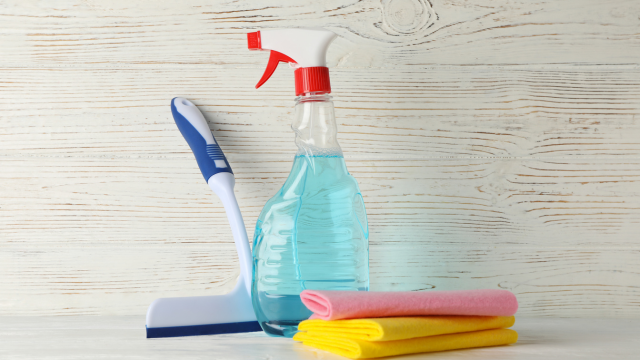
A surface that looks clean is not necessarily microbiologically safe.
Cleaning removes dirt, grease and food residues.
Disinfection reduces harmful microorganisms after effective cleaning.
Food Standards Scotland’s CookSafe guidance emphasises that disinfectant should be used appropriately on a surface that has first been cleaned, and that dilution and contact-time instructions matter.
A common error is quickly spraying disinfectant onto a greasy worktop and wiping it away immediately.
If the product requires a specified contact time, removing it too soon may reduce its effectiveness.
Businesses should follow manufacturer instructions for:
- dilution;
- application;
- contact time;
- rinsing where required; and
- safe storage.
Mistake 9: Using Dirty Cloths and Equipment
Cleaning tools can themselves become sources of contamination.
Examples include:
- reused cloths;
- dirty sponges;
- brushes;
- mop heads;
- chopping boards;
- knives;
- food processors; and
- slicers.
A cloth that has been used around a raw-meat preparation area should not then be used around ready-to-eat food.
Complex equipment can also contain hard-to-clean areas where food hygiene UK debris accumulates.
Cleaning schedules should clearly state:
- what is cleaned;
- how it is cleaned;
- which product is used;
- how frequently cleaning occurs; and
- who is responsible.
“Clean when dirty” is often too vague for a professional operation.
Mistake 10: Getting Allergen Information Wrong
Allergen failures can be extremely serious.
Food businesses need to know which regulated allergens are present in the food they provide and supply the required information to customers.
The 14 regulated allergens include foods such as:
- peanuts;
- milk;
- eggs;
- fish;
- crustaceans;
- molluscs;
- sesame;
- soybeans;
- mustard;
- celery;
- lupin;
- tree nuts;
- cereals containing gluten; and
- sulphur dioxide or sulphites above the relevant threshold.
Common Allergen Mistakes
Problems can arise when:
- recipes change but allergen records do not;
- suppliers substitute ingredients;
- staff guess instead of checking;
- allergens are transferred through shared utensils;
- the same cooking oil is used inappropriately;
- food is stored in unlabelled containers;
- online menu information differs from kitchen safety UK information; or
- staff promise that a dish is allergen-free without being certain.
The FSA advises businesses to keep allergen ingredient information accurate and current.
Where non-prepacked food is sold, current best practice encourages written allergen information supported by a conversation with customers.
Mistake 11: Ignoring Allergen Cross-Contamination
Correctly listing ingredients is not enough if allergens can accidentally enter a dish during preparation.
For example, allergen transfer may occur through:
- knives;
- chopping boards;
- worktops;
- fryers;
- hands;
- grills;
- serving utensils; or
- storage containers.
If a customer asks for food hygiene UK without a particular allergen, the kitchen safety UK should follow a reliable process for determining whether that request can safely be met.
If cross-contamination cannot be adequately controlled, staff should not make an unsupported promise that the food is allergen-free.
This is one of the most consequential restaurant hygiene mistakes UK businesses should train staff to recognise.
Mistake 12: Letting Ill Staff Handle Food
Food handlers can contaminate food when they are unwell.
Vomiting and diarrhoea are particularly important warning signs in food businesses because infections such as norovirus can spread easily.
Staff should understand the business’s sickness-reporting procedure and should not feel pressured to conceal symptoms because the kitchen safety UK is short-staffed.
Managers need clear arrangements covering:
- reporting illness;
- excluding affected employees from food handling where necessary;
- return-to-work requirements;
- cleaning after sickness incidents; and
- escalation where appropriate.
Good food hygiene depends on workplace culture.
If employees fear losing shifts for reporting illness, even a well-written hygiene policy may fail in practice.
Mistake 13: Ignoring Use-By Dates
A use-by date is connected with food safety.
It should not be treated like a best-before date.
Kitchen teams need a reliable system for:
- checking deliveries;
- dating opened products;
- rotating stock;
- removing expired food; and
- following manufacturer storage instructions.
FIFO—first in, first out—can help with stock rotation, but staff still need to check the actual date and condition of individual products.
A kitchen safety UK should not rely solely on smell or appearance to decide whether food beyond a use-by date is safe.
Mistake 14: Poor Storage of Cleaning Chemicals
Chemical contamination is another food-safety hazard.
Cleaning products should not be stored where they can leak, spill or be confused with food ingredients.
Good practice includes:
- clearly labelled products;
- suitable containers;
- appropriate storage away from food;
- following manufacturer instructions; and
- training staff in safe use.
Never transfer cleaning chemicals into food or drink containers.
It creates an obvious risk that someone could mistake the substance for something consumable.
Mistake 15: Weak Pest Control
Flies, cockroaches, rodents and other pests can contaminate food and food-contact areas.
Signs can include:
- droppings;
- gnaw marks;
- damaged packaging;
- insect activity;
- unusual smells; or
- nesting materials.
Businesses should not wait until an infestation is severe before responding.
Good pest control includes:
- restricting access;
- maintaining the building;
- storing food securely;
- managing waste;
- inspecting deliveries;
- cleaning effectively; and
- using competent pest-control support where required.
Kitchen cleanliness and pest management are closely connected.
Mistake 16: Poor Waste Management
Overflowing bins can contribute to contamination, odours and pest problems.
Waste should be removed frequently enough and managed so it does not compromise food areas.
Internal bins should not become so full that staff must touch contaminated waste while preparing food.
External waste areas should likewise be maintained appropriately.
Good waste control is not simply a housekeeping issue; it supports wider food-safety management.
Mistake 17: Assuming a Food Hygiene Certificate Is All That Training Requires
Food businesses sometimes treat training as a box-ticking exercise.
A new employee completes an online food hygiene course, receives a certificate and is then assumed to be fully competent.
That is not enough.
Food handlers should be supervised, instructed and/or trained in food hygiene matters appropriate to their work.
Formal training can be useful, but staff also need to understand the actual procedures used in their own kitchen.
A chef may know the theory of cross-contamination while still not knowing:
- which colour-coded equipment the business uses;
- where allergen utensils are stored;
- how fridge temperatures are recorded;
- what disinfectant concentration is required; or
- what to do after a failed temperature check.
Effective training connects general knowledge with workplace practice.
Mistake 18: Having HACCP Paperwork That Does Not Match Reality
Food businesses are expected to operate food-safety procedures based on HACCP principles.
For smaller restaurants and cafés, systems such as Safer Food, Better Business can provide a practical way of applying those principles.
The mistake is not necessarily having insufficient paperwork.
Sometimes the problem is having impressive paperwork that bears little resemblance to what actually happens.
For example, a written procedure may say refrigerator temperatures are checked every morning, while staff cannot explain who checks them or where they are recorded.
A useful food-safety management system should reflect real operations.
It should identify:
- hazards;
- controls;
- monitoring;
- corrective action;
- verification; and
- appropriate records.
If the business changes its menu, equipment, layout or process, relevant procedures should also be reviewed.
Mistake 19: Failing to Take Corrective Action
Monitoring is useful only if people respond to problems.
Imagine a fridge check records 10°C.
Writing “10°C” on a sheet does not control the risk.
Staff need to know what happens next.
Depending on the circumstances, corrective action may involve:
- checking the food temperature;
- moving food to working refrigeration;
- assessing how long it has been outside control;
- disposing of unsafe products;
- calling maintenance;
- recording the incident; and
- investigating why the failure occurred.
The same principle applies to failed cooking temperatures, allergen mistakes, cleaning failures and other food-safety controls.
Mistake 20: Treating a Good Hygiene Rating as Permanent
A strong rating is not a guarantee that a kitchen will remain safe indefinitely.
The Food Hygiene Rating Scheme used in England, Wales and Northern Ireland assesses standards found by local authority food-safety officers at the relevant inspection.
The rating considers matters including:
- hygienic food handling;
- physical condition of the premises; and
- food-safety management.
Businesses can deteriorate after inspection if staff change, equipment fails or procedures are neglected.
Scotland operates the separate Food Hygiene Information Scheme.
Whatever scheme applies, hygiene should be maintained every day—not simply when an inspection is expected.
How to Prevent Common Food Hygiene Mistakes
Preventing the common food hygiene mistakes discussed above requires a system rather than relying on individual memory.
Build Daily Checks Into the Operation
Opening and closing checks can cover issues such as:
- refrigeration;
- cleanliness;
- handwashing facilities;
- pest signs;
- stock condition; and
- cleaning equipment.
Make Responsibilities Clear
Staff should know who is responsible for:
- temperature monitoring;
- allergen information;
- cleaning;
- deliveries;
- stock rotation; and
- food-safety records.
Keep Procedures Simple
A complicated procedure that nobody follows is less useful than a clear procedure staff understand.
Supervise New Employees
Do not assume previous kitchen experience means a worker understands your system.
Investigate Repeated Problems
If the same mistake keeps happening, investigate the cause.
Perhaps the process is unclear, equipment is poorly designed, staff lack time or the training has not been effective.
Keep Records Meaningful
Records should demonstrate that important controls are functioning.
They should not exist merely to fill a folder.
A Practical Safe Food Handling UK Checklist

For businesses reviewing safe food handling UK practices, these questions provide a useful starting point:
- Are hands washed properly at the right times?
- Are raw and ready-to-eat foods adequately separated?
- Are chilled-food temperatures monitored?
- Are high-risk foods cooked according to a validated safe method?
- Is cooked food cooled appropriately?
- Are cleaning and disinfection clearly distinguished?
- Are cloths and utensils managed hygienically?
- Is allergen information current?
- Can allergen cross-contamination be controlled?
- Do staff know what to do when they are ill?
- Are use-by dates monitored?
- Are chemicals stored safely?
- Are pest and waste controls effective?
- Does staff training reflect actual duties?
- Does the HACCP-based system reflect what really happens?
- Do staff take corrective action when controls fail?
A “no” to any of these does not automatically prove food is unsafe, but it identifies an area that deserves attention.
Frequently Asked Questions
What are the most common food hygiene mistakes?
The most common food hygiene mistakes include inadequate handwashing, cross-contamination, poor temperature control, undercooking, incorrect cooling, poor cleaning, inaccurate allergen information and weak food-safety management.
What are the 4Cs of food hygiene?
The 4Cs are cleaning, cooking, chilling and avoiding cross-contamination. They provide a simple framework for preventing many everyday food-safety problems.
What temperature should a commercial fridge be in the UK?
For food businesses in England, Wales and Northern Ireland, chilled food requiring temperature control should generally be kept at 8°C or below. The FSA recommends setting fridges at 5°C or below to allow for temperature fluctuations.
What cooking temperature is considered safe?
Current FSA guidance recognises 70°C for two minutes as one safe time-temperature combination, with equivalent alternatives such as 75°C for 30 seconds. Businesses should follow an appropriate validated cooking method for the food concerned.
Should raw chicken be washed?
No. Washing raw poultry can spread bacteria through splashes around sinks, worktops and equipment. Proper cooking is the appropriate control.
Do food handlers legally need a Level 2 food hygiene certificate?
Food handlers need supervision, instruction and/or training appropriate to their work. A particular commercially named Level 2 certificate is not automatically required for every worker in every circumstance. Businesses should ensure employees are genuinely competent for their duties.
Is allergen management part of food hygiene?
Yes. Businesses need accurate allergen information and effective procedures to manage allergen cross-contamination alongside microbiological and other food-safety hazards.
What is HACCP?
HACCP stands for Hazard Analysis and Critical Control Point. It is a structured approach for identifying food-safety hazards, determining appropriate controls, monitoring them and taking corrective action where control fails.
Does the same food hygiene rating scheme apply throughout the UK?
No. England, Wales and Northern Ireland use the Food Hygiene Rating Scheme. Scotland uses the Food Hygiene Information Scheme.
Why is food hygiene important in restaurants?
Good hygiene protects customers from foodborne illness and allergen incidents, supports legal compliance and helps maintain customer confidence and business reputation.

Conclusion
The most dangerous common food hygiene mistakes are often not dramatic incidents. They are small shortcuts repeated every day.
Poor handwashing, storing raw meat incorrectly, leaving chilled food outside refrigeration, failing to disinfect equipment properly or guessing allergen information can all undermine an otherwise professional kitchen.
Effective food hygiene UK practice therefore depends on more than visible cleanliness. Businesses need reliable systems covering cooking, chilling, cleaning, cross-contamination, allergens, illness, storage, pests and staff competence.
Good kitchen safety UK procedures should also be practical. Staff need to understand what to do when a refrigerator fails, when a cooking temperature is too low, when an allergen request is received or when contamination may have occurred.
The best way to reduce food contamination UK risks is to prevent them rather than react afterwards. That means separating raw and ready-to-eat food, monitoring temperatures, maintaining equipment, cleaning effectively and following a HACCP-based food-safety system that reflects the real kitchen.
For restaurants and caterers, avoiding restaurant hygiene mistakes UK customers may never see is especially important because food safety depends on what happens behind the scenes.
Ultimately, strong safe food handling UK practice comes from consistent habits. When managers train staff properly, supervise important controls and correct problems as soon as they appear, food hygiene becomes part of everyday kitchen culture rather than something considered only before an inspection.