

If stored and heated correctly, yes. Our UK guide covers safe times, temperatures and methods.
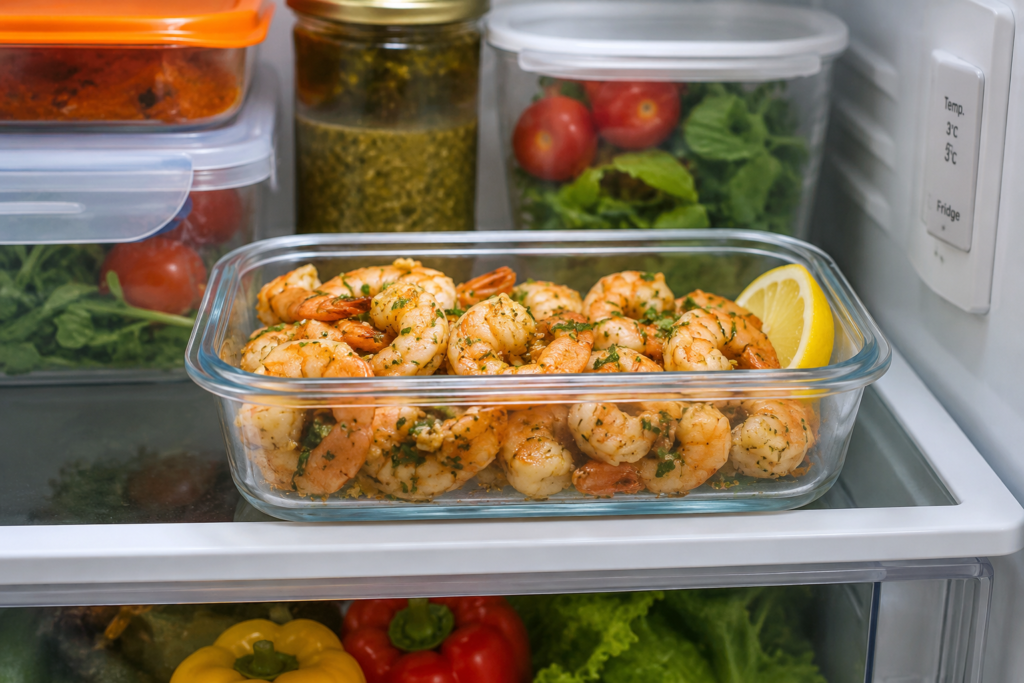
Introduction
Yes, you can reheat cooked prawns from the fridge — but only if they were cooled, stored and handled correctly in the first place, and only if you reheat them until they are piping hot all the way through. Prawns are a low-fat, delicate protein that spoils faster than most meat, which means the margin for error is smaller than it is with, say, leftover roast chicken.
This guide walks through exactly how long cooked prawns can sit in the fridge, how to tell if they’ve gone off, the safe internal temperature to reheat them to, and the best method to use depending on what’s in your kitchen. It draws on guidance from the UK Food Standards Agency (FSA) and NHS, so you can make a confident, informed decision rather than guessing.
If your prawns are part of a larger dish, our companion guide, Can You Reheat Prawns? The Complete Guide, covers reheating prawns in curries, stir-fries and pasta bakes in more depth.
Table of Contents
- Can You Reheat Cooked Prawns From the Fridge?
- How Long Can Cooked Prawns Stay in the Fridge?
- How to Store Cooked Prawns Properly Before Reheating
- Signs Your Refrigerated Cooked Prawns Have Gone Bad
- Food Safety Rules for Reheating Refrigerated Cooked Prawns
- The Best Ways to Reheat Cooked Prawns From the Fridge
- How Long Should You Reheat Cooked Prawns?
- How to Keep Reheated Cooked Prawns Tender
- Can You Freeze Refrigerated Cooked Prawns?
- Can You Eat Cooked Prawns Cold Straight From the Fridge?
- Common Food Poisoning Symptoms From Spoiled Seafood
- Final Words
- FAQs
Can You Reheat Cooked Prawns From the Fridge?
Yes, you can reheat cooked prawns from the fridge, provided they were cooled and refrigerated within two hours of cooking, kept below 5°C, and eaten within 48 hours. When reheating, prawns must be heated until steaming hot throughout — ideally reaching a core temperature of at least 70°C for two minutes, or 74°C if you’re using a food thermometer. They should only be reheated once.
This isn’t a blanket “yes” though. Cooked prawns are a ready-to-eat, high-risk food, which means bacteria can multiply on them relatively quickly if they’re left in the wrong conditions. The FSA’s general position on leftovers is that food cooled and refrigerated properly can be reheated safely, as long as it’s done thoroughly and only once.
In practice, this means three things need to be true before you reheat cooked prawns from the fridge:
- They were cooled and put in the fridge within two hours of cooking (or purchase, for shop-bought pre-cooked prawns).
- They’ve been stored at 8°C or below (ideally 5°C or below) and used within roughly two days.
- They show no signs of spoilage — no sour smell, sliminess, or discolouration.
If all three apply, reheating is safe. If you’re not sure how the prawns were handled before they reached your fridge — for example, prawns from a buffet or takeaway of unknown age — it’s safer to treat them with more caution or discard them.
How Long Can Cooked Prawns Stay in the Fridge?
Cooked prawns typically last around two days in the fridge when stored at 8°C or below, and ideally at 5°C or below. This applies to both homemade cooked prawns and pre-cooked prawns bought from a supermarket once the pack has been opened. Always check the use-by date on shop-bought products, as this takes priority over general storage guidance.
Homemade cooked prawns vs pre-cooked supermarket prawns
There’s an important difference between prawns you cook yourself and the pre-cooked, ready-to-eat prawns sold chilled in supermarkets:
- Homemade cooked prawns (e.g. from raw prawns you’ve cooked at home) should be cooled within two hours, refrigerated, and used within about two days.
- Pre-cooked supermarket prawns have already been through a controlled commercial cooking and chilling process. Once opened, follow the “use within X days of opening” instruction on the packaging — this is often shorter than two days, sometimes just 24 hours, because the product has already spent some of its shelf life in the pack before you opened it.
The use-by date on the packet is a legal safety limit, not a guideline. Even if prawns look and smell fine, the FSA advises against eating food after its use-by date has passed.
Why fridge temperature matters so much
Cold food must legally be kept at 8°C or below in food businesses in England, Wales and Northern Ireland, and the FSA recommends home fridges are set to 5°C or below to build in a safety margin for temperature fluctuations, such as when the door is opened frequently. A fridge thermometer is a cheap and reliable way to check yours is actually holding this temperature, since the dial settings on many fridges aren’t accurate.

How to Store Cooked Prawns Properly Before Reheating
Store cooked prawns in a shallow, airtight container in the fridge within two hours of cooking, ideally within one hour for seafood, and keep them separate from raw meat and fish. Cooling them quickly and covering them properly are the two biggest factors in keeping them safe to reheat later.
Step-by-step storage method
- Cool quickly. Spread cooked prawns out in a shallow dish rather than leaving them piled in a deep pot — this helps them cool faster and spend less time in the temperature “danger zone.”
- Don’t put warm food straight into the fridge. The FSA advises cooling cooked food at room temperature first, then transferring it to the fridge within one to two hours, rather than placing hot food directly in the fridge, which can raise the internal fridge temperature and put other food at risk.
- Use an airtight container. A sealed container or a bowl tightly covered with cling film prevents the prawns from drying out, absorbing fridge odours, or cross-contaminating other food.
- Store away from raw food. Keep cooked prawns on a shelf above raw meat and fish, never below, to avoid drips of raw juices contaminating them.
- Label with the date. A simple sticker with the cooking or opening date makes it far easier to track the two-day window.
A note on cooling large batches
If you’ve cooked a large batch of prawns — for a party or a curry night, for example — divide them into smaller, shallower portions before refrigerating. Large volumes of food cool much more slowly in the centre, which extends the time bacteria have to multiply.
Signs Your Refrigerated Cooked Prawns Have Gone Bad
Bad cooked prawns typically develop a strong ammonia or sour smell, a slimy or sticky texture, greying or yellowing flesh, and black spots around the head or shell. Any one of these signs is a reason to throw the prawns away rather than reheat them — reheating does not reverse spoilage or make spoiled seafood safe to eat.
Look out for:
- Smell: Fresh cooked prawns have a mild, faintly sweet sea smell. A sharp, sour, or ammonia-like odour is a clear sign of spoilage.
- Texture: Prawns that feel slimy, sticky, or tacky to the touch — rather than firm — should not be eaten.
- Colour: Grey, yellow, or dull, faded flesh (rather than the typical pink-white colour) can indicate spoilage.
- Black spots (melanosis): Small black spots on the shell or near the head aren’t always dangerous on their own, but combined with any other signs above, they suggest the prawns are past their best.
- Use-by date: If the date on the packet or your storage label has passed, don’t rely on smell or appearance alone — discard the prawns.
Because some seafood-related toxins and bacteria don’t noticeably change the smell, taste, or appearance of the food, “it smells fine” isn’t a guarantee of safety on its own — this is exactly why sticking to the two-day storage window matters, rather than judging by senses alone.
Food Safety Rules for Reheating Refrigerated Cooked Prawns
Cooked prawns must be reheated until steaming hot throughout, ideally to a core temperature of 70°C for two minutes or higher, and should only ever be reheated once. Reheating is not the same as gently warming through — the FSA is explicit that reheating means cooking the food again, not simply taking the chill off it.
Safe temperatures
Aim for a core temperature of at least 70°C held for two minutes, which is the FSA’s standard guidance for destroying harmful bacteria in reheated food. Many food safety sources also reference 74°C (165°F) as a reliable target for shellfish specifically, which gives an extra margin of safety. If you have a digital probe thermometer, insert it into the thickest part of the largest prawn to check.
The one-time reheating rule
Only reheat cooked prawns once. Each cycle of cooling and reheating gives any surviving bacteria another opportunity to multiply while the food passes back through the danger zone. If you have a large batch, only take out and reheat the portion you intend to eat, and leave the rest chilled.
Cooling leftovers correctly (if you’re reheating a dish, not just prawns)
If you’re reheating a prawn curry, stir-fry, or pasta dish rather than prawns on their own, the same cooling principles apply to the whole dish: cool within one to two hours, refrigerate, and reheat only once, discarding any that’s left over after that.
Avoiding bacterial growth
- Never reheat prawns that have been left out at room temperature for more than two hours in total (or one hour if the room is particularly warm, such as during summer).
- Don’t reheat prawns straight from frozen unless the packaging specifically says the product can be cooked from frozen — otherwise, defrost fully in the fridge first.
- Never leave reheated prawns sitting out to cool and then put them back in the fridge to reheat again later.
The Best Ways to Reheat Cooked Prawns From the Fridge
Cooked prawns can be safely reheated in the microwave, on the stovetop, in the oven, or in an air fryer — the key in every method is gentle, even heat and checking that they’re steaming hot all the way through before serving. Because prawns are small and low in fat, they overcook easily, so the biggest risk with every method below is turning rubbery prawns tough, not making them unsafe.
Microwave
The fastest option for a small portion.
- Place prawns in a microwave-safe dish with a splash of water, stock, or the sauce they were cooked in to stop them drying out.
- Cover loosely (a lid or damp paper towel works well) to trap steam.
- Heat in short bursts of 30–45 seconds, stirring between each, until steaming hot throughout.
Stovetop
Good for prawns in a sauce, curry, or stir-fry.
- Warm a splash of oil, butter, or the original sauce in a pan over medium heat.
- Add the prawns and stir gently and frequently so they heat evenly.
- Heat until piping hot throughout — this usually takes just a few minutes given how quickly prawns cook.
Oven
Best for larger batches or prawns as part of a baked dish.
- Preheat the oven to around 180°C (160°C fan).
- Cover the prawns with foil to retain moisture and prevent them drying out.
- Heat for around 8–10 minutes, checking they are steaming hot in the centre before serving.
Air fryer
A quick option if you want a slightly crisp finish, particularly for battered or breaded prawns.
- Preheat the air fryer to around 160–180°C.
- Arrange prawns in a single layer so hot air circulates evenly.
- Heat for 3–5 minutes, shaking the basket halfway through, and check they’re piping hot before eating.
How Long Should You Reheat Cooked Prawns?
Most reheating methods take between 2 and 10 minutes, depending on the method and portion size — the exact time matters less than confirming the prawns are steaming hot throughout before you stop. Because prawns are small, they heat through quickly, and it’s easy to overshoot and end up with a rubbery texture.
| Method | Approx. Reheating Time | What to Check |
|---|---|---|
| Microwave | 1–2 minutes (in 30-second bursts) | Steaming hot, no cold centre |
| Stovetop | 3–5 minutes | Piping hot and stirred through evenly |
| Oven | 8–10 minutes | Steaming hot in the thickest prawn |
| Air fryer | 3–5 minutes | Hot throughout, shaken halfway |
If you have a food thermometer, use it: a core temperature of at least 70°C (held for two minutes) confirms the prawns are safe, regardless of how long that took to achieve.
How to Keep Reheated Cooked Prawns Tender
The best way to keep reheated prawns tender is to use low-to-medium heat, add a small amount of liquid or fat, and remove them from the heat the moment they’re steaming hot — prawns turn rubbery from overcooking, not from being reheated per se.
Practical tips:
- Add moisture. A splash of water, stock, wine, or sauce during reheating helps prevent prawns from drying out, especially in the microwave or oven.
- Don’t blast on full heat. High, direct heat cooks the outside of the prawn before the centre has warmed through, which is what causes a tough, chewy texture. Medium heat gives more even results.
- Reheat as part of the dish, not alone, where possible. Prawns reheated within a curry, pasta sauce, or stir-fry are naturally protected from drying out by the surrounding liquid.
- Stop as soon as they’re hot. Prawns cook (and reheat) in minutes. Checking frequently is better than walking away and coming back to an overcooked batch.
- Use fresh garnishes after reheating. Adding a squeeze of lemon, fresh herbs, or a drizzle of good olive oil after reheating can freshen up both flavour and perceived texture.
Can You Freeze Refrigerated Cooked Prawns?
Yes, you can freeze cooked prawns that have been stored correctly in the fridge, as long as you do so promptly — ideally within a day or two of cooking — and use them within around three months for best quality. Freezing pauses bacterial growth but doesn’t reverse any deterioration that’s already happened, so only freeze prawns that are still well within their safe storage window.
Key points on freezing:
- Freeze prawns in a sealed, airtight container or freezer bag to prevent freezer burn and reduce moisture loss.
- Label with the date so you know how long they’ve been frozen.
- Once frozen and then defrosted, prawns should not be refrozen raw or uncooked again — you can only cook or reheat defrosted food once.
- Defrost frozen cooked prawns slowly in the fridge overnight rather than at room temperature, which keeps them out of the temperature danger zone during defrosting.
- Once defrosted, treat them the same as freshly refrigerated cooked prawns: use promptly and reheat only once.
Can You Eat Cooked Prawns Cold Straight From the Fridge?
Yes, cooked prawns can be eaten cold straight from the fridge without reheating, as long as they’ve been cooked, cooled and stored correctly. This is actually one of the safest ways to enjoy leftover prawns, since it avoids the repeated heating and cooling cycle altogether — the FSA confirms that leftovers can be eaten cold if they’ve been cooked properly, cooled, and refrigerated within two hours.
This is why pre-cooked prawns are sold ready to eat cold in prawn cocktails, salads, and sandwiches — provided they’ve been kept chilled throughout and used within their use-by date, no reheating is required for safety. The same two-day storage rule still applies to cold leftovers as it does to prawns you plan to reheat.
Common Food Poisoning Symptoms From Spoiled Seafood
Food poisoning from spoiled seafood typically causes nausea, vomiting, diarrhoea, stomach cramps, and sometimes a fever, usually starting within a few hours to a couple of days after eating. Symptoms usually improve within a week and can typically be managed at home with rest and fluids, but some situations need medical attention.
Common symptoms include:
- Nausea and vomiting
- Diarrhoea
- Stomach cramps or pain
- Fever
- General fatigue or feeling unwell
Seek medical advice, or contact NHS 111, if you or someone you’re caring for:
- Shows signs of severe dehydration (such as confusion, reduced urination, or dizziness)
- Has blood in their vomit or stool
- Has diarrhoea lasting longer than a week, or vomiting that doesn’t settle
- Is pregnant, elderly, very young, or has a weakened immune system and develops food poisoning symptoms
- Has a high fever or symptoms that are getting worse rather than better
This information is for general awareness and isn’t a substitute for medical advice. If you’re ever seriously concerned about symptoms, contact NHS 111 or your GP.
Final Words
Reheating cooked prawns from the fridge is safe when you get three things right: cool and refrigerate them promptly, keep the fridge cold enough, and reheat them thoroughly, just once, until steaming hot. Prawns are forgiving to cook but unforgiving of poor storage, so a little care at the fridge stage does more for food safety than anything you do at the reheating stage.
When in doubt — about how long prawns have been in the fridge, how they smell, or how they were handled before they got there — it’s always safer to throw them away than risk it. Food poisoning from spoiled seafood is unpleasant and, for some people, genuinely dangerous.
If you deal with food professionally, or simply want a deeper, structured understanding of hygiene principles like these, a recognised course such as the Food Hygiene and Safety course from Career Education covers storage, temperature control and cross-contamination in far more depth than any single article can.
FAQs
Can you reheat cooked prawns from the fridge? Yes, if they were cooled and refrigerated within two hours of cooking, stored below 8°C, and used within about two days. Reheat them once, until steaming hot throughout, ideally reaching a core temperature of at least 70°C.
Can you reheat cooked prawns more than once? No. Cooked prawns, like most seafood, should only be reheated once. Repeated reheating increases the amount of time the food spends in the temperature danger zone, raising the risk of bacterial growth.
How long do cooked prawns last in the fridge? Cooked prawns generally last around two days in the fridge when stored at 8°C or below. Always check the use-by date on shop-bought pre-cooked prawns, as this can be shorter once the pack is opened.
Can you eat cooked prawns cold from the fridge? Yes. Cooked prawns that have been properly cooled, stored, and kept within their use-by date can be eaten cold without reheating — this is how prawn cocktails and prawn salads are traditionally served.
How do you know if refrigerated prawns have gone bad? Warning signs include a sour or ammonia-like smell, a slimy texture, dull grey or yellow colouring, and a use-by date that has passed. Any of these means the prawns should be discarded, not reheated.
What temperature should reheated prawns reach? Reheated prawns should reach a core temperature of at least 70°C, held for two minutes, to ensure any bacteria present are destroyed. A food thermometer inserted into the thickest prawn is the most reliable way to check.
Can you freeze cooked prawns after refrigeration? Yes, as long as they’re still within their safe storage window. Freeze them promptly in an airtight container, use within about three months, and defrost in the fridge rather than at room temperature before reheating.
What’s the best way to reheat cooked prawns without them going rubbery? Use gentle, even heat rather than a high blast, add a little liquid or fat to keep them moist, and remove them from the heat as soon as they’re steaming hot. Overcooking, not reheating itself, is what causes rubbery prawns.
Can you reheat prawns straight from frozen? It’s safer to defrost frozen cooked prawns fully in the fridge before reheating, unless the packaging specifically states they can be cooked from frozen. Reheating from frozen can lead to uneven heating, leaving cold spots where bacteria could survive.
Is it safe to reheat prawns in a curry or stir-fry? Yes, as long as the whole dish was cooled and refrigerated correctly and is reheated until steaming hot throughout, not just the prawns. The same two-hour cooling rule and two-day storage window apply to the full dish.