


Choosing between the best electrical engineering courses UK providers offer is not simply a matter of finding the university with the highest league-table position. The right course depends on the type of engineer you want to become, the qualifications you already hold, whether you want paid industrial experience, and how closely the programme supports your longer-term professional goals.
Best electrical engineering courses uk is a broad field. One course may concentrate on power systems and renewable energy, another on electronics and embedded computing, and another on control, automation or communications. UK learners can also choose between a BEng, an integrated MEng, a foundation-year degree, an HNC or HND, a degree apprenticeship, postgraduate study and shorter professional courses.
This guide explains those routes, shows what to look for in an Electrical Engineering degree UK applicants can realistically use, and helps you compare course quality without relying on rankings alone. It also covers accreditation, entry requirements, specialisms, career options and the likely electrical engineer salary at different stages.
What is electrical engineering?
Best electrical engineering courses uk is the study, design and practical application of systems that generate, distribute, control or use electrical energy and signals. It includes large-scale power networks, motors and drives, renewable generation, rail systems, industrial controls, communications, sensors, electronics and intelligent devices.
A common search phrase is “what is the Best electrical engineering courses uk field?” The simplest answer is that it applies mathematics and science to electrical power, electronic circuits and electromagnetic systems. Students learn not only how components work, but how to design complete systems that are safe, reliable, efficient and suitable for real use.
The subject usually begins with circuit theory, mathematics, programming, digital logic, electronics and electromagnetism. Later study may move into power electronics, control engineering, electrical machines, signal processing, communications, microprocessors, renewable energy, robotics or semiconductor technology.
Although “electric engineering” sometimes appears in informal searches, the standard UK subject titles are normally electrical engineering, electronic engineering, or electrical and electronic engineering. The exact title matters less than the curriculum. Two courses with similar names can have very different compulsory modules and career emphasis.
Electrical engineering, electronic engineering and electrician training are different
Electrical and electronic engineering overlap, but they are not identical. Best electrical engineering courses uk often gives greater attention to power generation, transmission, machines, drives, high-voltage systems and industrial energy use. Electronic engineering usually focuses more heavily on low-power circuits, semiconductors, embedded systems, communications, computing hardware and signal processing.
Many UK degrees combine both areas during the first one or two years. This Electrical engineer salary allows students to build a common foundation before choosing optional modules or a final-year project. Combined degrees can be particularly useful for learners who are interested in electric vehicles, robotics, renewable energy, automation or smart infrastructure, where power, electronics and software interact.
An electrical engineer is also different from an electrician. Electricians install, inspect, test and maintain electrical installations, usually through trade training, workplace competence and industry qualifications. Engineers are more likely to analyse, specify, design, model, develop or manage systems. There is overlap in practical knowledge, but a university engineering degree is not a substitute for the competence assessment required for electrical installation work, and electrician qualifications do not automatically make someone a professional engineer.
What makes an electrical engineering course one of the best?
There is no single course that is best for every student. A research-intensive MEng may suit someone aiming for advanced design or professional registration, while an HNC studied part-time may be far better for a technician who wants progression without leaving employment.
When comparing programmes, look closely at the following factors.
Professional accreditation
Accreditation is one of the most useful quality checks for a UK engineering degree. The Institution of Engineering and Technology accredits higher-education programmes against standards connected to UK-SPEC and the Engineering Council’s accreditation framework. The Electrical Engineering degree UK Council also maintains a searchable database of recognised degrees, apprenticeships and other qualifications. (IET)(IET)0
However, accreditation does not mean that a graduate automatically becomes a Chartered Engineer or Incorporated Engineer. Professional registration also requires evidence of competence, commitment and relevant professional development. An accredited qualification can make the educational pathway more straightforward, but it is only one part of the process. (Engineering Council)heck the accreditation status for the exact course title, award, campus, mode of study and intake year. A university may offer several similar programmes, and accreditation can apply differently to a BEng, MEng, top-up route or foundation pathway.
Course content and specialism
Do not choose by title alone. Open the module list and identify what is compulsory. A course advertised as electrical and electronic engineering may lean strongly towards embedded systems, while another may focus on electrical energy, drives and power networks.
For a broad first degree, a strong curriculum normally includes engineering mathematics, circuit analysis, analogue and digital electronics, programming, control, signals, electromagnetism, design projects and laboratory work. Later options should connect with your likely career direction.
Practical design and laboratory work
Electrical Engineering degree UK is not learned through lectures alone. Look for laboratory classes, group design projects, simulation, programming, hardware development, testing, fault-finding and a substantial individual project. Employers value graduates who can turn theory into a working design, explain their decisions and document results properly.
Placement or industrial experience
A year in industry can provide evidence of workplace competence, strengthen a graduate CV and help a student understand which engineering specialism suits them. It can also create useful professional contacts. Placement availability is not always guaranteed, so check whether the university finds placements, supports applications or simply allows students to arrange their own.
Electrical Engineering degree UK of Manchester’s MEng Electrical and Electronic Engineering with Industrial Experience, for example, is structured as a five-year programme and combines degree study with a year in industry. Its 2026 entry page states that the course covers electrical power, electronic and communication systems, although it was already full for that intake when checked. (The University of Manchester)y route and flexibility
The best course must be one you can enter and complete. Some programmes require strong A-level results including Mathematics and sometimes another science or technical subject. Others accept BTECs, T Levels, Access to HE Diplomas or international qualifications. Foundation-year courses provide another route for applicants who do not yet meet the standard first-year requirements.
UCAS listings for 2026 show a wide range of electrical and electronic engineering provision, including BEng, MEng, HNC, HND, foundation and part-time options. Entry requirements vary considerably between providers, which is why applicants should check the exact course rather than rely on a general subject-level assumption. (UCAS)ent outcomes and evidence quality
Discover Uni can help applicants compare course structure, continuation, student views, graduate activity and earnings data. However, course-level datasets are sometimes based on small groups or are combined with related subjects. Electrical Engineering degree UK site itself warns when there is not enough data to publish a course-specific result. Treat the figures as one source of evidence, not a guarantee of what will happen to an individual graduate. (Discover Uni)Best electrical engineering courses uk course routes in the UK
The UK offers several routes into electrical and electronic engineering. The best option depends on whether you are starting after school or college, already working in industry, changing career or seeking advanced specialisation.
| Course route | Usually best for | Main advantage | Important limitation |
| BEng | School or college leavers seeking an engineering degree | Broad technical education with a shorter route than an MEng | Check whether further learning may be needed for your intended professional-registration pathway |
| Integrated MEng | Learners seeking deeper study and advanced design work | Combines undergraduate and master’s-level study in one programme | Longer and usually more demanding than a BEng |
| Foundation-year degree | Applicants without the standard direct-entry profile | Builds mathematics, science and study skills before Year 1 | Adds time and cost to the degree |
| HNC, HND or foundation degree | Technicians, employees and vocational learners | Practical and often available part-time | Progression or top-up arrangements must be checked carefully |
| Degree or higher apprenticeship | Learners who want employment alongside study | Paid work and structured training | Vacancies are competitive and depend on employer recruitment |
| Short or postgraduate course | Graduates and working professionals | Focused specialisation or updating | A short certificate does not replace a full engineering qualification |
BEng Electrical Engineering
A BEng is the standard bachelor’s-level engineering award. It normally provides a strong foundation in analysis, design and practical engineering. Depending on the nation, university and course structure, study may take three or four years full-time, with extra time for a foundation year, placement or part-time route.
A BEng can lead directly to graduate engineering roles. It can also support progression to postgraduate study. Applicants who may later seek CEng registration should check the Engineering Council database and understand whether their chosen BEng fully or partially meets the relevant educational benchmark.
Integrated MEng Electrical and Electronic Engineering
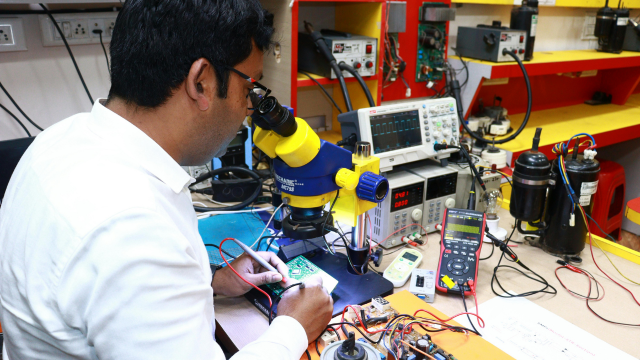
An integrated MEng goes beyond the BEng level and usually includes more advanced analysis, systems design, group projects and management or research content. It is often the clearest academic route for students who already expect to pursue higher-level engineering responsibility.
The University of Strathclyde, for example, offers both BEng and MEng electronic and Best electrical engineering courses ukroutes and states that its programmes are accredited by the IET on behalf of the Engineering Council. Its course content spans electronic, electrical, digital and power-related study. (University of Strathclyde)ees with a foundation year
A foundation year can be an excellent route for students who have ability and motivation but lack the required Mathematics or Physics background, are returning to education, or hold qualifications that do not align neatly with direct entry.
The foundation stage should not be viewed as an easy year. It is designed to develop the mathematical, scientific and academic skills needed for engineering study. Applicants should check the progression rules, minimum marks and whether successful completion leads automatically into the named BEng or MEng.
UCAS listed numerous 2026 foundation-year options across the UK, with substantial differences in tariff requirements and study patterns. Some also offer a placement year, turning the full pathway into five years. (UCAS) HND and foundation-degree routes
An HNC or HND in electrical and electronic engineering can suit people who prefer applied study or are already employed as technicians. These qualifications may cover electrical principles, engineering design, instrumentation, electronics, control, maintenance and project work.
Part-time delivery can make them more realistic for employed learners. Some holders later progress to a top-up degree, but progression is not automatic. Before enrolling, confirm which universities accept the qualification, the entry point offered, any required module content and whether the complete pathway has the professional recognition you need.
Current UCAS listings include part-time HNC programmes and electrical and electronic engineering top-up courses, showing that vocational progression remains available but varies by institution. (UCAS)trical engineering apprenticeships
An apprenticeship combines employment, pay and structured learning. In England, the government’s apprenticeship service allows applicants to search for vacancies, while Scotland, Wales and Northern Ireland operate separate systems. The official guidance makes clear that apprentices work, receive pay and train towards a qualification. (GOV.UK)ing apprenticeships can lead towards technician, incorporated-engineer or degree-level roles, depending on the standard and programme.
The Engineering Council explains that approved qualifications and apprenticeships can support a structured pathway towards professional registration, although the precise outcome depends on the programme. (Engineering Council)te is attractive for learners who want practical experience and do not want full-time university study. The limitation is that you apply for a job, not simply a place on a course. Employers set their own selection criteria, and vacancies may involve assessment centres, technical tests and interviews.
Postgraduate and short professional courses
An MSc can help graduates specialise in power systems, renewable energy, control, robotics, communications, microelectronics or embedded systems. It may also support career change within engineering, although entry usually requires a relevant first degree or substantial technical background.
Short courses are useful for focused development in areas such as programmable logic controllers, power-system protection, electrical safety, CAD, MATLAB, Python, embedded programming or project management. Electrical engineer salary can strengthen existing competence, but they should not be marketed or understood as equivalent to a degree, apprenticeship or licence to undertake regulated work.
UK electrical engineering courses worth comparing
The following are not presented as a fixed league table. They are useful examples of different course designs currently visible in official university or UCAS information. Availability, fees, modules and accreditation should always be checked for the intake year in which you intend to start.
University of Manchester: MEng with Industrial Experience
This route suits applicants who want a broad electrical and electronic curriculum with a substantial period in industry. The five-year structure is longer than a standard MEng, but the placement can help students connect power, electronics and communication theory with professional practice. The fact that the 2026 course was already full when checked also shows why competitive applicants should research and apply early. (The University of Manchester)ersity of Strathclyde: BEng or MEng Electronic and Best electrical engineering courses uk
Strathclyde offers both BEng and MEng pathways, giving students a choice between bachelor’s-level and integrated master’s study. electric engineering official pages identify IET accreditation and describe a curriculum across electronic and electrical principles. This can suit learners who want to study in Scotland and keep several technical directions open. (University of Strathclyde)el University London: BEng Electronic and Best electrical engineering courses uk
Brunel’s UCAS course information describes an IET-accredited BEng that can be completed in three years full-time or four years with a placement. It is an example of a route that gives students a clear choice between the shortest degree format and additional industrial experience. (UCAS)ersity of Greenwich: Extended Electrical and Electronic Engineering
The extended programme listed by UCAS includes a foundation stage and offers full-time, sandwich and part-time patterns. Its listing also identifies professional accreditation. This type of course can be valuable for applicants who need a preparatory year or more flexible study, although they should verify the status of the exact pathway and intake. (UCAS)ersity of Bath: MEng Electrical and Electronic Engineering
Bath’s four-year MEng is an example of a conventional integrated master’s route. Its course page stated that applications from Home students for September 2026 were closed when checked, while overseas applications remained open. This is another reminder that a strong course may not remain available throughout the admissions cycle. (University of Bath)amples show why “best” depends on fit. One student may prioritise a placement, another a foundation year, another Scottish study, and another a four-year MEng. The correct shortlist should reflect your own academic profile and intended sector.
Which specialism should you choose?
Best electrical engineering courses uk degrees often begin broadly, but your later modules and projects can shape your first job. Think about the systems you want to work on rather than choosing a specialism because its title sounds impressive.
Power systems and renewable energy
This area covers generation, transmission, distribution, electrical machines, protection, high voltage, smart grids and the integration of renewable energy. It suits learners interested in utilities, infrastructure, rail, industrial energy, offshore systems, electric vehicles or net-zero projects.
A useful course should include power-system analysis, machines, power electronics, control and protection. Access to simulation tools and practical equipment is especially important.
Electronics, embedded systems and semiconductors
This pathway focuses on analogue and digital circuits, microcontrollers, sensors, chip-level systems, hardware design and embedded programming. It connects well with consumer technology, aerospace, automotive systems, medical devices, telecommunications and advanced manufacturing.
Applicants should look for substantial laboratory work and programming rather than a curriculum built mainly around theoretical electronics.
Control, automation and robotics
Control engineers design systems that behave predictably and safely. electric engineering Study may include feedback control, modelling, sensors, actuators, industrial automation, robotics, machine vision and intelligent systems.
This route suits students who enjoy mathematics, programming and practical system integration.
Communications and signal processing
Communications study covers how information is represented, transmitted and recovered. Modules may include digital communications, wireless systems, networks, signal processing, radio-frequency engineering and antennas.
It can lead towards telecommunications, satellite systems, broadcasting, sensing and data-intensive engineering.
Entry requirements and preparation
Mathematics is central to Best electrical engineering courses uk. Strong courses move quickly into algebra, calculus, complex numbers, differential equations, vectors, probability and modelling. Students who struggle with mathematics are not necessarily excluded, but they should strengthen their foundation before the course begins.
Physics is helpful because it develops understanding of energy, fields, waves and measurement. Programming is increasingly important, and even power-focused engineers may use Python, MATLAB, simulation environments or embedded code.
Entry requirements differ widely. Some selective degrees expect high grades in Mathematics and another technical subject. Foundation routes may accept lower tariff profiles or a broader mix of qualifications. UCAS examples show that providers may consider A levels, BTECs, T Levels, Access to HE Diplomas, the International Baccalaureate and combinations of qualifications. (UCAS)pplying, strengthen your profile through mathematics practice, coding, a small technical project or relevant work experience. The aim is to show informed interest and readiness for the subject.
How to compare your final shortlist
Once you have identified suitable courses, compare them side by side. Start with the exact compulsory modules for each year. Then check optional modules, project structure, assessment, accreditation and placement support.
At an open day, ask current students how often they use laboratories, how assessment feedback works and what placement support is actually provided.
Also compare location and total cost. Accommodation, travel and an added placement or foundation year can materially change affordability.
Finally, electric engineering check whether you would still value the course if your preferred specialism changed. A broad and well-designed first two years can protect you from choosing too narrowly before you have enough experience.
Electrical engineer salary and career prospects
Electrical engineering can lead to work in energy, transport, construction, manufacturing, automation, aerospace, telecommunications, defence, consulting, electronics and technology. Common job titles include graduate electrical engineer, power-systems engineer, control engineer, electronics engineer, design engineer, test engineer, project engineer and systems engineer.
The National Careers Service currently gives an indicative electrical engineer salary range of about £27,000 for starters to £58,000 for experienced workers, with typical working hours of 35 to 40 per week. It lists electronics engineers at approximately £28,000 to £60,000 and Best electrical engineering courses uk technicians at around £24,000 to £48,000. These are broad career-profile estimates rather than guaranteed pay scales. (National Careers Service) Uni data can provide another perspective.
One course page displaying UK-wide comparison data for full-time electrical and electronic engineering graduates reported median earnings of £33,000 after 15 months and £38,000 after five years, but earnings vary by region, employer, role, experience and the graduates included in each dataset. (Discover Uni)alaries may be available in specialist or senior roles, but a course cannot guarantee them. Professional responsibility, technical depth, industry, location, security clearance, electric engineering project experience, management duties and professional registration can all influence progression.
Common mistakes when choosing a course

One mistake is choosing entirely by university reputation. A famous institution may offer an excellent programme, but another provider may have modules, placements or part-time arrangements that fit your electric engineering career better.
Another is assuming that every Best electrical engineering courses uk course is accredited in the same way. Check the exact award and intake. Do not rely only on a general university statement.
Students also underestimate mathematics and programming. Reviewing these areas before starting can make the first year much more manageable.
A further mistake is treating an online certificate as a complete route into professional engineering. Short study can be valuable, but employers will consider the level, assessment, practical evidence and relevance of the qualification.
Finally, avoid assuming that a degree guarantees a job or a specific salary. The electric engineering strongest career outcomes usually come from combining study with projects, placements, communication skills, professional development and a clear understanding of the sector.
Frequently asked questions
What are the best electrical engineering courses UK students should consider?
The best option is an accredited, well-structured course that matches your entry qualifications, preferred specialism, budget and study format. Compare BEng, MEng, foundation, HNC/HND and apprenticeship routes rather than assuming one university is best for everyone.
Is a BEng or MEng better for electrical engineering?
A BEng is a strong route into graduate engineering work and is shorter. An integrated MEng provides additional advanced study and may align more directly with the academic benchmark commonly associated with a CEng pathway. Professional registration still requires competence and experience, not only a degree.
Do I need A-level Mathematics?
Many direct-entry degrees require Mathematics, especially selective programmes. Some also prefer Physics or another technical subject. Foundation years, Best electrical engineering courses uk Access routes and vocational qualifications can provide alternatives, but requirements differ by provider.
Is electrical and electronic engineering the same as electrical engineering?
They overlap. A combined course usually covers both power-related and electronic systems, while a more specialised Best electrical engineering courses uk course may place greater emphasis on energy, machines, power electronics and networks. Always check the modules.
Can I become an electrician with an electrical engineering degree?
A degree develops engineering knowledge but does not automatically prove occupational competence for electrical installation work. Electrician routes normally require relevant practical training, assessment and industry-recognised qualifications.
Can I study electrical engineering online?
Some theory, software and postgraduate content can be delivered online. However, a complete first degree should also provide credible laboratory, design and assessment experience. Best electrical engineering courses uk Check how practical outcomes are achieved before enrolling in a distance-learning programme.
Are electrical engineering apprenticeships worth it?
They can be an excellent option because they combine paid employment and structured learning. electric engineering are particularly suitable for practical learners who want early industry experience. The main challenge is securing an employer vacancy and balancing work with academic study.
Does an accredited degree make me a Chartered Engineer?
No. Accreditation can help demonstrate the required educational foundation, but CEng registration also depends on professional competence, responsibility, commitment and evidence assessed through a licensed professional engineering institution.
Can I progress from an HND to an electrical engineering degree?
Often, yes, through advanced entry or a top-up course. Acceptance depends on the HND content, grades, awarding body and university rules. Best electrical engineering courses uk Confirm the exact entry point and accreditation implications before beginning the HND.
How much can an electrical engineer earn in the UK?
Current National Careers Service guidance gives a broad range from around £27,000 at starter level to about £58,000 for experienced electrical engineers. Actual pay depends on sector, location, specialism, employer, experience and level of responsibility. (National Careers Service)usion
The best Best electrical engineering courses uk courses UK learners can choose are those that match a clear career objective and provide credible technical depth, practical work and progression. A BEng may be the right direct route into industry, an MEng may suit advanced professional ambitions, a foundation year may open access to degree study, and an apprenticeship or HNC/HND may be more practical for learners who want to work while qualifying.
Before applying, compare exact modules, IET or Engineering Council recognition, laboratory access, placement support, entry requirements, cost and course-level evidence. Do not confuse electrical engineering with electrician training, and do not assume that accreditation alone guarantees professional registration, employment or a particular electrical engineer salary.
A careful shortlist should therefore be personal rather than prestige-driven. Best electrical engineering courses uk right electrical electronic engineering course is the one that develops the knowledge, design ability and workplace evidence needed for the systems and industries you genuinely want to enter.